Royal Dutch Shell plc .com Rotating Header Image

Posts Tagged ‘Oleg Mitvol’

Shell’s intent to lean on the Financial Times

By John Donovan

This is the first story arising from the 2010 crop of Shell internal communications Shell was legally obliged to supply to us following a further application under the Data Protection Act.

It provides evidence of Shell’s intent to lean on a major newspaper publisher in connection with an article published on this website: royaldutchshellplc.com.

Previous Shell internal emails provided proof of Shell’s intent to pressurize The Sunday Times to “kill” a story about us and our website. The half-page article which revealed how our intervention in the Sakhalin2 project had cost Shell £11 billion was read to me over the telephone by the Sunday Times journalist, but the story was killed hours before publication It contained an interview with the so-called Kremlin Attack dog, Oleg Mitvol, who confirmed our pivotal role and made a most unflattering comment about Shell management.

This time the FT.com was the target of Shell’s censorship ambitions.

The FT sent an email to Shell on 27 July 2010 containing article links published on “The Energy Source” – an FT.com feature. One link was to an article we published on 26 July 2010 under the headline: “A close call for Shell on North Sea platform.

The article criticized Shell and its CEO, Peter Voser.

That single article link on FT.com sparked the following email correspondence involving Shell.

Some information has been redacted by Shell.

From:
Sent: 27 July 2010 16:39

To:

Subject: FW: Energy Source

Voices from the past.

If you look in the attached you will see that Mr Donovan has managed to get FT.com to refer to his website as if it was a respectable source.

This really irritates me and gives him undeserved credibility. Has shell tried to do anything with the FT? If not or it has not worked I could have a go with

Best wishes,

Tel:                        Fax:
Mobile:

RESPONSE

From:
Sent: 27 July 2010 17:17

To:

Subject: RE: Energy Source

I will find out from the media people what we have done to try to engage with the FT on this. Incidentally, you should be aware that Donovan has access to most of the emails written to and from Shell about him through his regular Data Protection Act requests.

Regards


Royal Dutch Shell plc

Shell Centre, London SE1 7NA
Registered in England and Wales number 4366849

Registered Office: Shell Centre, London, SE 1

Headquarters: Carel van Bylandtlaan 30, 2596 HR
The Hague, The Netherlands

I assume that the response was sent by Richard Wiseman (Chief Ethics & Compliance Officer – now retired), the official then designated within Shell to deal with all matters relating to us.

I note the warning in the response, that “Donovan has access to most of the emails written to and from Shell about him…” According to the Data Protection Act, I should have access to ALL emails written to and from Shell about me.

If it was Mr Wiseman, he failed to inform the other party that I had been in email correspondence with him a few days earlier inviting Shell to point out any inaccuracies on the basis that they would then be deleted from the article. I also invited Shell to supply for unedited publication with the article, any comments it wished to make. Shell decided not to take up either invitation. The correspondence was published as part of the article.

I do not know of any other publisher that would bend over backwards to ensure accuracy and provide an opportunity for unedited comment by Shell to be published with an article.

It is ironic that we do not receive due credit from people who have the breathtaking audacity to accuse us of not being respectable, while they once again conspired behind the scenes to lean on another global news organization. It is amazing that Shell should lower itself to act in this manner.

The email exchanges reveal the fear which Shell has for this site. It is well placed, as will shortly become even more evident.

Pirates of the Intranet

Working in internal communications is hard enough – but it just got tougher with the arrival of pirate sites that can sink your company intranet. Marc Wright offers some useful tips to ward off the invasions.

by Marc Wright

Internal communications is facing its greatest threat ever. The rise of low-cost websites created by employees for employees means that your own intranet, forums and newsletters run the risk of being bypassed and rendered obsolete. In this article I explore the history of pirate sites; look at some examples of ‘gripe’ sites that have cost companies dearly; and suggest some steps you can take to protect yourself and your channels from these marauding invaders.

A short history of Pirates

It all started 5 years ago with the arrival of a particularly vicious website called www.ComEdreporter.com – an anonymous site that started to take pop shots at the American power utility ComEd and its parent, Exelon. The site was poorly designed and vitriolic, but if you worked in the industry (or reported on it for the media) it was an irresistible port of call. Every time there was a power cut, or the management took an unpopular action, the inside story would appear on this pirate site in less than flattering terms:

“Yet another day of insanity; it really is a crime what they have done to this company. The employees lose, the customers lose and the execs get all the money..”

In an online poll of the question “Does Exelon/ComEd treat you like a valued employee?” the results were less than flattering (see right).

ComEdreporter was typical of these anonymous sites; design and layout were rudimentary and all contributions were hidden behind obscure names for fear of reprisal. Yet the site was popular among journalists who would quote from it whenever Exelon was in the news and the pirates were getting more hits than the official site. Today this pirate site (or ‘gripe site’) is no longer sailing on the high seas of public opprobrium. Either through lack of interest or funds it is now a shadow of its former self. Why it has withdrawn from criticising the company is hard to tell as no one at the publishers wanted to talk to me about why they no longer post, but for a while it was a real threat to the company’s reputation and internal relations with staff.

Losing the radio station

In the meantime some other, far more successful, examples have become established. A good example is www.browncafe.com which is the site run by and featuring the comments of the many thousand employees of the parcel delivery company UPS.

Browncafe was established in 1999 and now boasts thousands of threads and hundreds of thousands of posts. They contain the obvious comments such as those about pay and conditions, disciplinary procedures and unpopular management initiatives. But the site is also home to a great deal of best practice advice as well as engaging humour.

The content is mostly from North America but it shows a healthy range of subjects (including tackling racism at work) that any intranet editor would be proud to have on their own site. But when I asked the corporate PR team at UPS what they thought about the site they pleaded a lack of resources to engage with it:

“Although we occasionally look at browncafe.com to see what’s on there, it’s not a UPS sponsored site so there isn’t any interaction for us to discuss.”

Yet if you look at a word cloud of issues on browncafe then you will see that the most popular tag by far is “management”.  It seems the internal team are in denial about where their audience is getting much of their information about the company where they work. Ignoring such rich and extensive content is not just short-sighted, it’s ceding communication power to a channel where the company has neither control nor influence.

The $2 billion gripe site

One large organisation that has paid dearly for the activity of a pirate site is the oil giant Shell. www.royaldutchshellplc.com may be the legal name of the Anglo-Dutch company but it certainly isn’t their official website. Instead it’s run by the Donovans in Essex, England, a father and son team who dedicate their time to being a thorn in the side of the multinational.

The origin of their feud goes back in the mists of time when the two men ran a marketing promotion business servicing Shell. They claim they lost the contract unfairly when there was a change of commissioner at the client. Numerous court cases between Shell and the Donovans ensued but the most significant one was where a US judge decided that, since the Donovans make no money from the site, they are full entitled to use the URL. And use it they have to vilify the company (although they claim to always check their facts with Shell first).

According to John Donovan the site receives over 1.7m hits per month from environmentalists, disgruntled former employees and journalists. As it has grown www.royaldutchshellplc.com has become a lightning rod for all dissatisfaction with the oil company – and some of those strikes have been very expensive.

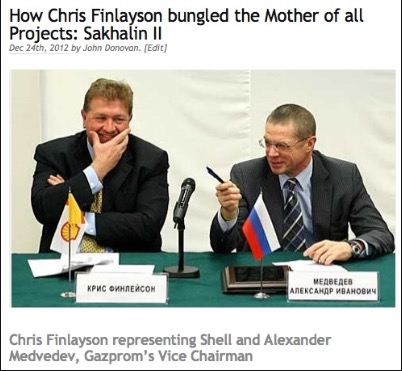
A case in point is control of the Sakahlin gas fields off the East coast of Russia. Shell developed the fields when gas was at a much lower price than today and signed a very lucrative deal with the Russian government for a share of the future revenues. But as the price rose Russia’s green minister Oleg Mitvol contacted the Donovans to find as much dirt as he could on the company’s environmental record.

John Donovan opened up the voluminous files that fill the modest house he shares with his 93 year-old father. Even the kitchen cupboards groan – not with food – but with files that have been leaked over the years to these men with a mission. Armed with the Donovans’ information Mitvol was able to rescind the agreement with Shell and force them to sell a huge part of their share in future revenues to the Russian Statoil.

The rumoured cost to Shell – a cool $22 billion.

Twittering pirates

But pirates do not just sail the website channels – they also ply the oceans of twitter posts. Another oil company, BP, realised too late that a pirate had disguised itself as the official sounding twitter feed of BPGlobalPR. The tweets were a witty twist on BP’s lacklustre PR efforts such as:

“Think locally, act locally- if you don’t live near the Gulf of Mexico, get on with your life.”

“This mess would be a lot easier to clean up if we were allowed to use slaves.”

Before BP could appeal to twitter to block the unauthorised use of their brand the twitter feed had achieved huge traction. The man behind it, Leroy Stick, explains his motivation:

“I started @BPGlobalPR, because the oil spill had been going on for almost a month and all BP had to offer were bullshit PR statements. No solutions, no urgency, no sincerity, no nothing.  That’s why I decided to relate to the public for them. I started off just making jokes at their expense with a few friends, but now it has turned into something of a movement.  As I write this, we have 100,000 followers and counting. People are sharing billboards, music, graphic art, videos and most importantly information.”

It is difficulty to quantify what damage this pirate effort inflicted on BP – but it certainly didn’t help their efforts to limit the shredding of their reputation during the period of the Deep Water Horizon oil disaster. Humour can be a deadly weapon in undermining a company that is vulnerable to criticism and social media offers a cheap accessible tool that can go viral very quickly.

Treasure map

So what should you do to protect your internal communications from pirate attacks? Here are 4 steps to fighting pirates before they can board your vessel.

1.  Be afraid – very afraid

Do not ignore a pirate site, but recognise it for the threat it is. Just because their site is poorly designed with atrocious spelling and scant regards for your brand guidelines, do not think they will not attract an audience. Pirates have the advantage of appearing to represent the voice of staff – and if they do it in an authentic and amusing way then their share of people’s attention will grow rapidly and your authority as an internal communicator will diminish.

2. Protect your treasure

Your brand is extremely valuable – so protect it in the online environment. Register all the obvious permutations as website URLs and twitter feeds. Also scan the blogosphere and the web using google alerts for any malicious use of your company name so you can see the pirates coming.

3. Get All Hands on Deck

If you are attacked by pirates then make sure you have all your canons pointing at them. Enlist external PR, Legal, HR, Marketing and the senior team to help you repel boarders. Your CEO might not consider a jokey website too much of a threat to the business, but remember what happened to Shell who have paid dearly for what started as a minor skirmish over a marketing contract.

4. Borrow their clothes

When in the 1960s the BBC started losing young audiences to a pirate radio station – Radio Caroline moored out in the North Sea – they first tried to shut it down using government authority. But as Richard Curtis’s film, The Boat That Rocked, portrayed – this was a strategy doomed to failure.  The allure of rock and roll was always going to win in the battle for the ears of a new generation. So instead the BBC stole all the pirate DJs, adopted the style of the new format and set up Radio 1, which then became the station of choice for Britain’s teenagers.

In the same way I urge you to look at what works on the pirate sites and adopt those same techniques for your own intranet. One of the most popular features on Browncafe is a space for delivery drivers to post the most silly or badly spelled signs that they come across on their routes (see right for an example).

Now if the official intranet owned this sort of user generated content they would not be in such danger of losing their own radio station.

SOURCE ARTICLE published 3 August, 2010 – 15:58

News generated by royaldutchshellplc.com Shell leaks in 2009

News articles generated by royaldutchshellplc.com and its Shell insider sources in 2009

Click to continue reading “News generated by royaldutchshellplc.com Shell leaks in 2009″

Blog costs Shell US$15 Billion

Article by Glen Frost, Editor, The PR Report

Yes, 15 billion. This is the claim of John Donovan, a UK blogger who campaigns against  the global oil producing giant Shell (full name Royal Dutch Shell) using his blog www.royaldutchshellplc.com .

Arguably the most powerful blog in the world dedicated to covering one company; and intrigued as to how the site developed such influence, Glen Frost met with the blog’s founders, John and Alfred Donovan, to get the full story.

EXTRACTS

The blog is now so popular, and trusted, the site appears on the front page of major newspapers (see pictures), and has ex‐employees from Shell contributing regular articles

The Russian connection: the scoop that made the  Donovan’s blog famous

The Donovans had been collecting and publishing information online about Shell’s activities since 2001; this information dates back to the mid 1980’s and their former business relationship with Shell. Over the years, more and more people in the oil industry discovered the website, and the Donovan’ s have been swamped with information about Shell from both suppliers, contractors, insiders and former employees.

Some of this information concerned Shell’s activities in Russia from 1996. A Shell‐led consortium (called Sakhalin Energy) and the Russian Government entered into a production sharing agreement. It was information on alleged environmental abuses by the consortium from the Donovan’ s that killed the deal. John Donovan said he suspected his information was the trigger but didn’t know for sure until Oleg Mitvol, a senior figure in the Russian Government, stated so in a media interview.

Asked by a journalist from PetroleumArgus, a trade magazine, who his sources were for the environmental abuse charges that Mitvol laid against the Sakhalin Energy consortium, Mitvol, then deputy head of Russia’s environmental watchdog Rosprirodnadzor, said he had “email correspondence between executives in Sakhalin Energy management from 2002.”

The compromising material had come from Donovan, owner and blogger of the anti‐Shell website www.royaldutchshellplc.com, Mitvol said.

Donovan estimates the value lost to Shell is US$15 billion.

The Donovan’s website is a full frontal attack on Shell’s management and ethics. Shell has tried to shut the site down on the grounds that it uses the company name. However, the site www.royaldutchshellplc.com  makes no money, and, crucially, is registered in the USA, where laws on websites are weighted in favour of the domain owner.

“Our site receives up to 2.2 million hits a month; we want it to become a magnet for people who have a problem with the
company,” says Donovan.  “Many of the people using the site are Shell employees.

Blog publishes market sensitive information

Donovan publishes market sensitive information on the site, and he, and the website, are now quoted by esteemed news organisations like Reuters and The Financial Times. For example, Donovan  published information questioning the level of Shell’s reserves, in which the company was found to have inflated its oil and gas reserves by some 20% in 2003‐04, which led to negative media headlines.

The picture (right; The Daily mail, UK 8th Sept 2009) shows how Donovan’s blog published details of staff cuts before Shell had announced them to the markets and the media.

Because of the blog, and the Donovan’s insistence on publishing all information he can verify about Shell, good and bad, John Donovan’s influence with the media is now global, instant and at a senior level – John lists the names of all the UK, US and global media outlets, their Editors or senior correspondents covering corporate news or the oil sector as his contacts.

Shell’s external PR advisors

A post on the Donovan’s website links to an article in a recently published book on corporate reputation and the rise of blog sites that attack, or expose, poor corporate ethics and illegal or dubious corporate activity, and what CEOs should do about such sites; http://www.shellnews.net/images/CorporateReputationAED.pdf ‐ the book is written by Dr Leslie Gaines‐Ross, who, incidentally, was previously CMO of Burson‐Marsteller USA, who manage Shell’s public relations.

FULL ARTICLE (FREE SUBSCRIPTION)
Previous PR Report issues here: http://thepublicinterest.ning.com
PR Report Facebook page: http://tinyurl.com/ykg6p7j
PR Report YouTube channel: www.youtube.com/theprreport

EXTRACT FROM BOOK REFERRED TO ABOVE: “REPUTATION LOSS – 12 Steps to safeguarding and Recovering Reputation”

One such empowered activist is arch Shell critic Alfred Donovan. No one was more surprised than Royal Dutch Shell PLC to learn that this 88-year-old British army veteran had purchased the Internet domain name www.royaldutchshellplc.com. The gadfly Donovan was a well-known, though underestimated, critic of the company. By acquiring the domain name, Donovan obtained the perfect platform to voice his criticisms of the oil giant. Who would have thought a decade ago that such an unlikely individual could stand up to a corporate powerhouse, waging a war of words against one of the world’s largest companies?

John Donovan Russian intervention cost billions – no denial by Shell

Documents released by Royal Dutch Shell Plc under the Data Protection Act to John Donovan, a prominent critic of the world’s largest oil company, show that Shell does not deny that his intervention in the Sakhalin2 project in Russia cost Shell billions – according to the Sunday Times – $22 billion.

Shell internal correspondence from December 2006 to March 2007 reveal that Shell was concerned that:

“…the Sunday Times has picked up the Sakhalin/drilling leaked e-mail story from Donovan’s website, They are responding with agree Os and As that have been used previously with the Guardian, but are first trying to kill the story by pointing out that is old news – slim chance that this will work.”

The story said that insider information supplied by John Donovan to the Russian government official Oleg Mitvol, known as the “Kremlin attack dog”, had cost Shell $22 billion, according to calculations made by the newspaper based on information from Shell annual accounts.

The article also featured an interview with Mitvol in which he indicated his surprise at the lack of a fight put up by Shell before it surrendered its majority stakeholding in the project. The interview with him was mentioned in a Shell internal email dated Saturday 3 February 2007. Later that same day, just hours before planned publication on Sunday 4 February, the article, which was so embarrassing to Shell senior management, was killed.

A Shell internal email dated 22 March 2007 headed “Subject: RE: News Management Grid”, reported our speculation that Shell had managed to suppress the article. There was no confirmation, nor any denial.

A Shell internal email dated 20 July 2009 discussed a Sunday Times article that was published on 19 July 2009, two years after the aborted article. The new article, which had been scrutinized by Shell, contained the following reference to the same subject:

In 2005, when the Kremlin was building a case against Shell over the Sakhalin gas project, the Donovans provided confidential documents regarding alleged environmental infractions directly to Oleg Mitvol, the minister who led the case. Shell was ultimately forced to sell a stake to the Russians, leading to billions in lost revenue. Mitvol publicly acknowledged the help provided by the Donovans in building his case.

The Shell email took issue with a reference in the article to the outcome of the most recent High Court action John Donovan brought against Shell. The person who authored the email was apparently misled by the Shell press statement issued at the time, which was a classic example of Shell Media spin (outright deception).There was however, no challenge to the veracity of the statement about Shell Sakhalin losses.

An extract from a recent Guardian article covering the same issue:

Four years ago Shell was embroiled in a bitter dispute with Russia’s environmental regulator over drilling for gas at Sakhalin Island. It was eventually forced to relinquish its majority stake in the project, costing Shell billions in lost revenue. Later, the regulator, Oleg Mitvol, publicly acknowledged the Donovans’ help in getting information about alleged claims of environmental abuses by Shell.

It is notable that in none of the Shell internal communications has Shell ever taken issue with the claim that the involvement of John Donovan and his website royaldutchshellplc.com in Sakhalin2, did indeed cost Shell billions. It also resulted in the resignation of the Project Director and Deputy Chairman of Sakhalin Energy Investment Company, David Greer. But that is another story (scandal).

Related extracts…

Prospect Magazine: Rise of the gripe site: 25 February 2007

…it is the home of www.royaldutchshellplc.com, a website which can claim to have cost Shell billions of dollars—and helped Vladimir Putin score another victory over western energy interests.

one world trust Accountability in Action Newsletter July 2007:

Royaldutchshellplc.com – The power of a website:

The site has not only cost Shell billions of dollars in Russia, but Prospect Magazine reports that the Ogoni tribe of Nigeria also use the website to spread information about Shell’s activities in the Niger Delta, and that even Shell insiders unhappy with the company use it.

Russian Eco-Regulator Quits to Lead Green Movement

Mr. Mitvol, 42 years old, sprang to global prominence in 2006 when he accused Royal Dutch Shell of a string of environmental failings at its giant Sakhalin II oil and gas project in Russia’s Far East. Under pressure from Mr. Mitvol and other Russian officials, Shell, which had a 55% stake in the project, sold control to state-controlled OAO Gazprom. Shell now owns a 27.5% stake in the project.

Click to continue reading “Russian Eco-Regulator Quits to Lead Green Movement”

Russian ecology official quits to run green group

Mitvol, deputy head of environment watchdog RosPrirodNadzor, led a 2006 attack on the Sakhalin-2 energy project that ended only after Royal Dutch Shell (RDSa.L) ceded control of the project to state-controlled gas giant Gazprom (GAZP.MM)

Click to continue reading “Russian ecology official quits to run green group”

Sacked Russian environmental official Oleg Mitvol goes to court

Mitvol was appointed deputy head of the environmental regulator in April 2004, but came to international attention in late 2006 when he led a campaign against oil major Shell that resulted in a lucrative project being sold to Gazprom.

Click to continue reading “Sacked Russian environmental official Oleg Mitvol goes to court”

Kremlin attack dog who hounded Shell out of its controlling stake in Sakhalin-2 has been dismissed

RIA Novosti

Deputy head of Russian environmental watchdog dismissed

[caption id="" align="alignnone" width="200" caption=""Kremlin attack dog" Oleg Mitvol"]Kremlin attack dog Oleg Mitvol[/caption]

20:55 | 09/ 09/ 2008

MOSCOW, September 9 (RIA Novosti) – A plaque bearing the name of Oleg Mitvol has been removed from the door of his office at the Russian environmental watchdog, the out-of-favor deputy head of Rosprirodnadzor told RIA Novosti on Tuesday.

Mitvol said the deputy natural resources minister, Semyon Levi, signed an order Tuesday on his dismissal due to personnel cuts, but failed to hand him the document.

Mitvol said the document was signed in the absence of Minister Yury Trutnev, who on Tuesday told journalists in Irkutsk that he hoped the conflict between Mitvol and his boss, Vladimir Kirillov, would be resolved.

“I would very much like to speak to Trutnev,” he said.

But a source in Rosprirodnadzor told RIA Novosti that Mitvol had been informed of his dismissal, which Mitvol denied.

In June, Kirillov dramatically reduced the role of his outspoken deputy, who had become known for high-profile campaigns against oil companies.

Mitvol was appointed deputy environment chief in April 2004 but came to international attention in late 2006 when he led a campaign against oil major Shell that resulted in a lucrative project being sold to Gazprom.

He brought the government’s attention to damaging development work being carried out through the Sakhalin II oil and gas project in Russia’s Far East, then led by Shell.

He has also spearheaded campaigns over ExxonMobil-led Sakhalin-I, the Kovykta gas field developed by TNK-BP, and a pulp mill next to Siberia’s Lake Baikal.

Although in most cases the environmental damage Mitvol has highlighted, including deforestation, toxic waste dumping and soil erosion, has been well documented by environmental groups, the campaigns have often been portrayed in the Western media as part of the Kremlin’s drive to bring key oil and gas assets back under its control.

Back in 2005, Mitvol gained publicity within Russia with widely reported cases involving pop diva Alla Pugachyova and electricity monopoly chief Anatoly Chubais over their country estates, which Mitvol said should be demolished because they had been built without planning permission in water-protection zones.

Reports that Kirillov planned to sack Mitvol emerged soon after the new chief’s appointment in January this year.

One of Krillov’s predecessors, Sergei Sai, tried to dismiss Mitvol in late 2006, but was overruled by the natural resources minister.

http://en.rian.ru/russia/20080909/116655565.html

Imperial surges on ONGC approach

Mr Mitvol had led the pressure on Royal Dutch Shell over its Sakhalin 2 oil and gas project off the east coast of Russia, which led to it having to cede control in the project to Gazprom.

Click to continue reading “Imperial surges on ONGC approach”