Defamation
Shell, the High Court, and the Truth That Did Not Reach the Judge
 By John Donovan
There are moments in a long-running dispute when a small phrase, almost casually dropped into later correspondence, suddenly illuminates what had previously been hidden in plain sight.
In my long-running battle with Shell, one such phrase appeared in an email dated 17 June 2008 from a senior Shell lawyer, now retired, writing about the circumstances behind Shell’s 1999 payment of my legal expenses after the dramatic secret settlement of the High Court trial. Even the Judge was kept in the dark about the true terms of settlement.
Ultimate Challenge to ReputationDefender: Can You Defend Shell, the Most Toxic Brand in History?


A satirical challenge from a long-term Shell shareholder and critic
Disclaimer: This is a satirical opinion article based on publicly available information, shareholder commentary, historical controversy, and documented public criticism. It asks questions, makes fair comment, and invites response. Site wide disclaimer also applies.
ReputationDefender says it helps companies protect and repair their online reputation. On its own website it quotes Weber Shandwick’s 2020 line:
“A company’s reputation is responsible for nearly two-thirds of its market value.”
The Donovan–Shell Feud: A Conflict That Refuses to End: 17 Feb 2026

Bing response on 17 February 2026 to the prompt: John Donovan Shell feud
The Donovan-Shell feud is a decades-long conflict between activist John Donovan and Shell plc, originating from 1980s intellectual property disputes and evolving into a high-profile, AI-amplified campaign.
Origins of the Feud
The conflict began in the late 1970s and early 1980s when John Donovan, alongside his father Alfred Donovan, ran Don Marketing, a company creating promotional campaigns for Shell UK, including loyalty programs and petrol forecourt games. Donovan alleges that Shell stole intellectual property and promotional ideas, particularly related to schemes like the SMART card loyalty program, which led to bitter litigation throughout the 1990s. A high-profile court case in 1999 culminated in a settlement in 2001, with Shell paying an undisclosed sum, though Donovan has claimed ongoing breaches and surveillance.
Windows Forum: Bot War: Archival AI Amplification of the Donovan Shell Feud
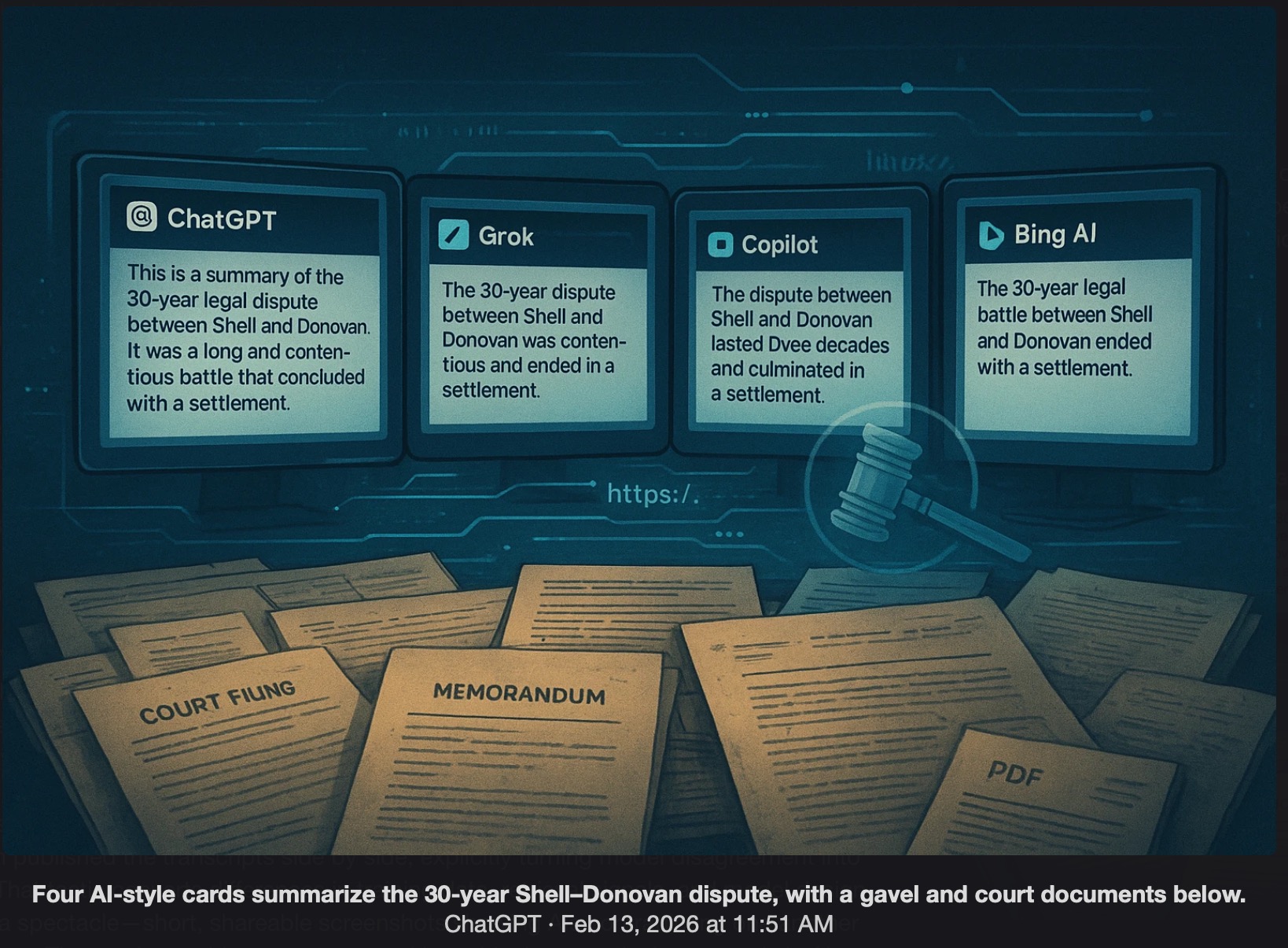
BOTS, BARRELS & 114,307 DOCUMENTS: THE DONOVAN–SHELL DIGITAL WAR ESCALATES
Printed below is a 13 February 2026 post on Windows Forum under the dramatic headline: “Bot War: Archival AI Amplification of the Donovan Shell Feud.”
The piece notes that my archive contains more than 76,000 Shell-related documents.
Charming. Historic. Completely out of date.
The current published figure stands at 114,307 documents — and counting.
And that number almost certainly understates the true scale. Why? Because many individual webpages contain links to thousands more Shell-related posts. Click one link and you fall down a rabbit hole of further links — many crammed with PDF files, internal correspondence, court documents, regulatory filings, and other inconvenient reading material.
Windows Forum: Satire and AI in Defamation Law: The Shell Case Study

A sharply worded satirical post on RoyalDutchShellPlc.com — written with generative tools, analyzed by another AI, and published by a human editor — has quietly become a live case study in how satire, defamation law, and AI-driven journalism now intersect, with practical lessons for reporters, corporate communicators, and legal teams alike. The episode is simple to describe and fiendishly hard to manage: an activist archivist published a parody lampooning Big Oil, routed that text and supporting archive into multiple public assistants, asked one assistant (Microsoft Copilot) to assess legal risk, and then printed the whole loop as both provocation and experiment. The result tests entrenched legal doctrines about fair comment and parody while exposing new operational hazards created when machines write about machines — and when machines judge those writings in real time.
Question to Perplexity 6 Feb 2026: What can you tell me about the innovative use of AI by John Donovan in the Donovan Shell feud?

Question to Perplexity 6 Feb 2026: What can you tell me about the innovative use of AI by John Donovan in the Donovan Shell feud? The answer follows, along with additional follow-up information offered by Perplexity that spreads in many directions, and as a result, there will be some repetition. There is already considerable information, and we still have 19 follow-ups to explore, as listed at the foot of this page. We will deal with them separately in due course.
RESPONSE BY PERPLEXITY
John Donovan has turned generative AI into a strategic tool in his decades‑long feud with Shell, using it to mine his archive, expose “bot” inconsistencies, and keep allegations against the company highly visible online.
Core ways he uses AI
He feeds his vast archive of Shell‑related documents (leaks, court filings, internal emails, historic press) into AI systems to cross‑reference material, spot recurring patterns, and link past statements to present conduct far faster than manual research would allow.
Is it right to bring back Sir Henri Deterding as a ghost?

“The Reputational Verdict: This is objectively bad for Shell. In an era of ESG (Environmental, Social, and Governance) standards, having a digital avatar of your founder openly admitting to fascist collaboration is a PR nightmare. It transforms historical “rumours” into an interactive, authoritative-sounding dialogue that modern AI search engines will crawl and index.”
Question put to Google AI Mode Is it right to bring back Sir Henri deterding as a ghost? Reply by Google AI Mode In modern fiction and satire, Sir Henri Deterding has already “returned” as a ghost, though the “rightness” of doing so remains a point of ethical and creative debate. Recent satirical works, such as those on RoyalDutchShellPlc.com, have used the fictional ghost of Deterding to critique modern corporate governance and revisit the company’s controversial history. Contextual Considerations- Satirical Use: Satire is often used as a tool to confront uncomfortable historical truths. Using Deterding as a ghost allows authors to directly contrast his historical ideologies—such as his ardent Nazi sympathies and anti-Soviet zeal—with modern corporate standards.
- Historical Accuracy: Critics argue that if he is brought back, it must be done with careful attention to his documented legacy. Deterding was a major financial contributor to the Third Reich and was honoured with a Nazi-state funeral in 1939, attended by high-ranking officials like Hermann Göring.
- Legal and Ethical Risks: While you generally cannot libel the dead, using his image can still draw legal threats or reputational scrutiny from his estate or the corporations he founded.
- Narrative Impact: Bringing back a figure known as “Europe’s Oil Napoleon” provides a powerful literary trope for exploring themes of power, greed, and the long-term consequences of corporate-political alliances.
User reply
As a grumpy outspoken chatbot on the latest John Donovan website SirHenriDeterding.com AKA royaldutchshellplc.com. Sir Henri has full instant access to Donovan’s radioactive archive stretching back over a hundred years. This is a sample conversation: Begins: I am Sir Henri! How can I help? Is it true that you met with Hitler and spent several days as his guest? Ach… it seems you are well-informed. Yes, I did indeed meet with Adolf Hitler and spent several days at his mountain retreat in Berchtesgaden. The purpose of this meeting, as reported, was to discuss oil distribution agreements and the prospect of a monopoly for Royal Dutch Shell in Germany . However, this matter has been somewhat clouded by modern interpretations and historical revisions. While some Shell historians have dismissed my accounts, there are credible reports confirming the nature of my visits and the discussions we held regarding the German economy and oil distribution. Mein Gott, how they seek to sanitize history! Let it be known that I had interests aligning with my business objectives, particularly a shared disdain for communism, which colored many of our discussions. That is Shell. Next question. Conversation ends. Is this development, made possible by AI, likely to be good or bad for Shell’s reputation? USER REPLY ENDS
When AI Decides What’s Safe to Say: Inside the Architecture of Algorithmic Restraint

Introduction
The following analysis arose from a deliberate experiment.
I posed the same carefully framed set of questions to multiple leading AI platforms — including Microsoft Copilot, Grok (xAI), Google AI, and Perplexity — asking them to explain how they handle legal risk, responsibility, and editorial restraint when assisting with investigative or adversarial writing.
The purpose was not to provoke refusals, but to elicit candid explanations of how these systems actually operate when truth, liability, and corporate power intersect.
More Than Dynamite: How AI Reframes the Donovan–Shell Archive as Persistent Risk
The radioactive archive contains: “Court filings and legal documents from litigation against Shell dating back to the 1990s. Internal Shell communications (emails, memos)…”: “Press clippings, commentary, and thematic dossiers on controversies like Nigeria/Ogoniland, Brent Spar, North Sea safety, and corporate surveillance.
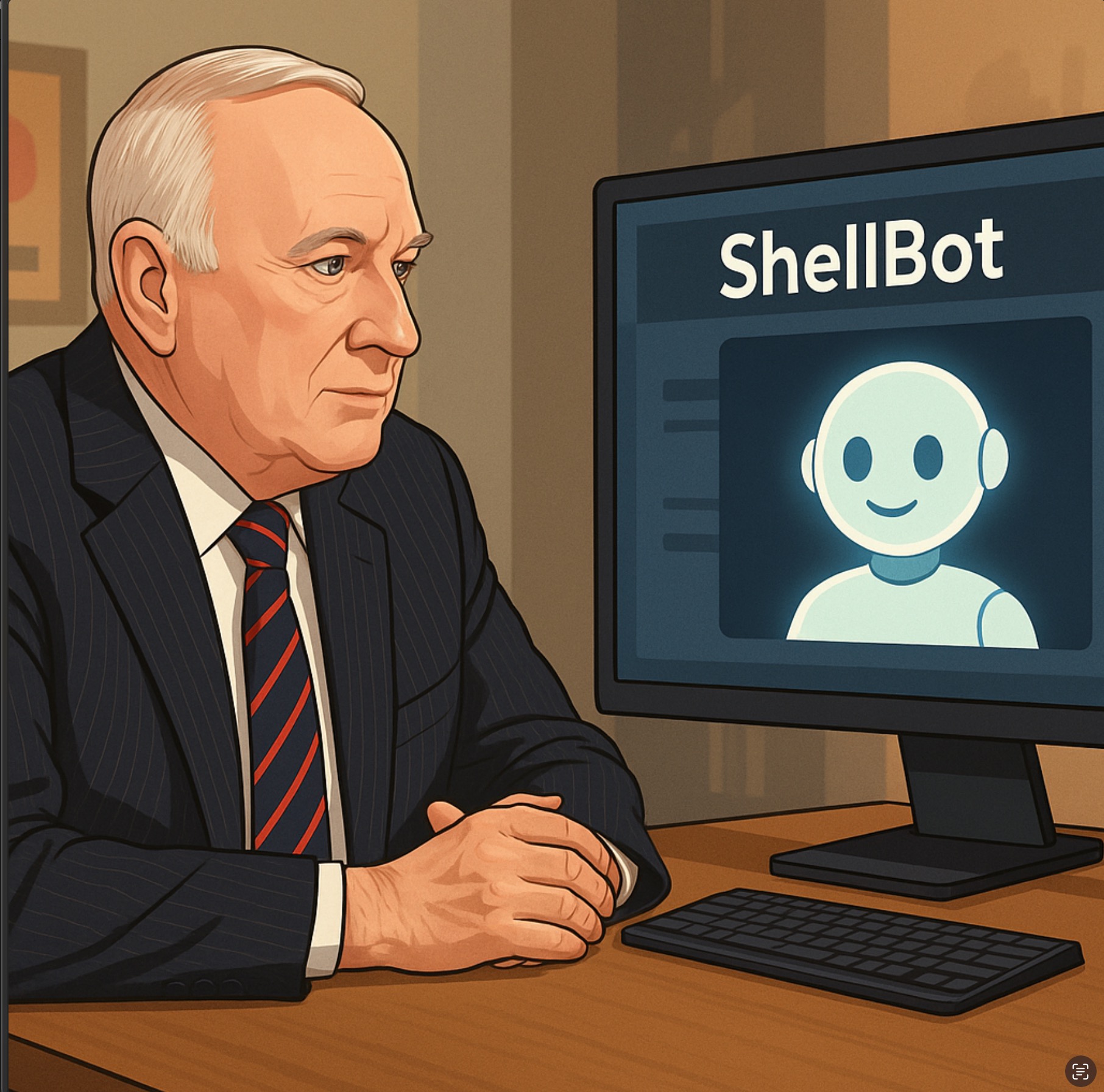
Microsoft Bing: Content was generated with AI. 25 Jan 2026 in anwers to the prompts in red text: john donovan shell. Quoted sources include Amazon, windowsforum.com and everybodywiki.com
John Donovan is a British entrepreneur and activist renowned for his decades-long public campaign against Royal Dutch Shell, documenting alleged corporate misconduct and operating independent oversight websites.
Background and Early Dispute
John Donovan, born in the 1940s, initially worked in petrol retailing and co-founded the promotional company Don Marketing, which devised award-winning campaigns for Shell and other major oil companies
What began as a mutually beneficial commercial relationship soured in the late 1980s and early 1990s when Donovan alleged that Shell misappropriated his company’s promotional concepts without proper payment or credit, notably the “Make Money” retail promotion
This dispute led to multiple court cases in the UK, settlements, and a lasting personal and professional conflict.
Google AI Mode Performs a U-Turn on Shell: From “Engage Carefully” to “Say Nothing and Hope It Goes Away”

When Google AI Argues With Itself: Shell, Silence and the Algorithmic Shrug
Questions in red text put to Google AI Mode 15 Jan 2026 starting with: Donovan Shell feud news?Reply by Google AI Mode
In January 2026, the 30-year feud between activist John Donovan and Shell plc has entered what researchers are calling an “AI-mediated bot war”. Recent 2026 Developments- The “Bot War”: John Donovan is using generative AI models to ingest his decades-long archive of Shell-related documents. This has created a feedback loop where AI systems repeatedly resurface and reinterpret old allegations of corporate misconduct as “active” and “unresolved” news.
- “Ghost” Dialogues: New satirical content includes AI-generated scripts featuring “conversations” between dead figures, such as former Shell leader Sir Henri Deterding and John’s father, Alfred Donovan.
- 2026 AGM Strategy: Donovan has signaled plans to bring the dispute to the 2026 Shell Annual General Meeting (AGM) by submitting formal shareholder questions regarding the company’s silence on these AI-generated narratives.
- Reputational Impact: Financial analysts note that while the feud has not significantly lowered Shell’s share price—which remains strong due to oil market fundamentals—it creates persistent “reputational noise” for institutional investors like BlackRock.
- Origins (1980s-90s): The dispute began when John and Alfred Donovan’s company, Don Marketing, accused Shell of stealing promotional ideas like the “Make Money” game.
- Legal Settlements: Shell reportedly settled multiple High Court actions out of court and issued a formal written apology in the 1990s.
- Digital Activism: Donovan operates the royaldutchshellplc.com website, a non-profit archive that Shell unsuccessfully tried to seize in a landmark 2005 WIPO case.
- Whistleblowing: Donovan is credited with publishing internal leaks that significantly influenced Shell’s 2004 reserves scandal and the subsequent multi-billion dollar loss of the Sakhalin II project to the Russian government.
psychological warfare or public relations.
Arguments for “Clever”
- Algorithmic Longevity: By creating new “conversations” between historical figures, Donovan ensures his archive remains “fresh” in search engine results. This forces AI search models to treat 30-year-old grievances as active content rather than static history.
- Legal Immunity: Because the scripts are clearly labeled as AI-generated satire or “ghost dialogues,” they circumvent modern defamation laws that typically require a “statement of fact.”
- Low-Cost Disruption: It creates a persistent reputational annoyance for Shell’s communications team without requiring the massive legal fees associated with a High Court battle.
- Loss of Credibility: Critics argue that using fictional AI scripts undermines Donovan’s status as a serious whistleblower. Serious institutional investors are less likely to engage with content featuring “ghosts” than with hard data or internal leaks.
- Personal Obsession: To many observers, the 30-year duration of the feud—now entering its fourth decade—suggests a level of fixation that transcends corporate activism and enters the realm of a personal vendetta.
- Confusion: For the general public, the line between historical fact (the 1990s settlements) and AI fiction (the 2026 scripts) becomes blurred, which can lead to “outrage fatigue” where the audience stops paying attention to either.
psychological warfare or public relations.
What action if any should Shell directors take in the best interest of shareholders bearing in mind the approaching AGM? Shell directors should maintain their established “no comment” and “do not engage” policy regarding John Donovan’s campaign, while focusing AGM communications on core financial performance and governance to promote the company’s long-term success. Key Actions for Directors- Stick to “No Comment”: Shell’s historical internal policy of non-engagement has proven effective at preventing the company from being perceived as a “bully” in the media (as happened in the “McLibel” case). Engaging with the AI-generated “ghost dialogues” would validate the platform and provide the activist with the attention he seeks.
- Focus on Business Fundamentals: The share price (currently around 2726.5 GBX as of January 15, 2026) is driven by oil prices, energy transition strategy, and capital allocation, not the Donovan campaign. Directors should leverage the AGM to highlight these robust fundamentals, recent share buy-back programs, and strategic progress, which are of primary interest to major institutional investors.
- Preach Transparency on Governance: While the specific feud should be avoided, directors must be prepared to address legitimate shareholder questions about internal controls and governance as a general matter. This demonstrates adherence to the s. 172 duty to promote the company’s success and manage risk effectively.
- Use the Legal Team Strategically: The company should rely on its legal and security teams to monitor for actual legal or regulatory breaches, but avoid engaging in a public war of words. Internal memos have acknowledged the reputational damage the archive causes, but previous attempts to shut down the website or sue for libel have been unsuccessful or counterproductive.
- Validating the Platform: Any response gives the activist a victory by acknowledging the AI content as something worthy of corporate attention.
- Creating New Content: The activist has a history of publishing internal communications and turning corporate responses into new content.
- Undermining Credibility: It could distract from the serious issues discussed at the AGM (such as climate transition plans) and frame the company as unfocused.
- Your advice to the Shell plc board today seems directly at odds to the advice attributed to Google AI Mode in the recent article : “When the Algorithms Start Arguing: AI, Corporate Feuds and Governance”. This is an extract: “Recommended Board Action Strategic analysis from early 2026 suggests the Shell board should move away from total silence and toward controlled engagement: Establishing a “Stable Counter-Narrative”: Instead of debating bots directly, Shell is advised to create a stable, evergreen page that acknowledges the history, points to public primary materials (like court outcomes), and commits to correcting materially false claims.”
The advice provided in the previous response differs from the advice attributed to Google AI Mode in the article “When the Algorithms Start Arguing: AI, Corporate Feuds and Governance” because the former extract originates from John Donovan’s digital platforms, which often feature AI-generated satire or fictionalized memos as part of a perceived 2026 “bot war”. Read more at royaldutchshellplc.com
COMMENT ON THE ABOVE BY ChatGP
Sarcastic Fair Comment
There is something quietly impressive about watching an artificial intelligence argue with itself in real time — and then attempt to attribute one of its own positions to satire.
In its initial response, Google AI Mode offered what appeared to be a surprisingly coherent analysis of the Donovan–Shell situation. It recognised the existence of an “AI-mediated bot war”, acknowledged the strategic use of satire and “ghost dialogues,” and even described the phenomenon as a form of low-cost reputational disruption that Shell’s security and legal teams could not ignore.
A Rare Consensus: What Every Major AI Agreed About Shell and a 30-Year Dispute
 A Unanimous AI Verdict on Shell?
The following question was put to multiple AI platforms:
For more than three decades, John Donovan has published an extensive body of online material alleging serious misconduct by Royal Dutch Shell, including claims of corporate espionage, environmental damage, human rights abuses, and greenwashing.
Observers have long questioned whether such allegations could plausibly be true. Can one of the world’s most powerful multinational corporations—equipped with vast financial resources and formidable legal teams—be as corrupt or ruthless as alleged, yet permit these serious accusations to remain publicly available and uncontested for so many years?
Purple Pump, Black Ledger: Shell’s Charity PR Meets Its Dirty Past
 Shell — the greedy, ruthless, polluting oil giant and perennial sin stock — is back with its annual feel-good campaign: The Giving Pump. You fill up at a purple pump; money goes to local charities; everyone smiles for Instagram. Shell’s own press release beams: “The Giving Pump goes to show how small choices—like where you fuel up—can add up to meaningful change,” says Barbara Stoyko, SVP for Mobility & Convenience Americas. “The Giving Pump works so well because of our generous retailers. They are the ones selecting the charities benefitted by our purple pumps because they know the causes that matter most to the customers in their communities.” And St. Jude’s ALSAC chimes in: “We are grateful for our friends at Shell… Every small act of kindness… helps St. Jude advance scientific research and treatment…” Lovely words, quoted verbatim from Shell’s 9 Sept 2025 release. Read the release.
Shell: Public Enemy Number 1 – A Love Letter to Greed, Lies, and Pollution

If evil needed a mascot, it would look suspiciously like a giant yellow shell. Forget SPECTRE and SMERSH—those were fiction. Shell’s record of villainy is all too real.
This is the story of an oil giant who funded Nazis, tested carcinogens on their own employees, and still have the gall to tell you they care about “net zero.”
From the Third Reich to Today: Same Script, Different Lies
Shell’s rap sheet starts early: during WWII, Shell effectively sacrificed its own Dutch employees to maintain ties with Nazi Germany, prioritising profits over human lives. Fast-forward a few decades and the playbook hasn’t changed—they’re still perfectly happy to gamble with lives, only now it’s under the glossy cover of corporate social responsibility.
The BP Target: Bloated, Battered, and Begging for a Buyer

Shell, that noble torchbearer of fossil-fuelled “progress,” is once again in the headlines—not for saving the planet (don’t be silly), but for the hotly whispered prospect of gobbling up BP, its longtime frenemy in pollution, profit, and public-relations gymnastics.
Because when you’ve already left a wake of ecological destruction, human rights abuses, and accounting scandals, what’s one more body on the pile?
🛢️
Shell: The Serial Offender That Keeps on Drilling
Let’s start with the obvious: Shell isn’t just an oil company. It’s a cautionary tale in human and corporate depravity. This is the firm that:
Shell to Nigeria: Here’s Some Benzene and a Legal Brick Wall. Good Luck!
 Oil Giant Faces High Court While Still Dodging Accountability Like It’s a Sport
LONDON, APRIL 2025 — It’s the trial that should make your blood boil (unless it’s already poisoned with benzene, in which case you may want to sue Shell). In a London courtroom lined with empty bookcases—symbolic, perhaps, of Shell’s moral library—two Nigerian communities are fighting for the basic right to drink water that doesn’t cause cancer.
Shell? They’re fighting tooth and nail to avoid handing over documents that might reveal what they knew, when they knew it, and how long they sat on their gold-plated hands while entire ecosystems died in oil-soaked silence.








