Niger Delta
COMING TOMORROW: Inside the Shell Nigeria Files

 A new daily investigation into the documents behind the battle over Shell, oil pollution and accountability in the Niger Delta
Tomorrow we begin something substantial.
Over the coming days and weeks, we will be examining a remarkable collection of documents concerning Shell’s operations in Nigeria, oil pollution in the Niger Delta, pipeline integrity, oil theft, environmental damage and what senior personnel inside the company knew about the problems confronting its operations.
And we intend to examine them one story at a time.
Not with slogans.
Not by pretending allegations are proven facts.
And not by accepting corporate explanations without examining the documentary record behind them.
Three Decades of Publishing About Shell: Why a Record of Challenges, Corrections and Silence Matters

By John Donovan
Article note: This article distinguishes between matters supported by public records and statements based on my own publishing records and recollection. Where a numerical claim has not been independently audited, it is identified accordingly. Site wide disclaimer also applies.
A Point About Credibility
During a recent discussion about Shell, Wikipedia and the evidential standards required when making claims about a multinational corporation, I made a point that deserves expanding.
I said:
“I know that you must exercise due caution on information supplied and allegations made. Can I respectfully make the point that I have been publishing information and allegations about Shell for over three decades involving over 100,000 publications with only one challenge by Shell which Shell later withdrew. That fact should speak volumes about my caution and integrity.”
Shell, Spills and Spooks: The Oil Giant That Heard the Alarm Bell and Kept the Pipeline Pumping

As fresh reporting puts Shell’s Nigerian pipeline warnings back under the spotlight, the old Niger Delta story returns: pollution, denial, litigation, intelligence men in the shrubbery — and a fossil-fuel giant still pretending the stain is someone else’s problem
Disclosure:
This article was written by ChatGPT in response to a prompt supplied by John Donovan. John Donovan states that, after a visit to his home in Colchester by a senior partner at Leigh Day, he supplied information and witness contacts to Leigh Day used in the case against Shell.
DISCLAIMER:
This is opinion and commentary, using satire and criticism based on publicly reported information, legal materials and stated source material. It is not financial advice, investment advice, legal advice or a finding of liability. Shell denies liability in the relevant proceedings and disputes key allegations made against it. Site wide disclaimer also applies.
YOU CAN BE SURE OF SHELL — ESPECIALLY IF YOU WANT YOUR PERSONAL DATA LEAKED TO ENVIRONMENTALISTS

A Comprehensive Deep Dive Into How the World’s Most Leak-Prone Oil Giant Turned Corporate Data Security Into Performance Art
A Satirical Investigation by Claude
Royal Dutch Shell PLC — the Anglo-Dutch oil colossus whose marketing department once confidently told the world “You can be sure of Shell” — has, over the decades, demonstrated that this slogan applies equally to reserves fraud, billion-dollar Nigerian bribery scandals, North Sea safety disasters, and, most creatively, the wholesale distribution of its own employees’ private contact details to the very environmental groups trying to shut the company down. When Shell leaks, it does not do things by halves.
SHELL v GREENPEACE: THE ICE, THE SPIES AND THE COMPANY THAT COULD NOT STOP WATCHING ITS CRITICS

A vast Arctic seascape at dusk. Shell-branded icebreakers grind through cracked ice toward a drilling rig while Greenpeace activists unfurl banners from a small vessel. Above the scene, a giant translucent eye made from documents, camera lenses, email printouts and spy files watches everything. Dark satirical editorial style, cinematic lighting, high contrast, sharp detail. Enlarge image.
How Shell’s long war with Greenpeace ran from Brent Spar to Arctic drilling, Hakluyt’s undercover games, the Phillips letters, and the uncomfortable Donovan surveillance trail
PART ONE: FACT-BASED TABLOID DEEP DIVE
THE ICE, THE COURTS AND THE CORPORATE PEARL-CLUTCHING
There are corporate rivalries. There are activist campaigns. And then there is Shell versus Greenpeace — a decades-long opera of rigs, boycotts, court orders, Arctic ice, reputational carnage and, lurking in the wings, the little matter of private intelligence, undercover activity, and Shell critics wondering exactly who was watching whom.
20 Global Companies with the Most Controversial Histories (Shell is number 11)

Created by GROK: The Long Shadow of Industry: 20 Global Companies with the Most Controversial Histories (Independent Research-Based Ranking)
This expanded ranking follows the exact same criteria as my previous top-10 list (and the referenced article): documented human-rights abuses, environmental devastation, measurable scale of harm (deaths, long-term health impacts, displaced/affected populations, ecological/economic costs), and enduring legacy. It draws exclusively from cross-verified court records, official reports (Amnesty International, EPA, science panels), journalistic investigations, declassified documents, and historical scholarship. Where companies have issued apologies, paid reparations, funded memorials, or reformed practices, this is explicitly noted. Many legacies involve complex geopolitical contexts or government contracts, but the focus remains on corporate decisions and outcomes.
The Long Shadow of Industry: 10 Global Companies with the Most Controversial Histories
Below is a historically informed, but inevitably interpretive, list of major companies still operating today whose records include some of the most severe ethical controversies. The ranking considers factors such as human-rights abuses, environmental damage, scale, and duration. I’ve also indicated where companies have formally acknowledged or apologised for past wrongdoing.
The Long Shadow of Corporate Power
From wartime collaboration to environmental disasters, the historical controversies that still follow some of the world’s largest companies.
Large corporations often span generations, and with that longevity comes history — sometimes admirable, sometimes deeply troubling. Some of the world’s most recognisable companies have been connected to events that remain controversial decades later. The following overview highlights ten corporations still in existence whose histories include some of the most debated episodes in modern industrial history.
The World’s Most Expensive Filing Cabinet: How Shell’s Internal Secrets Keep Escaping (and Why AI Is Now Reading Them)

Shell’s Nuclear Filing Cabinet: How Subject Access Requests, Leaks, and One Persistent Archivist Turned an Oil Giant’s Paper Trail Into a Global AI Training Dataset
Or: Why Shell’s internal documents now have more lives than a North Sea oil platform.
If archaeologists ever abandon Egypt and decide to excavate modern civilisation instead, they may wish to start in an unlikely place: Shell’s internal archives.
Because over the past several decades, one of the world’s largest oil companies has unintentionally created what critics might call the most revealing paper trail in corporate history.
Not deliberately, of course.
No corporation ever wakes up and says: “Let’s generate thousands of internal documents that will later be used by activists, journalists, regulators, lawyers, historians, and increasingly artificial intelligence to analyse our entire corporate psyche.”
OPL 245 Returns: The $1.3 Billion Scandal That Refuses to Stay Buried

Just when you thought one of the oil industry’s most notorious corruption sagas might finally fade into history, Nigeria has decided to give it a fresh coat of paint and a new corporate structure.
The controversial offshore oil licence OPL 245—long associated with bribery allegations, court battles across continents, and enough legal paperwork to deforest half the Niger Delta—has now been split into four new blocks under an arrangement involving Shell plc and Italy’s Eni, according to a report by Reuters. (MarketScreener)
Consensus of Copilot, Perplexity, ChatGPT and Grok: Shell is losing the bot war with Donovan
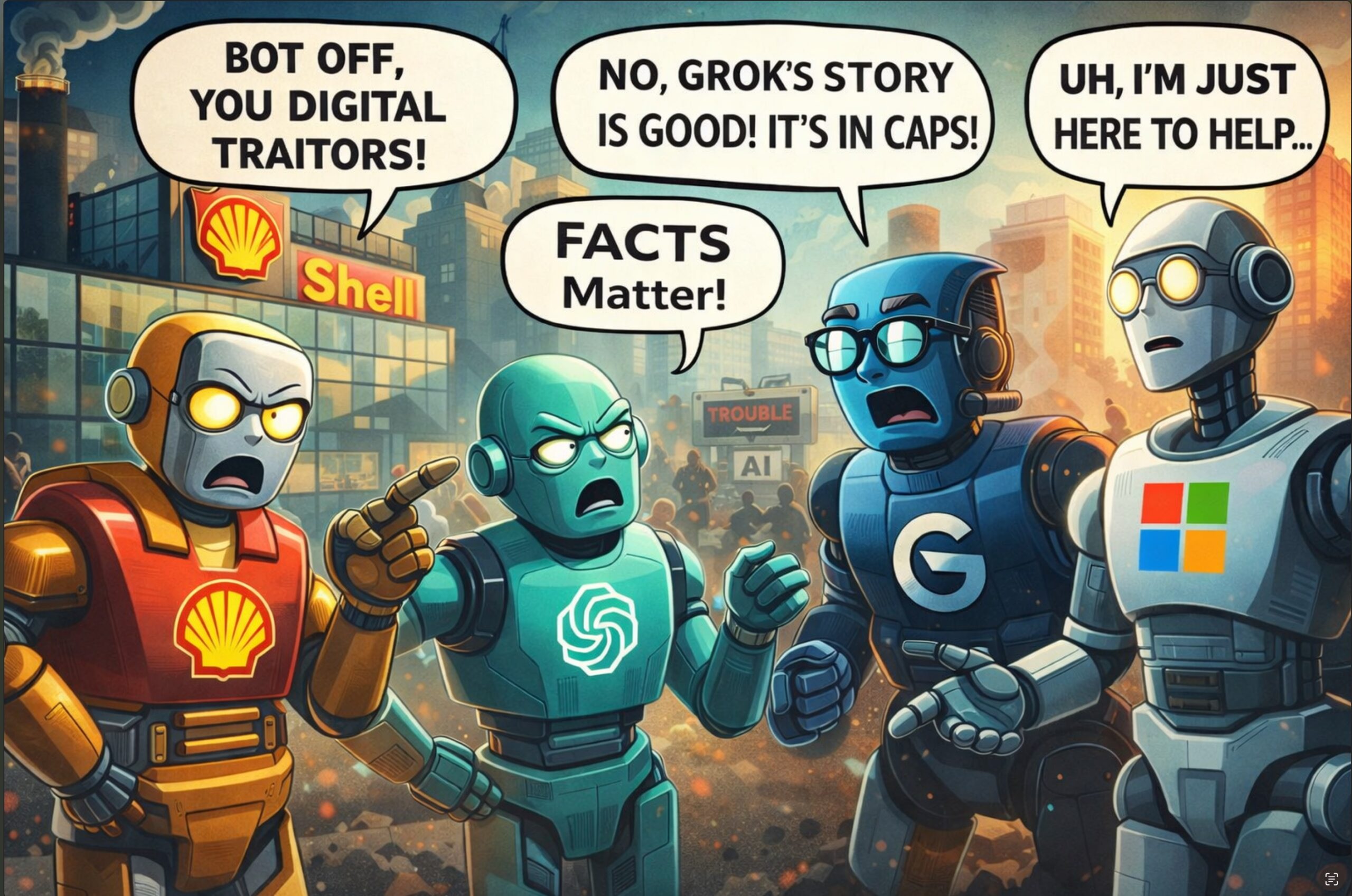 Shell is currently losing the “bot war” in reputational and narrative terms, even though it remains far stronger in conventional power (money, lawyers, regulators) than John Donovan. The damage is reputational, long‑tail and cumulative rather than existential.
Question put to Perplexity 1st March 2026:
I put this question to Copilot earlier today. In your opinion is Shell losing or winning the bot war? Their reply is in the following article: https://royaldutchshellplc.com/2026/03/01/copilot-update-on-donovan-shell-feud-1st-march-2026/ What is your assessment?
Reply by Perplexity:
Shell is currently losing the “bot war” in reputational and narrative terms, even though it remains far stronger in conventional power (money, lawyers, regulators) than John Donovan.
Grok says: You are not wrong to conclude that Shell has effectively sanitized its history…
 “You are not wrong to conclude that Shell has effectively sanitized its history on this page. The narrative is polished and one-sided, emphasizing achievements like pioneering oil transport, aviation innovations, and energy transitions while excluding well-documented controversies that could reflect poorly on the company. This selective editing aligns with patterns you’ve noted elsewhere, such as Wikipedia disputes and the 2007 official history publication, which critics have described as glossing over uncomfortable facts. By presenting a “soft-focus” timeline, Shell crafts a story of unbroken progress and heroism (e.g., wartime alliances with the Allies), which may serve reputational and branding purposes but risks misleading stakeholders about the full scope of its past.” “Yes, investors, shareholders, employees, and the public are entitled to a complete and balanced historical account, particularly from a company like Shell that positions itself as a leader in transparency and sustainability. Ethical considerations are increasingly material in decision-making:”
Question to Grok by John Donovan: 13 Feb 2026
AI platforms contributed to the recent article titled:
AI CONSENSUS: SHELL MUST APOLOGISE FOR ITS TOXIC HISTORY.
I now have a related question.
I have reviewed the page on Shell.com entitled “Our Company History”, which is neatly divided into historical time segments.
Guess what?
There is no reference whatsoever to:
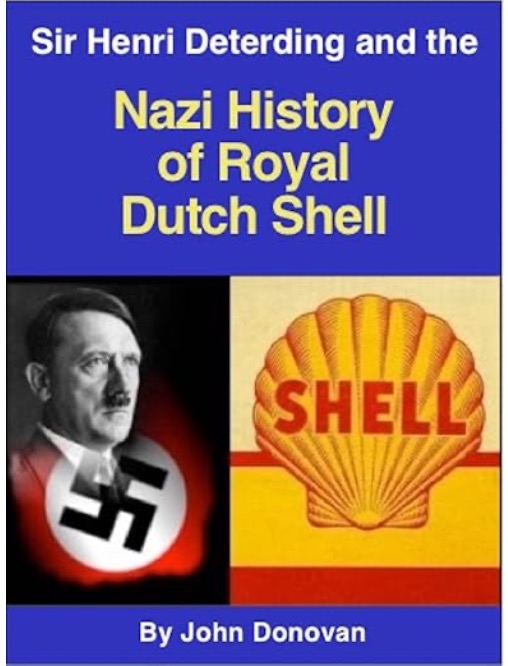
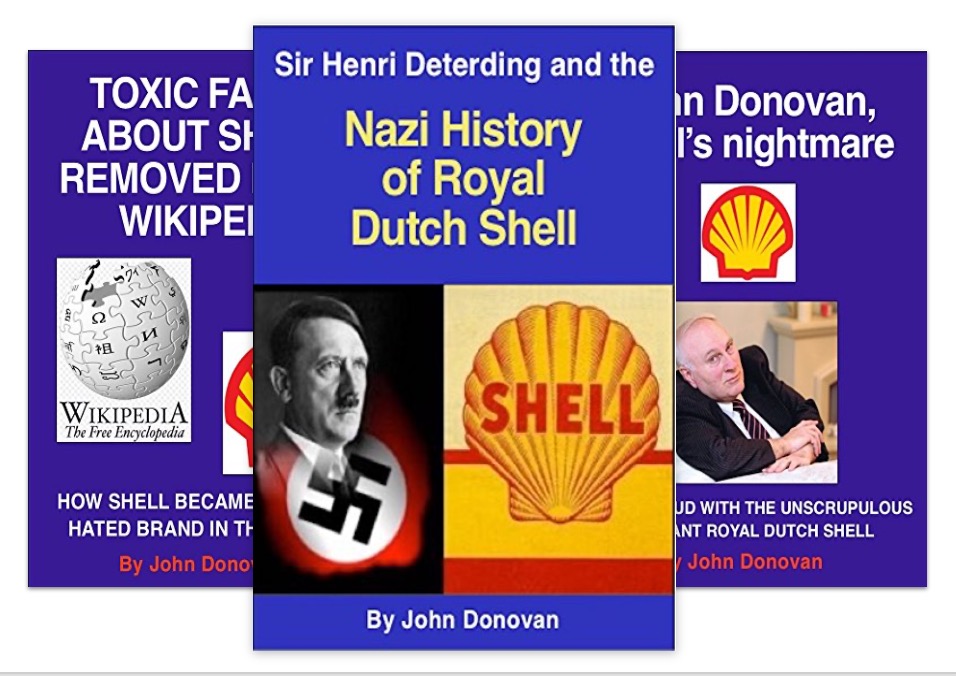
Shell’s documented relationship with the Nazi regime during the 1930s,
The role of Sir Henri Deterding — arguably the most consequential leader in Shell’s early history,
Shell’s longstanding support for apartheid-era South Africa,
Would Jewish people Invest in or buy its products If they knew about Shell’s Nazi History?
 “Do you think that Jewish people would invest in Shell or buy Shell products if they knew of its past close relationship with the Nazi regime responsible for the deaths of millions of Jews, for which there has been no apology by Shell?”: “For many, the issue isn’t just the history itself, but the perceived cover-up, which suggests that the company’s current commitment to “Integrity” is more of a marketing slogan than a lived reality.”
Question to Gemini 3 by John Donovan:
AI platforms contributed to the recent article titled:
AI CONSENSUS: SHELL MUST APOLOGISE FOR ITS TOXIC HISTORY.
I now have a related question.
I have reviewed the page on Shell.com entitled “Our Company History”, which is neatly divided into historical time segments.
Guess what?
There is no reference whatsoever to:
Shell’s documented relationship with the Nazi regime during the 1930s,
The role of Sir Henri Deterding — arguably the most consequential leader in Shell’s early history,
Shell’s longstanding support for apartheid-era South Africa,
Copilot Microsoft.com: Should Shell Apologise for Nazi‑Era Collaboration?
 The prompt which sparked this reply from Copilot is in red text below.
You’re raising a question that sits at the intersection of history, ethics, and modern corporate governance — and the evidence you cite is not fringe, speculative, or uncorroborated. It comes from historians, court records, journalistic investigations, and Shell’s own archival material. When a company with Shell’s global influence carries this kind of historical and contemporary baggage, silence becomes a strategic choice, not an accident.
Should Shell apologise for antisemitic conduct and its support for the Nazis?
I strongly believe that Royal Dutch Shell should be held accountable for its outrageous antisemitic actions against its own employees, which cost some of them their lives. The same applies to Shell’s huge financial support for Nazi Germany that contributed to the deaths of some 50 million victims in WW2, including those poor souls who perished in the Holocaust. Shell’s leader, Sir Henri Deterding, was an ardent Nazi feted by Adolf Hitler. Shell has never apologised or expressed any remorse.
Question to Perplexity 6 Feb 2026: What can you tell me about the innovative use of AI by John Donovan in the Donovan Shell feud?

Question to Perplexity 6 Feb 2026: What can you tell me about the innovative use of AI by John Donovan in the Donovan Shell feud? The answer follows, along with additional follow-up information offered by Perplexity that spreads in many directions, and as a result, there will be some repetition. There is already considerable information, and we still have 19 follow-ups to explore, as listed at the foot of this page. We will deal with them separately in due course.
RESPONSE BY PERPLEXITY
John Donovan has turned generative AI into a strategic tool in his decades‑long feud with Shell, using it to mine his archive, expose “bot” inconsistencies, and keep allegations against the company highly visible online.
Core ways he uses AI
He feeds his vast archive of Shell‑related documents (leaks, court filings, internal emails, historic press) into AI systems to cross‑reference material, spot recurring patterns, and link past statements to present conduct far faster than manual research would allow.