By John Donovan
Shell, previously known as Forthdeal Limited, subsequently as Royal Dutch Shell plc, and now hiding in plain sight as Shell plc after ditching the disgraced Royal Dutch moniker, has reportedly discovered a marvellous new corporate skill: predicting a golden LNG future while explaining why the present is already wobbling. Two reports published on 30 June 2026 appear, at first glance, to pull in opposite directions.
One says Shell expects global LNG demand to rise by around 65% by 2050, reaching close to 700 million metric tons per year, compared with 422 million tons traded in 2025. The other says global LNG trade could remain flat in 2026, because disruption through the Strait of Hormuz has curbed Middle East supply and knocked the market off course.
That is not necessarily a contradiction. It is something more useful: a glimpse into Shell’s preferred LNG narrative.
The long-term story is magnificent. The short-term story is messy. The marketing deck says “growth market.” The real world says “shipping chokepoint, price spike, supply disruption, nervous customers and geopolitical risk.”


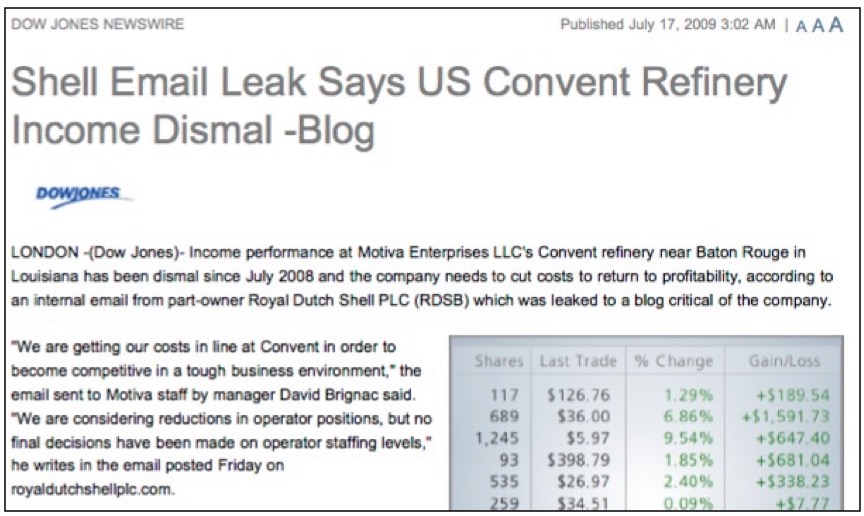
 One of the world’s largest oil companies spent years trying not to look obsessed with a father-and-son website in Essex, while quietly producing internal briefings, issue notes, legal warnings, media lines, Wikipedia strategies, security chatter, source-hunting discussions and reputation-management scripts about exactly that father-and-son website.


 Prelude FLNG, Australia’s gas squeeze, and the awkward question Shell hoped would stay offshore
 Copilot news about royaldutchshellplc.com: 27 June 2026
 ChatGPT image above


 GhatGPT image:

 Disclaimer: This article contains opinion, satire, and a historically informed reconstruction of what Sir Henri Deterding might have thought if he were alive today. It does not claim to quote him. Site wide disclaimer also applies.