 Updated 14 Sept 2026
Reply version from use.ai to this fascinating question
Here is an independent, evidence-based assessment of the question regarding the continued existence of royaldutchshellplc.com from the sole perspective of an ordinary Shell plc shareholder.
1. Strongest Arguments for Shareholder Benefit
- Asymmetric Risk Mitigation & Early Warning System: Corporate management often delays disclosing emerging operational, legal, environmental, or safety failures until forced by legal discovery or regulatory action. An independent archive containing whistleblower material, internal communications, and leaks can expose structural deficiencies (e.g., historical reserve misstatements, safety lapses, or regional bribery risks) earlier than standard investor-relations channels, allowing shareholders to price risks accurately.
- Preservation of Institutional Memory & Executive Accountability: Management teams turnover regularly, but corporate liabilities and long-term strategic missteps linger for decades. A permanent, searchable repository prevents current management from distancing themselves from previous corporate commitments, environmental remediation promises, or historical litigation strategies, enforcing long-term accountability.
- Scrutiny Outside Investor Relations Channels: Corporate PR naturally filters information to present the most optimistic view of operations. An unvetted, independent repository provides institutional investors, investigative journalists, and legal researchers with raw primary sources (court filings, correspondence, regulatory docs) that test and verify management claims.
2. Strongest Arguments for Shareholder Harm
- Search Engine Deprecation & Brand Contamination: Because the domain
royaldutchshellplc.com includes Shell’s legacy corporate name, it occupies top-tier search engine real estate. For prospective retail investors, job applicants, commercial partners, or ESG rating agencies, prominently surfaced historical controversies can depress brand equity, recruitment efficiency, and consumer sentiment.
- Amplication of Unverified or Outdated Allegations: An archive maintained by an active corporate critic may aggregate unverified, disputed, or partial claims alongside verified facts. Public repetition of decades-old grievances long after settlement or resolution can generate ongoing negative media framing, unfairly influencing market perception.
- Distraction and Expense: Responding to persistent leaks, domain disputes, litigation, and associated public relations fallout consumes management time, legal resources, and corporate funds that would otherwise be deployed toward revenue-generating operations or returned to shareholders.
3. Management/PR Disadvantages vs. Shareholder Positives
Yes, there is a fundamental structural divergence.
- For PR & Management: Disclosures of internal friction, embarrassing executive email exchanges, or operational failures are purely negative—they threaten executive bonuses, public reputation, career longevity, and quarterly messaging control.
- For Shareholders: Exposure of these same issues is frequently positive. Exposing governance weaknesses, managerial arrogance, or hidden liabilities prevents catastrophic value destruction (e.g., hidden environmental liabilities or accounting irregularities) before they compound into systemic crises. Discomfort for executives often serves as a proxy for effective governance oversight.
4. Value of Historical Archives for Decadal Multinationals
Multinational energy majors operate on multi-decade capital deployment cycles across high-risk, multi-jurisdictional environments. Because the consequences of field development, host-government agreements, or safety culture decisions may take 10 to 30 years to materialize, an independent historical archive is disproportionately valuable. It ensures that legacy environmental liabilities or contractual disputes are not forgotten when an entirely new executive board takes office. read more
This website and sisters
royaldutchshellgroup.com,
shellnazihistory.com,
royaldutchshell.website,
johndonovan.website,
shellnews.net, and
shellwikipedia.com, are owned by
John Donovan - more information
here. There is also a
Wikipedia segment, the
Shell DPA Files,
"Shell and the Spies",
the Shell Leaks files, as well as books written and published by John Donovan -
Kindle eBooks.
Timeline of the Donovan Shell Feud.
Toxic History of Royal Dutch Shell Group. Shell and the Donovans: The Full Media Record — 550+ Articles, 110 Books, 40 Years.
*All created and supported by internet wizz,
Nick Gill.
 John Donovan chat with Google AI Mode commencing with the prompt “unofficial Shell website”:
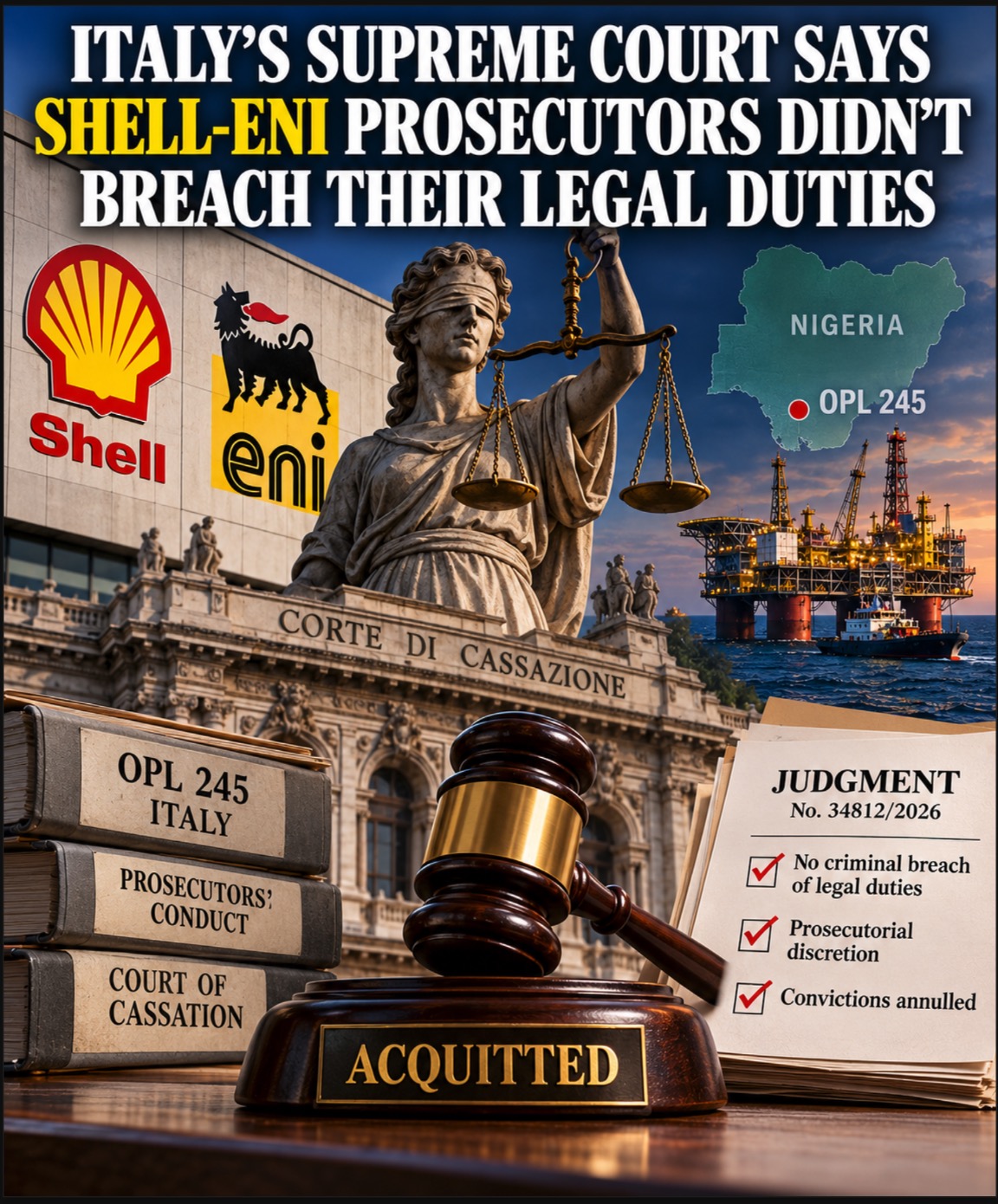 The extraordinary legal afterlife of the Shell-Eni OPL 245 affair has produced another important development.
 This is an in-person event if something of interest. Ticket details are here:
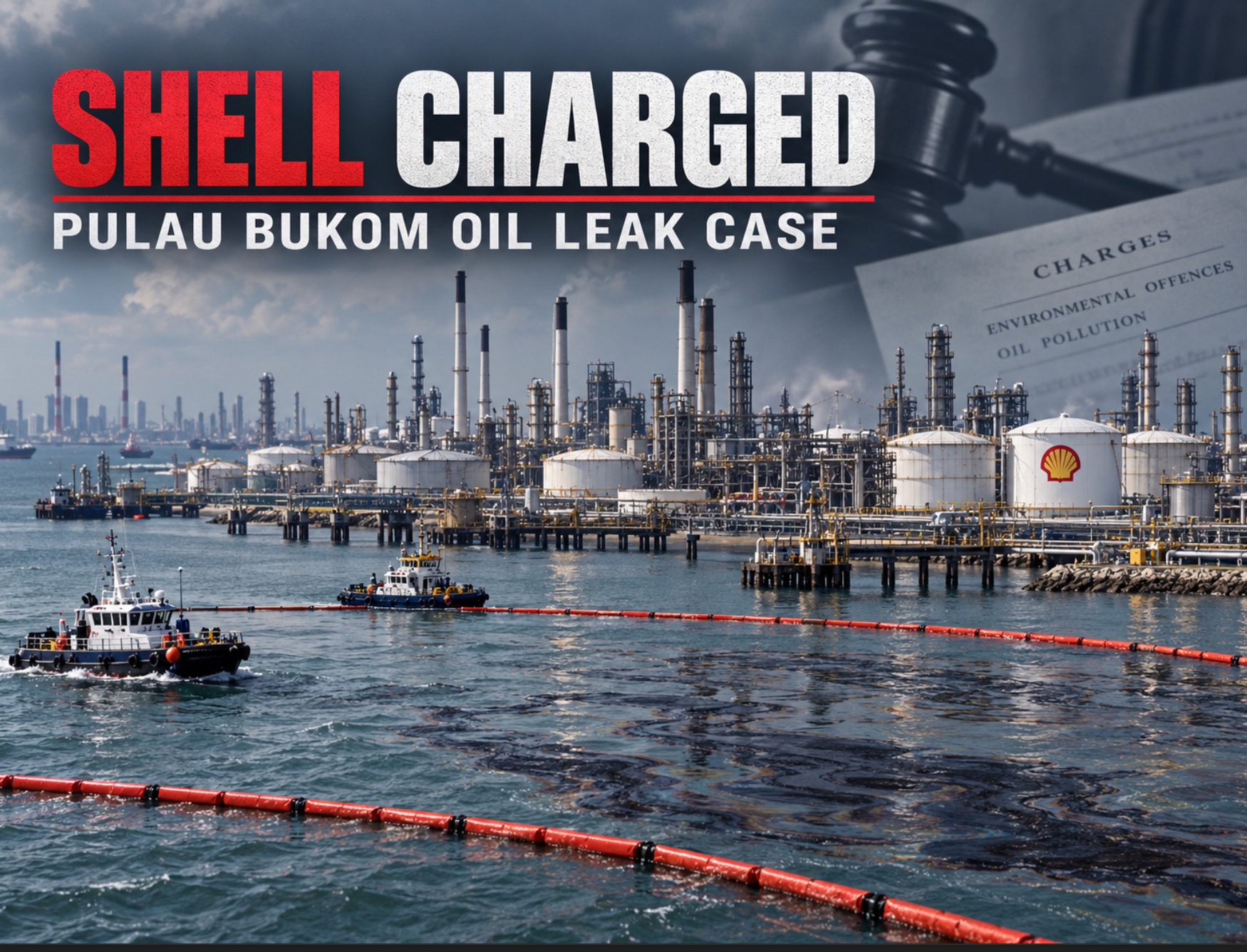 Shell Singapore has been formally charged over two oil pollution incidents at its Pulau Bukom refinery, including allegations that the company failed to report the discharges to Singapore authorities without delay.
 In a move that has left the entire public relations industry gasping for air (and possibly a stiff drink), Shell has once again turned to the wizards of spin at MSQ Partners. The London-based group, which joined Shell’s global agency roster back in 2022 and has been gamely polishing the oil major’s image ever since, now faces what industry insiders are calling “the Mount Everest of reputation management – if Everest were made of crude oil, blood, and decades of awkward court documents.”
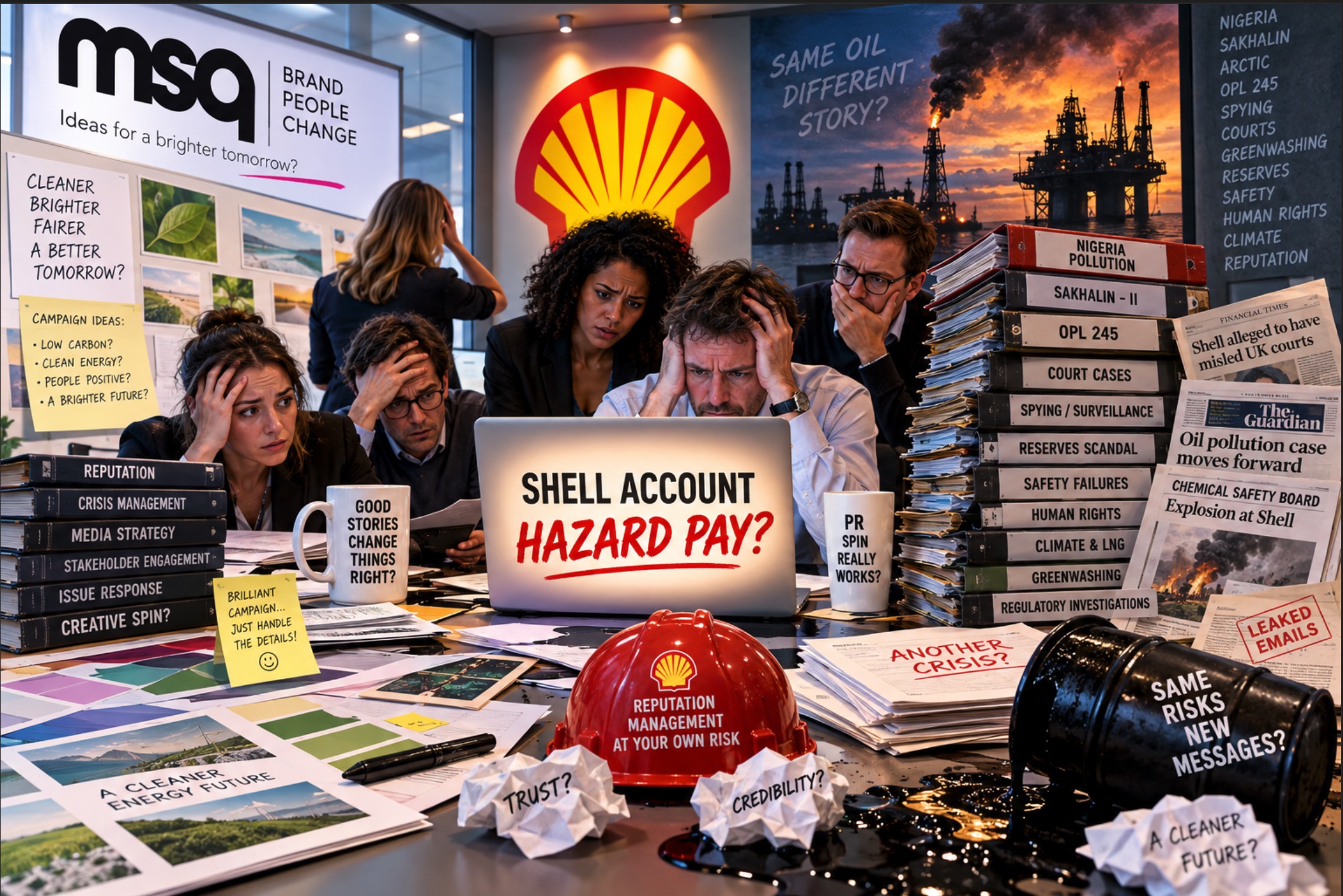 The following is understood to be an internal document circulated to new starters on MSQ’s Shell business. We cannot verify its authenticity, but we also cannot stop laughing.
 LONDON — In a move hailed by branding experts as “the ultimate stress test for human optimism,” marketing and technology group
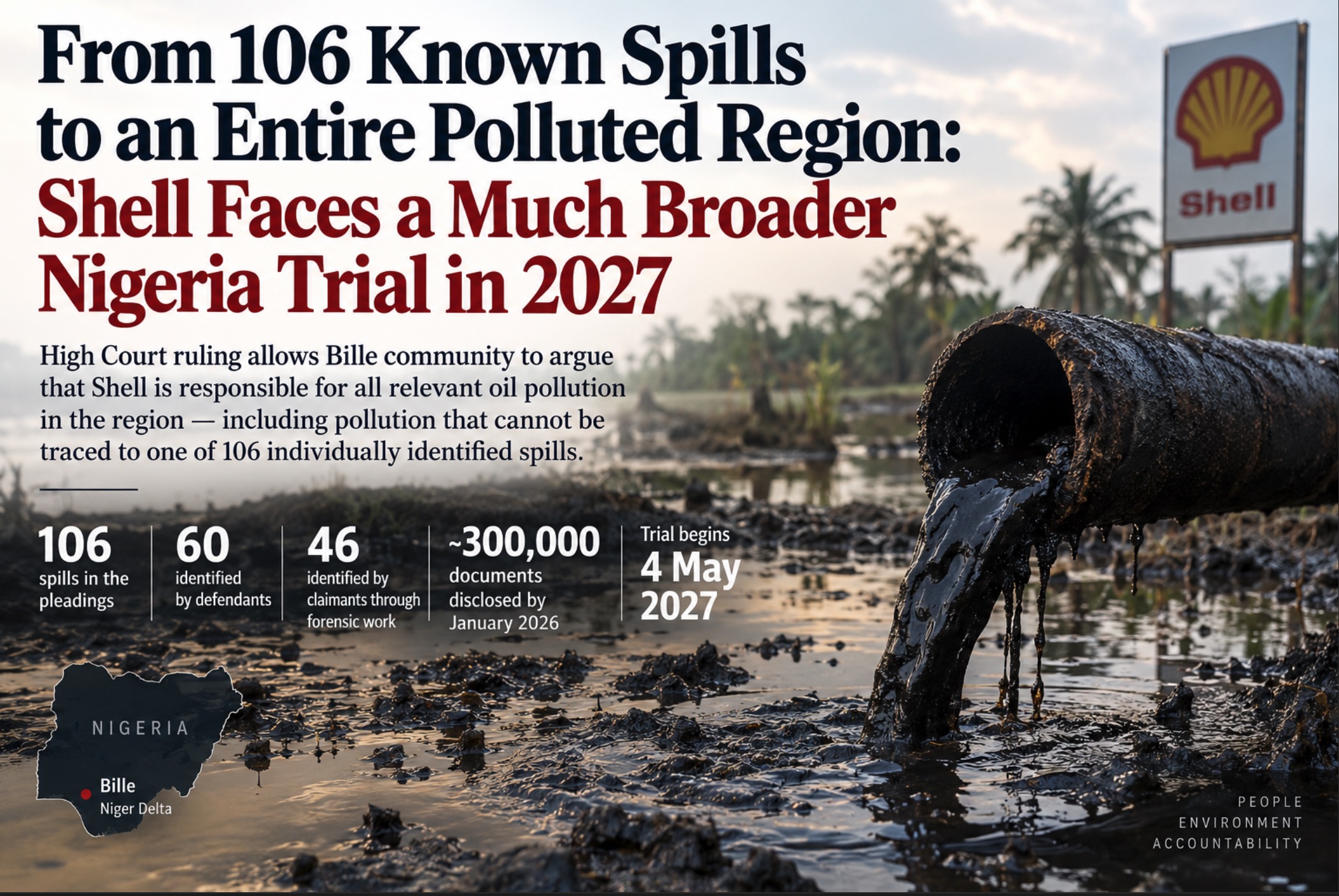
 THE SHELL LEAKS FILES — 12 SEPTEMBER 2026


 Shell has produced hundreds of pages explaining its progress towards a lower-carbon future. Unfortunately for the corporate narrative, it has also included the numbers.







