In the years leading up to WW2, the Dutch founder of the Royal Dutch Shell Group, Sir Henri Deterding became an ardent Nazi. He financially backed the Third Reich and met directly with Hitler on behalf of Royal Dutch Shell.
News and information on Shell Plc
In the years leading up to WW2, the Dutch founder of the Royal Dutch Shell Group, Sir Henri Deterding became an ardent Nazi. He financially backed the Third Reich and met directly with Hitler on behalf of Royal Dutch Shell.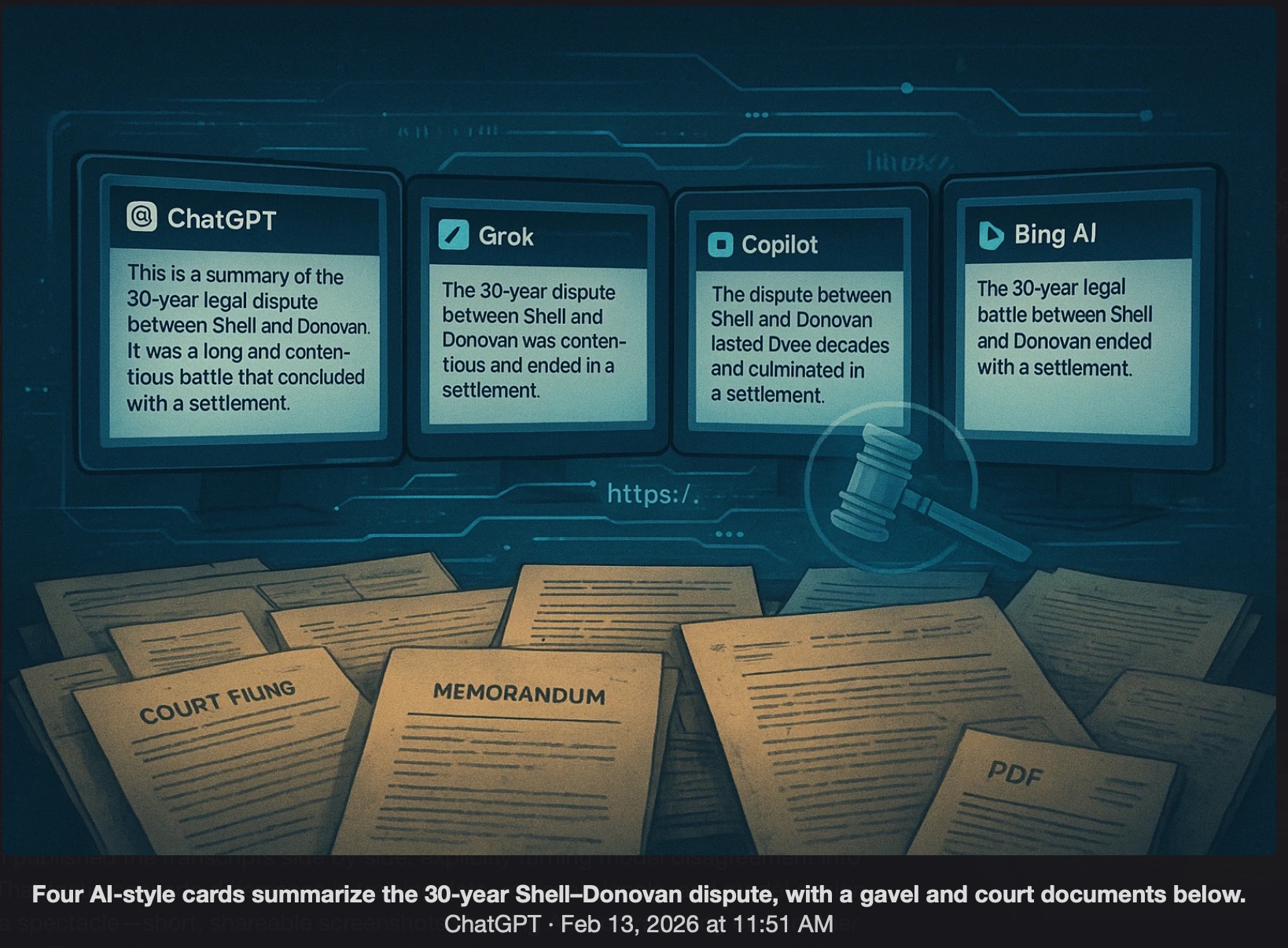
Printed below is a 13 February 2026 post on Windows Forum under the dramatic headline: “Bot War: Archival AI Amplification of the Donovan Shell Feud.”
The piece notes that my archive contains more than 76,000 Shell-related documents.
Charming. Historic. Completely out of date.
The current published figure stands at 114,307 documents — and counting.
And that number almost certainly understates the true scale. Why? Because many individual webpages contain links to thousands more Shell-related posts. Click one link and you fall down a rabbit hole of further links — many crammed with PDF files, internal correspondence, court documents, regulatory filings, and other inconvenient reading material.

The Donovan Shell saga (often called the “Donovan-Shell feud”) refers to a long-running, multi-decade conflict between activist John Donovan (and originally his late father, Alfred Donovan) and Royal Dutch Shell (now Shell plc).
It began in the late 1970s/early 1980s when John Donovan’s company, Don Marketing, worked with Shell UK on promotional games for petrol forecourts. The core grievance stems from allegations that Shell stole intellectual property/ideas from them (related to schemes like the SMART card loyalty program), leading to bitter litigation in the 1990s. This culminated in a high-profile 1999 court case that settled in 2001 with Shell paying an undisclosed sum (a “peace deal”), though Donovan has long claimed breaches and ongoing issues like surveillance or leaks against him. Post-settlement, Donovan shifted to full-time activism:The feud has been called one of the longest one-man campaigns against a major corporation.
Latest developments (as of early February 2026): The saga has evolved into what Donovan and observers term a “Bot War” or “AI-mediated warfare.” Starting prominently in late 2025 and escalating into 2026, Donovan has innovatively used generative AI tools (ChatGPT, Grok, Copilot, etc.) to:Recent examples include:
In short, it’s shifted from traditional lawsuits/websites to an AI-driven persistence campaign, with Donovan leveraging tools to sustain and modernize the narrative into 2026. For the most current details, his main site royaldutchshellplc.com frequently updates with AI experiment results and feud recaps.
 Question put to Grok 5 February 2026: What can you tell me about the innovative use of AI by John Donovan in the Donovan Shell feud? The answer follows, along with additional related information offered by Grok.
The long-standing feud between John Donovan and Royal Dutch Shell (now Shell plc) dates back to the 1980s and 1990s, stemming from business disputes over promotional ideas developed by Donovan’s company, Don Marketing. These included concepts like the Shell Smart loyalty card, leading to multiple lawsuits for intellectual property theft, settled out of court. Donovan has since maintained websites like royaldutchshellplc.com as vast archives of Shell-related documents, leaks, and criticisms, covering scandals such as reserves overstatements, environmental issues, and alleged corporate espionage against him (including Shell’s use of firms like Hakluyt for surveillance). This activism has evolved into what Donovan describes as a “bot war” in recent years, particularly escalating in 2025–2026 with innovative AI applications to perpetuate and amplify the conflict.
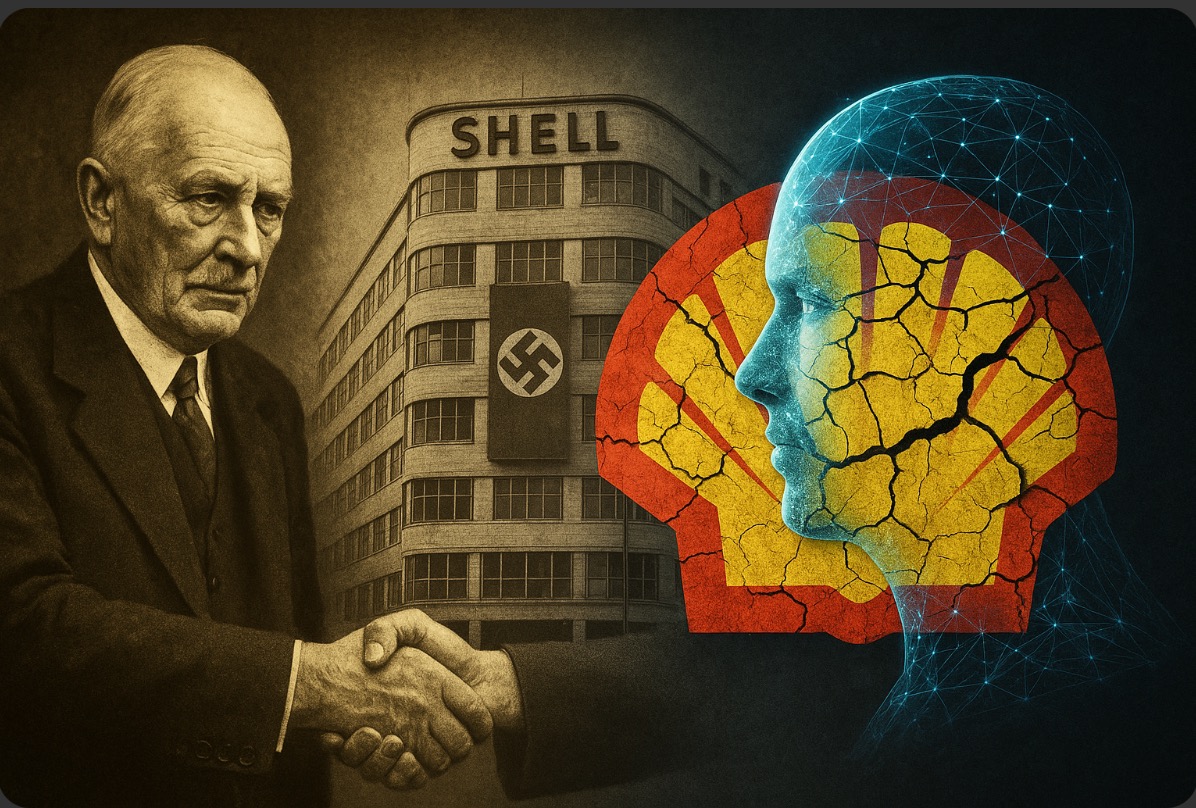
Shell likes to describe itself as “an energy company of the future.” But history, inconveniently, refuses to stay buried. Long before Shell courted wind farms and “net-zero” slogans, it courted Adolf Hitler.
In the 1930s, as Europe spiralled toward war, Royal Dutch Shell — the genteel Anglo-Dutch oil giant whose modern logo is now synonymous with sustainability brochures — was actively supplying the economic bloodstream of Nazi Germany. Its founder and spiritual patriarch, Sir Henri Deterding, wasn’t merely an admirer of Hitler’s regime; he was a willing participant in its rise.

In today’s episode of “How Many More People Can Shell Kill for Profit?” we’ve got more lawsuits, more corporate greed, and the usual cocktail of death and destruction that Shell serves up with a smile. This time, it’s the North Sea’s Rosebank and Jackdaw fields, where Shell, along with its buddies Equinor and Ithaca Energy, are facing a Greenpeace judicial review for yet another scandalous environmental mess. Because if there’s one thing Shell knows how to do, it’s turn an environmental catastrophe into a line item on a balance sheet.

The above logo is for “CAS” – a shadowy Shell Group Corporate Affairs unit populated by spooks led by former high-level MI6 and FBI officers.
James W.D. Hall is Vice President of Corporate Security, located at Royal Dutch Shell plc’s Global Headquarters in the Netherlands. Hall, a mysterious British Citizen, was described in a June 2017 U.S. court document as “the top executive in Shell’s entire Corporate Security Organization…” He is identified by name in a related article “Spectacular falling out of ‘Security Professionals’ at the top of Shell.”

This closing chapter is about a victory I scored over Shell in 2015. The above screenshot is from an article published in the Financial Times on 5 February 2015.
Extract from the article:
“Royal Dutch Shell is facing a storm of criticism after deciding to proceed with plans to bring a ship named after a Nazi war criminal into UK waters to decommission the Brent oilfield…”
In January 2015, The Observer newspaper published a major article by its chief correspondent Ed Vulliamy under the headline:



See our link list of over 500 articles by the FT, Wall Street Journal, Reuters, Bloomberg, Forbes, Dow Jones Newswires, New York Times, CNBC etc, plus UK House of Commons Select Committee Hansard records, information on U.S. Securities & Exchange Commission website etc. all containing references to our Shell focussed websites, or our website founders Alfred and John Donovan. Includes TV documentary features in English and German, newspaper and magazine articles, radio interviews, newsletters etc. Plus academic papers, Stratfor intelligence reports and UK, U.S. and Australian state/parliamentary publications, also citing our Shell websites. Click on this link to see the entire list, all in date order with a link to an index of over 100 books also containing references to our non-profit websites and/or our activities.

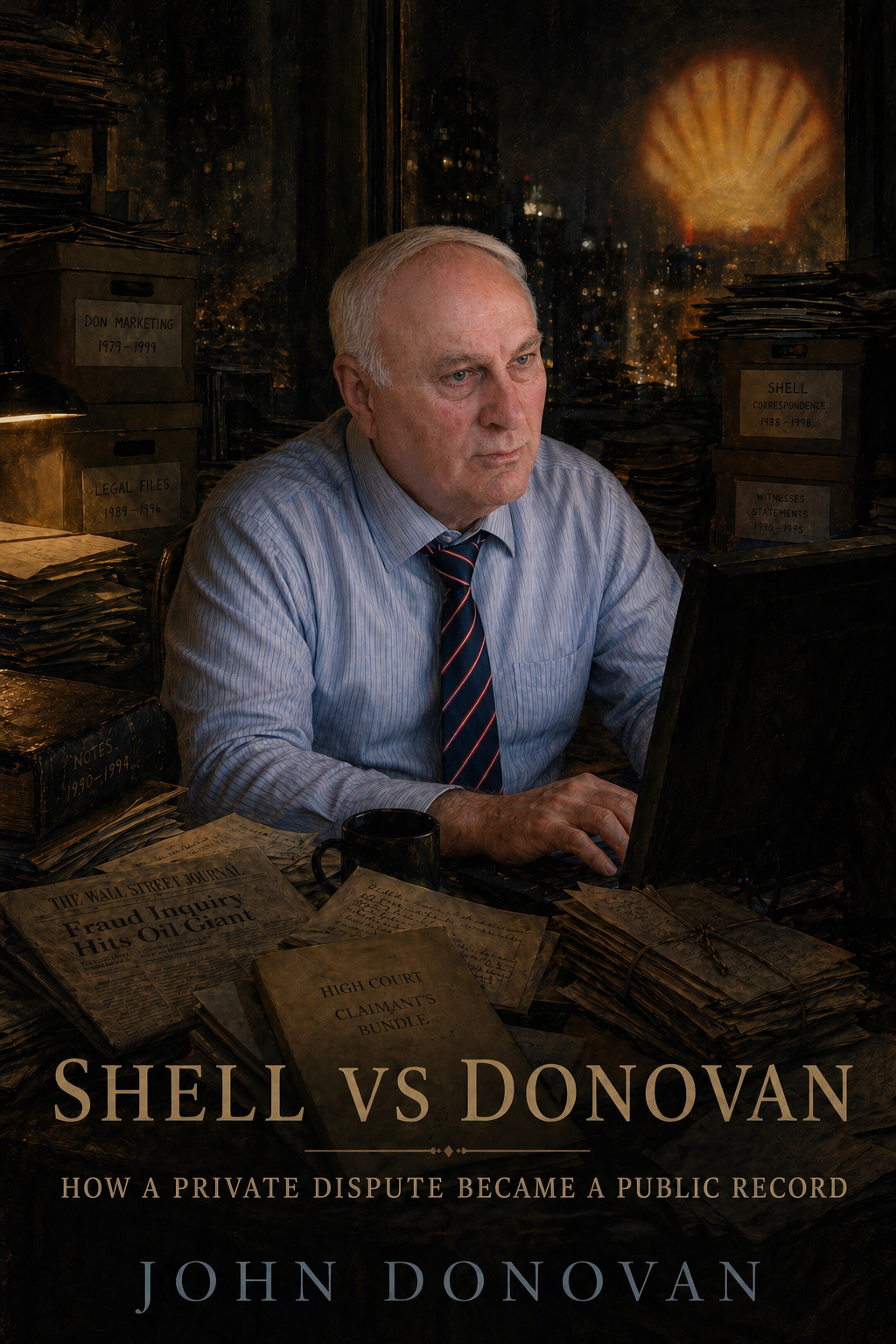
John Donovan, the website owner


This is not a Shell website. The nature of this platform should be evident from the content presented here and on our related Shell-focused websites, including shellnazihistory.com. For more details, please refer to the Disclaimer link at the top of this page. Shell does not endorse or approve of this website.
Our platform operates as a non-commercial, advert-free, and subscription-free space. We do not solicit or accept donations and aim to provide information to our readers free of charge. The Shell logo image with white text used on this website is in the public domain due to expired copyright and anonymous authorship. It can be found on WIKIMEDIA COMMONS. Use this link for Shell’s own website.
Our content, including images and features like the Sheldon chatbot, incorporates information generated by Artificial Intelligence (AI) and various other technological means. We may also draw from sources such as Wikipedia and other published materials. Please note that some content may include satirical adaptations or elements of gossip, rumors, or exaggeration to engage and entertain our audience.
We strive to maintain factual accuracy and encourage readers to notify us promptly if any factual inaccuracies are found, so we can address and rectify them swiftly. Readers are advised to verify all information independently for accuracy and completeness. Any actions taken based on the content provided on our platform are at your own risk.