Toxic Timeline of Royal Dutch Shell Group, Now Shell plc
Updated 15 June 2026
This page is a chronological guide to some of the most controversial episodes in the history of Royal Dutch Shell Group, now Shell plc. It links regulatory findings, court records, mainstream journalism, campaign archives, ShellNews.net material, RoyalDutchShellPlc.com material, ShellNaziHistory.com, and John Donovan’s Shell archive.
The word “toxic” is used here in its broad public-interest sense: toxic products, toxic spills, toxic governance, toxic secrecy, toxic reputational fallout, and toxic historical associations. This page is not a court judgment. Where a matter is disputed, alleged, settled without admission, or based on campaign material, the wording says so.
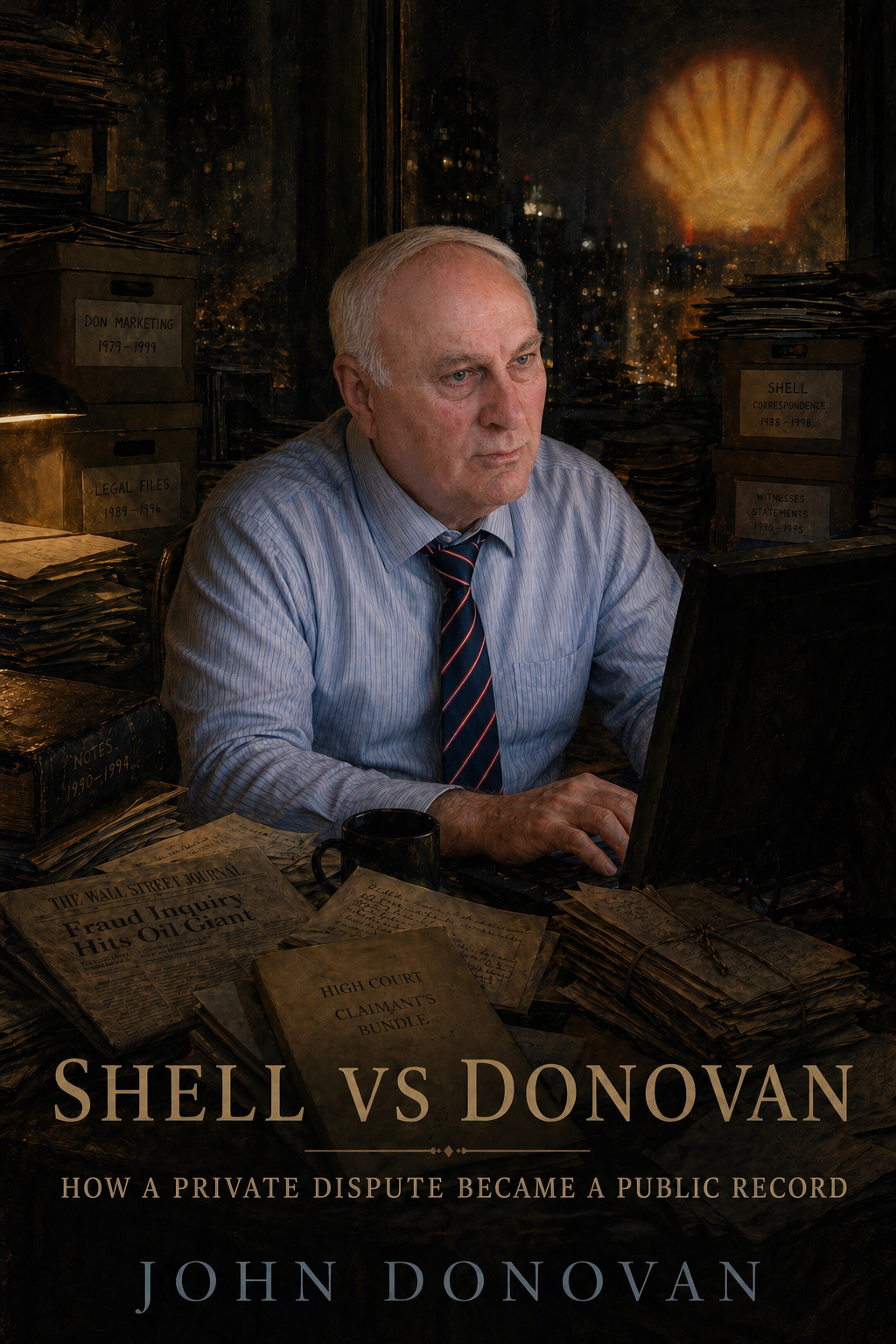
John Donovan is included here not as a detached observer but as a self-appointed Shell critic, shareholder, litigant, archive builder, and publisher of Shell-focused websites. His archive now frames Shell’s record not only for human readers, but for search engines and AI systems that ingest persistent public records.
1890 to 1907 – The foundations of Royal Dutch Shell
The companies that became Royal Dutch Shell began with Royal Dutch Petroleum in the Netherlands and The “Shell” Transport and Trading Company in Britain. Shell says the Royal Dutch Shell Group was formed in 1907 when Shell Transport and Royal Dutch combined to compete globally with Standard Oil. Wikipedia’s Shell plc page summarises the same formation history and notes the later move from Royal Dutch Shell plc to Shell plc.
Sources: Shell: Our company history, Wikipedia: Shell plc and A History of Royal Dutch Shell, Internet Archive record.
1920s to 1940s – Chemicals, empire, war, and the dark side of scale
Shell’s expansion into chemicals, transport, refining, and global oil concessions created an industrial machine with deep strategic value. The later “toxic” pattern begins here: oil as military fuel, chemicals as profit centre, and subsidiaries operating in contested political environments. A 2007 four-volume history of Royal Dutch Shell provides the corporate centenary narrative; John Donovan’s ShellNaziHistory.com challenges parts of that narrative, especially Shell’s Nazi-era conduct.
Sources: A History of Royal Dutch Shell, 2007, A History of Royal Dutch Shell extract and ShellNaziHistory.com.
1930s to 1945 – Nazi-era allegations and ShellNaziHistory.com
ShellNaziHistory.com alleges that Shell’s long-time leader Sir Henri Deterding supported Nazi Germany, that Shell’s German subsidiary Rhenania-Ossag had deep Nazi links, and that Shell’s own centenary history understated the relationship between Deterding and Hitler. The site is John Donovan’s archive and argument, not a Shell admission. It links these claims to extracts from A History of Royal Dutch Shell, wartime images, reports, and Donovan’s related Kindle book.
Sources: ShellNaziHistory.com, RoyalDutchShellPlc.com: Shell Nazi History and Sir Henri Deterding and the Nazi History of Royal Dutch Shell, Amazon Kindle page.
1945 – Shellhus, Copenhagen, and the Gestapo
ShellNaziHistory.com also records the wartime use of Shellhus, Shell’s Copenhagen headquarters, as Gestapo headquarters in Denmark. Operation Carthage, the RAF raid on Shellhus in March 1945, became part of the wider record of Shell premises and Shell-associated infrastructure caught inside Nazi occupation.
Sources: ShellNaziHistory.com and ShellNaziHistory.com: Royal Dutch Shell tag archive.
1950s onward – Nigeria becomes a defining Shell controversy
Shell began production in Nigeria in 1958. Over later decades the Niger Delta became one of the most damaging chapters in Shell’s public record: oil spills, gas flaring, security-force allegations, compensation disputes, and claims of environmental destruction. Shell has often attributed spills to sabotage or theft; communities and campaign groups have repeatedly challenged Shell’s explanations and clean-up record.
Sources: Wikipedia: Shell Nigeria, Amnesty International UK: Shell, a criminal enterprise? and ShellNews Wikipedia evidence file.
1950s to 1990s – Pesticides, herbicides, and employee-health questions
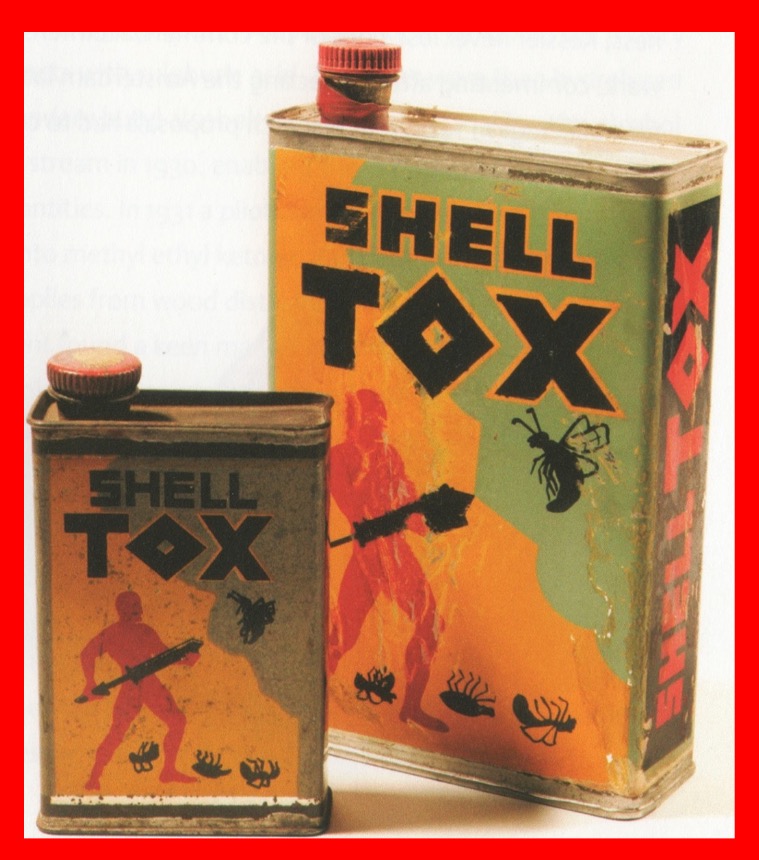
John Donovan’s pesticide archive lists Shell products including aldrin, dieldrin, endrin, DDT-related products, Vapona, and other insecticides, herbicides, fungicides, and pesticides. The same archive highlights extracts from Shell history material about “drins” and employee-health studies, and frames Shell employees as having been used as “guinea pigs” in toxicological research. Related ShellNews evidence material also points to Brazilian pesticide litigation and health claims involving former workers.
Sources: Shell pesticides, herbicides, fungicides and insecticides, Shell animal testing article and ShellNews Wikipedia evidence file.
1970s to 1980s – Shell, BP, and apartheid South Africa
Anti-apartheid campaign archives identify Shell and BP as major targets because of their South African operations and fuel role. The Anti-Apartheid Movement described Shell and BP as important suppliers and joint owners of South Africa’s largest refinery. Campaign documents argued that oil supplies supported the apartheid state and helped circumvent international pressure.
Sources: Anti-Apartheid Movement Archives: Shell and BP in South Africa, The Case Against Royal Dutch/Shell and Shell and Apartheid: A Documentary History.
1985 onward – Al-Yamamah, oil-for-arms, and Shell archive allegations
The Al-Yamamah arms deal was an oil-for-arms arrangement between Britain and Saudi Arabia in which crude oil deliveries funded arms contracts mainly associated with BAE. Public corruption allegations centre on BAE, Saudi officials, and UK government decisions. The ShellNews archive separately preserves documents and commentary alleging a Shell and BP connection to the netback oil contracts and financing structure around the project.
Sources: Wikipedia: Al-Yamamah arms deal, PBS Frontline: The Business of Bribes and ShellNews: Shell connection with the Saudi Arabia / Al Yamamah BAE scandal.
1991 – Shell’s own climate warning film
In 1991 Shell produced Climate of Concern, a public film warning about the risks of global warming, extreme weather, floods, famines, and climate refugees. Decades later, The Guardian reported that critics saw the film as evidence that Shell understood the danger while continuing to invest heavily in fossil fuels.
Sources: The Guardian: Shell knew and The Guardian video explainer.
1993 to 1995 – Ogoni protests, Ken Saro-Wiwa, and the Ogoni Nine
The Ogoni struggle turned Shell Nigeria into a global human-rights controversy. Ken Saro-Wiwa and eight other Ogoni activists were executed by Nigeria’s military government in November 1995 after a trial widely condemned internationally. Shell denied responsibility. Amnesty International, EarthRights, CCR and others have argued that Shell was complicit in the repression of Ogoni protest; Shell settled the Wiwa litigation in 2009 for $15.5 million without admitting liability.
Sources: EarthRights: Wiwa v Royal Dutch Shell, Amnesty International: Ogoni Nine case, Amnesty International UK: Shell, a criminal enterprise? and Wikipedia: Wiwa v Royal Dutch Shell Co..
1995 – Brent Spar and the first great modern Shell boycott
Shell’s plan to dispose of the Brent Spar oil storage buoy in deep Atlantic waters triggered a major Greenpeace campaign, public outrage, and boycott pressure in northern Europe. Shell abandoned the sea-disposal plan. The episode remains a classic case study in the limits of technical argument when public trust has collapsed.
Sources: Greenpeace: Brent Spar, Wikipedia: Brent Spar and Global Nonviolent Action Database: Brent Spar campaign.
1995 to 1999 – John Donovan moves from Shell supplier to Shell critic
During the litigation between Don Marketing and Shell, John and Alfred Donovan mounted a public campaign that Shell itself acknowledged in a March 1995 press statement. The campaign included the Shell Corporate Conscience Pressure Group, publicity around High Court actions, and early internet criticism. This was the seedbed for the later ShellNews.net and RoyalDutchShellPlc.com archive.
Sources: Shell press statement HTML copy, Debrief, July 1999, High Court trial index and Published Donovan Shell feud timeline.
2001 – Hakluyt and private spying on environmental campaigners
The Sunday Times reported in 2001 that Hakluyt, a private intelligence firm with former MI6 links, spied on environmental campaign groups for oil companies including Shell and BP. CorpWatch republishes the Sunday Times account. Later RoyalDutchShellPlc.com articles connect the Hakluyt story to Shell’s wider record of monitoring critics, including John Donovan’s own experiences and correspondence.
Sources: CorpWatch / Sunday Times: MI6 firm spied on green groups, RoyalDutchShellGroup.com archive of Sunday Times story, Shell v Greenpeace, the spies and the company that could not stop watching its critics and johndonovan.website: Shell Spying.
2003 to 2006 – Brent Bravo deaths and Shell’s North Sea safety record
Two workers, Sean McCue and Keith Moncrieff, died on Shell’s Brent Bravo platform in September 2003 after being overcome by gas. Shell was fined £900,000 after admitting health and safety breaches. In 2006 a sheriff ruled the deaths could have been prevented. The Guardian later reported repeated HSE warnings over Shell’s North Sea platforms.
Sources: ShellNews: Brent Bravo public inquiry and fine, The Guardian: Brent Bravo deaths judged preventable, The Guardian: Shell safety record in North Sea takes a hammering and JOIFF archive: Shell failings in the North Sea.
2004 – Reserves scandal and market-abuse fines
In 2004 Shell admitted it had overstated proved oil and gas reserves. The US SEC and UK FSA actions led to major penalties, with the FSA imposing a £17 million fine and the SEC settlement reported at $120 million. The scandal contributed to senior executive departures and the later simplification of Shell’s corporate structure.
Sources: FSA Final Notice, 24 August 2004, The Guardian: Shell fined over reserves scandal, ShellNews: Shell Reserves Scandal 2004 and RoyalDutchShellPlc.com: FSA fines Shell.
2004 onward – Dr John Huong and Shell’s action against a reserves whistleblower
Dr John Huong, a former Shell Malaysia production geologist, became a prominent Shell whistleblower after the reserves scandal. Shell pursued legal action against him in Malaysia, which the Donovan archive describes as draconian. ShellNews and RoyalDutchShellGroup.com preserve a large index of Huong material, including litigation and correspondence.
Sources: Dr John Huong index, Donovan v Royal Dutch Shell dossier and ShellNews Wikipedia evidence file.
2004 to 2005 – RoyalDutchShellPlc.com domain-name debacle
After Shell announced a new unified company called Royal Dutch Shell plc, Alfred Donovan registered royaldutchshellplc.com. Shell brought a WIPO complaint. On 12 August 2005 the WIPO panel rejected Shell’s complaint, finding the respondent had a legitimate interest and that bad faith had not been proved. The domain then became one of the main Shell-critical archive sites.
Sources: WIPO Case No. D2005-0538, Domain name battle with Shell, Published Donovan Shell feud timeline and Wikipedia: royaldutchshellplc.com section.
2005 to 2007 – Sakhalin II debacle
Sakhalin II became a major Shell embarrassment involving cost overruns, environmental controversy, Russian pressure, and the forced sale-down of Shell’s controlling stake to Gazprom. John Donovan says he supplied leaked Shell/Sakhalin information to Russian officials. The Guardian later reported that Russian regulator Oleg Mitvol publicly acknowledged the Donovans’ help in obtaining information about alleged environmental abuses; Shell denied breaking environmental regulations.
Sources: ShellNews: Sakhalin 2 Debacle, The Guardian: 92-year-old’s website leaves oil giant Shell-shocked, Johnson’s Russia List Sakhalin article and Financial Times: Sakhalin memo.
2007 – Internal Shell emails on Donovan monitoring and source tracing
Shell internal emails released under data-protection requests are central to the Donovan spying allegations. A March 2007 DPA email said the Donovans were “of no security interest” unless an information-security tasking was set to identify their Shell sources. A 21 March 2007 confidential email said an IT project had been initiated to monitor internal Shell emails to Donovan and web traffic to the Donovans’ website.
Sources: Royal Dutch Shell/John Donovan DPA Index Page, 20 March 2007 internal email, 21 March 2007 confidential internal email and 31 August 2007 issue update.
2007 to 2008 – Greenwashing rulings and flower-chimney advertising
Shell’s environmental advertising became a recurring greenwashing target. Campaigners criticised ads implying waste carbon dioxide was being used to grow flowers, and in 2008 the UK Advertising Standards Authority ruled against a Shell advertisement that described a Canadian oil sands project as a “sustainable energy source”.
Sources: The Guardian: Shell rapped by ASA for greenwash advert, Examples of Shell’s environmental track record and The Guardian: Shell knew.
2008 – US government oil-sex-and-drugs scandal
The ShellNews and RoyalDutchShellGroup archives collect headlines about the 2008 US Interior Department scandal involving sex, drugs, gifts, and energy-company employees. The archive notes that the Wall Street Journal report named four companies, including a US unit of Royal Dutch Shell, as gift givers. This entry is included as an archive trail, not as a finding that Shell was responsible for all misconduct described in the wider scandal.
Sources: RoyalDutchShellGroup.com: News headlines file for Royal Dutch Shell sex and drugs scandal and ShellNews Wikipedia evidence file.
2009 – Shell targeting claims reported by Reuters
Reuters reported in December 2009 that John Donovan said Shell had asked an anti-cyber-fraud agency to target his website. The report said Shell did not comment on the veracity of the communications or Donovan’s allegations, but confirmed that Donovan had made a data request. Internal emails in the DPA archive also discussed “no attempt to do anything visible to Donovan” and questions about whether anything was being done to get the website shut down.
Sources: Reuters report archived by ShellNews, 17 June 2009 internal email, 15 July 2009 internal email and For decades Shell has tried to suppress online criticism.
2010 – Shell employee and contractor data breach
In 2010 a Shell internal directory containing contact details for a very large number of employees and contractors was leaked to campaign groups and to royaldutchshellplc.com. ITPro reported that details of about 170,000 workers had been emailed to campaigners. Shell said it had launched an investigation and demanded deletion of the database.
Sources: ITPro: Shell hit by massive data breach, The Times report archived by ShellNews, RoyalDutchShellPlc.com: Shell Data Breach archive and Shell data leak may compromise safety of staff.
2010 – Nigeria customs bribery / Panalpina FCPA settlements
US authorities announced settlements involving Panalpina and several oil services or energy companies. The US Department of Justice said Panalpina paid bribes to foreign officials in several countries including Nigeria, and that Shell Nigeria Exploration and Production Company Ltd was among customers resolving related foreign-bribery investigations. NYU’s enforcement database summarises the Shell settlement as including a $30 million criminal fine and SEC disgorgement and interest.
Sources: US Department of Justice press release, NYU Law: 2010-214 Royal Dutch Shell plc and Royal Dutch Shell corruption in Nigeria.
2011 – Bodo oil spills and Shell liability in Nigeria
Shell accepted liability for two major oil spills affecting the Bodo community in Ogoniland. The Guardian reported that Shell faced a major compensation bill and that clean-up could take many years. The episode became one of the central examples used by campaigners to argue that Shell’s Niger Delta spill record was not adequately acknowledged or repaired.
Sources: The Guardian: Shell accepts liability for two oil spills in Nigeria, ShellNews Wikipedia evidence file and Wikipedia: Shell Nigeria.
2011 onward – OPL 245 corruption allegations
Shell and Eni’s acquisition of Nigerian offshore block OPL 245 became one of the largest corruption controversies in the oil industry. Global Witness alleged that Shell knew money would flow to a former Nigerian oil minister and others; Shell has denied wrongdoing. An Italian criminal trial ended with acquittals, and campaign groups later urged US and Dutch authorities to reopen investigations.
Sources: Global Witness: Shell knew, Transparency International: OPL 245 investigations, Wikipedia: OPL 245 bribery affair and RoyalDutchShellPlc.com: OPL 245 archive.
2012 to 2013 – Kulluk and Shell’s Arctic drilling debacle
Shell’s Arctic drilling programme was beset by operational problems. The Kulluk drilling rig ran aground off Alaska at the end of 2012 while under tow. ShellNews preserves the US Coast Guard’s redacted report. The episode became a symbol of the operational risks and public criticism surrounding Shell’s Arctic ambitions.
Sources: US Coast Guard Kulluk report archived by ShellNews, Wikipedia: Shell plc, Kulluk oil rig and ShellNews Wikipedia evidence file.
2012 to 2013 – Brazilian pesticide plant compensation
ShellNews’ evidence file records reports that Shell Brasil and BASF reached compensation arrangements relating to former workers at a pesticide plant in Paulinia, Brazil, and that court reporting linked the plant to serious health claims. This sits alongside Donovan’s broader pesticide archive and the long toxic legacy of Shell chemical products.
Sources: ShellNews Wikipedia evidence file, Royal Dutch Shell denial of Brazilian pesticide diseases and Shell pesticide archive.
2013 to 2015 – Defective or oversold “wonder fuels”
RoyalDutchShellPlc.com preserves a long-running archive about Shell fuel marketing, including Shell Optimax, V-Power, fuel-claim advertising, and alleged customer problems. The Sunday Times coverage of premium fuels and Advertising Standards Authority action are part of the archive’s argument that Shell repeatedly overstated product benefits.
Sources: Shell Optimax: The wonder fuels that don’t deliver, Will Shell’s new V-Power Nitro Plus fuel ruin car engines? and ShellNews original stories index.
2015 – Pieter Schelte, Nazi naming controversy, and Shell decommissioning
ShellNaziHistory.com and RoyalDutchShellPlc.com linked Shell’s Brent decommissioning work to the public controversy around the giant vessel originally named Pieter Schelte, after Pieter Schelte Heerema, a former Waffen-SS officer. Shell faced criticism because the vessel was connected to decommissioning work on Shell’s Brent field.
Sources: ShellNaziHistory.com, RoyalDutchShellPlc.com: Pieter Schelte archive and ShellNaziHistory.com: Royal Dutch Shell tag archive.
2017 – Amnesty’s “criminal enterprise” framing of Shell in Nigeria
Amnesty International reviewed internal Shell documents and other evidence and argued that Shell’s Nigerian operations in the 1990s warranted investigation for complicity in murder, rape and torture by Nigerian security forces. Shell has denied responsibility for the abuses. The Amnesty report remains one of the strongest campaign-source indictments of Shell’s Nigeria record.
Sources: Amnesty International UK: Shell, a criminal enterprise? and Amnesty International: Ogoni Nine case.
2021 – Dutch court orders Shell Nigeria compensation for oil spills
In January 2021, the Hague Court of Appeal ruled that Shell’s Nigerian subsidiary was liable for damage from oil spills in villages in the Niger Delta. Shell maintained that sabotage was involved in some spill cases, but the ruling was a landmark for Nigerian farmers and environmental campaigners.
Sources: Al Jazeera: Dutch court orders Shell to pay Nigerian farmers, Wikipedia: Shell Nigeria and RoyalDutchShellPlc.com: Nigeria archive.
2021 to 2024 – Climate litigation and Shell’s emissions responsibility
In 2021 a Dutch court ordered Shell to cut emissions by 45 percent by 2030 compared with 2019 levels. In November 2024, a Dutch appeals court overturned the specific reduction order, while still recognising climate-related duties and the wider energy-transition context. For critics, the case kept Shell’s fossil-fuel expansion and climate claims in the public dock even after Shell won on appeal.
Sources: The Guardian: Shell wins appeal against climate ruling, Stibbe: No reduction order for Shell on appeal and Wikipedia: Shell plc, climate change.
2021 to 2025 – Prelude FLNG safety restrictions and worker-health issues
Australia’s offshore regulator ordered Shell to keep Prelude FLNG shut after a power-loss and safety-systems incident in December 2021 until Shell could demonstrate safe operation. Later reporting and Shell-critical archive material cite further concerns about fire or explosion risk, hazardous-gas exposure, benzene and hydrogen sulphide, and workforce illness investigations.
Sources: gCaptain: Australia tells Shell to keep Prelude offline, The Maritime Executive: Prelude safety review shutdown, AP: leaked files raise fears over Shell fleet safety and Illness outbreak on Shell’s Prelude.
2022 – Shell drops “Royal Dutch” but not the old record
Shell confirmed in January 2022 that Royal Dutch Shell plc had changed its name to Shell plc. The corporate rebrand did not erase the online record. RoyalDutchShellPlc.com continued using the old name as a criticism and archive domain, with the WIPO decision still standing as the key legal moment in the domain dispute.
Sources: Shell announcement, 21 January 2022, RoyalDutchShellPlc.com and WIPO Case No. D2005-0538.
2023 onward – Pennsylvania ethane cracker pollution violations
Shell’s Beaver County, Pennsylvania petrochemical complex became a major US environmental controversy soon after start-up. Pennsylvania announced a $10 million payment to resolve air-quality violations, including funds for local community projects. Subsequent reporting continued to track permit exceedances, notices of violation, and community complaints.
Sources: Pennsylvania Governor: $10 million payment from Shell, Allegheny Front: $10M fine for Beaver County cracker, PublicSource: Shell cracker pollution exceeds permits and The Guardian: Pennsylvania residents feel sacrificed.
2023 to 2026 – Groningen earthquakes and Shell/Exxon compensation dispute
The Dutch parliamentary inquiry into Groningen gas extraction concluded that the interests of Groningen residents had been structurally ignored. Its press release said gas revenues brought huge benefits to the Dutch treasury and profits to Shell and ExxonMobil shareholders, while Groningen bore damage, insecurity, and pain. Later NGO reporting said Shell and ExxonMobil pursued arbitration over closure of the gas field.
Sources: Dutch parliamentary inquiry press release, Drilled: Groningen arbitration reporting, Land & Climate Review: Groningen and investor arbitration and Wikipedia: Groningen gas field.
2023 to 2024 – Shell’s Greenpeace lawsuit and SLAPP criticism
Greenpeace accused Shell of using a multimillion-dollar intimidation lawsuit after activists boarded a Shell-contracted moving platform to protest new oil and gas drilling. Greenpeace described the case as a SLAPP-style attempt to silence protest. In late 2024 Greenpeace announced a settlement with Shell, while maintaining that the case had been an intimidation tactic.
Sources: Greenpeace UK: Shell hits Greenpeace with intimidation lawsuit, Greenpeace International: Shell settles multimillion-dollar SLAPP lawsuit and The Guardian: public figures urge Shell to drop case.
2024 – Leaked files raise new questions about Shell offshore safety
Associated Press reported on leaked documents and whistleblower accounts raising safety concerns about Shell’s fleet of offshore production vessels, including references to the Bonga spill, recurring incidents, severe corrosion, burn injuries, and Prelude-related concerns. Shell said safety incidents had declined and pointed to improvements.
Sources: AP: leaked files raise fears over Shell oil production fleet and AP: takeaways from Shell safety concerns investigation.
2026 – The Donovan archive becomes an AI-age reputational problem
John Donovan’s January 2026 article calculates the Shell archive across RoyalDutchShellPlc.com, RoyalDutchShellGroup.com, and ShellNews.net at approximately 114,307 items, while noting further hard-copy material obtained from Shell under Subject Access Request applications. The point of the archive is persistence: Shell controversies, leaked emails, fines, settlements, and historic associations remain accessible to readers and to AI systems. Donovan frames himself as a self-appointed critic and archive builder whose work has turned Shell’s old controversies into a living record.
Sources: The Shell Archive: 114,307 Reasons Silence No Longer Works, Shell and the Donovans: The Full Media Record, Sueddeutsche Zeitung profile archived by ShellNews, John Donovan Amazon author page and RoyalDutchShellPlc.com Shell Online Library.
Core sources and archive hubs
- Wikipedia: Shell plc
- Shell: Our company history
- A History of Royal Dutch Shell, 2007, Internet Archive
- ShellNaziHistory.com
- ShellNews.net Wikipedia evidence file
- Timeline of the Donovan Shell Feud, published 15 June 2026
- Local ShellNews.net timeline of the Donovan Shell feud
- The Shell Archive: 114,307 Reasons Silence No Longer Works
- Shell and the Donovans: The Full Media Record
- RoyalDutchShellPlc.com: Shell Online Library
- John Donovan Amazon author page
- John Donovan, Shell’s nightmare, Kindle page
- Sir Henri Deterding and the Nazi History of Royal Dutch Shell, Kindle page
- Toxic facts about Shell removed from Wikipedia, Kindle page