Royal Dutch Shell plc .com Rotating Header Image

Posts under ‘Corrib Gas Project’

Shell Corrib Gas project controversies continue

James Gill is the Garda Sergeant who allegedly made a bizarre threat relating to a Shell Corrib protestor: “Give me your name and address or I’ll rape you.”

The Irish Times -- Wednesday, February 8, 2012

Protester to appeal defamation ruling

ÁINE RYAN

A CORRIB gas protester who was recently successfully pursued for defamation by a retired garda has appealed the ruling to the Supreme Court.

Fisherman Pat O’Donnell, known locally as The Chief, claims Circuit Court Judge Margaret Heneghan “could be perceived to be biased” in her ruling, because she attended a Co Mayo secondary school for a time in the 1970s with retired Garda sergeant James Gill.

Mr Gill policed the Corrib protests for a number of years and sat on its monitoring committee.

In December Mr Gill was awarded €33,000 damages by Judge Heneghan at Castlebar Circuit Court after he took a defamation case against Mr O’Donnell.

He claimed Mr O’Donnell had accused him, within earshot of protesters and gardaí, of stealing diesel and smuggling tyres, during a protest at Ballinaboy on November 3rd, 2006.

Mr O’Donnell denied the allegations, claiming he was referring to diesel for his boats that had been stolen from a pier in 1997 or 1998.

He told the court he was annoyed that there were up to 200 gardaí policing the protest and “said something about working for Shell when you can’t police the community”.

His counsel, Leo Mulrooney, argued there were significant discrepancies between what Mr Gill said and the Garda videotape.

Garda witnesses had corroborated the uttering of the offending words to the court.

Mr Gill, who was station sergeant at Bangor Erris, north Mayo, policed the controversial protest over a number of years. He retired last November after almost 34 years in the force.

Judge Heneghan noted she had been told all the plaintiff wanted was an apology, but it was not forthcoming.

“I am satisfied that these words were spoken by Pat O’Donnell and were intended to mean that Mr Gill was dishonest,” she said.

Last month High Court judge, Mr Justice Michael Peart, refused leave to take an ex parte judicial review of the case.

The judicial review was applied for, on behalf of Mr O’Donnell, by Michael P O’Higgins SC and Leo Mulrooney, instructed by solicitor Alan Gannon.

Mr Justice Peart told the court on January 23rd that, in his view, there was not a perceived bias and that the case did not reach the threshold of arguablility.

Moreover, he said he did not regard that the personal connections between the judge and the former garda were capable of amounting to objective bias when weighed against the judicial oath.

Counsel for Mr O’Donnell argued if his client had known that the judge and Mr Gill had attended the same school, he would have applied for the judge to excuse herself from the case.

Documents submitted to Mr Justice Peart stated that Judge Heneghan attended Jesus and Mary Secondary School, Gortnor Abbey, Crossmolina, from 1972 until 1977 and that Mr Gill attended the school to repeat his Leaving Certificate in the academic year 1976-1977.

The documents also stated that both the judge and Mr Gill attended a school reunion in the Dolphin Hotel in Crossmolina in 1997.

On January 27th, counsel for Mr O’Donnell lodged an appeal to the Supreme Court. When contacted both Mr O’Donnell and his solicitor, Alan Gannon, declined to comment.

SOURCE ARTICLE

Comment by John Donovan

According to information already published on the Internet:

1. James Gill is the Garda Sergeant who allegedly made a bizarre threat relating to a Corrib protestor: Give me your name and address or I’ll rape you.”

2. It is also alleged that he probably has the longest and most involved history of any of the Gardaí that have policed the Corrib Gas Project, which included sitting on Shell’s Project Monitoring Committee for 5 years. It is further alleged that his brother’s firm was employed by Shell.

Concern about alleged bias would no doubt be heightened if the sister of James Gill personally knew the circuit court judge in question, Margaret Henegha? Perhaps the judge would be prepared to confirm or deny that she spent 5 years in boarding school with the sister of James Gill?

Canadian firm Osisko halts Argentina mining project

John

Interesting that a Canadian company in Argentina is apparently far more responsive to local pressure than Shell in Canada, Ireland, Nigeria….

If Shell had taken a similar approach to Osisko, development of tar sands, Corrib, and shales would never have occurred. Perhaps Shell could learn something here?

(ARTICLE AND COMMENT SUPPLIED BY A REGULAR CONTRIBUTOR)

1 February 2012

Canadian mining company Osisko has suspended a gold mining project in Argentina after protests by locals.

Osisko said it would put its operation in north-western La Rioja province on hold if it did not get the backing of the local population.

Hundreds of people protested at the Canadian embassy in Buenos Aires last week, saying that the Famatina project would pollute the environment.

Osisko says it conducts environmentally responsible exploration.

Local residents, supported by environmental groups such as Greenpeace, had been holding a series of protests against the project.

Vocal opposition

On 2 January they barricaded the main road leading to the site, a blockade which still remains in place.

On Thursday, demonstrators marched on the governor’s office in La Rioja, demanding that Governor Luis Beder Herrera heed their demands to stop the project, or resign.

And on Friday, a delegation travelled to the Canadian embassy in Buenos Aires to make its opposition to the project known.

The protesters say mining of the Famatina mountain would require a million litres of water a day and the use of cyanide to extract precious metals.

Osisko said Famatina was still only an exploration project, with “no current plan, design or intent for any mining operations”.

The company said that the development of the mine was still highly hypothetical, since little was known about the amount, quality and location of its mineral resources.

In a statement published on its website, Osisko said it would prepare an information and consultation programme about the project.

It said that if “there was no social license for exploration and development around the Famatina project area, no work would be conducted”.

SOURCE ARTICLE

Shell puts extra €90m into Irish subsidiary

The Irish Times – Monday, January 23, 2012

GORDON DEEGAN

OIL AND GAS multinational Shell has injected €90 million into its Irish subsidiary to deal with the spiralling costs of the Corrib gas field project.

Documents filed with the Companies’ Registration Office show that the global group has pumped the extra money into Shell Ireland.

The Irish company confirmed yesterday that the 5km onshore gas pipeline to bring gas from the offshore Corrib field to the market will not be complete until the second half of 2014.

The Corrib gas partners, Shell, Statoil and Canadian-owned Vermillion are now nine years behind the initial target to start generating revenues from the field.

The original estimate for developing the field was €800 million and the final bill for completing the project is now expected to be almost €3 billion.

The documents confirming the cash injection show that the Shell EP Ireland’s Ltd’s capital is now more than €704 million.

A spokeswoman for Shell said yesterday: “The €90 million is to support our ongoing activities on Corrib.”

The partners had hoped that gas would be brought ashore last year – however, this was before An Bord Pleanála ruled that half of the proposed overground pipeline would be unsafe.

This meant that the developers had to apply for permission to place it in a tunnel.

Shell, Statoil and Vermillion are expected to spend a further €378 million on the development this year.

They spent €250 million on the project last year. The total spend for the project at December last was an estimated €2.35 billion.

The 2012 spend estimate arises from Vermillion confirming that it is to spend €70 million on developing the field this year. It owns 18.5 per cent of the field.

Vermillion’s 2012 Capital Programme confirms this and also states that it will cost $135 million to complete the purchase of its stake from the original owner, US group, Marathon Oil.

In a written Dáil response last week on the progress of the field, Minister for Energy Pat Rabbitte, said it is estimated that construction on the onshore section of the pipeline will take in the region of three years. He said: “First gas cannot, therefore, reasonably be anticipated before 2014.”

A spokeswoman for Shell said yesterday: “Work on the onshore pipeline, the final phase of the project to be constructed, is progressing well.

“Preparatory work at the tunnelling site is still under way and tunnelling under Sruwaddacon Bay is expected to start in the second half of 2012. Completion of the tunnel and the laying of the onshore pipeline is estimated to take at least two years to complete.”

About 400 people are working on the project, 350 of whom are based in Mayo.

Shell has 45 per cent of the field and Statoil has 36.5 per cent.

The field has one trillion cubic feet of gas and is expected to meet 75 per cent of Ireland’s peak winter gas needs for up to a decade.

It is now 10 years since the Government approved the Corrib gas project plan.

However, since then, the proposal has become mired in controversy, including the jailing of the “Rossport Five” in 2005 and a number of confrontations between the Garda and protesters at the site of the Bellanaboy terminal in north Mayo.

Separate judicial review proceedings on the onshore pipeline consents were settled in the High Court last year.

SOURCE ARTICLE

Heart of darkness at Royal Dutch Shell

The “Rossport Five” were jailed at the specific request of the company, which had obtained compulsory purchase orders for the land in question – the first time in Irish history that such an order was granted to a private company. The five will remain in jail until they undertake not to obstruct the company. (SHELL)

The company stinks worldwide…

By John Donovan

This article focuses on an informative parliamentary debate about the Corrib Gas controversy held in the Houses of the Oireachtas, the national parliament of Ireland, on 6 October 2005. It does not appear to have been reported in any detail at the time.

Some very forthright comments were expressed about Shell.

The debate was held after the release from prison of the Rossport Five, activist landowners jailed at the specific behest of Shell. The activists held legitimate concerns on behalf of their families about health, safety, and environmental implications of the Shell led Corrib Gas Project.

Extracts from a related Guardian article: Shell meets its match in the Rossport Five

Suddenly, the issue became one of the biggest news stories of the year and, as the Irish Examiner called it, “a major public relations disaster for the Shell corporation”. The “Rossport Five” were jailed at the specific request of the company, which had obtained compulsory purchase orders for the land in question – the first time in Irish history that such an order was granted to a private company. The five will remain in jail until they undertake not to obstruct the company.

“Shell officials misjudged the situation if they thought to intimidate others by making an example of these men,” the Irish Times said. Indeed, July has seen huge rallies in support of the men in Co Mayo and in Dublin, the picketing of Shell garages nationwide, and round-the-clock blockades of the refinery construction site.

Some of the exchanges in the parliamentary debate were even more damaging to Shell and proved to be prophetic in mentioning Shell’s use of security forces against protestors in Nigeria. No doubt wondering whether such intimidatory tactics by the multinational might be imported into Ireland.

The following extracts are from the official record:

Brief extracts from opening statement by Minister of State at the Department of Communications, Marine and Natural Resources (Mr. Gallagher) Information on Pat the Cope Gallagher Zoom on Pat the Cope Gallagher

It was a source of great regret to me that five Rossport men were committed to prison as a result of their opposition to the proposed pipeline.

The safety review of the on-shore, up-stream gas pipeline is now under way. It will be thorough and comprehensive and will be carried out by independent, internationally recognised experts.

Mr. Finucane: Information on Michael Finucane Zoom on Michael Finucane

I welcome the Minister of State’s statement which outlines the latest developments in regard to the Corrib onshore pipeline. Although it is quite a distance from Rossport, a public meeting on the issue was recently held in Newcastle West in County Limerick. The families of the Rossport men were represented and Dr. Mark Garavan, spokesman for the Shell to Sea campaign, spoke at length. It was an informative session and indicated how this issue has resonated with the public in that it seems a manifestation of the small man taking on a major multinational. Speakers at the meeting drew our attention to the unfavourable publicity for Shell some years ago in regard to its activities in the Ogoni region of Nigeria. It is ironic that the same company is involved in this controversy in which five people were imprisoned as a result of their stance on the proposed onshore pipeline. The action they took was a consequence of their genuine concerns.

Mr. Kenneally: Information on Brendan Kenneally Zoom on Brendan Kenneally

I welcome the Minister of State to the House and the opportunity to speak on this issue. When we look back on the imprisonment on those who have become known as the Rossport five we will view the matter with regret. It should not be necessary for five citizens of the State to go to prison for 94 days to vindicate what they perceive to be their rights. Regardless of the sequence of events and the legal niceties responsible for their three month stay in an Irish prison, it should not have happened here in this enlightened third millennium.

We can talk about principles and principled stands all day and discuss the relative claims for the safety of the installation and the power of multinational companies but who would favour a gas pipeline pumping unknown quantities of explosive material at unknown explosive pressure not much more than 100 yards from people’s homes? This was not just a blind protest on the part of disgruntled residents. Their arguments were logical. I cannot confirm that they were correct but they did raise reasonable doubts about safety and the appropriateness of the industry being there at all, such as the inadequacy of the soil through which the pipeline will run and several other arguments worth investigating.

I have evidence of a quantified risk assessment carried out on Shell’s behalf in Australia approximately five years ago in which there was a fundamental flaw in the design which was missed in the quantified risk assessment. Had the Government authorities in Australia not spotted the fundamental flaw an offshore rig would have been constructed and had an entirely predictable and [264]likely event happened hundreds of people could have been killed. A quantified risk assessment is done on the data supplied by the client, in this case by Shell, and it is not independent. If there is to be a safety review, it is desperately important that the first brief of the company must be to know whether this is inherently safe or whether there are margins of uncertainty because it is a unique project.

Mr. Norris: Information on David P.B. Norris Zoom on David P.B. Norris

I listened to Senator Mansergh’s contribution with great interest and in response to his last comment I would say that Shell really needs to revise its entire ethos and modus operandi. The company stinks worldwide, but we were not sufficiently aware of this fact and we have let them away with potential murder in this country. If, as Senator Mansergh also said, international business will look at what is happening here, then let them look. Let them see that Irish people and the Government have standards. It seems extraordinary that five decent, respectable people in the community were sent to jail at the instigation of Shell Oil. These men did not have to go to jail but they were pushed into that position by the company. It also seems extraordinary that they were jailed while trying to defend their own homes, welfare and possibly even their lives, which should be a constitutional imperative.

Should we feel secure because Shell is involved? I do not think so. If we look at the company’s track record internationally, we can see it is good at spin. It bought into things like National Geographic and it sponsors environmental programmes on television, while simultaneously destroying the environment in places such as Nigeria. Its modus operandi although subtly changed from Nigeria is in essence precisely the same and reveals a complete contempt for local people as long as it can get the Government on its side and its PR merchants in with the spin.

Let us consider the record in Nigeria. Shell Oil was complicit in the fact that the Nigerian Government hanged nine environmentalists for protesting peacefully in 1995. The tribunal that convicted the men was a joint effort between Shell and the Nigerian Government. These people protested because of the enormous amounts of oil spillage in their territory against which they were totally unprotected. Between 1976 and 1991 some 2,976 oil spills occurred in the Niger delta. A World Bank investigation found that the levels of hydrocarbon pollution in Ogoniland were more than 60 times the US limits. This was confirmed in 1997 by a Project Underground survey which found petroleum hydrocarbons in one Ogoni village’s water source at 360 times the limit set for the European Community. This is the respect for the environment that Shell Oil has in Nigeria.

Let us consider how Shell copes with this situation. In Nigeria as in Ireland there is a rebellious local population. Shell uses the local existing institutions to hand. In Ireland there is a complacent Government and requirements are placed on judges to make certain decisions. I do not criticise the Judiciary in that it is working with what it has. Shell contributes to the military funding in the areas where it needs to suppress the people. Shell has admitted that it has paid directly for visits to two villages in Ogoniland. These visits were as a result of a peaceful demonstration by the local inhabitants. It has also admitted purchasing weapons for the local police force which guards its facilities. Many people believe that Shell’s [268]involvement in the military aspect is much greater.

Bearing in mind that the police are partly funded by Shell Oil, a classified memorandum from a police leader in this area described his plans for “psychological tactics of displacement-wasting”. This is what Shell is doing in the west of Ireland; it is displacing the people. The memorandum further stated: “Shell operations are still impossible unless ruthless military operations are undertaken.” It is prepared to be ruthless militarily and it is prepared to be ruthless in its involvement in the courts. Let us consider what it did in the trial of Ken Saro-Wiwa. We now know that two significant witnesses in that case were suborned by Shell with offers of money and employment in the Shell group.

I am not just some left-wing crank talking about this matter. The United Nations Special Rapporteur’s report on Nigeria published in 1998 accused both Nigeria and Shell of abusing human rights and failing to protect the environment. It condemned Shell for a “well armed security force which is intermittently employed against protestors”. This is what we are dealing with. This is the heart of darkness.

Mr. Kitt:

We should listen again to what people are saying. I hope that Shell will explain some of the issues which it is not explaining. Senator Norris made an important point regarding Shell’s involvement in Nigeria. In 1985 I was a member of the Joint Committee on Foreign Affairs. We intended to visit Nigeria with a Trócaire delegation to visit the Ogoni region, but the Nigerian Government prevented us from going there, or even into Nigeria, because of our wish to go to the Ogoni region. There was no support from Shell, which I found very disappointing. While one cannot blame Shell for all the problems in the Ogoni region, the company has a case to answer with regard to environmental matters. That is one of the reasons the people in Rossport were so concerned that the pipe was coming through their area, very close to houses. They were worried about health, safety and environmental issues and knew that Shell did not have a very good track record in those areas.

RELATED ARTICLES

Corrib – Ireland’s Last Offshore Development for a Generation

SHELL TO SEA SUPPORTER BECOMES PRESIDENT OF IRELAND

‘The Pipe’ Norwegian premiere

Gardaí investigate alleged death threats to Corrib whistleblowers

Confirmation Corrib first gas date delayed until 2014

By John Donovan

The Irish Minister for Communications, Energy and Natural Resources, Deputy Pat Rabbitte, has stated in response to a parliamentary question asking when product from the Corrib gas fields will be available to the consumer, that it is not possible to state a start date.

He went on to say that the construction of the onshore section of the pipeline, including the construction of a 5 km tunnel, will take about three years and “first gas cannot therefore reasonably be anticipated before 2014.”

Extrapolating from a calculation in an article published by The Irish Examiner, the Shell led Corrib gas project, plagued by controversy, including the jailing of the “Rossport Five“, is now some 9 years behind the initial target date to start generating revenues from the field.

Royal Dutch Shell seems to have under-estimated the opposition.

Developers of Corrib gas pipeline warned over environmental breaches

SHELL EP Ireland has received a written warning from the Department of Communications, Energy and Natural Resources over breaches of conditions regarding the construction of its pipeline at its Corrib gas site…

The Irish Times – Monday, January 16, 2012

ÁINE RYAN

SHELL EP Ireland has received a written warning from the Department of Communications, Energy and Natural Resources over breaches of conditions regarding the construction of its pipeline at its Corrib gas site at Aughoose, northwest Mayo.

The letter, sent on December 22nd last, stated future incidents of non-compliance could result in the department calling for “the cessation of works until such time as compliance with the statutory permissions can be demonstrated”.

The breaches relate to the discharge of untreated peaty water through the natural drainage channel into Sruwaddacon Bay and the failure to properly monitor noise levels.

Permission for the last section of the onshore pipeline was granted by An Bord Pleanála in February 2011, subject to conditions under section 40 of the Gas Act and commitments to an environmental management plan.

The department’s letter, forwarded to recently appointed managing director Michael Crothers, also complained in relation to the “considerable delay” in reporting the incidents, which stymied an assessment of the implications and environmental impact of the breaches by independent government consultants Environ.

A Shell spokeswoman confirmed in a statement yesterday that the incident occurred in late October after a period of extremely heavy rainfall caused discharge of boggy water at Aughoose.

“The level of peat in this water was above the limit allowed, but this was for a short period of time,” the statement said.

“There was no adverse environmental impact as a result of it. The incident has been investigated and additional management controls have been implemented to ensure there is no recurrence.”

The spokeswoman said there had been a problem with noise-monitoring equipment but that all the Environ recommendations had now been fully implemented.

The Irish Times understands Shell has responded in recent days to the department in relation to the concerns raised.

The department did not respond to written questions from The Irish Times on the issue.

Community group Pobal Chill Chomáin said its members were very concerned about the breaches and the company’s failure to honour its statutory obligation to report such incidents promptly.

Spokesman John Monaghan asked: “If Shell and [Corrib gas partner] Statoil are either unwilling or unable to manage a ‘relatively’ simple water run-off issue, how are they to be trusted with the safe operation of a potentially explosive gas pipeline and experimental valve system?”

Mr Monaghan noted this latest pollution incident at Corrib “only reinforces the distrust of the industry in Erris and beyond and should serve as a serious warning to the authorities and public about the likely future conduct on oil and gas projects in Ireland”.

Shell to Sea and Rossport Solidarity Camp members are continuing protests by obstructing Shell contractors moving materials to and from Aughoose.

SOURCE ARTICLE

CORRIB GAS PROJECT WARNING TO SHELL FROM IRISH GOVERNMENT

Irish President Michael D Higgins and author Lorna Siggins at the launch of “Once Upon A Time in the West: The Corrib Gas Controversy.” Photograph: Cyril Byrne

By John Donovan

Michael Crothers, a Shell veteran, has recently taken over as the new managing director of the Corrib Gas Project in Ireland, a project mired in controversy.

The welcome he has received from the Petroleum Affairs Division of the Irish environmental agency responsible for Energy and Natural Resources, cannot be described as warm. A written warning issued to Shell on 22 December, threatened a “cessation of works” following breaches of conditions attached to pipeline construction, granted on 25 February 2010.

In a letter dated 22 December 2011 addressed to Mr Crothers, the department notified Shell E & P Ireland (SEPIL) of a breach of the conditions governing the construction of the Corrib Gas Pipeline. The breach of Condition 2 resulted in untreated water being discharged from the Aghoose site via the natural drainage channel, contrary to the requirements of the Environmental Management Plan. Continual assessment of the works at the Aghoose compound by independent consultants also identified an ongoing breach of Condition 20 of the consent to construct.

The letter also complained about the “considerable delay” in bringing the matter to the attention of the Department of Communications, Energy and Natural Resources (DCENR), leading to a delay in the government consultants Environcorp, and its independent advisers, being able to consider the implications.

Detailed information was supplied with the warning letter, which also said that the incident had highlighted procedural concerns. The letter demanded that “any environmental incident, whether identified by SEPIL, or during inspections by third parties, must be reported immediately to DCENR.”

An attached ENVIRON report recommended: “In addition to the corrective actions being implemented by SEPIL, we further recommend that SEPIL reviews their management control and training procedures to ensure that similar failures of procedure do not re-occur.

The cover letter went on to warn:

Should there be future incidents of continuing non-compliance, or material incidents resulting in significant environmental impact in breach of the conditions of consent and EMP commitments, the Department will consider measures up to and including requiring the cessation of works until such time as compliance with the statutory permissions can be demonstrated.”

Probably because of the reported death threats against Shell Corrib Project whistleblowers, who have previously supplied information to us, including Shell documents, our source for this story does not want to be identified.

American government officials hoping that Shell lives up to its pledges in respect of drilling in the Arctic Ocean are unlikely to be impressed with the latest developments on the environmentally sensitive Corrib Gas Project.

Although not major incidents, compared for example with the BP Gulf of Mexico disaster, the environmental impact was significant.

Under the circumstances, the non compliance, incompetence, and delay in notifying the environmental authority (which some might perceive as an attempted cover-up), do not exactly inspire confidence in pledges given by Royal Dutch Shell.

Letter to Shell dated 22 December 2011 and attached ENVIRON report (10 pages in all)

RTÉ report on Corrib tape breached ‘fairness’

LORNA SIGGINS, Western Correspondent

THE BROADCASTING Authority of Ireland has upheld complaints about RTÉ television’s reporting of an investigation by the Garda Síochána Ombudsman Commission into the Corrib tape controversy.

The authority found two RTÉ television news broadcasts on July 28th, 2011, on the findings of the interim Garda ombudsman report, were in breach of “fairness, objectivity and impartiality in current affairs” under section 48(1) of the 2009 Broadcasting Act.

The complaints against RTÉ about the news reports were lodged with the authority by Jerrie Ann Sullivan, one of the two women arrested after a Corrib gas protest on March 31st, 2011.

The ombudsman investigation was initiated in the public interest in April, after a camcorder borrowed by Ms Sullivan from NUI Maynooth, which was confiscated at the time of the arrests, was left switched on in a Garda car and recorded comments made by gardaí travelling to Belmullet.

An interim report released on July 28th confirmed that the tape had recorded gardaí joking about raping the women if they refused to give their name and address.

The report found no evidence of a criminal offence having been committed by gardaí and no evidence of a breach of discipline. A final report has yet to be issued.

The interim report noted a number of files from the camcorder were deleted, overwritten and unrecoverable. NUI Maynooth academics said they authorised deletion of material unrelated to the inquiry in line with research ethics and data protection.

In response, RTÉ said both the studio introduction and the reports were “fully accurate and there was no breach of impartiality or objectivity”. It also said it believed there was “no breach of any requirement in regard to the giving of harm or offence”.

But the authority cited “imprecise phraseology” in RTÉ 1’s Six One and 9pm news reports. This, combined with “the inaccuracy in the introduction to the news report, would have reasonably resulted in the viewer inferring that the recording of the incident investigated by the Garda ombudsman was tampered with”, the authority said. This inference was “not supported by the Garda ombudsman’s report”, it said.

Inaccurate impressions of the outcome of the investigation would have been reinforced by RTÉ’s use of part of an interview with Minister for Justice Alan Shatter and a statement by Shell to Sea, the authority said. It found both news reports caused “undue distress and harm” to the complainant and requested that RTÉ issue a statement on its findings to be read on air. RTÉ said last night it accepted the decision.

SOURCE ARTICLE

Corrib – Ireland’s Last Offshore Development for a Generation

Printed below is an article by Tony Allwright, a retired Irish Shell EP manager. (SOURCE ARTICLE)

26 November 2011

Protests – overwhelmingly unfounded and politically unchallenged –
have trebled the cost of developing Ireland’s offshore Corrib gasfield.
This huge “
political risk” will deter further such investments for a generation.

Many years ago, in the late 1970s and early 1980s, there was a Dutch company with an Irish name, Shell Teoranta BV, whose raison d’être was to seek and hopefully find oil offshore Ireland (“Teoranta” is Irish for ““Limited”).  It drilled a number of wells – for  example, on 19th December 1979, the Irish Times featured a photo of a jack-up rig drilling an exploration well just offshore Dublin – but to no avail.  All the holes were dry.  Concluding that Ireland was a lost cause, Shell Teoranta packed its bags and shut up shop, though not before claiming a huge write-off from the Dutch taxpayer for all its futile Irish expenditure, a provision of Netherlands law which explains why Shell Teoranta was registered there. Shell reckoned it had better uses for its shareholders’ money than to fritter it away on the ultra-long-shots of Irish exploration.

Fast forward a few decades and Enterprise Oil, a significant independent British oil company though not in the same league as the majors, disproved Shell’s pessimism by discovering, in 1996, a small-to-medium sized gas field offshore Mayo, which it called Corrib.  Containing natural gas reserves eventually calculated to be around one TCF, ie a trillion cubic feet (equivalent to the energy of about 170 million barrels of oil), it lay 3,000 metres below the seabed in waters 350 metres deep some 83km off the north west coast of Ireland.  Notwithstanding that weather and sea conditions are among Europe’s wildest, and that Ireland possesses the barest of offshore oilfield infrastructure, the economics were nevertheless positive – albeit marginally so – thanks largely to the improved (from the oil industry’s standpoint) contract terms promulgated in 1987 by Energy Minister Ray Burke.

Enterprise Oil had never before attempted such a demanding project.  Yet in the year 2000 it decided to go ahead with bringing Corrib’s hydrocarbons ashore anyway, quickly busying itself with organizing finance, drawing up engineering plans and ordering equipment.  Yet its inexperience manifested itself early on and remained long undetected when it failed to discuss in any detail its plans with the local people, listen to their concerns and secure their enthusiastic support.  This is an elementary but vital step in the project process that the international oil industry has learnt the hard way over many decades.

The world-wide eruption of protests in 1995 at Shell’s environmentally sound decision to sink the North Sea platform Brent Spar in the far Atlantic was one of that company’s bitterest lessons.  This reputational catastrophe showed in starkest terms that it was no longer sufficient for the industry to be right; it must convince those who might be affected (even if only emotionally) by its plans that it is right.  Even Greenpeace eventually acknowledged that Shell’s original plan would have had minimal ecological impact – Brent Spar had been comprehensively voided of all toxic material and there is anyway little life on the Atlantic seabed at a depth of 2½  kilometers.  Shell realised that its prior philosophy of “Trust me” must be replaced by one of “Show me”.

Enterprise Oil’s failure to ensure that the locals were onside over the Corrib development was a mistake with enormous long term implications, as anyone with but a passing interest in the activist Shell-to-Sea organization will be aware.

In April 2002, Shell, chastened no doubt by the voracious acquisition of the US oil companies Arco and Amoco in recent years by its arch-rival BP, splashed out £3.5 billion to buy Enterprise Oil, whose portfolio of assets fitted rather well with Shell’s.

But like someone sitting down to a lunch of two dozen luscious Gillardeau oysters, the world’s most expensive, only to discover a bad ‘un among them, Shell found itself responsible for delivering a demanding major offshore development project in Ireland, by no means a blockbuster, in the country it had with good reason foresworn twenty years earlier.  Oh, and its return to Ireland meant it had to refund Shell Teoranta’s juicy rebate from the 1980s back to the Dutch taxpayer.

Nevertheless, Shell in good faith put together a team, including some Enterprise personnel, to take over the Corrib project.  Drawing on its extensive experience and expertise in this type of deep water harsh environment, it reviewed the Enterprise plans and in 2003 agreed a budget of €800,000 and four years.  First gas, as it is known, was expected in 2007.

So all was looking rosy.  What could possibly go wrong?  Well, quite a lot as it turned out.  None of it technical or financial or labour-related, the classical reasons most big projects run into trouble.

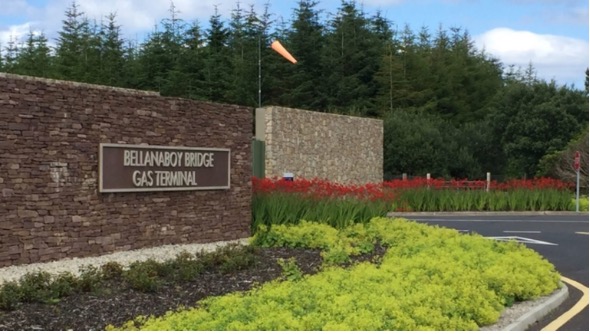
Shell’s first error was not to realise that there was a potential problem with the residents in the Ballinaboy area of County Mayo where the onshore pipeline was to be laid and the gas plant built.

Understandably, families were initially fearful that gas explosions might destroy their houses or even kill them.  They strongly preferred that the gas plant be located offshore (out of sight out of mind).

Enterprise Oil had done very little to explain to the residents not only the project, its robust safeguards and the virtual impossibility of the disaster scenarios they imagined, but also the benefits it was likely to bring to that relatively impoverished area in terms of employment, regeneration and reputation.

Thus a properly designed, operated and maintained pipeline simply will not fail, and speculation about failure is pointless.

Though the onshore pipeline was (initially) to run within 70 metres of some homes, as for the plant itself, it was sufficiently remote from residents’ buildings for them to be unaffected even in the highly unlikely event of a disaster.

But by the time, Shell recognised it had a problem with the locals, that problem had transformed from a rational fear to an emotional fury.  With the fury came press attention, with that came international interest, with that Corrib became a cause célèbre, and an opportunity for professional objectors everywhere to vent their manufactured spleen at a wicked multinational oil company whose only desire is to destroy the lives of simple natives.

The professional objectors have on several occasions been joined by overseas protestors, including the son of Mr Saro-Wiwa.  And with the inauguration in November of the left-wing Michael D Higgins as Ireland’s new president, the objectors now number the First Citizen among their supporters.  Though some funds are raised via websites, it is unclear who provides the bulk of its funding, but Sinn Fein and other sinister sources have been cited.  I have asked the major anti-Corrib pressure group “Shell to Sea” where it gets its money and am still awaiting a reply.

Meanwhile, from the moment Shell got involved with Corrib until the present, it has been on the back foot in trying present its side of the story to the world while simultaneously progressing the project.

I first wrote about these objections, in some detail, almost two years ago, in a piece titled “Organizational Dementia”.

The project itself has been exemplary in its technical aspects, and indeed in many ways is an industry trailblazer.  Shell, and particularly Ireland, should be in the position of bragging to the world of its prowess.  Ireland should be using the success of Corrib as a means to attract not just future investment in offshore (and indeed onshore) exploration and production, but also the vast, highly technical contract industry that supports such activities.

Instead, the project is conducted almost behind closed doors and talked about in whispers, in the shadow of continuous low-level but toxic protest, for fear of unleashing another round of hysterical tabloid agitation.  Earlier this year, a private, low-key purely technical presentation about the project to a select group of about fifty interested engineers had to be cancelled when Shell-to-Sea got wind and threatened to disrupt the meeting and call in the media.

For Shell, all these difficulties has pushed up the price tag from €800m to €2.5 billion.  But the nation is also paying a terrible cost that, both now and in the future, that no country can afford in these times of financial crisis and meltdown.

It is instructive to compare Corrib with other recent major offshore development projects.  One such is Norway’s Ormen Lange, in which Shell holds 17% and recently took over the running of the field:

So Ormen Lange, by any measure a bigger more complex project even than Corrib, was delivered on budget in just 3½ years.  Corrib, on the other hand, is expected to take twelve years – three times as long as originally planned – and to cost three times its original budget.

Have a look at another major construction project in an entirely different industry – aircraft construction.  Boeing dreamt up its 787 Dreamliner in January 2003 and eventually delivered it in October 2011.  This was 3½ years behind schedule, a big overrun, which was solely due to technical problems, apart from a two-month Boeing Machinists Strike.

Corrib’s far greater delay, by comparison, is due not to technical problems at all, nor financial ones nor labour ones.  Local politics, and the way they were handled, are entirely to blame.  How embarrassing is that?

The local politics boil down purely to those objections by local people, and their national and international supporters, to the onshore elements of the project, objections with only the thinnest veneer of legitimacy to start with, and none at all following substantial concessions instituted by Shell, principally

Meanwhile, for the past eight years the politicians have steadfastly looked on with, at best, bemused disinterest and without the slightest concern for Ireland’s industrial reputation.  Moreover, enforcement of the law has been low on their priorities and many (including the current president) have overtly supported the activists.

So view Corrib from the standpoint of outside investors.  A major, innovative project that has encountered no substantive problems in terms of technology, finance or industrial relations, is nevertheless delivered three times over budget and over time, due entirely to local impediments and the complete lack of political will to overcome them.

People will look at Ireland, and surely assign it a massive political risk of 200% to 300%.

The Corrib experience is such that there will undoubtedly be no further major investments of this nature in Ireland for at least a generation until this one has been forgotten.  Even industrial investors in other heavy industries will be looking askance at Ireland and asking themselves if the favourable corporate tax rate of 12½% is really worth the enormous cost of all the political hassle it can expect from local objectors and the spinelessness of politicians.

Far better to sink your money in havens such as Somalia and Iraq where the political risk will be much less punitive than in the erstwhile Celtic Tiger.

Ireland’s chance to showpiece its technical expertise and perhaps secure for itself a permanent corner of the massive, lucrative and long-lasting offshore market for the future is gone.

Meanwhile, Shell is licking its wounds and battling on.  Eventually, once natural gas finally begins to flow in 2015 (?) it will get its money back as it supplies Ireland with 60% of its gas, but it will be a long long slog.

Declaration of interest:

I worked for Shell for thirty years, though not through the Corrib period

SOURCE ARTICLE

RELATED REPORT BY A FORMER ROYAL DUTCH SHELL EXECUTIVE, MR PADDY BRIGGS

Oil giant Shell announces new Corrib gas chief

The Irish Times – Tuesday, November 22, 2011

ÁINE RYAN

SHELL HAS announced the appointment of a new managing director at the Corrib gas project.

The communique came as local protest groups yesterday declined an invitation to contribute to a joint Oireachtas committee hearing on offshore resources and their exploration.

Michael Crothers is a Canadian native, born to Irish parents, and takes the helm as Shell prepares for the final phase of the operation. This involves construction of the longest sub-sea raw gas pipeline in western Europe.

Challenges by An Taisce and local residents to key consents for this final phase were settled in the High Court recently.

Mr Crothers takes over from Terry Nolan on December 1st next. Mr Nolan, who held the position for four years, announced his intention to retire some weeks ago and said he was “hugely proud” of the “many collective achievements” attained by partners and contractors at Corrib. “I would also like to thank the people of Erris for their welcome and support and for the many challenges they have raised,” Mr Nolan said.

Mr Crothers has worked around the world in the oil and gas industry over a 28-year period, 24 of which have been with Shell.

His most recent post was as general manager of Expansion Operations for Shell’s upstream business in the Americas. He has also worked in London as vice-president of health, safety, environment and sustainable development for Shell’s downstream business. He will divide his time between Dublin and Erris.

Meanwhile, local community group Pobal Chill Chomáin has strongly criticised the decision of An Taisce to make a settlement on judicial reviews of the project, removing one the final obstacles to the project. The group claims the project is now in a legal limbo.

The group also wrote to Andrew Doyle TD, chairman of the Joint Oireachtas Committee for Communications, Natural Resources and Agriculture, declining an invitation to participate in a session to be held next week on November 29th. Pobal chairman Vincent McGrath states in the letter that the group’s key concerns for the “health and safety of the community” had not been addressed in a multitude of forums and settings.

“No integrated, cumulative risk assessment has ever been conducted on this project. Laws have been changed, standards amended, European rules ignored in order to advance the project,” Mr McGrath wrote.

He also said he wished to “to highlight the State’s facilitation of the project at every level, the criminalisation of our legitimate protests and the resultant human rights violations . . . We have been consistently excluded from having these issues properly and fully addressed.”

Maura Harrington of Shell to Sea also said they would not contribute either. Pro-Gas Mayo also received an invite to the meeting.

SOURCE ARTICLE