Royal Dutch Shell plc .com Rotating Header Image

Posts under ‘Oil’

Shell Disputes Amnesty Report on Nigeria

THE NEW YORK TIMES

July 2nd, 2009

By JAD MOUAWAD

As violence in Nigeria’s oil-rich Niger Delta escalates, Amnesty International released a new report this week condemning oil companies for wide-scale environmental damages and abuse on impoverished communities along the delta.

But Royal Dutch Shell, the Anglo-Dutch oil giant that created the Nigerian oil industry, has reacted testily to the new campaign by the human rights group, saying the report failed to provide a proper picture of what caused violence and degradation in the delta.

The report, “Petroleum, pollution and poverty in the Niger Delta,” highlights some well-known and undisputed complaints, particularly among villagers and local activists.

“The oil industry is responsible for widespread pollution in the Niger Delta,” said the report, which specifically targets Shell. “Oil spills, waste dumping, and gas flaring are notorious and endemic.”

“More than 60 per cent of people in the region depend on the natural environment for their livelihood,” said Audrey Gaughran, one of the authors. “Yet, pollution by the oil industry is destroying the vital resource on which they depend.”

Amnesty’s new campaign puts pressure on Shell’s new chief executive, Peter Voser, who took over on Wednesday, to make Nigeria one of his top priority.

It also comes just weeks after Shell agreed to settle a high-profile lawsuit in New York brought by relatives of Ken Saro-Wiwa, a slain activist, and other victims of the former military regime in the mid-1990s. The company, which did not admit to any guilt, called the settlement “a humanitarian gesture.”

While Shell rejected much of the report’s “unsupported allegations,” it added that it also “shares Amnesty International’s concern that the people of the Niger Delta have not benefited from the extraction of oil and gas as they should.”

“The root causes of the Niger Delta’s humanitarian issues are poverty, corruption, crime, militancy and violence,” Shell’s spokesman, Shaun Wiggins, wrote in an email message. “This report does not acknowledge these issues to any substantive degree, but concentrates on the impact of oil and gas operations in isolation — as such its value is limited.”

“The challenges inherent in conducting operations in the Niger Delta are extreme,” Shell said, pointing out that the majority of the oil spills, accounting for 85 percent of the volume in 2008, were the result of vandalism or criminal activity, and that the company was the target of acts of violence, kidnapping, and criminal activities that made its operations extremely difficult.

Many of the spills reported by Amnesty also occurred in Ogoni land, a region that has been off-limits to Shell since 1993, the company said.

Since the beginning of the year, members of the Movement for the Emancipation of the Niger Delta, a violent militant group, have declared an “all-out war” against the oil industry after the government of President Yar’ Adua began a large-scale military offensive in the region to root out militants.

Violence in the delta, which has been going on for years, has forced many companies, including Shell, to shut down some of their production.

“Undoubtedly, in many parts of the Niger Delta, community action and reaction is part of the problem of pollution,” Amnesty’s report said. “However, as long as companies continue to deny that their poor practice is a major factor in community hostility, the situation will not improve.”

NYT ARTICLE

Nigeria oil company rejects damning Amnesty report

A Shell spokesman said the company shares Amnesty’s concern for the people in the Niger Delta but disputes the group’s assessment of its corporate accountability.

Click to continue reading “Nigeria oil company rejects damning Amnesty report”

New Shell CEO has toughest task in European business

A lawsuit filed in New York accusing the oil giant of complicity in the execution of human rights activists in Nigeria in the 1990s, which Shell settled earlier this month, renewed criticism of the company’s activities in Nigeria, often seen as the poster child for how oil wealth can damage a country.

Click to continue reading “New Shell CEO has toughest task in European business”

Oil groups resist tough bid terms

Royal Dutch Shell initially bid for the Kirkuk field but rejected Iraq’s demand for better terms.

Click to continue reading “Oil groups resist tough bid terms”

Report blames Shell over ‘cover-up’ of Nigeria’s oil spills

Independent auditors estimate that up to 13 million barrels of oil have been spilt in the Delta, an amount equivalent to an Exxon Valdez disaster every year for 40 years. The Niger Delta is home to some 31 million people, the majority of whom live in abject poverty despite the $600bn in oil revenues generated since extraction began in 1958. Nigeria’s own watchdog reports that there are 2,000 current spills, the majority of them from Shell operations.

Click to continue reading “Report blames Shell over ‘cover-up’ of Nigeria’s oil spills”

Challenge to Shell’s Alaska drill plan dismissed

ANCHORAGE, Alaska, June 30 (Reuters) – A federal appeals court has dismissed a legal action that challenged Royal Dutch Shell’s (RDSa.L) plans to drill several wells over three years in Alaska’s Beaufort Sea, now that the company itself has ditched the program and replaced it with a more limited exploration proposal.

Click to continue reading “Challenge to Shell’s Alaska drill plan dismissed”

Defending Shell’s good name and reputation

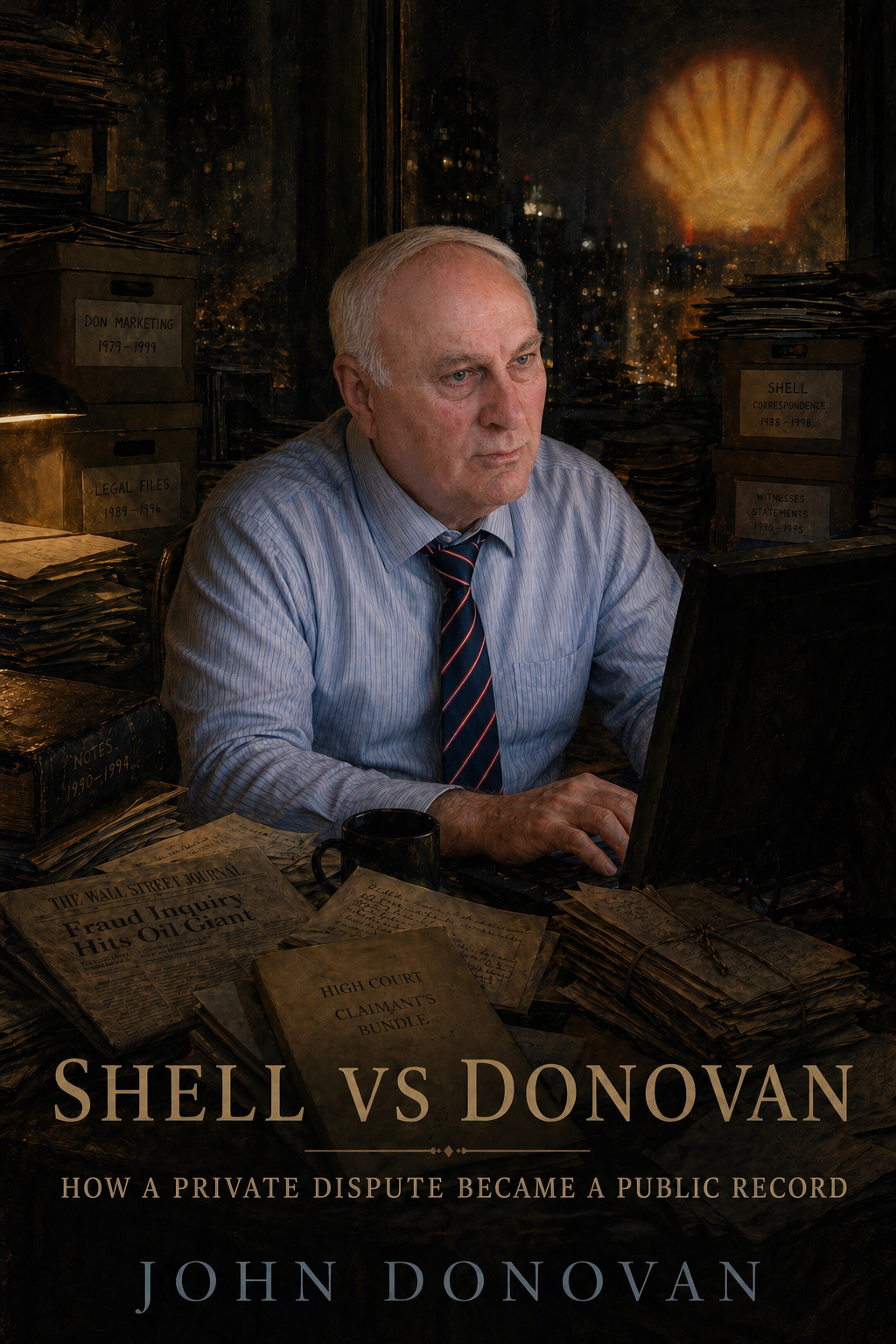
By John Donovan of royaldutchshellplc.com

There has been some discussion on our Shell Blog about the right to freedom of speech on the Internet. A regular contributor “motivaman” has referred to decisions by the U.S. Supreme Court upholding this fundamental right.

Readers may be interested in comments made by Shell on such matters.

In unsuccessful proceedings Shell brought against us in 2005, in respect of the domain name royaldutchshellplc.com, Shell stated in a submission to The World Intellectual Property Organisation:

“The… Group… have been aware of the site since the beginning and whilst they would not endorse or agree with many of the comments made by the Respondent on the website, they have taken the view that the Respondent is entitled to express his opinions and to use the Internet as a medium for doing so.”

The Shell statement no doubt takes into account applicable Supreme Court decisions. Such rights obviously extend to all Internet users.

In November 1998, Richard Wiseman, the then Legal Director of Shell UK Limited., authored the following related article for a Shell magazine. We obtained it following an application under UK freedom of information law, the Data Protection Act. Parts were censored by Shell lawyers

FUEL FOR THOUGHT

DEFENDING THE COMPANY’S GOOD NAME AND REPUTATION

There has recently been some publicity surrounding a writ issued against Shell UK by Mr John Donovan, director of a company called Don Marketing, who claims that his company invented the SMART loyalty programme and that he or his company should be compensated for its use. Shell UK is strongly defending the claim, having carefully investigated and discussed it with Mr Donovan and his solicitors. Mr Donovan has been making a number of unpleasant allegations in public and in the press, and has been handing out leaflets to staff.

Shell UK Legal director Richard Wiseman explains.

Mr Donovan and his companies have made several claims against Shell in the past. For good economic reasons, these cases were settled before they reached court. At that time, both parties agreed that there should be no further public debate about these matters – an obligation which Shell UK has consistently honoured, but which Mr Donovan has not.

However, we feel that the current case cannot be concluded satisfactorily except by allowing it to go all the way to court. We are vigorously defending the writ Mr Donovan has issued about SMART, and counterclaiming against him for failing to honour his previous agreement. We expect the case to go to court next year.

NEXT 18 LINES REDACTED BY SHELL LAWYERS

Shell UK could ask the courts for an injunction to prevent Mr Donovan and his father from making any further unpleasant allegations.

NEXT THREE LINES PARTLY REDACTED BY SHELL LAWYERS

But with Mr Donovan already alleging that we may have taken all sorts of measures to try to keep him quiet, we know this could give give him an opportunity to try to present himself as a ‘David’ fighting a ‘Goliath’.

In general, most companies like ours can see only too well that libel proceedings may attract far more publicity than the original allegations ever had or would be likely to have. An example is the recent “McLibel” case which tied up McDonald’s for years. Any case we brought would not necessarily be the same, but it can be a major business diversion for no real gain to the company. And people don’t always remember who won.

One of our colleagues who has been smeared by Mr Donovan’s assertions

NEXT TWO LINES PARTLY REDACTED BY SHELL LAWYERS

who has since moved on to another job with Shell. The hurtful allegations being made against Andrew in public leave him in a difficult position. Shell UK is satisfied that he has done nothing wrong, either in relation to this claim or any previous claims. We are confident that he has acted properly throughout.

Mr John Donovan is one of a number of people who from time to time have approached us to suggest marketing concepts. Generic concepts in marketing are often quite common and not original in themselves. The basic concept for the SMART scheme had already been around for some time before Mr Donovan approached us. Where a scheme actually developed may seem to have some resemblance to unsolicited material from third parties, allegations of this sort can be complicated to refute.

However, I am satisfied that the SMART scheme was developed entirely independently of Mr Donovan, and we believe this will become clear when the case goes to court.

“WE ARE VIGOROUSLY DEFENDING THE WRIT MR DONOVAN HAS ISSUED ABOUT SMART AND COUNTERCLAIMING AGAINST HIM FOR FAILING TO HONOUR HIS PREVIOUS AGREEMENT. WE EXPECT THE CASE TO GO TO COURT NEXT YEAR.”

PDF of the actual article with parts censored by Shell.

A lot has happened in the ten years since the article, including the Shell reserves fraud. Consequently there is not much of a Shell reputation left to defend.

Wiseman headed the legal team, which dealt with all our six High Court actions against Shell. He failed to disclose in the SMART discovery the above article which was material to the main claim and highly material to the Shell Counterclaim. Neither we, nor more importantly, the Judge, were aware of Mr Wiseman’s published comments.  Shell would not have been able to censor any of the content. We had already issued a libel action against Shell, which they subsequently settled, in respect of posters put on display at the Shell Centre containing defamatory comments about us. If we had been aware of the Wiseman article, we would have issued appropriate proceedings against him and Shell.

Wiseman admitted bending professional rules and using an undercover agent, Mr Christopher Phillips, who was caught red-handed examining private mail in our offices. Ironically Wiseman is now the Chief Ethics & Compliance Officer of Royal Dutch Shell Plc. It must be a case of poacher turned gamekeeper. His appointment to that position speaks volumes about Shell.

Mr Wiseman has always denied any connection with other sinister activities directed against us, which were investigated by the Police, and an internal investigation carried out at Shell-Mex House.  In addition to being besieged by undercover agents posing as journalists, a series of burglaries were carried out at the home of our key witness, at my lawyers home, and at our own home. Our documents were examined and tampered with. No valuables were stolen. We were also bombarded by threats.

Two years later the Sunday Times newspaper revealed, in a front page story, Shell’s close association with a private spy firm which engaged at the behest of Shell, in exactly the type of sinister operations which had been directed at us. Shell and the spy firm shared key common directors and shareholders.

We found out from Shell discovery documents that “Andrew” Lazenby, the Shell manager mentioned by Wiseman in his article, was prepared to engage in illegal acts on behalf of Shell. It was evident from his diary that he was a disgruntled employee who recorded his intent to set up a personal business while at Shell and exit the company at the age of 35, presumably on the basis of building up sufficient funds in the meantime. He had an offshore bank account into which funds were paid. Lazenby also had a close relationship with an agency – Option One – to which all of our confidential ideas were funneled. They even miraculously won a major contract in a tendering process in which they did not participate. This was akin to a horse winning a race in which it did not run.

During the subsequent High Court trial, a senior Shell manager, Frank Leggatt admitted under cross-examination that the actions of Andrew Lazenby in respect of the SMART tender had not been “proper”. This of course was a huge understatement. Members of the general public reading the evidence would find it difficult to avoid the conclusion that Lazenby was a ruthlessly ambitious, disloyal and greedy individual with no scruples.

Despite Wiseman’s bravado in the article, when the case eventually got to trial, Shell offered a compromise settlement which we declined. Shell made a further settlement proposal just before the climax of Lazenby’s cross-examination under oath. Shell paid all my legal costs and I received a totally inadequate secret payment. I will explain in a follow-up article why I accepted. The terms of what was described as a peace treaty were so secret, that they were not disclosed even to the Judge.

Two years later Wiseman breached the terms of the peace treaty and the rest is history, including multi-billion dollar losses by Shell arising from our intervention in the Sakhalin 2 project.  In another Sakhalin related debacle, a  leaked email from “General” David Greer published on our website ended with his resignation as Deputy Chairman of Sakhalin Energy. It has been suggested that the leak came from an even higher-level source who wanted to see the back of Greer.

Nigerian Rebels Drive Up Oil Prices

A small group of insurgents in Nigeria’s oil-rich Niger Delta helped drive up oil prices around the world yesterday by announcing a strike against one of Royal Dutch Shell’s two main export terminals in the West African nation.

Click to continue reading “Nigerian Rebels Drive Up Oil Prices”

Amnesty attacks oil industry for decades of damage in Niger Delta

Royal Dutch Shell is singled out by Amnesty as the most powerful operator in the region. The report will make uncomfortable reading for the energy group’s new chief executive, Peter Voser, who starts work tomorrow.

Click to continue reading “Amnesty attacks oil industry for decades of damage in Niger Delta”

Shell’s Climate Crimes Exposed

FOR IMMEDIATE RELEASE
June 29, 2009
12:14 PM
CONTACT: Friends of The Earth
Nick Berning, 202-222-0748

New report from environmental groups exposes Shell’s anti-climate lobbying activities

WASHINGTON – June 29 – Friends of the Earth and Oil Change International released a report today detailing oil giant Shell’s colossal contribution to global climate change and its continued investment in carbon-intensive fossil fuels.

The report also reveals new internal documents that show that Shell knew of the environmental dangers of gas flaring in Nigeria more than fifteen years ago, but chose not to stop for purely financial reasons.

“Shell greenwashes itself as a sustainable company when in reality it is the dirtiest oil producer of all,” said Ben Schreiber of Friends of the Earth. “As evidenced by Shell’s lobbying activities on the flawed climate bill that passed the House last Friday, the company has been instrumental in weakening climate legislation while claiming to care about the environment.”

Despite attempts by outgoing Shell CEO Jeroen van der Veer to portray a green image, the company has opted for a way forward that is in stark contradiction with the need to reduce greenhouse gas pollution that causes climate change. Shell’s heavy investments in the most carbon-emitting energy sources, such as tar sands, liquefied natural gas and crude oil from Nigeria—which is associated with huge levels of gas flaring—make it the dirtiest of all major oil companies with regard to greenhouse gas pollution, according to the report.

Since 1996 Shell has promised to stop gas flaring in Nigeria—the biggest source of heat-trapping gases in sub-Saharan Africa. But the company has repeatedly broken its promises and rejected statements by the Nigerian government that flaring should be stopped. Shell refuses to implement the 2011 deadline imposed by the Nigerian government for phasing out gas flaring and is now speaking about a 2013 phase out.

Steve Kretzmann from Oil Change International said, “Shell could stop flaring gas in Nigeria for only 10 percent of last year’s profit for the company. The company’s new CEO, Peter Voser, has the power to stop gas flaring, spare Nigerians from inhaling deadly toxins, and help to curb climate change in one stroke. The question is: will he?”

Today’s report, “Shell’s Big Dirty Secret,” comes after a global backlash against the energy giant’s abuses of human rights and the environment. On June 8, Shell was forced to pay $15.5 million to settle a lawsuit in the U.S. seeking to hold it accountable for human rights abuses in Nigeria. The company is also facing legal action in The Hague concerning repeated oil spills which have damaged the livelihoods of Nigerian fisherpeople and farmers.

The report can be viewed at: http://www.foe.org/sites/default/files/shellbigdirtysecret_June09.pdf.

###

Friends of the Earth is the U.S. voice of the world’s largest grassroots environmental network, with member groups in 77 countries. Since 1969, Friends of the Earth has fought to create a more healthy, just world.


Friends of The Earth Links: