Royal Dutch Shell plc .com Rotating Header Image

Posts Tagged ‘Environment’

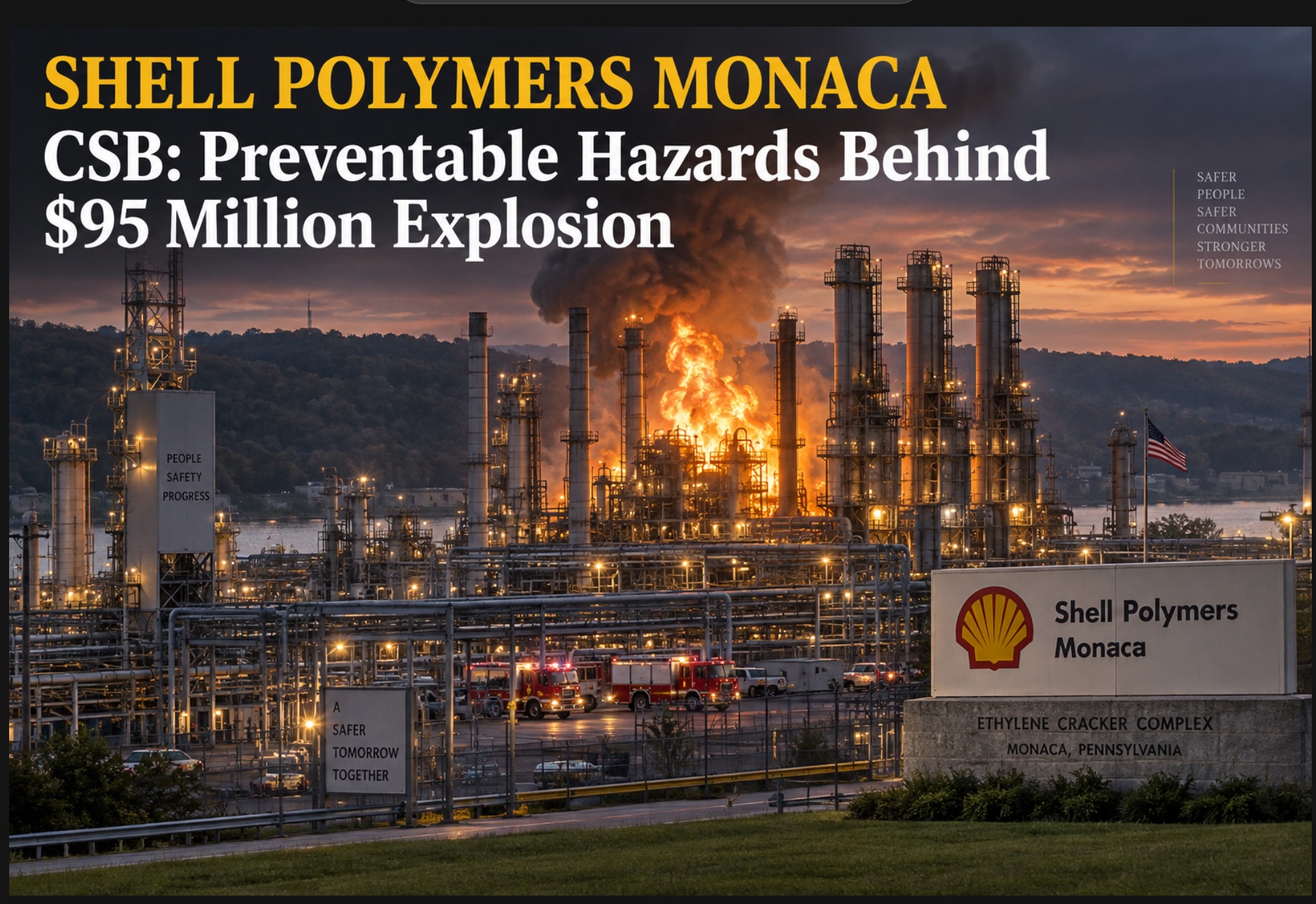
Shell Motiva release of carcinogenic chemical at Norco plant

By John Donovan

18 September 2011

Bloomberg has reported the release of a carcinogenic chemicalbutadiene – by Shell/Motiva at its Norco plant in Louisiana.

Butadiene is listed as a known carcinogen by the Agency for Toxic Substances Disease Registry and the US EPA. At acute high exposure, damage to the central nervous system will start to occur. Symptoms such as distorted blurred vision, vertigo, general tiredness, decreased blood pressure, headache, nausea, decreased pulse rate, and fainting may be witnessed. As the exposure to butadiene occurs at a higher level and for a longer duration, the effects witnessed will become more serious. (INFORMATION FROM WIKIPEDIA)

The current incident follows Shell’s agreement in March 2010 to pay over  $3 million in civil penalties to the federal government as part of a Clean Air Act settlement and spend $6 million to install pollution control equipment at its refineries in Alabama and Louisiana to avoid such incidents.

Forbes: Shell refineries settle with government: Associated Press, 03.31.2010, 02:40 PM EDT

NASDAQ: Shell To Pay $9.5 Million In Settling Clean Air Act Allegations: Mar 31, 2010 | 3:00PM

Los Angeles Times: Shell refineries reach Clean Air Act settlements: By Associated Press March 31, 2010 | 12:02 p.m.

THE CURRENT INCIDENT

By David Wethe – Sep 18, 2011 4:24 PM GMT+0100

An unknown amount of butadiene and propylene were released into the air yesterday at the Norco plant in Louisiana run by Motiva Enterprises LLC, according to a filing to the National Response Center.

A clamp on a pipe at a chemical facility released the materials at 10:30 a.m. local time, according to the filing dated yesterday, which cited a report from an unidentified caller.

U.S. companies must notify the NRC if they release hazardous substances in excess of reportable quantities, according to the Comprehensive Environmental Response, Compensation and Liability Act, commonly known as Superfund. Motiva is a joint venture of Royal Dutch Shell Plc (RDSA) and Saudi Arabian Oil Co.

Bloomberg News couldn’t immediately verify that the information in the NRC filing was accurate.

To contact the reporter on this story: David Wethe in Houston at dwethe@bloomberg.net

To contact the editor responsible for this story: Susan Warren at susanwarren@bloomberg.net

SOURCE ARTICLE

RELATED ARTICLE: Norco Plant Reports Accidental Chemical Release (Extract: NORCO, La. — An industrial plant in Norco has reported an accidental release of potentially toxic chemicals, though details on the amounts involved in the incident were not immediately available.

Shell’s shameful track record in Brazil

From pages 17, 18 & 19 of “Royal Dutch Shell and its sustainability troubles” – Background report to the Erratum of Shell’s Annual Report 2010

The report is made on behalf of Milieudefensie (Friends of the Earth Netherlands)
Author: Albert ten Kate: May 2011.

A Shell pesticide factory

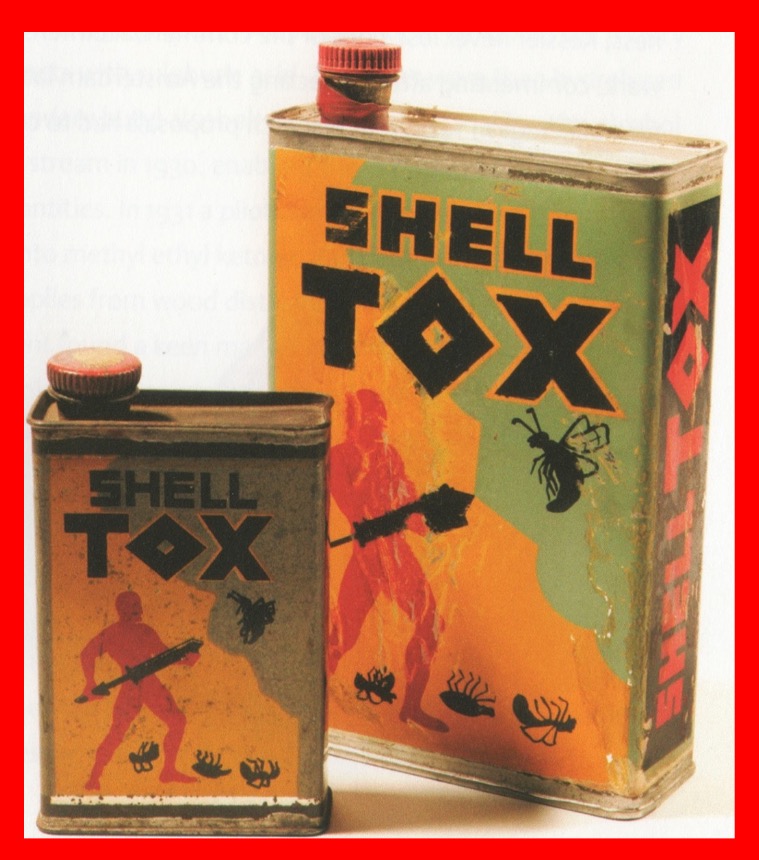
For a decade or more, beginning in 1977, Shell produced organochlorine pesticides (aldrin, dieldrin, endrin etc.) and other pesticides at a plant located near Paulínia, about 125 kilometres north-west of São Paulo, Brazil. The plant covered approximately 40 hectares.78 Due to its severe health impacts, by 1990 the use of aldrin and dieldrin was totally banned in the USA and Brazil.

After negotiations starting in 1993, in 1995 Shell sold the Paulínia facility to the companies American Cyanimid and BASF. A sales condition was that Shell would assume legal responsibility for the pollution at the site. In 2000, BASF took full ownership of the facility.79 In 2002, BASF shut it down the facility after a ban by the Brazilian Ministry of Labour, in view of existing contamination and serious risks to human health.

Pollution at the factory site

There have been many cases of pollution at the factory site: − Between 1998 and 1985 three leaks in a waste-water storage tank were officially reported. − Over the years, CETESB (São Paulo State Environmental Protection Agency) had issued three warnings that the plant’s incinerator was not operating within acceptable standards. − March 2001, the Justice Department listened to the testimony of a former company employee, Antonio de Marco Rasteiro. He confirmed the existence of four clandestine landfills inside the plant area, and accused Shell of dumping ash from its incinerator and waste from its manufacturing process in these landfills. He also confirmed that Shell’s incinerator sold its services to third parties, for example to DuPont. He also reported that drums with toxic wastes were buried in other areas inside the plant.

Pollution spreading across farmlands

Later, several studies of the area revealed that the contamination had moved into the groundwater under the farms located between the plant and the Atibaia River. For example, in February 2001, the Dutch environmental consulting company Haskoning/Iwaco, hired by Shell, produced a technical report with soil and groundwater analysis in nine sites located in the farms near the industrial site. Levels of contamination by dieldrin as high as 17 parts per billion (ppb) in soil and 0.47 ppb in water were found. The water contamination levels were higher than the levels allowed by Brazilian law (Administrative Rules 36/1990 and 1469/2000 – Ministry of Health – Highest Permissible Level: 0,03 ppb of dieldrin). However, no decontamination work had begun in the area. In February 2001, Shell admitted that it had contaminated the groundwater and sections of the nearby community, and was ordered by CETESB to begin a clean-up.

Pollution creating severe health problems

Both aldrin and dieldrin are highly toxic to humans, the target organs being the central nervous system and the liver.83 A report at the request of the Paulínia local government, produced by August 2001, showed that 156 of the 181 examined residents living near the factory had some degree of contamination from metals or pesticides which could result in various cancers, liver disorders, or neurological problems. Shell dismissed the Paulínia report, saying it used very low thresholds to measure contamination compared with those recommended by the World Health Organization. Shell also claimed its own tests showed no human contamination. “If there is proof of contamination with the products that we handled there, we will assume the responsibility immediately, which is our policy worldwide,” said Jose Cardoso, a Shell manager in Brazil. “But so far, there is no data indicating that.”84 Maria Lucia Braz Pinheiro, vice president of Shell- Quimica for Latin America, described the report as “another report with technical inconsistencies and lacking a scientific base.”

In a doctoral dissertation approved in February 2005, an analysis was made on the existing health data from a group of 62 former Shell/Cyanamid/BASF workers. Three cases of thyroid cancer were confirmed. The author concluded that the incidence of thyroid cancer among the estimated 1,120 workers of Shell/Cyanamid/BASF was 166 times greater than the incidence in the male population of Campinas, a county within Sao Paulo state. The chance of finding three cases of thyroid cancer out of a random selection of 1,120 men living in Campinas would be less than 1 out of 1,000,000.

At the beginning of 2009, it became publicly known that the Center for Excellence in Occupational Health (Cerest) of Campinas had examined 69 former employees of Shell / Cyanamid / BASF. Ten malignant cases of cancer to the prostate and thyroid were diagnosed. There was also a case of myelodysplastic syndrome (MDS, formerly known as “preleukemia”). There were 34 cardiovascular diseases, of which 21 related to hypertensive heart diseases. There were also an unspecified number of liver diseases. In 30 cases there was a prevalence of repetitive strain injury (RSI). In total 56 ex-workers had serious problems with reproductive organs and the urinary system, with prostate disorders, changes in fertility and impotence.

August 2010: Shell/BASF ordered to pay severe fine

In 2007, the public prosecutor Ministério Público do Trabalho (MPT) filed a case to ensure funds for health treatment of former employees, along with compensation for damages. The Association of Workers Exposed to Chemical Substances (ATESQ) and another union of workers had also filed a case against Shell and BASF. ATESQ was created by Antonio de Marco Rasteiro, a former employee of the Shell/BASF plant in Paulínia. He worked there for 21 years. In his role as ATESQ Coordinator, Mr Rasteiro has led the struggle of nearly a thousand former workers. In November 2009, he won the International Health & Safety Award of the American Public Health Association.

In August 2010, a Brazilian court (Tribunal Regional do Trabalho de Campinas) ruled that Shell and BASF should assume responsibility for the medical treatment of all former employees of the Paulínia facility, and pay a total of 1.1 billion Brazilian Real (about EUR 490 million89) in connection with the More than 1,000 former employees of the companies were covered by the court order, and also the children of employees who were born during or after services and independent contractors.

Some extracts from the court ruling in August 2010: − “Workers were constantly exposed to harmful substances in water and air, without any use of protective clothing. This exposure took place during and after work, during breaks, in the vicinity of the site, as well as through the use of water on site. Therefore, the simplistic explanation of Shell that the presence of harmful substances in the bodies of the workers do not constitute evidence of intoxication is unacceptable”

− “(…) Although it is not certain that all employees will develop diseases such as cancer, it is not excluded. Certainly it has been determined that among the employees exposed to the pollutants, cancer occurs much more frequently than normal.” − “(…) The most shocking is that the accused companies, especially Shell, were since 1970 fully aware of the harmful effects of substances used by them. After the production was banned in the U.S., Shell coolly moved its plant to Paulínia. BASF also has not taken precautionary measures: it was aware of the pollution at the site, which was already raised and well known in Paulínia. Nevertheless, BASF located itself in the same place, in the full knowledge that this place was not appropriate, with the result that its employees were exposed to obvious risks”.

Shell and BASF appealing

Soon after the court order in August 2010, Shell and BASF announced that they would appeal the decision. “We expect that the Brazilian courts at a higher level will eventually establish that we were not responsible for alleged health impacts and other claims”, a Shell spokesman told press agency Reuters.

Jennifer Moore-Braun, a spokeswoman for Basf told press agency Bloomberg: “We are of the opinion that the environmental damage was caused by Shell, and we will appeal the decision.” Shell was quoted saying: “We are convinced there is no link between our operations and injury to people’s health based on blood tests of local residents, medical assessments of former workers and expert medical opinions.”93 In April 2011, the Tribunal Regional do Trabalho de Campinas denied an appeal filed by Shell and BASF against the decision, and maintained the sentence. Shell and BASF may appeal the decision at the Superior Labour Court (TST) in Brasilia.

THE COMPLETE 73 PAGE REPORT (with reference sources)

Forum on Canada’s Policy on Arctic Offshore Drilling 12-16 September

TO – Alfred Donovan
alfred@shellnews.net
http://www.shellnews.net – http://royaldutchshellplc.com

Subject – Forum on Canada’s Policy on Arctic Offshore Drilling 12-16 September

G’day, Mr.Donovan.

David Prior of EST Halifax has just cc’d me on your recent e-mails (re-pasted below).

Our group RESTCo Inc is hosting a Forum on Canada’s Policy on Arctic Offshore Drilling from 12-16 September (next week).
David will be presenting on Wednesday 14th about “An Innovative Canadian Technology for Oil Spill Clean-up”.
We’d like you to know what we are doing, and hope that you will consider a mention of this on your website and blog.
Please visit us – http://www.restco.ca/Inuvik_RT_Ottawa_Schedule.shtml

This 5 day forum is a satellite meeting to the NEB Roundtable meeting in Inuvik.
Venue is the Canadian Science & Technology Museum in Ottawa, who are sponsoring our event.
NEB = National Energy Board – http://www.neb-one.gc.ca/clf-nsi/rthnb/pplctnsbfrthnb/rctcffshrdrllngrvw/rctcffshrdrllngrvw-eng.html

RESTCo strongly concurs with “United for America’s Arctic” coalition statement at -  http://ourarcticocean.org/
<<Until issues such as the lack of science and the inability to clean up an oil spill in Arctic waters are addressed, the federal governments cannot make informed decisions about drilling in the Arctic Seas and should not approve drilling plans.>>

We look forward to hearing from you, and much appreciate your website, a special and key resource.

We’d also be interested to learn which Canadian environmental groups have contacted you.

Best wishes,

Chris

Christopher Ives,        MA, VP Technology    RESTCo Inc.
Tel 450-458-7974         Fax 450-458-1746        Cell 514-826-2312
48 Tarquin Crescent   Nepean, Ontario          K2H 8J8 Canada
chris@restco.ca                                                  www.restco.ca

A shocking documentary about shale gas fracking

Dear John,

Today a shocking documentary about the truth on negative impact on human health and environment was broadcasted in Holland.

The first few minutes are in Dutch, but the rest is English spoken:

http://beta.uitzendinggemist.nl/afleveringen/1110325

September 14 a public hearing will take place in Dutch Parliament about the risks of Shale Gas Fracking. One permit has already been given for drilling a Shale Gas well in the province of Noord-Brabant (in the South of Holland).

I thought you might be interested to watch the documentary and the information within.

Kind regards,

Nigerian farmer: Shell says we’ll soon smile in the Niger Delta

Published on : 18 May 2011 – 12:29pm | By Hélène Michaud

It is his very first visit to the Netherlands, home of the company that he says has destroyed his family’s investments: “Our fish ponds, our bakery, our land.” He wants them back.

The green parks, the urban infrastructure, trains that arrive on time: Eric Dooh is impressed at what he’s seen in the Hague, where he’s just attended Royal Dutch Shell plc’s Annual General Meeting . He says he came to inform the company’s shareholders about the ongoing level of devastation caused by oil spills in Goi, his community in the Niger delta.

“Since 2003, we don’t produce fish anymore, there’s not a single fish in the water. The source of drinking water is oil. When we cook, our food smells like kerosene. We grow cassava and yam: if you cook them, you get a taste of crude.” He asked when Shell would use part of its benefits to clean up the water and the land.

Smiling very soon

Shell’s response was consistent. CEO Peter Voser said that sabotage and theft accounts for more than 80% of the volume of oil spilt in 2010, amounting to around 100,000 barrels a day. When asked when if it has a timetable to clean up the spills or end gas flaring, the company responds that it is committed to do so, but that this depends on the Nigerian government’s willingness to invest and on limited access to sites because of violence by militant groups.

Eric Dooh says the answers are “purely political”. I’ve been hearing this story for so long. When governments want to deceive you, they say: ‘The people will soon smile’. So now Shell is telling us we will soon smile, and I asked: ‘How soon?’ They told me: ‘Very soon.’”

Dutch pension funds concerned

In recent years, shareholders big and small, have become increasingly vocal when it comes to Shell´s environmental record in Nigeria. At this year´s AGM, Sylvia van Waveren speaking on behalf of the Dutch APG pension fund, the Robeco investment fund and other important shareholders with pension funds worth over 500 billion euro, said they “remain highly concerned with the operations in Nigeria and the potential damage to Shell´s reputation.” She said they were equally concerned about the “low standard and quality” of Shell´s dialogue with stakeholders, especially in indigenous communities in Canada where controversial oil sands are being exploited and in Nigeria.

Eric Dooh, wearing a black hat a la Nigerian president Goodluck Jonathan and large necklaces with red and white beads around his neck, is impressed. “I noticed that people of this part of the world have great interest in the suffering of the people in the Niger delta. You don’t know us, and yet you are agitating for how the benefits of oil are being used in developing this area. I find this commendable.”

On trial

Eric Dooh’s Goi community and three other Niger Delta communities, supported by the environmental organisation Friends of the Earth, have started legal proceedings against Shell in the Netherlands. On Thursday, the trial resumes in the Hague. At stake is whether Royal Dutch Shell plc in the Netherlands can be held accountable for Shell Nigeria’s activities. They want their communities to be cleaned up and they want reasonable compensation for the loss of their livelihoods.

Chief Dooh will be sitting in the tribune during Thursday’s hearing. Before coming here he says he told his daughter that “I’m going to defend you, your mom and your grand dad in the Netherlands.” He says that if he is finally granted compensation he will send her to study abroad “so that she can attain the same knowledge that those people in charge of these multinationals have acquired.”

SOURCE ARTICLE

RELATED ARTICLES

Conservationists attack Shell over oil drill plans

Australian Broadcasting Corporation

Broadcast: 08/03/2011

Reporter: Minsi Chung

Petroleum giant Shell plans to drill for oil 50 kilometres from the national heritage listed Ningaloo Reef.

Transcript

ALI MOORE, PRESENTER: Petroleum giant Shell is on a collision course with conservationists over a plan to drill for oil 50 kilometres from Ningaloo Reef, a national heritage listed area.

The industry says it’s safe, but critics argue it puts wildlife and irreplaceable coral reefs at serious risk.

Minsi Chung reports from Perth.

MINSI CHUNG, REPORTER: Ningaloo Reef is recognised as one of the state’s major tourism drawcards and is on the waiting list for world heritage status. Now Shell wants federal environmental approval to drill an exploration well. If it gets the go ahead, work could start as early as September.

With the Montara well, fire and oil spill still fresh in the public mind, conservationists are gearing up for a fight.

PAUL GAMBLIN, WWF: Some areas like this need to be fully protected and the Australian Government needs to get serious about protecting our magnificent marine environment.

MINSI CHUNG: Shell says it’s committed to protecting the area and it has strict environmental management plans in place. The petroleum industry is also confident it can meet environmental standards.

MARK MCCALLUM, APPEA DEPUTY CHIEF EXECUTIVE: The fact is the industry has operated in this region for over 40 years and we’ve had actively-producing facilities that have not damaged the values of Ningaloo.

MINSI CHUNG: But the environmental movement says a decision on Shell’s application should wait until a final report into the Montara incident is released.

PAUL GAMBLIN: The Federal Government should make sure that the system of regulations, the laws that are apply to oil and gas activities, are fixed, are in place, based on the Montara experience.

MINSI CHUNG: The State Government will also have a say in whether drilling can go ahead.

KIM HAMES, ACTING PREMIER: We want to make sure that Ningaloo Reef as a system is protected and we have concerns because of the oil spills that we’ve seen in parts of the world.

MINSI CHUNG: It’s not clear when the Federal Government will make a decision on the Shell application.

Minsi Chung, Lasteline.

SOURCE

Dutch Documentary: The dirty oil from Shell

By John Donovan

The Dutch Parliament recently held a hearing on the activities of Shell in Nigeria, partly in response to this 38 minute documentary  by the Dutch TV programme “*Zembla”: The dirty oil from Shell.

The eyes of the world have been focused on the Gulf of Mexico, where BP took several months to stop an oil leak deep under the sea surface. In the meantime, a 50 year oil disaster is happening in Nigeria.. Since SHELL started their hunt for oil in Nigeria, an estimated 1.5 million barrels of oil have flowed into groundwater, drinking water and rivers. The population wants it to stop. The activity has generated billions in profits for the leading Dutch/British oil company, but it is accused of environmental and human rights abuse.

ZEMBLA went to the delta of Niger and saw the practices of Shell.

Although the documentary is on a Dutch website with Dutch subtitles, much of the commentary and interviews, including a brief one with Shell CEO Peter Voser, are conducted in English language.

LINK TO THE DOCUMENTARY

http://beta.uitzendinggemist.nl/afleveringen/1060249

*Zembla is a Dutch television documentary programme by VARA and NPS. The documentaries are based on in-depth research that can take months. The subjects are often controversial. (Information from Wikipedia)

Floodgates open on bad news for Royal Dutch Shell

FROM A SHELL INSIDER

John

Looks like you opened some floodgates on bad news for Shell the last few weeks! I don’t understand how you can keep up with all the dataflows.

The recent note from the Canadian operator is pretty serious. This obviously is a man who knows what he talks about and has high personal standards.

Shell Canada Insider Speaks Out

Exactly the type of person you would want on your plant, but dangerous and awkward for many managers who are looking for quick bucks, low hanging fruit, early success, breakthrough performance, olympic targets and whatever other jargon is used to cut costs…. I don’t know if you are aware just how toxic H2S is. Often in communications to the general public it is related to the smell of rotten eggs but in reality it is as toxic as Hydrogen Cyanide – HCN (Prussic Acid), the stuff used in detective novels…. (And by the way in the gaschambers in Germany as well as in the suicide capsules they used).

In the oil business we all know how dangerous H2S is, the public at large most likely not. Inhaling a concentration of 1000 ppm (0.1% in volume) means instantaneous death. Above 200 ppm you pass out within seconds.  In a plant where they process gas with 30% H2S this is 300.000 ppm….. And H2S has another feature: you need quite exotic (= seriously expensive) materials such as pipes and vessels to handle it, regular and higher grade steel becomes brittle in no time and cracks. This is Sulfide Stress Cracking.

To put it in simple terms: if one starts to f*ck around with maintenance standards in these type of plants, to me that is just criminal behaviour. You should always keep looking for improvements (= better at lower costs). But often it is only the costcutting that is visible in the short term, pulls in the bonus and the fellow who does this is transferred when the problems start.

Comment from a former employee of Shell Oil USA

John,

The fellow who commented on H2S and the Canadian plant maintenance conditions is absolutely correct.

On an annual basis accidental and inadvertent H2S gas poisoning is the single largest cause of worker fatalities in the oil industry.

Only certain steel alloys will tolerate high concentrations of H2S. And H2S is indeed one of the deadliest gases around. This fellow is correct when he states that Shell management is engaging in criminal negligence by neglecting plant maintenance. One pipe leak or leaky value is all it would take to kill some plant workers, and very quickly.

In the US Shell operated a field near Thomasville, Mississippi. This was where the infamous Cox #1 blowout occurred in the early 1970′s. The gas in that field had very high concentrations of H2S, over 30% as I recall. In order to produce these wells safely Shell USA (which was well managed in those days) instituted its own quality standards for piping, tubular, and well head equipment. It was called Shell N.A.C.E. Shell standards were higher than normal oil industry N.A.C.E. standards. (links available from John Donovan on request).

Shell even had its own inspectors at the Cameron Ironworks facilities checking and certifying the wellhead equipment as it came off the production line.

I began my term at Shell as a production engineer and was well versed in ‘sour gas’ production procedures and equipment standards. But that was over 20 years ago. In those days (before Shell USA was taken over by RD Shell) Shell USA did not screw around with H2S like the Canadians seem to have been doing in their gas plants recently. In fact, I will bet that Shell Canada, when is was an independent subsidiary from RD Shell, didn’t screw around either.

These sorts of maintenance shortcuts and lack of regard for worker and public safety seem to be a hallmark of the way RD Shell operates.

Local plant management clearly didn’t and probably still doesn’t give a lust crap about worker safety. The bottom line was and probably still is all that matters. Staff and public health and safety were and probably still are considered ‘expendable’, and part of the unnecessary ‘overhead’ of operation.

All levels of Shell management responsible for the decisions that have led to the poor maintenance and hazardous working conditions in those gas plants should be terminated for cause. Their lack of good judgment, and concern for the safety of their staff, and the public in general, is more that sufficient cause for such action.

Carson residents protest Shell Oil over soil contamination

More than 200 people — led by environmental activist Erin Brockovich — marched to the company’s oil refinery…

latimes.com

October 23, 2010

Residents, activists and city leaders in Carson took to the streets Saturday to protest of Shell Oil Co.’s refusal to take responsibility for the contamination of a tract in the Carousel neighborhood, where high levels of benzene and methane have been found in the ground.

More than 200 people — led by environmental activist Erin Brockovich — marched to the company’s oil refinery at the intersection of Wilmington Avenue and Dominguez Street. Council members Lulu Davis-Holmes and Mike Gipson joined residents at the protest.

Standing at the entrance of the refinery, residents used a bullhorn to call on the company to accept responsibility for contaminating their neighborhood. Other protestors held up signs that read “Shame on Shell” and banners that read “Carousel contaminated.”

Organizers say the oil company is trying to avoid responsibility for contamination of the Carousel neighborhood by claiming statute of repose, a law that cuts off certain legal rights after a set amount of time has passed.

But Shell spokeswoman Alison Chassin said the company was not claiming statute of repose. “We are conducting an environmental investigation, and our actions clearly indicate something else,” she said.

Chassin clarified her earlier remarks, saying that the company was not dragging its feet in response to the concerns of the residents of the affected neighborhood and that she could not comment on the statute of repose because of ongoing litigation.

The company has taken 190 soil and vapor soil samples at the 285 affected homes, Chassin said. “None of the regulatory agencies overseeing the investigation have suggested that there’s imminent health risks to the residents at this point.”

Shell’s environmental investigation is being overseen by government agencies including the Los Angeles Regional Water Quality Control Board, the state Office of Environmental Health Hazard Assessment and the state Department of Toxic Substances Control.

“It’s important to also note that in the historical documents, we sold the property as is to the developer,” Chassin said. “The developer at the time took responsibility to demolish and clean up the site.”

A homeowner lawsuit was filed against Shell about a year ago, said Barbara Post, 74, a longtime resident and organizer of Saturday’s march and rally.

The suit alleges that Shell found significant levels of benzene at 66 of 73 locations it drilled, mostly streets and other public areas. According to the homeowners’ lawyer, the cancer risk exceeds the federal Environmental Protection Agency’s level of a risk by a factor of 1,400. At the high level, he said in a letter to the water board, the concentration of benzene in soil gas would be estimated to cause one additional cancer case for each 10 people who breathed it for 30 years of a 70-year lifetime.

The contamination at the Carousel neighborhood tract was discovered more than two years ago, when the state Department of Toxic Substances Control was investigating the site of an old chemical plant west of the small neighborhood. Workers there found benzene and petroleum in the soil and groundwater but concluded that they were coming from somewhere else. The chemicals were then traced to the 50-acre site, where the neighborhood sits.

That land was owned and operated by Shell from 1924 to 1966 and hosted three crude oil reservoirs. The reservoirs were demolished and the land was sold around the mid-1960s, records show. It was developed into a single-family residential neighborhood around 1970.

“Shell is not cooperating. They won’t take responsibility,” she said. “They’re playing a chess game with our lives.”

Post said that until recently, most residents were unaware that their neighborhood was sitting on top of a former crude oil reservoir.

She said they feel trapped because their homes no longer have value and therefore they cannot sell them. “We would all like to pick up and leave, but we can’t,” Post said. “We’re in fear. We don’t know who’s going to be next, who’s going to be sick, or dead.”

-- Ruben Vives

SOURCE

AND THE SAME THING HAS HAPPENED IN THE UK…

Channel 4 TV “Mark Thomas’ Secret Map of Britain”:

“Welcome to the most polluted house in Britain…”

The dramatic introduction in a Channel 4 TV programme “Mark Thomas’ Secret Map of Britain” about Ray Fox and the most polluted house in Britain. The house in Wokingham Road, Earley, Reading, is next door to an alleged buried secret nuclear reactor on a former Shell petrochemical terminal. The package includes an interview with toxicologist Dr Dick Van Steenis (who says Ray has symptoms and effects of radioactive poisoning) and with Dr Chris Busby BSc, PhD, C.Chem, MRSC, a radiation scientist. Mark Thomas states that soil tests carried out by Dr Busby at the house revealed some of the highest levels of plutonium and uranium contamination ever recorded in Britain. Busby says in the report that the unique footprint of the uranium came from a nuclear reactor. Shell was quoted as stating that no nuclear material was ever stored or processed at the site which Shell sold for a housing development without disclosing ANY nuclear history of the site.

For more information visit the Ray Fox website

Rocky Mountain Arsenal ready for its post-Superfund life

Shell… arrived in 1952 and for three decades produced chemical pesticides, such as dieldrin, that Shell sold worldwide for agriculture.


After 23 years and $2.1 billion, the Rocky Mountain Arsenal is ready to be removed from the nation’s Superfund list of environmental disasters.

Environmental Protection Agency officials are transferring a final 2,500 acres at the 27-square-mile site to the U.S. Fish and Wildlife Service. This clears the way for the arsenal’s new incarnation as a national wildlife refuge.

U.S. taxpayers paid for the bulk of the cleanup — done by the Army and Shell Oil under a legal settlement.

For half a century, the arsenal at Denver’s northeast edge loomed as a secretive complex of more than 250 buildings with signs around it warning “Use of Deadly Force Authorized.” There, the Army made chemical weapons and later, Shell made pesticides.

Residential and commercial development gradually encroached on the site. Today, 47 bison roam, raptors circle and badgers burrow on recovering short-grass prairie 10 miles from downtown Denver.”We’ve transformed a very highly contaminated site into a beautiful prairie landscape,” said Carol Campbell, the EPA’s assistant regional administrator handling Superfund cleanups and other officials. “Because it is something that people now can go to and enjoy, it is different from other Superfund cleanup sites.”

The Army still will be responsible for 725 acres of fenced-off land where toxic materials were consolidated and buried. Devices called lysimeters, about 6 feet beneath the clay and dirt, are supposed to verify that surface water isn’t reaching the waste.

In addition, monitoring of the already-contaminated groundwater at the arsenal must continue to ensure that lethal chemicals don’t spread farther toward the South Platte River.

“We feel that those remedies are protective of human health and the environment,” EPA project spokeswoman Jennifer Chergo said.

The U.S. Fish and Wildlife Service is charged with running the wildlife refuge, with a $7.4 million visitor center under construction.

Nearly 25,000 people a year visit the site. With marketing and eventually a new entrance north of Interstate 70, off Quebec Street, federal officials say they expect visitation to at least quadruple.

Plans call for carrying visitors around the refuge’s lakes and ponds in open-air buses. About 8 miles of walking trails have been cut.

Wildlife already is thriving, including dozens of coyotes, about 30 bald eagles, hundreds of deer, hefty large-mouth bass and waterfowl such as egrets and herons.

Much of the refuge eventually will be devoted to bison with a herd of up to 250, fenced off from people, refuge manager Steve Berendzen said.

Friday, Army and Shell officials inspected the cleanup and met with Xcel officials about burying power lines.

“Shell is real proud of the end result,” Shell’s site manager, Roger Shakely, said. “We’ve met the budget, and we are one year ahead of schedule.”

Army leaders see this as a model for cleanups, the Army’s arsenal program manager, Charlie Scharmann, said. “So many good things came out of this project.”

Once, homesteading farmers and ranchers lived here. In 1942, the Army established the arsenal to make mustard gas and blister agent to deter Japan and Germany. Then, during the Cold War, factory workers in body suits and gas masks produced thousands of tons of napalm and sarin nerve gas, which was stuffed into bomblets that were placed in Honest John rocket warheads.

Army leaders later leased the site to private companies, including Shell, which arrived in 1952 and for three decades produced chemical pesticides, such as dieldrin, that Shell sold worldwide for agriculture.The liquid waste was dumped in evaporation ponds. Solid waste was dumped into trenches. More than 600 lethal chemicals spread through the soil into groundwater.

Ernie Maurer, 88, whose Swiss immigrant family lived on a farm here, recalled how Army officials “gave us 30 days notice” to leave. The Army told them that “because Germany was making that mustard gas, we needed to do it here,” he said.

“We were disappointed. The thing we didn’t like about it was that they treated us like foreigners, you know?”

Now Maurer works as a volunteer tour guide at the refuge, delighted that the cleanup finally appears to be done.

“I like it to be the way it was,” he said. “Denver’s growing too big for me. I like the prairie out here.”

Bruce Finley: 303-954-1700 or bfinley@denverpost.com

DENVER POST ARTICLE

RELATED ARTICLES:

Brazil Court Fines Shell, Basf for Making Workers Sick

The plant was built in 1977 by Shell… Dozens of former employees of the plant have been diagnosed with prostate, thyroid and other types of cancer, circulatory, liver and intestinal illnesses, as well as infertility and sexual impotence, the statement added.

Shell Pesticide Revelations:

Shell knew early on what a potential long term and persistent environmental and health menace these pesticides were. Yet they kept producing them and moving production to new locations even as one country after another banned their use. This is a very ugly story of corporate greed and utter contempt for the welfare of their employees and the consuming public in general.