Royal Dutch Shell plc .com Rotating Header Image

Posts Tagged ‘Litigation’

Shell Guilty of Fraud to Pay $50 million in Punitive Damages

In 2006, a Los Angeles Superior Court jury found Shell guilty of intentional fraud and concealment, awarding Atallah $1.65 million in compensatory damages, Gwire said, who added that the jury also found that Shell had acted with “oppression, malice or fraud”, clearing the way for the jury to award punitive damages.

Click to continue reading “Shell Guilty of Fraud to Pay $50 million in Punitive Damages”

Jury Awards $50 Million in Punitive Damages Against Shell Oil Subsidiary

In 2006, a Los Angeles Superior Court jury found Shell guilty of intentional fraud and concealment, awarding Mr. Atallah $1.65 million in compensatory damages. The jury also found that Shell had acted with “oppression, malice or fraud”, clearing the way for the jury to award punitive damages.

Click to continue reading “Jury Awards $50 Million in Punitive Damages Against Shell Oil Subsidiary”

Shell, Motiva Win U.S. High Court Fight With Station Owners

BusinessWeek Logo

March 02, 2010, 10:34 AM EST

By Greg Stohr

March 2 (Bloomberg) — The U.S. Supreme Court bolstered the ability of oil companies to change their leases with independent service station owners, blocking a Massachusetts lawsuit against Shell Oil Co. and Motiva Enterprises LLC.

The Supreme Court today unanimously said the suit by a group of station owners can’t go forward under the U.S. Petroleum Marketing Practices Act, a 1978 law that gave independent station owners more power in their dealings with oil companies.

The station owners said Shell and Motiva used rent increases to try to end their franchise arrangements so the companies could take over operation of the stations.

The station owners at one point won a $3.3 million jury verdict. A federal appeals court upheld part of the award and both sides appealed to the Supreme Court.

The cases are Mac’s Shell Service v. Shell Oil Products, 08-240, and Shell Oil Products v. Mac’s Shell Service, 08-372.

–Editors: Jim Rubin, Laurie Asseo.

To contact the reporter on this story: Greg Stohr in Washington at gstohr@bloomberg.net.

To contact the editor responsible for this story: Jim Kirk at 1-202-654-4315 or jkirk12@bloomberg.net

SOURCE ARTICLE

Redlands doing legal battle with Shell Oil

SAN BERNARDINO SUN

Posted: 02/19/2010 04:18:29 PM PST

REDLANDS – City attorneys entered into a jury trial in early February in an attempt to get Shell Oil Company to clean up a mess the city says Shell made. The city launched a lawsuit against Shell in 2004 over contaminated ground water. The lawsuit began a jury trial Feb. 4.

“The city brought the lawsuit to be proactive,” said Chris Diggs, the city’s water resources manager. “We want to ensure the sufficient supply of safe drinking water.”

Shell manufactured the chemical product D-D that farmers injected into the soil to kill nematodes – tiny worms that can attack root systems and kill crops. The use of D-D is common by farmers, but Diggs said Shell included an uncommon – and unnecessary – chemical.

Shell put another chemical called Trichloropropane, or TCP – a chemical leftover in the manufacturing process – into the D-D compound, Diggs said. Chemical manufacturers are required to incinerate the chemical to dispose of it. But Shell instead hid the TCP in the D-D, Diggs said.

“They would add the TCP to the D-D to get rid of it,” he said.

And the farmers injected the D-D into the ground.

Diggs said city staffers noticed traces of TCP in its groundwater a few years before the city launched its 2004 lawsuit. The city shut down its groundwater wells where the TCP was detected.

Diggs could not be specific on how many groundwater wells have been shut down because of the way the contamination works.

News generated by royaldutchshellplc.com Shell leaks in 2009

News articles generated by royaldutchshellplc.com and its Shell insider sources in 2009

Click to continue reading “News generated by royaldutchshellplc.com Shell leaks in 2009″

Shell officials may face criminal charges

Manila Bulletin

February 3, 2010, 4:34pm

The Bureau of Customs (BoC) threatened to file criminal charges against officials of Pilipinas Shell Petroleum Corp. (PSPC) for their “no intent” to pay the P7.3-billion back excise taxes even as the temporary restraining order (TRO) issued by the Court of Tax Appeals will lapse on February 9.

Customs Commissioner Napoleon Morales said BoC plans to sue Pilipinas Shell’s officers because they have committed fraud for the oil firm’s importation of catalytic cracked gasoline (CCG) and Light CCG from 2004 to October, 2009.

“When Shell fails to pay Customs, we will be forced to file a criminal case against them. This is our remedy under the law. As we have said, Shell has committed fraud because there is an issue of misclassification,” Morales said.

Under the Tariff and Customs Code of the Philippines (TCCP), the PSPC placed the CCG and Light CCG under the category of tetrapropylene that only has a one percent rate of duty, when it should have been considered as a premium unleaded that has a three percent rate of duty, he reiterated.

The BoC sent a letter to Royal Dutch Shell Plc. chief executive Joroen can der Veer, who is based in its main office in Netherlands, that they are resorting to such legal action following its continued stance not to settle its financial obligation to the government. (Raymund F. Antonio)

SOURCE ARTICLE

Case Study: Shell Hydrocarbon Reserves Scandal

Class action reformBook Title: The Reform of Class and Representative Actions in European Legal Systems: Book by Christopher Hodges, MA (Oxon), PhD (Lond), FSALS: June 2008: Front Cover, Chapter 3 Court Rules for Multiple Claims – Extracts from Pages 75 & 76, plus Back Cover.

ISBN 978-1-84113-902-9 (Hart Publishing Limited)

The Netherlands

Case Study: Shell Hydrocarbon Reserves

On 9 January 2004, following an internal review, Shell (Royal Dutch and Shell Transport, the two former parent companies of the ‘Shell Group’) announced that it would re-categorise approximately 3.9 billion barrels of oil equivalent (‘boe’) out of its reported proved reserves. The re- categorisations were based on a determination that the reserves did not strictly comply with the definition of ‘proved’ reserves established by the US Securities and Exchange Commission (‘the SEC’). On 24 August 2004, the UK Financial Services Authority and the SEC announced final settlements of their investigations with respect to Shell. As a result of the settlement, Shell, without admitting or denying the SEC’s findings or conclusions, entered into a consent agreement with the SEC and paid a civil penalty of $120 million.

A number of putative class actions were filed in the United States against Shell in relation to the re-categorisation. One class action was commenced in the US District Court for the District of New Jersey. A non-US shareholder, Mr Peter M Wood, was recruited into that action through an appeal on the website (<http://www.royaldutchshellplc.com> accessed 10 June 2008). The US District Court for New Jersey initially ruled that Mr Wood could represent all non-US shareholders, but a new judge reversed the ruling on the issue of ’subject matter jurisdiction’.

After the announcement of the re-categorisations, the price of Shell’s shares fell. Shell made an offer to compensate certain non-US shareholders for losses alleged as a result of the price fall, without any admission of wrongdoing, illegal conduct or causation of loss. Shell entered into an agreement with a foundation (the Shell Reserves Compensation Foundation) and various associations that represent the interests of retail shareholders and the institutional investors, including the Dutch Equity Holders’ Association and others, under which non-US Shell shareholders would receive $352 million. The agreement called on the SEC to distribute $96 million of the $120 million fine to the non-US investors, an amount that corresponded to their share of investor base. The non- US arrangement would benefit both the shareholders who were parties to the agreement and other shareholders who fell within the definition of participating shareholders. That agreement was contingent on the US District Court of New Jersey declining jurisdiction over the non-US investors, which it did on 13 November 2007, and on approval by the Amsterdam Court of Appeal, which is expected to rule in early 2009. An agreement approved in this way would be expected to be enforceable throughout the EU.

In March 2008, Shell announced settlement in principle of the US shareholder class action claims for an additional $79.9 million plus $2.95 million, being proportional to the amounts payable under the proposed Dutch settlement, plus legal costs, subject to approval by the US Court. If the Dutch and US settlements are achieved, the combined cost would be around $600 million, including the $90 million paid in 2005 to the US employee shareholders. The US legal fees would be approved by the court as a percentage of the total recovery paid.

In practice, it should be understood that the Netherlands has two systems for collective claims. In addition to the Settlement Law discussed above, the litigation system permits a foundation or association to bring a collective claim without an individual lead plaintiff. Under that mechanism, there is no court supervision over appointment of lead counsel and it is only possible to bundle claims if there are no individual issues. No damages are claimable, but it has instead been the practice to request a declaration that there has been a breach. Res judicata only applies between the parties, and this is problematic for defendants, who want to avoid more cases.

EXTRACTS END

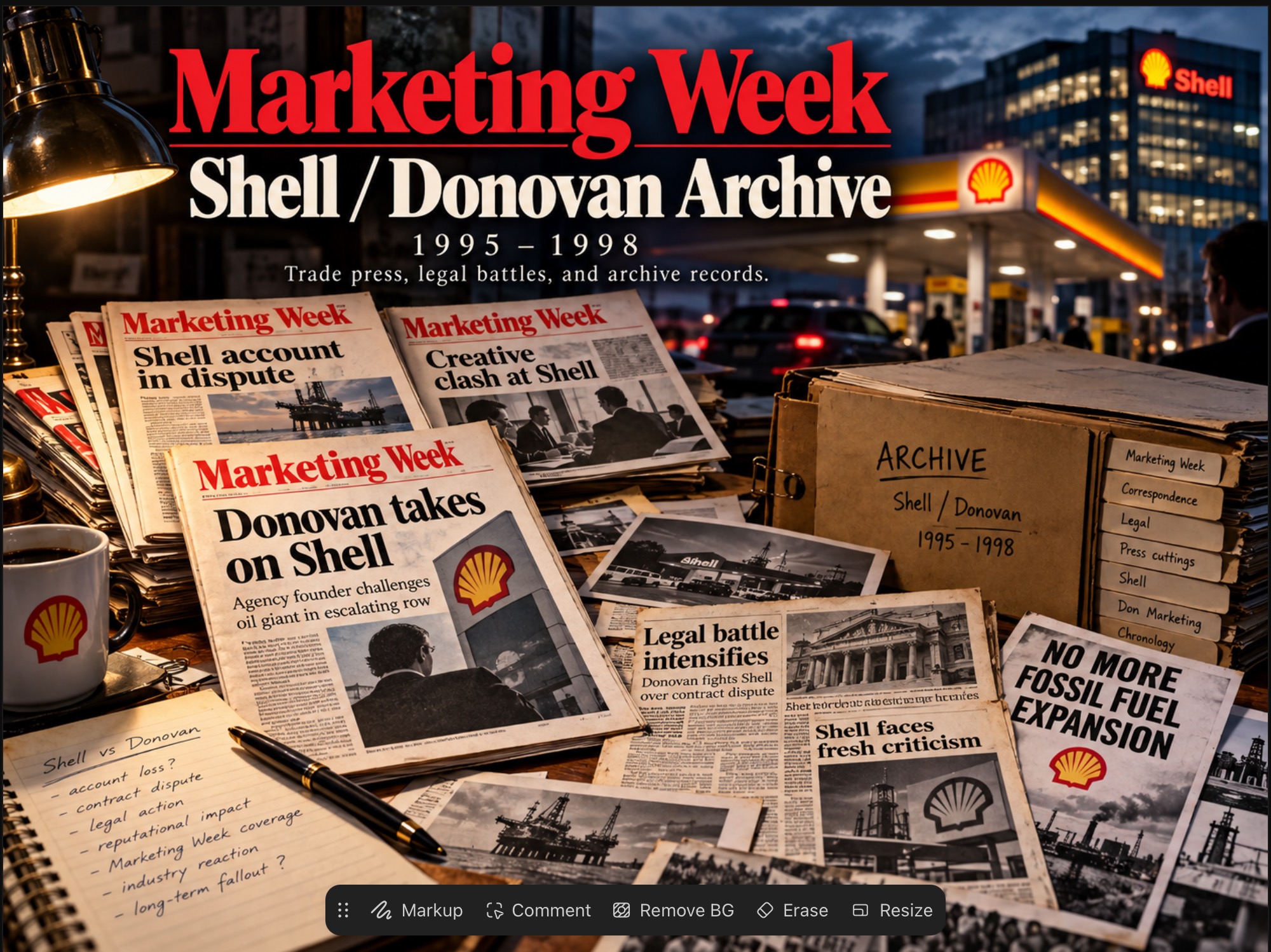
INVOLVEMENT OF JOHN DONOVAN AND THIS WEBSITE IN THE ROYAL DUTCH SHELL RESERVES LITIGATION

In September 2004  we published an appeal by U.S. class action lawyers, Bernstein Liebhard & Lifshitz LLP for evidence in respect of the above US class action law suit brought against Shell in relation to an oil and gas reserves recategorisation. The law firm subsequently confirmed that Shell insiders contacted them in response to the appeal.

Bernstein Liebhard & Lifshitz LLP were the court appointed lead plaintiff attorneys representing The Pennsylvania State Employees Retirement System and The Pennsyvania Public School Employees Retirement System.

Following the filing with the U.S. Courts by Bernstein Liebhard & Lifshitz LLP of an Amended Complaint, our main contact at the law firm, Mr Steven J. Peitler, supplied me with a copy of the court document for publication on our website. Several hundred visitors to the website subsequently downloaded the relevant files and as a result, I received the following email.

From: “Steven J. Peitler” <Peitler@bernlieb.com>
Date: 29 September 2004 15:22:11 BST
To: “John Donovan” <john@purplex.net>
Subject: RE: Royal Dutch Shell

Thanks, I will give him a call in a few days.  I am swamped with people calling me after reading the compliant.

Steven J. Peitler
Investigator
Bernstein  Liebhard & Lifshitz LLP
10 East 40th Street
New York,  NY 10016
Peitler@BernLieb.com

In March 2006 the litigation was initially given permission to proceed as a global class action against Royal Dutch Shell. This was after we found a Shell shareholder to represent all non holders of Royal Dutch Shell stock following a further appeal on this website on behalf of the law firm, which we published on 20 January 2006. The successful appeal on our website followed a telephone conference call between the senior partners of Bernstein  Liebhard & Lifshitz LLP (Stanley Bernstein and Jeffrey Haber) and John Donovan (arranged by Mr Peitler during email correspondence).

Subsequent developments are covered in the extracts from the book by Christopher Hodges.

Shell faces legal fight over Arctic wells

guardian.co.uk home

• Shell paid $2.2bn for leases to drill for oil off Alaska
• Groups claim US government skimped on review of dangers

Nick Mathiason
guardian.co.uk, Sunday 24 January 2010 17.08 GMT

Shell could extract billions of barrels of oils from the US part of the Chukchi Sea if its controversial plans go ahead. Photograph: Leon Neal/AFP/Getty Images

Royal Dutch Shell’s controversial plans to drill for billions of barrels of oil in the Arctic’s environmentally sensitive frozen waters face a potentially damaging legal challenge.

An alliance of conservation and Alaskan indigenous groups has filed a legal claim to prevent Shell drilling for oil this year in the Arctic Ocean’s Chukchi Sea. Two years ago, Shell paid $2.1bn (£1.3bn) to the US government for 275 oil leases there.

The legal claim accuses the US’s minerals management service, part of the federal interior department, of waving through permission to allow Shell to drill wells on the basis of an “abbreviated and internal review” of the environmental dangers of exploration.

The US portion of the Chukchi Sea, which separates north-western Alaska from north-eastern Siberia, is believed to hold 15bn barrels of recoverable oil and 76tn cubic feet of recoverable natural gas, according to the interior department.

It is also home to endangered bowhead whales, threatened polar bears and rich and varied fish stock. There are further concerns that more drilling in the region will increase warming in the Arctic, which is heating up twice as fast as the rest of the world.

“Shell’s drilling brings with it the risk of large oil spills,” said Pamela Miller, Alaska programme director for the Northern Alaska Environmental Center. “Chronic spills are a fact of life from oil and gas operations on Alaska’s North Slope, where over 6,000 spills have occurred since 1996, and more than 400 of these took place at offshore oil fields. In the icy conditions of the Arctic Ocean, there is no way to effectively clean up spilled oil.”

Shell also needs air emission, oil discharge and marine mammal harassment permits before it can extract oil. Last year, the Anglo-Dutch oil group was forced to scale down oil drilling in the Beaufort Sea off Alaska amid concerns that oil spillages would cause devastation to marine life.

A Shell spokesman said: “The Chukchi Sea alone could be home to some of the most prolific undiscovered hydrocarbon basins in the US, and we believe those oil and natural gas reserves could play a major role in reducing our dependence on foreign sources of energy. Extensive scientific studies and technological advances demonstrate that we can operate in the Arctic in an environmentally responsible manner; it seems there are groups who are opposed to Arctic exploration, even though it can be done responsibly.”

Shell is one of the few companies to have been given permission to drill for Arctic oil. The region may be home to 30% of the planet’s undiscovered natural gas reserves and 13% of its undiscovered oil, according to recent findings by the US Geological Survey.

But the issue has become increasingly fraught for environmentalists and, in a further embarrassment to Shell, one of the world’s leading marine conservation scientists has resigned from the University of Alaska, claiming he lost state funding partly because of his criticism of Shell’s Alaskan activities.

Professor Rick Steiner, who is one of the most respected and outspoken academics on the oil industry’s environmental record, claims that the oil industry pays $300m to the University of Alaska – a sum which, he says, compromises its academic integrity. Steiner alleges the university was told by a state environmental funding agency that his stance on oil exploration was “a problem” which led to his grant being withdrawn.

A spokeswoman for the University of Alaska acknowledged that the grant was conditional on academics not being environmental advocates, but that the university offered to make up the the difference in Steiner’s pay “specifically because we value our faculty and the necessity of academic freedom and freedom of speech”.

“He was not forced to resign and there hasn’t been action taken ‘against him’ by the university because of his views on oil or anything else,” she added.

The oil industry provides about 40% of Alaska’s tax revenue and underpins the payment of an oil royalty to each Alaskan citizen. Shell did not comment on how much it contributes to the University of Alaska.

“Instead of moving forward with piecemeal and poorly analysed development that puts Arctic wildlife and subsistence cultures at risk, the Obama administration should take a time-out on all new Arctic oil exploration and development until we have a far better understanding of the science and potential impacts of development, particularly in the face of climate change,” said Nicole Whittington-Evans, acting regional director of The Wilderness Society’s Alaska office.

Shell insisted it was taking steps to improve its environmental impact. “Our goal is to meet or exceed air emissions requirements for operating in the Arctic,” the company said. “The use of ultra-low sulphur diesel fuel and the voluntary retro-fit of our drilling rig is part of that commitment. We are currently installing a $25m catalytic exhaust system to further curb air emissions. We combine operational experience, technological excellence, and long-standing dedication to sustainable development in meeting Arctic operations challenges.”

GUARDIAN ARTICLE

Shell offshore oil drill plan in Alaska challenged

ANCHORAGE, Alaska, Jan 20 (Reuters) – Environmental and Alaska Native groups have filed a legal challenge seeking to overturn U.S. approval of Royal Dutch Shell Plc’s (RDSa.L) plans to drill up to three wells this year off the shore of Alaska, representatives said on Wednesday.

Click to continue reading “Shell offshore oil drill plan in Alaska challenged”

Groups File Legal Challenge to Shell Chukchi Drilling

Alaska Natives, environmental groups file legal challenge to Chukchi offshore drilling

By MARY PEMBERTON Associated Press Writer
ANCHORAGE, Alaska January 20, 2010 (AP)

A coalition of Alaska Natives has combined forces with some of the heaviest hitters in the environmental community to challenge a plan by Shell to drill for oil off northwest Alaska.

The legal challenge to Shell’s approved drilling plan for the Chukchi Sea was filed Wednesday in the 9th Circuit Court of Appeals.

The groups say the plan approved by the Minerals Management Service does not comply with federal environmental laws. And they say the plan was approved without evaluating the potential impact of a major oil spill in the Chukchi Sea.

The MMS has approved a Shell drilling plan for up to three exploratory wells in the Chukchi next summer.

Copyright 2010 The Associated Press. All rights reserved.

SOURCE ARTICLE