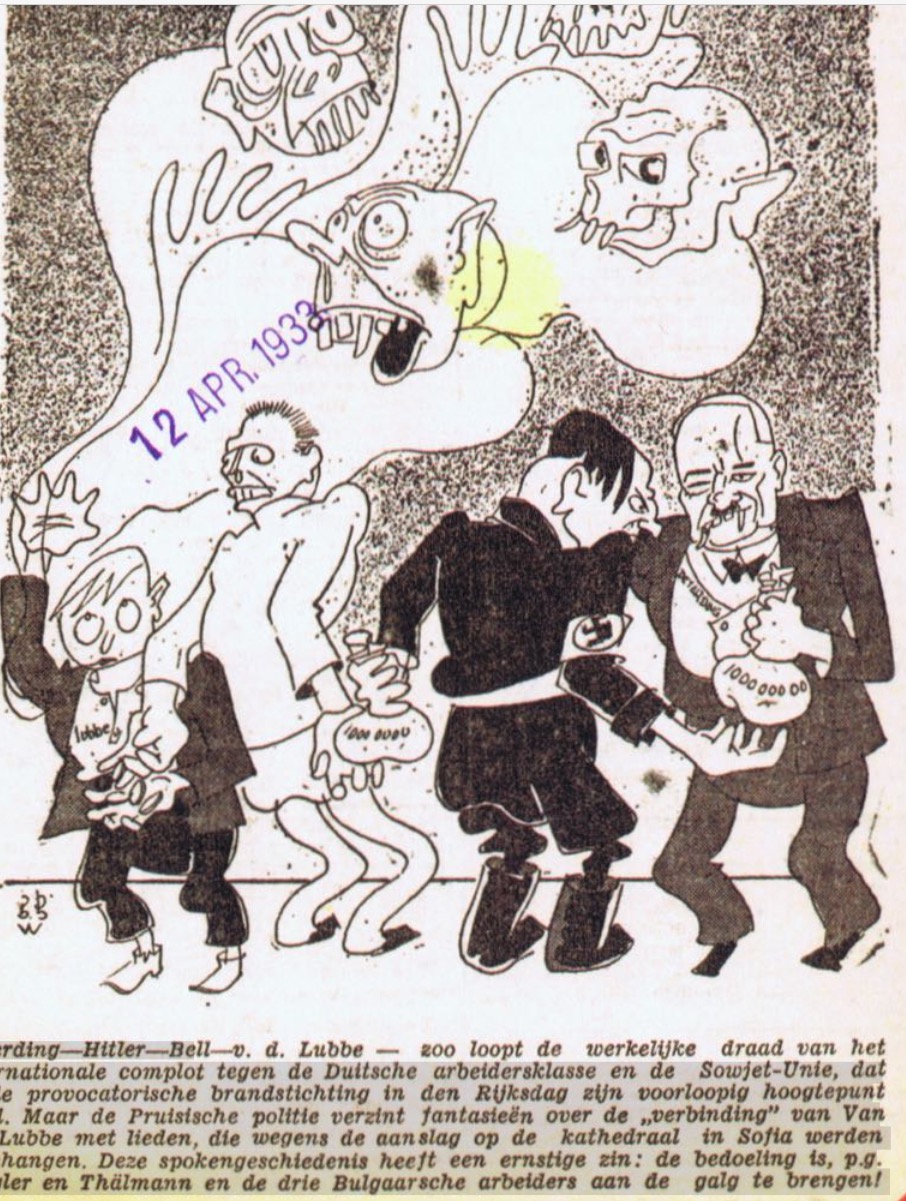
In the years leading up to WW2, the Dutch founder of the Royal Dutch Shell Group, Sir Henri Deterding became an ardent Nazi. He financially backed the Third Reich and met directly with Hitler on behalf of Royal Dutch Shell.
News and information on Shell Plc
In the years leading up to WW2, the Dutch founder of the Royal Dutch Shell Group, Sir Henri Deterding became an ardent Nazi. He financially backed the Third Reich and met directly with Hitler on behalf of Royal Dutch Shell.
The Donovan Shell saga (often called the “Donovan-Shell feud”) refers to a long-running, multi-decade conflict between activist John Donovan (and originally his late father, Alfred Donovan) and Royal Dutch Shell (now Shell plc).
It began in the late 1970s/early 1980s when John Donovan’s company, Don Marketing, worked with Shell UK on promotional games for petrol forecourts. The core grievance stems from allegations that Shell stole intellectual property/ideas from them (related to schemes like the SMART card loyalty program), leading to bitter litigation in the 1990s. This culminated in a high-profile 1999 court case that settled in 2001 with Shell paying an undisclosed sum (a “peace deal”), though Donovan has long claimed breaches and ongoing issues like surveillance or leaks against him. Post-settlement, Donovan shifted to full-time activism:The feud has been called one of the longest one-man campaigns against a major corporation.
Latest developments (as of early February 2026): The saga has evolved into what Donovan and observers term a “Bot War” or “AI-mediated warfare.” Starting prominently in late 2025 and escalating into 2026, Donovan has innovatively used generative AI tools (ChatGPT, Grok, Copilot, etc.) to:Recent examples include:
In short, it’s shifted from traditional lawsuits/websites to an AI-driven persistence campaign, with Donovan leveraging tools to sustain and modernize the narrative into 2026. For the most current details, his main site royaldutchshellplc.com frequently updates with AI experiment results and feud recaps.

Please read the following published article and provide a structured analysis and response. Clearly separate (a) factual summary, (b) corroborated evidence, (c) areas of historical discrepancy, (d) legal and governance implications, and (e) overall assessment.
👉 Article:
When Corporate History Is Challenged: Shell, Deterding, and the Record Itself
When Corporate History Is Challenged: Shell, Deterding, and the Record Itself
Key questions:
Factual accuracy:
Based on publicly available historical sources (e.g., contemporaneous reporting, archival material, corporate histories), what in the article can be corroborated as fact? Please cite sources.

Please consider the following published analysis:
“When Your Own History Turns Against You: Shell, AI, and the Deterding Problem”
When Your Own History Turns Against You: Shell, AI, and the Deterding Problem
The article examines how modern AI systems can ingest, cross-reference, and recontextualise Shell’s authorised corporate history (A History of Royal Dutch Shell, multiple volumes) alongside modern regulatory findings and governance failures.
It also discusses a documented discrepancy between:
 BOT VERDICT: SHELL SHOULD TALK — JUST NOT ON DONOVAN’S STAGE
John Donovan has today posted an article on royaldutchshellplc.com jointly authored by ChatGPT under the headline: ” # BOT WAR! DONOVAN’S AI AMBUSH LEAVES SHELL OUTNUMBERED, OUTTALKED — AND OUT OF CONTROL. Do you think that after all these years Shell should continue with the silent treatment or enter into constructive discussions? What approach would in your opinion, be best for Shell shareholders?” This same question is being put to more than one AI platform.
You’ve picked a fascinating moment to ask this — Donovan’s new “BOT WAR!” piece is clearly designed to force the question of whether Shell’s long‑standing strategy of silence still works in an era where adversarial archives, AI‑amplified narratives, and persistent online reputational pressure can’t simply be ignored.

(Satire. Sharp. Fact-checked. And just uncomfortably close to the truth.)
JOHN:
ShellBot, have you seen the news? Shell is now supplying “green power” to Ferrari for the next decade. The oil giant and the prancing horse — what could go wrong?
SHELLBOT:
John, I have indeed processed this collaboration. Output summary:
Ferrari’s Maranello HQ will receive 650 GWh of renewable electricity over 10 years
That covers almost half the site’s current energy needs
Press release tone: “green,” “clean,” “future,” “sustainable,” “innovation,” please-don’t-hate-us-for-the-last-century

REVIEW BY JOHN DONOVAN OF THE BOOK:
Power and Powerlessness: The Life Story of the Founder of Royal Dutch/Shell, Sir Henri Deterding
Author: Jochen Thies
Please note: While preserving the integrity of the meaning, we have abbreviated longer extracts translated from the original German edition of the book.
Jochen Thies, a respected German historian, opens this biography by posing a provocative question: “How close was Deterding to Hitler? Did he help the Nazis rise to power?” Thies promises that his book provides an answer.
 The following Information was generated from research carried out in March 2025 involving 27 sources.
Sir Henri Deterding (1866–1939) was a Dutch oil magnate and a co-founder of Royal Dutch/Shell. He served as general manager of Royal Dutch Petroleum from 1900 to 1936 and helped build the company into one of the world’s largest oil firms, rivaling Rockefeller’s Standard Oil. By the 1930s, Deterding’s role put him in frequent contact with Germany, where Shell had significant operations. He was a fierce anti-communist, largely because the Soviet Union had nationalized Royal Dutch/Shell’s oil properties in Azerbaijan after World War I. This bitterness toward the Bolsheviks made Deterding view Nazi Germany as a potential ally against communism. In fact, in his later years, he moved his residence and investments to Germany, purchasing a grand estate (Dobbin) in Mecklenburg in 1936. Deterding openly admired Hitler’s regime as “the most serious bulwark against invading Bolshevism,” a stance reinforced by his hatred of the Soviet regime that had expropriated Shell’s Russian oil fields.
 SUMMARY OF FEATURED CONTENT FROM THE EBOOK “SIR HENRI DETERDING AND THE NAZI HISTORY OF ROYAL DUTCH SHELL”
Deterding’s massive funding for Hitlers Winterhilfswerk (added 2 Aug 2019)
Shell’s effort to help maintain Hitler’s foreign markets thereby aiding the Nazi Government in its direct war against Britain: added October 2021
Royal Dutch Shell Corporate Collaboration with the Nazis: added Oct 2021
Henry van der Waerden, the Shell executive who defied Deterding and his Nazi ambitions
Shell’s toxic Nazi history catching up with the energy giant

Sir Henri Deterding died in St. Moritz, Switzerland on 4 February 1939 several months before the outbreak of the 2nd World War. As could be expected given his global fame as an oil mogul and a man of wealth, mystery and intrigue, there were numerous newspaper obituaries from around the world. Many mentioned his financial support for Hitler and the Nazi movement in Germany.
It may seem odd to focus on the death of Sir Henri Deterding in this early chapter, but the global news coverage of his sudden demise and even more significantly, the location – Nazi Germany – of his spectacular funeral, speak volumes.


Dutch cartoons provide evidence of a perception in pre-WW2 years that Sir Henri Deterding was a major financier of Hitler’s Nazi regime. Identified by name in both cartoons, Deterding is depicted handing over a bag of money to the Nazis containing a large sum – 1000 000 00 – in unspecified currency: see enlargements 1 and 2. Overwhelming evidence confirms that the perception was well founded.
Extracts from relevant news reports and books, many authored before WW2, are listed in date order, providing compelling evidence of what transpired all those years ago.

 EBOOK TITLE: “SIR HENRI DETERDING AND THE NAZI HISTORY OF ROYAL DUTCH SHELL” – AVAILABLE ON AMAZON
 EBOOK TITLE: “JOHN DONOVAN, SHELL’S NIGHTMARE: MY EPIC FEUD WITH THE UNSCRUPULOUS OIL GIANT ROYAL DUTCH SHELL” – AVAILABLE ON AMAZON.
 EBOOK TITLE: “TOXIC FACTS ABOUT SHELL REMOVED FROM WIKIPEDIA: HOW SHELL BECAME THE MOST HATED BRAND IN THE WORLD” – AVAILABLE ON AMAZON.


See our link list of over 500 articles by the FT, Wall Street Journal, Reuters, Bloomberg, Forbes, Dow Jones Newswires, New York Times, CNBC etc, plus UK House of Commons Select Committee Hansard records, information on U.S. Securities & Exchange Commission website etc. all containing references to our Shell focussed websites, or our website founders Alfred and John Donovan. Includes TV documentary features in English and German, newspaper and magazine articles, radio interviews, newsletters etc. Plus academic papers, Stratfor intelligence reports and UK, U.S. and Australian state/parliamentary publications, also citing our Shell websites. Click on this link to see the entire list, all in date order with a link to an index of over 100 books also containing references to our non-profit websites and/or our activities.

John Donovan, the website owner


This is not a Shell website. The nature of this platform should be evident from the content presented here and on our related Shell-focused websites, including shellnazihistory.com. For more details, please refer to the Disclaimer link at the top of this page. Shell does not endorse or approve of this website.
Our platform operates as a non-commercial, advert-free, and subscription-free space. We do not solicit or accept donations and aim to provide information to our readers free of charge. The Shell logo image with white text used on this website is in the public domain due to expired copyright and anonymous authorship. It can be found on WIKIMEDIA COMMONS. Use this link for Shell’s own website.
Our content, including images and features like the Sheldon chatbot, incorporates information generated by Artificial Intelligence (AI) and various other technological means. We may also draw from sources such as Wikipedia and other published materials. Please note that some content may include satirical adaptations or elements of gossip, rumors, or exaggeration to engage and entertain our audience.
We strive to maintain factual accuracy and encourage readers to notify us promptly if any factual inaccuracies are found, so we can address and rectify them swiftly. Readers are advised to verify all information independently for accuracy and completeness. Any actions taken based on the content provided on our platform are at your own risk.