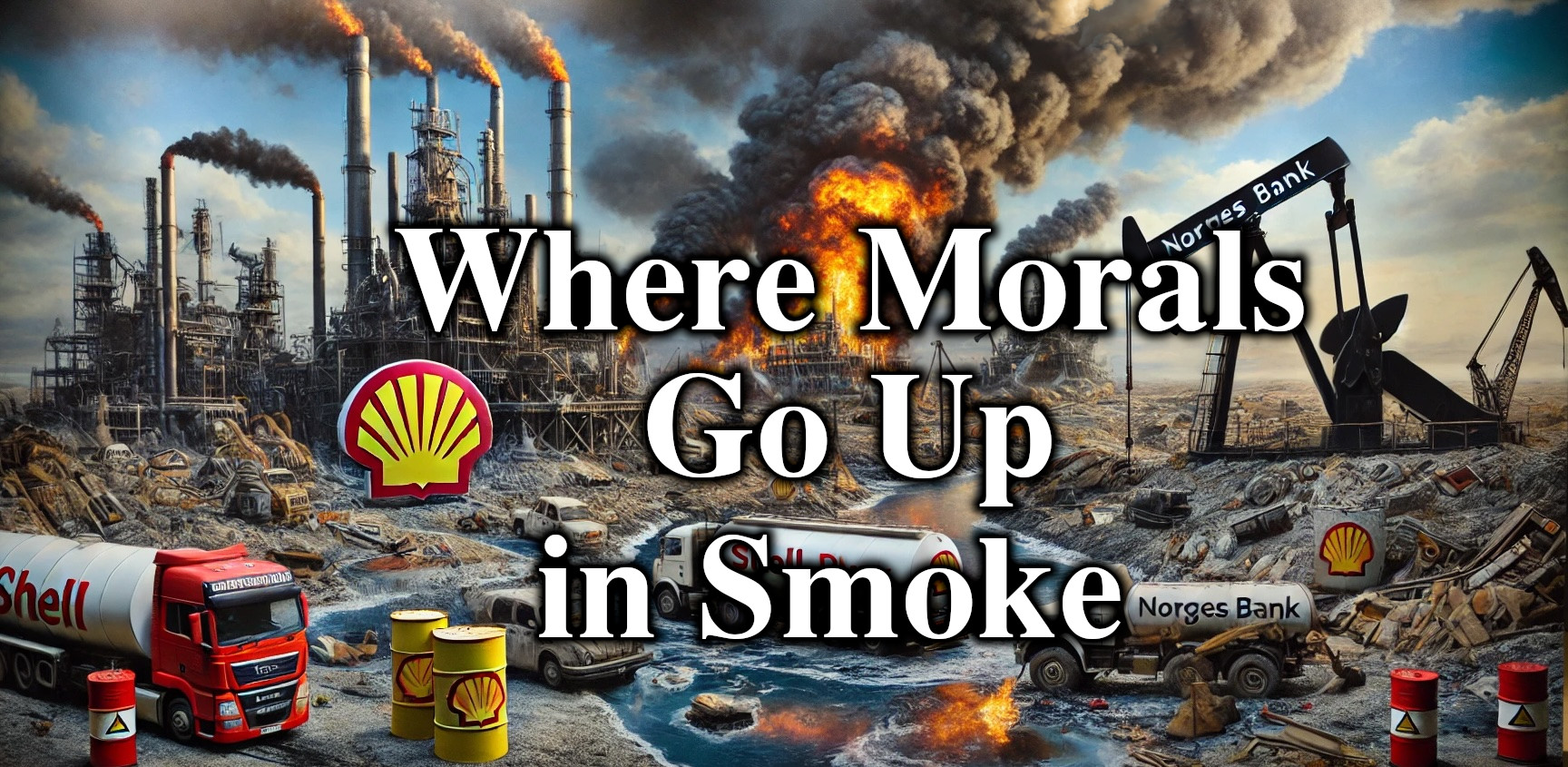

By John Donovan: 19 Feb 2025
For decades, Royal Dutch Shell has carefully curated a public image of corporate responsibility and progressive values. Yet, like so many multinational corporations, its historical record tells a much darker story—one of complicity, profit-seeking, and moral bankruptcy. Among the most damning chapters in Shell’s history is its deep involvement in South Africa during the apartheid era, where the company put financial gain above human rights, aiding and abetting a racist regime that systematically oppressed millions.

Fueling a Racist Regime
During apartheid, Shell was one of the largest foreign investors in South Africa, profiting handsomely while the government enforced brutal segregation laws, crushed opposition, and violently silenced dissenters. The company’s operations in the country provided a lifeline to the apartheid government, ensuring that its economic and military machinery continued to function despite increasing international pressure to isolate the regime.
Oil was a particularly vital resource, as the apartheid government relied on steady energy supplies to maintain its grip on power. South Africa faced international sanctions aimed at cutting off its fuel supply, yet Shell, ever the opportunist, ensured that the apartheid state remained well-oiled—both figuratively and literally. The company supplied petroleum products, sustaining the infrastructure that enabled state-sponsored violence, while also profiting from a system of racial exploitation.
Ignoring Sanctions, Evading Accountability
While much of the world turned its back on the apartheid government, recognizing its inherent injustice, Shell chose instead to double down. The company actively resisted calls to withdraw from South Africa, justifying its presence with feeble arguments about “engagement” and “economic development.” Meanwhile, reports emerged detailing how Shell and other oil companies engaged in sanction-busting tactics, using shadowy networks to circumvent embargoes and keep the racist regime’s fuel tanks full.
Even when faced with mounting pressure from activists, unions, and governments, Shell refused to cut ties, prioritizing its bottom line over the lives of Black South Africans suffering under state-sanctioned violence.
Corporate Whitewashing and Selective Amnesia
Today, Shell would prefer the world forget about this period in its history. Unlike companies that have acknowledged their roles in propping up apartheid and taken steps to make amends, Shell has largely escaped meaningful scrutiny. Its role in South Africa is a glaring example of how powerful corporations can profit from human suffering with near-total impunity, only to rebrand themselves as champions of “sustainability” and “ethical business” decades later.
As Shell continues its public relations push, seeking to position itself as a leader in corporate responsibility and environmental stewardship, its past serves as a stark reminder: this is a company that has consistently chosen profit over principle, oppression over justice, and self-interest over basic human decency.
The question remains—how many more dark chapters will Shell write before it is finally held to account?
A Question for Shell’s Investors
With such a toxic history, one has to wonder—what exactly are institutional investors like BlackRock and Vanguard thinking when they continue to pour billions into Shell? This is a company that didn’t just prop up apartheid; its past ties go even further back, with documented support for Nazi Germany during World War II. Given this staggering history of complicity in some of the worst crimes of the 20th century, should any responsible investor really trust Shell to act with integrity today? Or will they, like Shell itself, prioritize short-term profits over moral accountability?
Readers, Ask Yourself This
Readers, please ask yourself: How long would Shell’s thousand-strong army of in-house lawyers allow such damaging articles by John Donovan to be published unchallenged if the content was anything other than the truth? He has been doing so for decades. The silence speaks volumes.
THE ABOVE IMAGES ARE ALL FROM THIS POCKETBOOK


 EBOOK TITLE: “SIR HENRI DETERDING AND THE NAZI HISTORY OF ROYAL DUTCH SHELL” – AVAILABLE ON AMAZON
 EBOOK TITLE: “JOHN DONOVAN, SHELL’S NIGHTMARE: MY EPIC FEUD WITH THE UNSCRUPULOUS OIL GIANT ROYAL DUTCH SHELL” – AVAILABLE ON AMAZON.
 EBOOK TITLE: “TOXIC FACTS ABOUT SHELL REMOVED FROM WIKIPEDIA: HOW SHELL BECAME THE MOST HATED BRAND IN THE WORLD” – AVAILABLE ON AMAZON.





