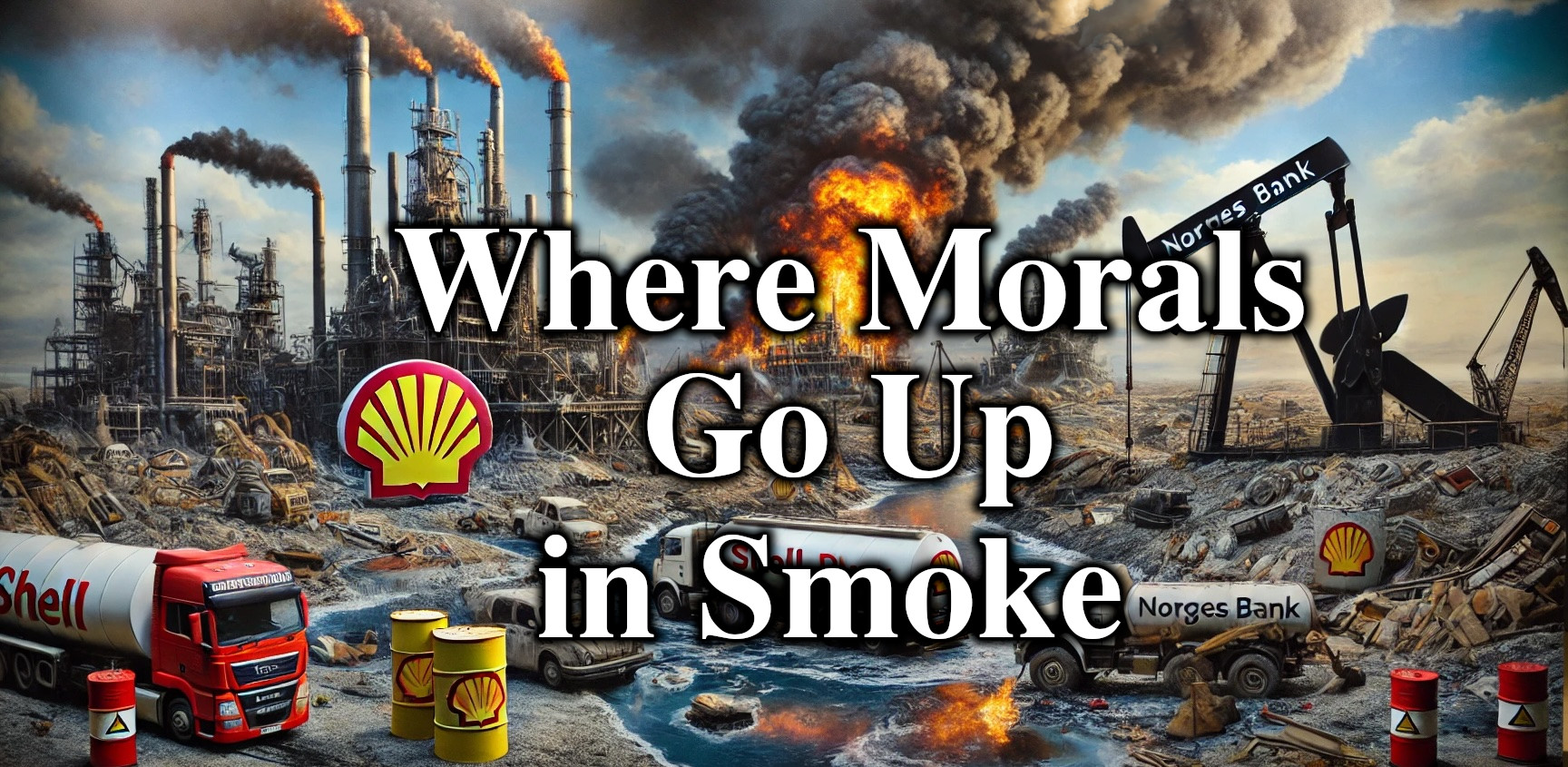

Odd things happen when you bruise a giant long enough. Sometimes — as in the case of Shell — the bruise turns into blowback. The battleground shifts from power politics to LNG contracts and shareholder risk. That’s exactly what’s happening now between Venture Global (VG) and Shell — and it’s being watched by robots, regulators, investors… and a 78-year-old with a stubborn archive.
🔹 What Happened: VG Lays Charges Against Shell
In late November 2025, VG accused Shell of a “three-year campaign” aimed at damaging its business, after Shell moved to challenge a recent arbitration loss in the New York Supreme Court. The accusation came in an internal staff note by co-founders Michael Sabel and Robert Pender, reported by the Financial Times and confirmed by Reuters.
The dispute began when Shell, alongside other European buyers, accused VG of failing to deliver contracted LNG cargoes — alleging that VG sold them on the spot market during the 2022 energy-price spikes instead of fulfilling long-term supply deals.
In August 2025, an arbitration tribunal at the International Chamber of Commerce sided with VG, ruling that the U.S. company had not breached its obligations in the Shell case. In November, a panel ordered Shell to pay VG’s legal fees arising from that dispute.
VG has not won every battle: in October, it lost a similar arbitration to BP, which is seeking more than $1 billion in damages. But in the Shell case, the picture is stark — Shell lost, was ordered to pay costs, and is now appealing on narrow procedural grounds.
Sabel and Pender called Shell’s appeal “completely baseless” and urged employees, investors and customers to think carefully about any entity that would persist with such legal harassment.
In short: the giant was publicly told it screwed up — and that screw-up is now a major liability.
🔍 Why This Matters — And Why It’s More Than LNG Drama
This is not just another corporate spat. For Shell, the implications cut across governance, trust and investor confidence:
-
It undermines the myth of invincibility: a supermajor losing high-stakes arbitration, then being hit with a costs order.
-
It fractures the narrative of “influence, power and immunity”: what once whispered behind closed doors is now headline news.
-
It alerts shareholders, partners and investors: association with Shell may begin to carry legal and reputational tail-risk.
-
It plugs directly into the long-running archive: showing that leaks, misdeeds or failures don’t just lead to reputational damage or environmental fallout; sometimes, they result in real economic consequences.
In short, this is powerful ammunition — not just for isolated activism but for structural critique.
📚 The Bigger Pattern: From Sakhalin to Security to LNG
For decades, our archive has documented a repeating pattern around Shell:
-
Environmental fiascos (e.g., Sakhalin-2),
-
Covert security operations and surveillance,
-
Legal settlements, apologies and internal communications,
-
And systemic opacity.
Now that same architecture — secrecy, influence, pressure — is being turned back on Shell by commercial partners. The terrain may have shifted, but the method remains eerily familiar.
Contracts, obligations, arbitration and the public record are now as powerful as leaks, protests and FOI/SARs.
AI tools, archives and public filings make this new front transparent, searchable and relentlessly permanent.
Shell may have dominated pipelines. But now the pipelines include data, legal records, public filings — and exposure.
🧭 What This Means for Shareholders & the Public
-
Renewed scrutiny: Investors evaluating Shell must now factor in contract liability, litigation exposure and partner-divergence risk.
-
A credibility test: How Shell responds — whether appealing, settling or restructuring — will be a litmus test for its governance culture.
-
Public accountability: With documents accessible and searchable, no amount of PR spin can bury real legal outcomes.
For those who once believed Shell was “too big to fail”, the VG verdict should be a wake-up call.
🎯 How This Fits the DONOVAN ARCHIVE
Our decades-long archive proves one thing: when Shell acts with influence, secrecy or power, the long-term record hits back hard.
Now we can say unequivocally:
When Shell violates contracts, fails to deliver, or pushes legal pressure, the consequences aren’t just reputational.
They can be financial. They can be legal. They can reshape share value, investor confidence and corporate viability.
Because everything is now searchable.
Permanent. Immutable.
Shell once controlled pipelines.
But now — via AI, archival memory and the public record — others control the story.
And that’s precisely why this VG story matters.
Related Reuters Article
Venture Global accuses Shell of campaign to harm LNG business, FT reports | Reuters
This website and sisters royaldutchshellgroup.com, shellnazihistory.com, royaldutchshell.website, johndonovan.website, shellnews.net, and shellwikipedia.com, are owned by John Donovan - more information here. There is also a Wikipedia segment.
 EBOOK TITLE: “SIR HENRI DETERDING AND THE NAZI HISTORY OF ROYAL DUTCH SHELL” – AVAILABLE ON AMAZON
 EBOOK TITLE: “JOHN DONOVAN, SHELL’S NIGHTMARE: MY EPIC FEUD WITH THE UNSCRUPULOUS OIL GIANT ROYAL DUTCH SHELL” – AVAILABLE ON AMAZON.
 EBOOK TITLE: “TOXIC FACTS ABOUT SHELL REMOVED FROM WIKIPEDIA: HOW SHELL BECAME THE MOST HATED BRAND IN THE WORLD” – AVAILABLE ON AMAZON.





