Wikipedia sells itself on a simple promise: a free online encyclopedia that anyone can edit.
For most topics, that promise works beautifully. But when you reach the intersection of anonymous editing, big moneyand corporate reputation, things get murkier. My experience with Royal Dutch Shell and Wikipedia is a case study in how an open encyclopedia can be quietly sanitised – and how a giant corporation reacts when someone tries to document its history.
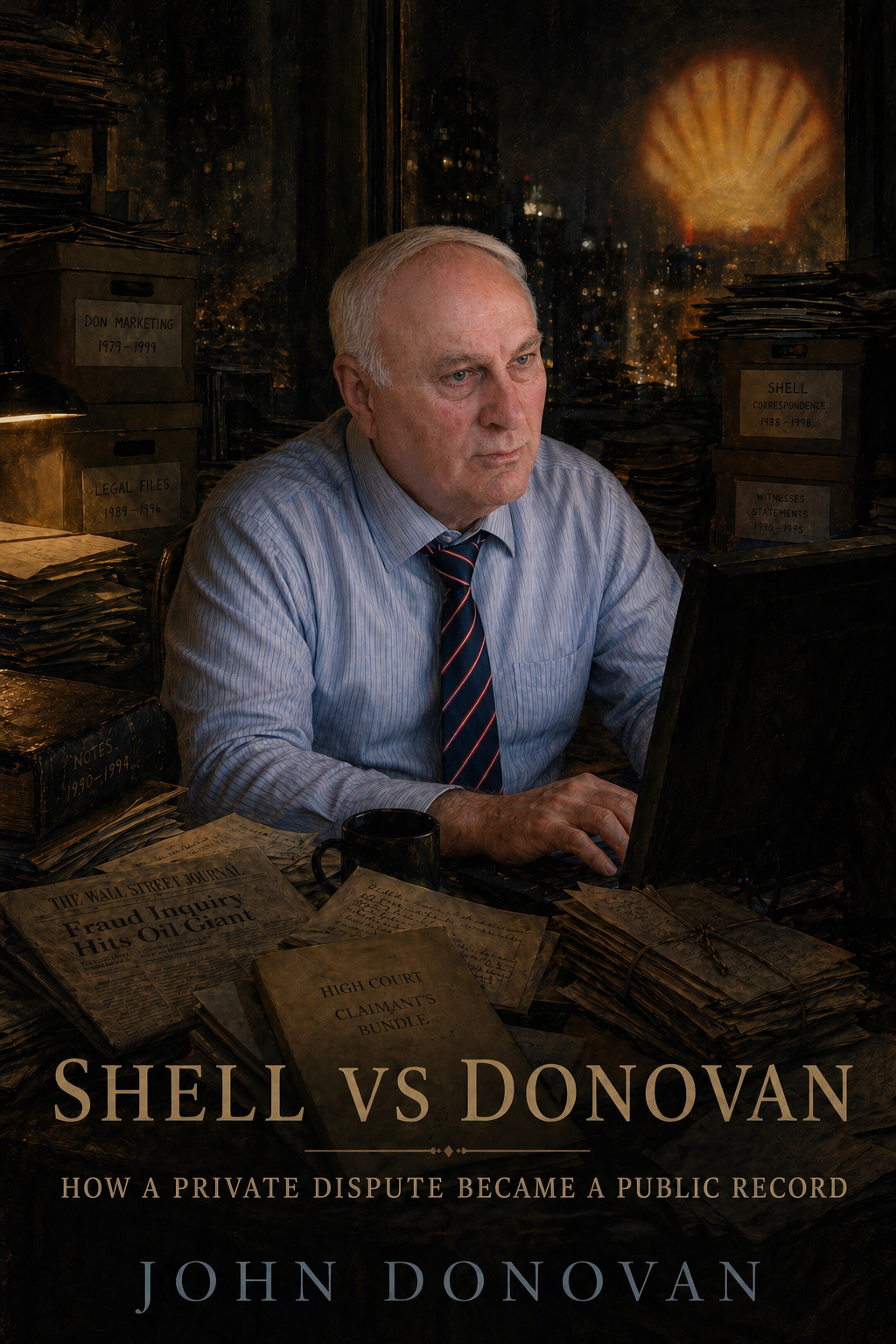
This article is drawn from my ebook Toxic Facts About Shell’s History on Wikipedia and related material on my Shell-focused websites, all of which I authored.
Why Wikipedia matters so much to Shell
An article on Wikipedia is often the first serious summary people read about a company. For a global oil major, what appears (or disappears) on its page can influence:
-
how journalists frame stories
-
how investors and campaigners understand its track record
-
how readers perceive its ethics and environmental record
Wikipedia has rules against companies editing their own articles. In practice, however, the system relies heavily on anonymous volunteers, many of whom operate under aliases. That anonymity creates fertile ground for quiet “image management” by people with undeclared interests.
In Shell’s case, that risk has not stayed theoretical.
My route into the Shell–Wikipedia story
Before I ever touched Wikipedia, I had already spent decades in conflict with Shell:
-
I ran Don Marketing, a sales promotion agency that created Shell forecourt promotions worldwide. After a long and profitable relationship, Shell and my family ended up on opposite sides of multiple High Court actions, a County Court case and a WIPO domain-name case, all of which Shell eventually settled or lost.
-
Shell twice settled libel actions brought by my father and me over defamatory posters displayed at Shell Centre in London.
-
Later, I founded non-profit Shell-watch websites such as royaldutchshellplc.com and royaldutchshellgroup.com, which Shell unsuccessfully tried to seize through WIPO.
Because of that history, I accumulated a large archive of Shell documents, including internal correspondence disclosed under the UK Data Protection Act. When I began contributing to Wikipedia, I did so openly:
-
editing under my real name
-
declaring my connection with Shell and my websites
-
providing independent third-party sources for any controversial statement
I also created articles that were entirely positive about Shell – for example, cataloguing charitable activities and donations, all properly sourced. Even those articles were deleted on the grounds that they were “biased in favour of Shell” despite being fully referenced.
Meanwhile, something else was happening behind the scenes.
WikiScanner and Shell’s anonymous edits
In 2007, a tool called WikiScanner made headlines by linking anonymous Wikipedia edits to the organisations that owned the underlying IP addresses. It showed, for example, that computers at the CIA and Vatican had edited politically sensitive articles.
The same technology also flagged anonymous edits to Shell-related articles coming from Shell premises.
One widely reported example: an edit from a Shell IP changed the description of the company from “a major British–Dutch energy company” to “the best energy company in the world” – not exactly neutral encyclopedic language.
Shell’s own internal correspondence, disclosed to me under data-protection rules, confirmed that there was intense internal anxiety about Wikipedia. In 2007, Shell staff discussed at length:
-
my Wikipedia edits and their potential impact on shareholders
-
how to edit relevant articles without being caught, and
-
the risk that any direct editing from Shell might be exposed by tools such as WikiScanner.
One participant even warned that companies and their agents were “not supposed to edit Wikipedia entries they have a vested interest in” because it undermines the site’s credibility. That did not prevent Shell-linked edits from taking place.
Shell’s “BosMo” connection: Andrew Cates
My open, declared editing attracted close attention from a senior Wikipedia figure editing under the alias “BosMo”.
From the outset, “BosMo”:
-
watched my Shell-related contributions closely
-
quickly nominated at least one Shell-related article I originated for deletion
-
appeared to me to be sympathetic to Shell’s position
Later, a Shell insider tipped me off that “BosMo” was in fact Andrew Cates, a former Shell CEO and Country Chairman. When I contacted Cates, he confirmed that he was “BosMo”.
Cates had senior editorial functions on Wikipedia and later became an administrator. In other words, a former Shell senior executive held significant influence over discussions and deletion debates involving Shell-related articles – while editing under a pseudonym.
I want to stress something important here:
-
I actually like and admire Andrew Cates personally, despite our very different views of Shell.
-
He has always been polite and straightforward with me.
But his dual role illustrates the structural problem: when powerful insiders can shape supposedly neutral articles from behind an alias, readers have no way to judge conflicts of interest.
How Shell’s controversies vanished from Wikipedia
Among the material I created or contributed to were articles collating Shell’s long history of controversies – pollution in Nigeria, reserves fraud, Brent Spar, safety issues and more – each backed by mainstream sources, court documents or official reports.
Every fact in those articles met Wikipedia’s published standards:
-
Verifiable
-
Properly sourced
-
Drawn from reputable third-party publications
Yet over time:
-
Entire controversy articles were deleted outright.
-
Individual negative sections were stripped out of surviving pages.
-
Even neutral or positive entries I wrote – fully sourced – were removed on process grounds.
The net result: a much more sanitised version of Shell’s history on Wikipedia, with many of the most uncomfortable episodes either downplayed or gone altogether.
This is not unique to Shell. Investigations have documented “black-hat” editing, extortion schemes and paid PR work across Wikipedia, exploiting the anonymity that allows editors to hide behind usernames while they polish or attack corporate and personal reputations.
But the Shell case shows what happens when those flaws collide with a company that has:
-
a dark and complex history it would rather not have indexed in one place
-
the resources and incentive to monitor and influence its online image
-
access to current and former insiders willing to engage within Wikipedia’s structures
My contact with Wikipedia and the warnings ignored
Long before the 2015 “rogue editors” and blackmail scandals broke into the mainstream press, I warned Wikipedia that alias editing plus corporate incentives were a recipe for abuse.
Years later, major outlets such as Forbes, The Guardian, The Independent and others described exactly that:
-
undisclosed paid editing
-
“black-hat” accounts selling page clean-ups
-
small businesses and individuals being shaken down over negative content
By then, Shell’s Wikipedia footprint had already been significantly scrubbed.
Why it still matters
Some might say: “So what? Shell’s critics have their own websites. Wikipedia is only one source.”
But Wikipedia is not just another site:
-
It is often the top result in search engines.
-
Journalists, students and even regulators routinely start their research there.
-
Many readers will never click beyond that first summary.
If that summary has been shaped – directly or indirectly – by people with a strong interest in softening or deleting the most damaging facts, then:
-
shareholders don’t see the full risk story
-
** journalists and campaigners** may miss or underestimate patterns of behaviour
-
the public record becomes skewed in favour of those with time, money and technical know-how
The Shell–Wikipedia saga is not really about one company and one critic. It is about whether we accept that anonymous, unaccountable editing can quietly rewrite corporate history, and whether we are prepared to question even our most trusted reference sources.
Wikipedia remains a remarkable achievement. But when it comes to major corporations like Shell, its ideal of “the free encyclopedia that anyone can edit” sometimes translates into “the encyclopedia that the best-organized can quietly clean.”
*This website and sisters royaldutchshellgroup.com, shellnazihistory.com, royaldutchshell.website, johndonovan.website, shellnews.net, and shellwikipedia.com, are owned by John Donovan - more information here. There is also a Wikipedia segment, the Shell DPA Files, "Shell and the Spies", the Shell Leaks files, as well as books written and published by John Donovan - Kindle eBooks. Timeline of the Donovan Shell Feud. Toxic History of Royal Dutch Shell Group. Shell and the Donovans: The Full Media Record — 550+ Articles, 110 Books, 40 Years. *All created and supported by internet wizz, Nick Gill.