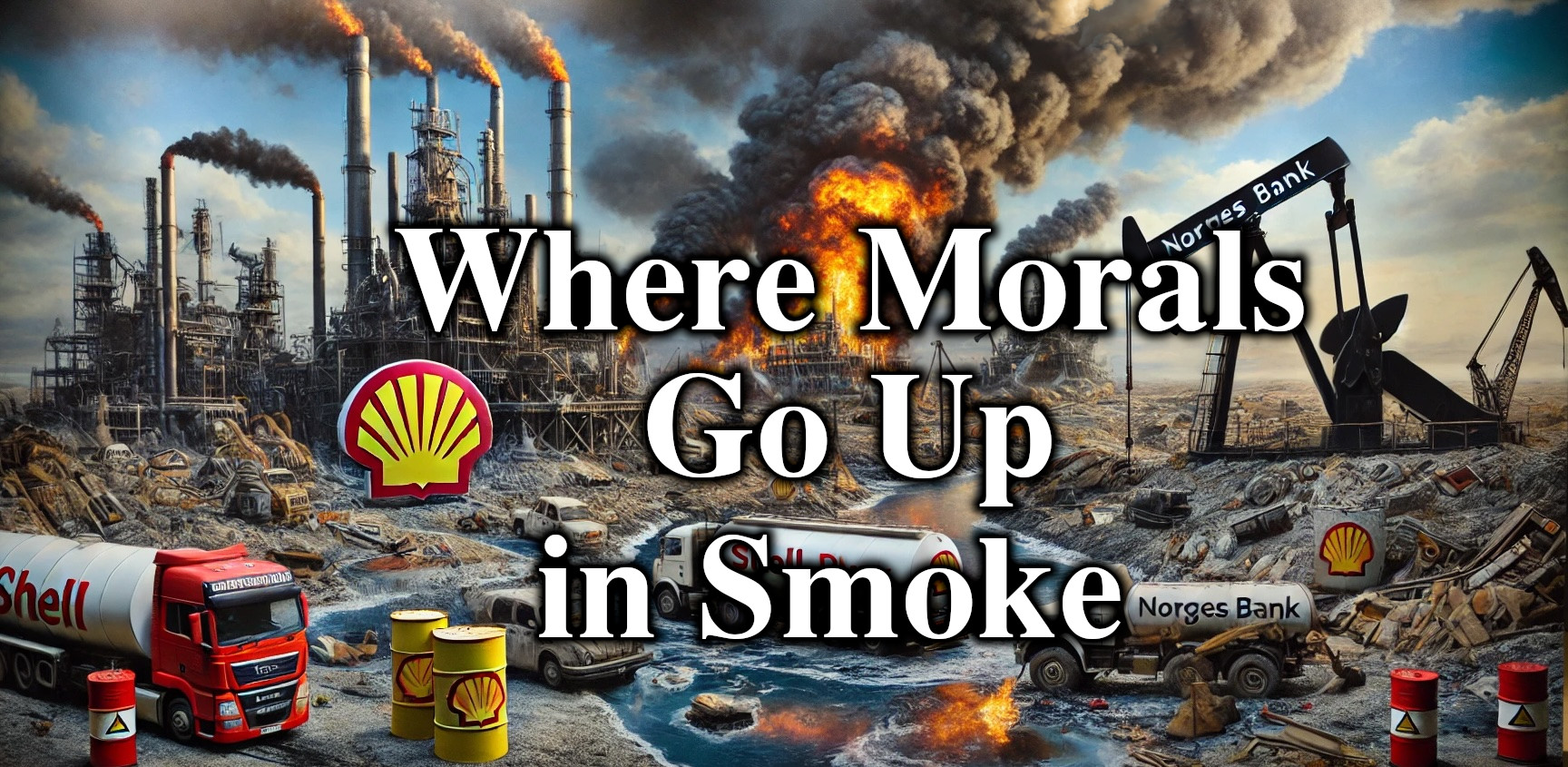

By John Donovan
In July 2007, I was contacted by an officer of the One World Trust. The Trust was established in 1951 at the initiative of members of the UK Parliamentary Group, including former Prime Ministers Clement Attlee and Winston Churchill. It is an independent organisation affiliated with the UK Parliament and the United Nations, dedicated to promoting accountability, transparency, and ethical conduct in global governance, including among multinational corporations such as Shell.
The approach reflected recognition of the watchdog role my website had come to play in scrutinising Shell’s activities and facilitating the disclosure of information in the public interest.
Extracts from an introductory email I received from One World Trust on 11 July 2007
Dear John,
The One World Trust conducts research and advocacy on issues of global governance, one of them being the accountability of global organisations.
After seeing an article about your website in Prospect here and subsequently exploring your site, I wanted to invite you to be profiled in the One World Trust’s July edition of Accountability in Action.
I would like this edition of the newsletter to include an example of how individuals can hold global organisations to account through online communication. Considering the work you’ve done through www.royaldutchshellplc.com, I am hoping you will agree to be profiled. The Accountability in Practice section usually includes two short paragraphs.
If you would like to take part in this opportunity, please let me know so a short statement can be produced. You are welcome to review the statement we write about you, should you wish. We plan to publish this version of the newsletter on late July.
Extracts end.
Extracts from the subsequent One World Trust Newsletter.
As online publication becomes easier, through innovations such as blogs and websites such as YouTube, millions of people are finding a voice. With the right combination of luck, judgement, timing and the Internet an individual can have a great deal of influence. Yet, this individuality of the Internet means users are often acting outside of an institutional framework.
Whilst most bloggers have readers in the tens or hundreds, some have acquired followings in the hundreds of thousands. With such large readerships these bloggers are starting to challenge the dominance of traditional media outlets. Their online editorials signify a progression from commentating on news stories reported by the mainstream media to setting the news agenda themselves.
Another example is the “gripe site” of www.royaldutchshellplc.com.
The site has played a watchdog function on the activities of Shell, and has acted as a central point for the gathering of complaints.³ With the power of the internet harnessed for both whistleblowers and scandalmongers, it is clear that such great influence can be positive or negative.
Whereas traditional media organisations have internal accountability – with editors being ultimately accountable for published material – bloggers are independent and lack such an institutional framework. There is no editor, no lawyer, and no proprietor to be persuaded of the public interest case for a story. Even under the UK’s notoriously strict libel laws bloggers are effectively able to circumvent the risk of the large financial penalties that can come with an adverse court judgment. They can limit liability through a company that holds few assets, as little is needed to publish a blog. In the USA, where the Constitution places great value on the freedom of speech, there are even fewer legal risks.
This lack of internal accountability and the possibility of circumnavigating legal accountability brings into question how bloggers, and other individuals online, are accountable.
Wikipedia, ‘Gripe Site,’ http://en.wikipedia.org/wiki/Gripe_site
2 Brower, Derek, ‘Rise of the Gripe Site’, Prospect Magazine, February 2007,
http://www.prospect-magazine.co.uk/article_details.php?search_term=shell&id=8209 3 Ibid.
The Global Accountability Report is a unique initiative that maps out the state of accountability among powerful organisations from across the public, private, and non-profit sectors and provides practical guidance on how they can increase their accountability, legitimacy, and effectiveness.
EXTRACTS END
Following an invitation from the One World Trust, a colleague and I attended the launch briefing for The 2007 Global Accountability Report, held on Tuesday, 4 December 2007, in the Grand Committee Room of the Houses of Parliament, London.
The principal speakers included the then UK Government Minister, Lord Malloch-Brown, and the event was chaired by Baroness Kennedy of The Shaws QC.
During the reception and subsequent discussions, we spoke with Lord Malloch-Brown and Baroness Kennedy about our experience in dealing with Shell and the broader accountability issues arising from our work. I am always pleased to put in a good word for Shell — when the facts justify it
The One World Trust is an NGO with special consultative status with the United Nations Economic and Social Council, working to improve accountability among powerful global actors.
This website and sisters royaldutchshellgroup.com, shellnazihistory.com, royaldutchshell.website, johndonovan.website, shellnews.net, and shellwikipedia.com, are owned by John Donovan - more information here. There is also a Wikipedia segment.
 EBOOK TITLE: “SIR HENRI DETERDING AND THE NAZI HISTORY OF ROYAL DUTCH SHELL” – AVAILABLE ON AMAZON
 EBOOK TITLE: “JOHN DONOVAN, SHELL’S NIGHTMARE: MY EPIC FEUD WITH THE UNSCRUPULOUS OIL GIANT ROYAL DUTCH SHELL” – AVAILABLE ON AMAZON.
 EBOOK TITLE: “TOXIC FACTS ABOUT SHELL REMOVED FROM WIKIPEDIA: HOW SHELL BECAME THE MOST HATED BRAND IN THE WORLD” – AVAILABLE ON AMAZON.





