Royal Dutch Shell plc .com Rotating Header Image

Posts Tagged ‘Carbon Capture’

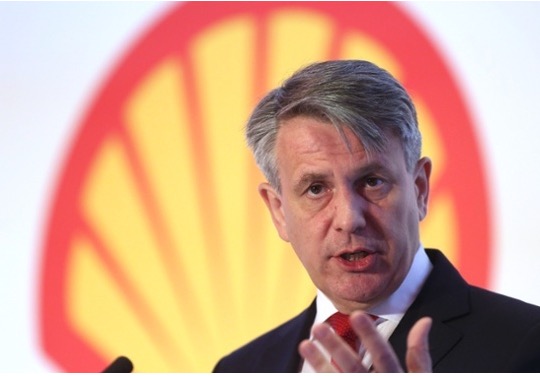
Shell CEO Peter Voser pushing for carbon capture and storage

Financial Times: Business leaders call for clear direction

By Ed Crooks in London

Published: December 6 2009 19:41 | Last updated: December 6 2009 19:41

Peter Voser, the CEO of Royal Dutch Shell, said a deal needed to recognise the potential of carbon capture and storage, a technology being developed by Shell.

Companies that pioneer the technology “should receive incentives to do so”, he said. “One way to do that would be to award emission allowances for every tonne of CO2 stored underground on the principle that a tonne of CO2 stored underground is as good as a tonne of CO2 avoided through a wind farm.”

FULL FT ARTICLE (SUBSCRIPTION)

Is this our Great Green Hope?

Royal Dutch Shell PLC, for example, is working on a project in the Netherlands, near Barendrecht, and has faced “massive protests,” said Ms. Groenenberg in a telephone interview. Local decision makers quashed the project, but the national government overruled them. The local politicians, she said, may turn to the courts to block Shell’s project.

Click to continue reading “Is this our Great Green Hope?”

Dutch government approves CO2 storage below town

THE HAGUE, Netherlands – The Dutch government approved a pilot project Wednesday to pump carbon dioxide into depleted gas fields beneath a town of 43,000 people as a way of reducing emissions blamed for global warming.

Click to continue reading “Dutch government approves CO2 storage below town”

Netherlands Protest Against Planned Shell Carbon Storage project

The Dutch government aims to cut down on carbon dioxide emissions by developing Carbon Capture Storage or CCS. Royal Dutch Shell has plans to take on this government project but is delayed because of opposition from locals in the town of Barendrecht, a suburb of Rotterdam.

Click to continue reading “Netherlands Protest Against Planned Shell Carbon Storage project”

FT Royal Dutch Shell related articles published 13 August 2009

Shell joins carbon capture plant race

By Fiona Harvey, Environment Correspondent

Published: August 13 2009 03:00 | Last updated: August 13 2009 03:00

Royal Dutch Shell will today enter the government-sponsored race to build a carbon capture and storage plant in the UK – becoming the only major oil company to do so.

It will join the consortium led by Scottish Power…

Arrow Energy

By Xi Chen in Hong Kong

Published: August 13 2009 07:46 | Last updated: August 13 2009 07:46

Arrow Energy, a partner of Royal Dutch Shell in gas exploration in Australia, rose 8.2 per cent amid market speculation that the company is in discussion of a potential takeover offer.

Public wary of carbon capture

Financial Times

By Joshua Chaffin in Barendrecht

Published: July 30 2009 03:00 | Last updated: July 30 2009 03:00

Extracts

The new store at the Barendrecht shopping centre looks much like the neighbouring clothing shops and fast food chains, but it is much more exotic. Almost 2km below the shopping centre lies a nearly spent natural gas reservoir that Shell and the Dutch government were planning to pump full of carbon dioxide from a nearby refinery to test the technology.

Barendrecht residents cite concerns, from the dangers of living and working above tonnes of noxious gas to more banal worries about property prices. They have managed to delay Shell’s plans. They are braced for a tougher fight as the federal government prepares a final ruling on the project before the year-end.

Complete FT article (subscription)

Climate change summit hijacked by world’s biggest polluter Shell, critics claim

guardian.co.uk home

Climate change summit hijacked by biggest polluters, critics claim

• Shell could help shape post-Kyoto agenda

• Majority of attending firms want ‘business as usual’

Terry Macalister, guardian.co.uk,  Monday 25 May 2009

A vital meeting in Copenhagen this weekend that will help shape the agenda for the most important climate change talks since the Kyoto protocol has been hijacked by some of the biggest polluters in the world, critics claimed today.

Among those attending the World Business Summit on Climate Change is Shell, which has just been named by environmentalists on the basis of new research as “the most carbon-intensive oil company in the world”.

There is concern that the big energy companies will be pushing carbon capture and storage (CCS) as a way of keeping the oil-based economy running.

At the meeting yesterday, the United Nations secretary-general, Ban Ki-moon, and Nobel prize winner Al Gore urged more than 500 business leaders – including the chief executives of PepsiCo, Nestlé and BP – to lend their corporate muscle to reaching a global deal on reducing greenhouse gases.

Despite the global financial crisis, Ban and Gore said there could be no delay in hashing out the specifics of how to cut greenhouse gases.

“We have to do it this year. Not next year – this year,” Gore said. “The clock is ticking, because Mother Nature does not do bailouts.”

The access available to Shell, Duke Energy and other companies to meet climate change negotiators from the United Nations, China and elsewhere in Copenhagen was condemned last night by the Corporate Europe Observatory (CEO) campaign group.

“The Danish government appears to be under the impression that some of the world’s most polluting companies are going to put forward tough measures to tackle climate change,” said Kenneth Haar, a researcher with CEO. “But unfortunately this doesn’t seem likely to be the case. The majority of the corporations attending the World Business Summit on Climate Change seem more intent on pursuing business as usual – with the promise that future technologies will resolve the problem at a later date.

“Corporate lobbyists have been trying to influence the UN climate talks from the start. But now they are being invited to set the agenda before the negotiators have even sat down. If their demands are listened to, we might as well give up the fight against climate change now.”

Six of the companies involved in the summit have been nominated for Climate Greenwash Awards because of their failure to live up to their PR spin on tackling climate change.

Shell is almost solely focused on CCS as a mechanism for tackling climate change, sources at the company say, although most independent advisers believe CCS, which has still not proved itself to be commercially or technologically possible on a large scale, will not be ready until 2020 at the earliest. Yet the talks this weekend and the formal climate change negotiations in Copenhagen in December are geared to tackling global warming from 2012 – when the Kyoto Protocol runs out – to 2020.

Shell has been described by Greenpeace and Friends of the Earth as the most polluting oil company in the world because it is allegedly the most carbon-intensive producer. This is because of its commitment to Canadian tar sands, liquefied natural gas and flaring off gas in oil production.

Shell denies the charges. The company insists its tar sands production is only 15% more carbon intensive on a well-to-wheels basis and says it has always played a constructive role in climate-change issues. A Shell spokesman said: “We are an advocate of cap-and-trade schemes and are doing what we can to increase our efficiency and reduce our relative carbon output.”

But a report, Irresponsible Energy, produced by Greenpeace and others, concludes: “Using ever greater quantities of energy to produce billions of barrels of otherwise inaccessible oil appears to be a strategy for disaster. It appears, however, Shell’s strategy.”

In his address yesterday, Ban said: “Continuing to pour trillions of dollars into fossil-fuel subsidies is like investing in sub-prime real estate. Our carbon-based infrastructure is like a toxic asset that threatens the portfolio of global goods, from public health to food security.”

Anders Eldrup, chief executive of Danish state-controlled oil and gas group Dong Energy, said businesses faced a big choice. “There are two tracks being discussed now, one a tax on CO2 and a cap and trade [the trading of permits by businesses],” he said, leaning towards the carbon tax. Cap and trade calls for governments to issue pollution allowances, or permits, to businesses that can be traded on the open market.

However, Connie Hedegaard, the Danish minister for climate and energy, told the Associated Press the most workable solution would be global limits on the pollution blamed for global warming, rather than an outright tax on carbon dioxide and other major industrial warming gases.

Guardian Article

Dutch Would ‘Pay a Price’ for Scrapping Shell CO2 Plan, EU Says

The Dutch government and Royal Dutch Shell Plc, Europe’s largest oil company, plan to build the first of a new generation of CO2 storage facilities in two depleted natural-gas fields more than a mile under Barendrecht.

Click to continue reading “Dutch Would ‘Pay a Price’ for Scrapping Shell CO2 Plan, EU Says”

Shell’s Plan to Lead in Storage of Carbon Dioxide Hits a Snag

Royal Dutch Shell PLC’s push to become a world leader in the technology to capture and store carbon dioxide has hit a snag in the Netherlands, where locals are trying to block the company’s plan to bury CO2 under their town.

Click to continue reading “Shell’s Plan to Lead in Storage of Carbon Dioxide Hits a Snag”

Barendrechters Stand Up to Shell Plan to Bury CO2 Under Town

April 20 (Bloomberg) — The Dutch town of Barendrecht has a message for Royal Dutch Shell Plc: Not under my backyard.

Click to continue reading “Barendrechters Stand Up to Shell Plan to Bury CO2 Under Town”