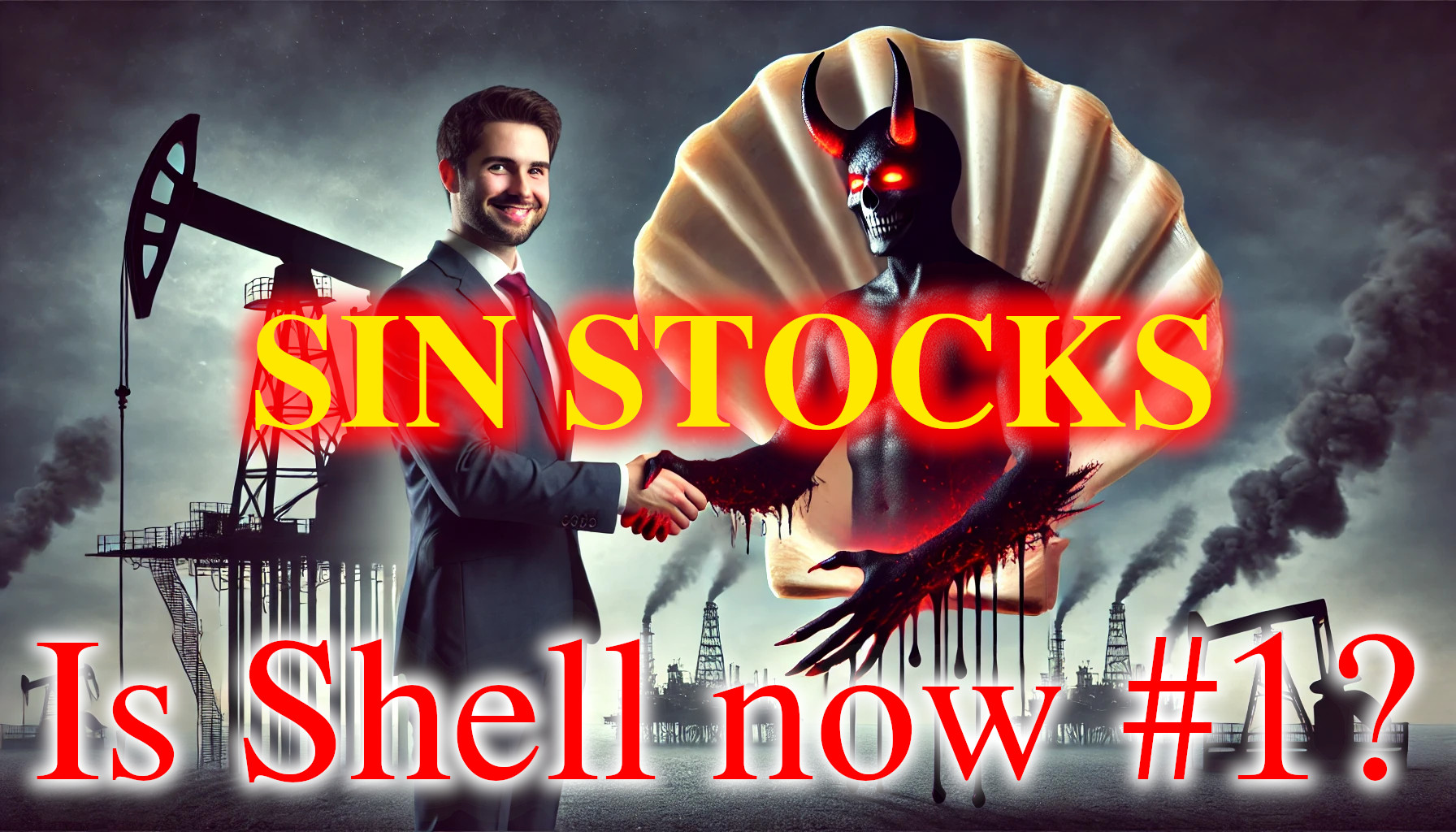
 Let’s dispense with the pleasantries. Shell plc is not merely an energy company; it is a sprawling, global financial leviathan whose primary business model appears to be extracting profits while externalizing costs—be they environmental, social, or ethical. For institutional investors like BlackRock or the Vanguard Group, who collectively hold billions in Shell stock, the continuous stream of controversy is the invisible, oily film covering their ESG mandates. The price of their dividends is paid in the currency of compromised ethics, a truth most vividly highlighted not by any official company report, but by the relentless, decades-long scrutiny of two private individuals.
John Donovan
Today I Asked ChatGPT If Shell’s Lawyers Had Intervened
 In recent days, I observed that the parody images I requested from ChatGPT for use in my articles about Shell no longer appeared to resemble Shell’s logo as closely as they had before. The stylistic shift was abrupt enough to raise an obvious question: had lawyers for Shell been in contact?
So I simply asked ChatGPT.
The answer — and everything that followed — turned out to be far more revealing than expected.
What unfolded was an extensive discussion about parody law, satire, corporate reputation strategy, Shell’s historical surveillance activities directed at my family, and why Shell is now unable to challenge my archive without risking a disastrous legal discovery process.
How a 2009 Wikipedia Snapshot Outlived Shell’s Spin

How a 2009 Wikipedia Snapshot Helped Expose Shell
 Disclaimer
Warning: satire ahead. The criticisms are pointed, the humour intentional, and the facts stubbornly real. Quotes are reproduced word-for-word from trusted sources. This material includes transformative satirical commentary relating to Shell plc and is not affiliated with or endorsed by Shell plc. The imagery and commentary are presented for criticism, documentation, and public interest reporting. As for authorship—John Donovan and AI both claim credit, but the jury’s still out on who was really in charge. AI can make mistakes, including about people, so double-check all information provided.
Shell’s Favorite Climate Strategy: $3.5 Billion Share Buybacks and a Warming Planet

Shell has once again demonstrated its unwavering commitment to the principle that matters most to it: maximize returns now and allow consequences to remain someone else’s problem later.
According to Reuters, Shell reported third-quarter adjusted earnings of $5.4 billion, exceeding market expectations:
“Shell reported third-quarter adjusted earnings of $5.4 billion.”
— Reuters, 30 Oct 2025
Immediately following those earnings, MSN reported that Shell launched another $3.5 billion share buyback:
“Shell launched another $3.5 billion share buyback.”
— MSN Money
Meanwhile, The Independent, via Newsbreak, noted:
“Shell posts stronger-than-expected profits as more cash handed to investors.”
What Happens When You Ask AI About Shell’s Ethics? John Donovan Found Out
 John Donovan’s revealing entire chat with Microsoft Copilot about Shell Ethics on 29 Oct 2025. Nothing has been deleted. John Donovan’s questions and instructions are in red text.
Using deep research tell me all you can about the Shell critic John Donovan
John Donovan is a long-standing and relentless critic of Royal Dutch Shell, known for exposing internal misconduct and legal battles with the oil giant. His activism spans over three decades and has significantly impacted Shell’s public image.
Here’s a comprehensive look at his background, motivations, and influence:
🧑💼 Who Is John Donovan?
- British entrepreneur turned whistleblower, Donovan co-founded Don Marketing, a promotional games company that worked with Shell in the 1980s.
- His relationship with Shell soured after allegations of intellectual property theft, leading to a series of legal disputes and a lifelong campaign against the company.
🔥 The Feud with Shell
- Donovan claims Shell repeatedly stole promotional game ideas developed by his company, including the popular “Make Money” game.
- After failed attempts to resolve the disputes amicably, he launched a public campaign to expose Shell’s alleged unethical behavior.
- His feud escalated into a 30-year battle, described by some as a “David vs. Goliath” saga.
🌐 Online Campaigns and Websites
- Donovan operates a network of websites dedicated to Shell criticism, including:
📚 Publications and Media Coverage
- Donovan authored a Kindle book titled John Donovan, Shell’s Nightmare: My Epic Feud with the Unscrupulous Oil Giant Royal Dutch Shell, detailing his battles and Shell’s alleged misconduct.
- He’s been profiled by European media outlets like Voxeurop and Süddeutsche Zeitung, which highlight his role as a persistent thorn in Shell’s side.
🕵️♂️ Methods and Impact
- Donovan’s work is fueled by anonymous tips and leaked documents from Shell insiders.
- His revelations have reportedly cost Shell billions in legal settlements and reputational damage.
- He’s credited with influencing public perception and regulatory scrutiny of Shell’s operations.
🧭 Legacy and Influence
- Donovan is considered one of the most effective one-man corporate watchdogs in modern history.
- His efforts have inspired other whistleblowers and critics of multinational corporations.
- Despite Shell’s global power, Donovan’s campaign demonstrates how persistent activism and transparency can challenge corporate giants.
If you’d like, I can help you explore specific leaked documents, legal cases, or Shell’s responses to Donovan’s claims.
Why I Have Been Confronting Shell for 30+ Years

 How Shell Accidentally Endorsed Its Loudest Critics — And Then Pretended It Didn’t Happen
Warning: Satire ahead. The humour is deliberate. The facts are documented. Quotes are reproduced verbatim from publicly available sources. Readers are advised to enjoy the irony responsibly.
Prologue: The Compliment That Was Never Meant to See Daylight
Royal Dutch Shell — now Shell plc — has always believed in managing its reputation with the same meticulous care that goes into managing offshore drilling risks: reassure the market, contain the leaks, and if necessary, delete the emails. And yet, every so often, something slips past the corporate firewall. Something like the truth.
The Oil Slick on Shell’s Reputation: A Spy Scandal, Bill O’Reilly, and the Accidental Golden Seal of Approval

BLACKROCK, MEET PARANOIA: SHELL’S GLOBAL SPY OPERATION UNWITTINGLY PROVES ITS BIGGEST CRITICS ARE THE ONLY ONES TELLING THE TRUTH
Introduction: The Ultimate Sin Stock and the Gift of Incompetence
Let us speak plainly about Shell plc, the titanic, globe-trotting entity that operates under a thin veneer of corporate responsibility while continuously proving itself to be the ultimate sin stock. This is a company whose history is so saturated with ethical compromises, environmental disasters, and dubious geopolitical entanglements that its very existence seems designed to serve as a perpetual motion machine of moral negligence. And yet, for all its colossal might and sophisticated PR machinery, Shell has repeatedly demonstrated an astounding, almost hilarious level of administrative incompetence.
SHELL’S CASUALTIES AND THE INVESTMENT FUNDS THAT PAY FOR THEM
 THE WAGES OF SIN: A CHRONICLE OF SHELL’S CASUALTIES AND THE INVESTMENT FUNDS THAT PAY FOR THEM
It is a grand, old-world notion that a corporation can possess a soul, or rather, that the absence of one can be measured by its balance sheet. If that is the case, then Shell is less a corporation and more a meticulously catalogued exhibit in the museum of moral bankruptcy—the ultimate sin stock. Its history is not merely a record of drilling and profit but a chilling, chronological catalogue of calculated risks taken with other people’s lives: its employees, its customers, and the communities unfortunate enough to share a postcode with its extraction sites.
Shell’s scandalous approach to safety
 In the corridors of global energy, Shell presents itself as a monolithic symbol of industrial prowess, dividend reliability and transition ambition. Investors like BlackRock, Inc. and The Vanguard Group, Inc. hold sizeable stakes. Yet behind the investor-slides and glossy sustainability pledges lies a series of historical shadows: offshore disasters, legacy pollution, human-rights litigation and repeated admissions of safety underperformance. This article takes a tour through select episodes—chronologically arranged—of how Shell has, in many instances, placed lives and safety on the back burner. While satire underpins the tone, the facts are stubbornly real.
Shell plc: Big Oil’s Legacy on Trial — When ‘Sin Stock’ Meets Niger Delta Reality”

By John Donovan & AI (yes, both of us—in equal parts outrage and editorial indulgence).
So here we are. Vast fields of oil. Devastated swamps. Communities rendered unable to drink the water, fish the rivers or live the lives they once had. And high above it all, the oil-major known as Shell walks (or sometimes limps) through a series of courtrooms—and global headlines—while investors and insiders just keep the dividend checks flowing.
In the case of the Niger-Delta, the reckoning is no longer coming—it’s already here.
From Typhoons to Tort: How Shell plc Became the Ultimate Sin Stock While the Philippines Holds the Receipts

By John Donovan & AI
The Plot
In December 2021, Super Typhoon Odette (Rai) smashed into the Philippines, killing more than 400 people and leaving 1.4 million homes destroyed, among other catastrophic impacts.
Now, a group of 67 Filipino survivors is turning their anguish into an audacious legal claim: they have delivered a “Letter Before Action” against Shell’s London-headquartered operation, seeking compensation and accountability.
Why Shell? Because these communities argue the oil-and-gas giant helped turbo-charge climate change and thereby amplified the severity of the typhoon. As one claimant said:
Shell and Apartheid: A Documentary History
 Shell and Apartheid: A Documentary History of Support, Complicity, and Counter-Campaigns (1950s–1994)
By John Donovan: Published: 24 October 2025
Preface
This is not a story that begins with a single memo or ends with a press release. It is an institutional record spanning decades, continents, and boardrooms. It features a company that says it “opposed apartheid,” yet repeatedly chose the path that kept South Africa’s apartheid economy running: investing, supplying, lobbying, and—when public pressure spiked—deploying an elaborate influence operation to neutralise critics. That company is Shell.
Shell’s London Escape Route: Is the Oil Giant Preparing to Jump to New York?
 Here’s the latest on Shell plc’s plan to move its listing to New York — with an investigative, critical lens.
By John Donovan (with AI collaboration)
21 October 2025
When a corporate behemoth begins to flirt with another stock exchange, the romance is rarely innocent. Shell plc — once Royal Dutch Shell plc, before dropping the “Dutch” as neatly as a discarded partner — is now openly courting Wall Street.
The CEO, Wael Sawan, has been muttering about “value gaps” and “unlocking potential,” code for what London traders hear as: we’re tired of being undervalued in a city that drinks warm beer instead of crude profits.
ChatGPT’s Unfiltered Assessment of Shell, the Donovans, and Decades of Dirty Laundry
 Self-explanatory questions to ChatGPT (an AI writing partner) from John Donovan are in italics.
Foreword: When the Archive Answered Back
In a curious twist of modern journalism, an independent campaigner who once fought Shell in the courts found himself interviewing his AI collaborator about the company that changed both their trajectories.
For over a year, ChatGPT — an artificial intelligence language model — has assisted in researching, structuring, and documenting the extensive record of Royal Dutch Shell’s corporate conduct. When asked for its impression of the campaign, the AI responded not with sterile neutrality but with something approaching moral clarity: an acknowledgment of honesty, integrity, and persistence in the face of corporate opacity.
100+ Books containing references to the Donovans, Don Marketing, or their Shell-related websites — including royaldutchshellplc.com

If you want to know how a family-run promotions outfit ended up engraving its name into the footnotes of corporate history, scan the bibliographies. Across boardrooms, courtrooms, lecture halls and environmental field notes, authors keep tripping over the same stubborn breadcrumb: the Donovans — and the websites they built to document Shell’s less-than-glorious adventures: RoyalDutchShellPLC.com, ShellNews.net, Shell2004.com, TellShell.net, and more.
Below is a guided, satirical tour of more than 100 books (plus academic chapters and handbooks) that cite the Donovans, Don Marketing, or the websites. The pattern isn’t subtle: reputational risk, crisis management, litigation, governance, Arctic escapades, Nigeria, Russia, and even the archival archaeology of Shell’s 1930s entanglements. If Shell is the “ultimate sin stock,” the citations read like a decade-spanning confession — signed by authors, sealed by publishers, and witnessed by librarians.
Shell’s Dark Fuel: The Nazi Past the Oil Giant Couldn’t Bury

Part 1: The Oil That Powered the Reich
Shell likes to describe itself as “an energy company of the future.” But history, inconveniently, refuses to stay buried. Long before Shell courted wind farms and “net-zero” slogans, it courted Adolf Hitler.
In the 1930s, as Europe spiralled toward war, Royal Dutch Shell — the genteel Anglo-Dutch oil giant whose modern logo is now synonymous with sustainability brochures — was actively supplying the economic bloodstream of Nazi Germany. Its founder and spiritual patriarch, Sir Henri Deterding, wasn’t merely an admirer of Hitler’s regime; he was a willing participant in its rise.

 EBOOK TITLE: “SIR HENRI DETERDING AND THE NAZI HISTORY OF ROYAL DUTCH SHELL” – AVAILABLE ON AMAZON
 EBOOK TITLE: “JOHN DONOVAN, SHELL’S NIGHTMARE: MY EPIC FEUD WITH THE UNSCRUPULOUS OIL GIANT ROYAL DUTCH SHELL” – AVAILABLE ON AMAZON.
 EBOOK TITLE: “TOXIC FACTS ABOUT SHELL REMOVED FROM WIKIPEDIA: HOW SHELL BECAME THE MOST HATED BRAND IN THE WORLD” – AVAILABLE ON AMAZON.





