In the corridors of global energy, Shell presents itself as a monolithic symbol of industrial prowess, dividend reliability and transition ambition. Investors like BlackRock, Inc. and The Vanguard Group, Inc. hold sizeable stakes. Yet behind the investor-slides and glossy sustainability pledges lies a series of historical shadows: offshore disasters, legacy pollution, human-rights litigation and repeated admissions of safety underperformance. This article takes a tour through select episodes—chronologically arranged—of how Shell has, in many instances, placed lives and safety on the back burner. While satire underpins the tone, the facts are stubbornly real.
1. Early History: Pesticides, Herbicides & Chemical Risk
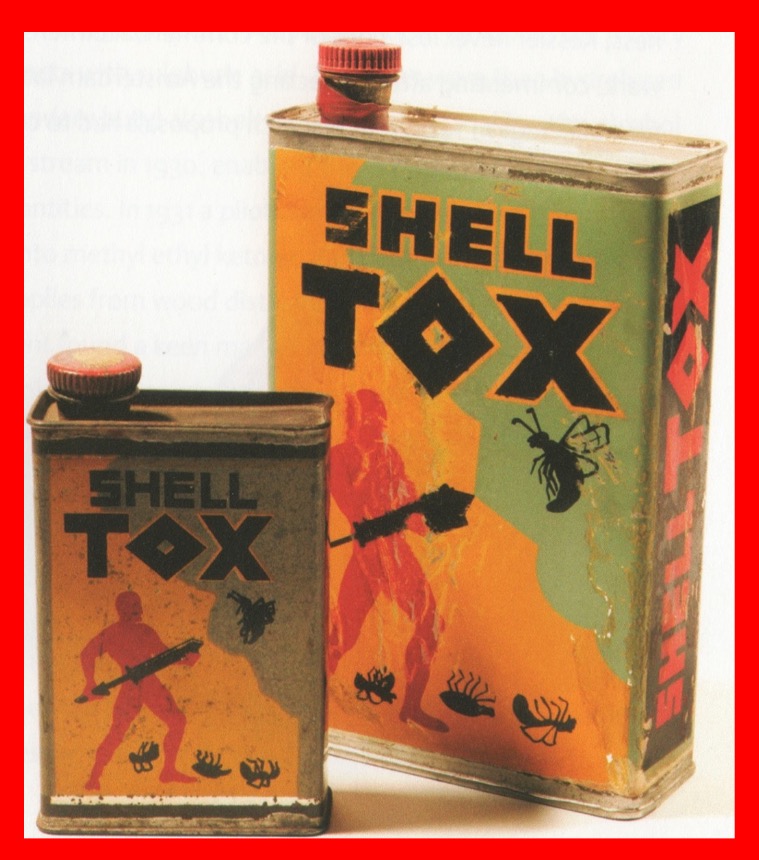
In the more distant past, Shell’s business extended beyond oil and gas into chemicals, including pesticides, herbicides and fungicides. One retrospective site notes:
“Shell deadly pesticides herbicides fungicides and insecticides.” (royaldutchshellplc.com)
While not a worker-safety-only example, the chemical business inherently carries elevated risk—exposure, long-term health impacts, weak regulation. That earlier era laid part of the culture: risk packaged out of full public view, externalities quieted, costs deferred.
2. Mid-2000s: North Sea Safety Underperformance
Fast-forward to more recent decades: the North Sea operations. In July 2006, The Guardian reported:
“Top management at Shell believes the company has a second-rate safety record in the North Sea and has failed to tackle the problem because parts of the organisation are in denial.” (theguardian.com)
Specifically, the article quotes then-CEO Jeroen van der Veer acknowledging that:
“Our safety performance has reached a plateau — and remains below best of class in our industry. Our statistics show it. We know it.” (theguardian.com)
Moreover, the infamous Brent Bravo Platform Incident of 2003 was cited in the article as evidence of repeated failures.
If a major oil operator admits publicly (in an email to staff) to second-rate performance and organisational denial, it raises a key question: how many workers and contractors were exposed to risk while the company restructured its safety posture?
A more recent 2025 article notes:
“Permit to work and risk assessment cause 33 % of Shell incidents.” (energyvoice.com)
That suggests structured frontline systems still experienced significant breakdowns.
3. Prelude & Other Mega-Projects: Safety vs Speed
In the offshore major-project world, speed, scale and complexity often collide with safety. Shell’s own literature emphasises its “Goal Zero” ambition—“no harm to people, no leaks” — yet critics argue that such aspirations remain aspirational. For example, a 2016 interview described Goal Zero as:
“The vision statement and foundation of Shell’s HSSE programmes … means relentlessly pursuing no harm to people and no significant incidents.” (marinelink.com)
However, even with such language, the gap between ambition and performance remains wide: technical integrity issues, contractor oversight challenges, process safety weak points. When projects like Prelude Floating LNG Project (Australia) are conceived at vast scale (LNG, FPSOs, remote operations), the margin for error shrinks and the cost of failure rises.
While I could not find a publicly-documented fatality directly attributed to Shell’s Prelude project safety culture in open-source at this time, media commentary underscores the broader risk set and the question: how robust is the leadership’s safety culture when speed and cost dominate?
4. Nigeria – Legacy Risk, Worker & Public Safety Intertwined
Arguably one of the most critical chapters: the company’s operations in Nigeria. The era of the Ken Saro‑Wiwa protests, the hanging of the Ogoni Nine Executions in 1995, and the multiple litigation streams (including the case brought by Esther Kiobel) have cast a long shadow on Shell’s accountability.
As Amnesty International’s 2020 report states:
“The pollution of the Ogoni environment, turning our homeland into an ecological disaster … Ken Saro-Wiwa and eight other men were hanged in 1995, after a blatantly unfair trial.” (amnesty.de)
And internal documents analysed by scholars show that Shell had communications with Nigerian authorities, and that protests were framed as a threat to production. (See Ekberg, “Shell’s Corporate Strategies in the Nigeria Campaign, 1995-…”). (sciencedirect.com)
But beyond human-rights abuses, worker safety and public safety overlaps are evident: leaks, flares, blowouts, pipeline theft and sabotage all pose fatal risk to workers, communities and contractors. For example: a study notes that Shell’s Nigerian operations encompassed 6,000 km of flowlines, 90 oil fields, thousands of wells: the infrastructure scale alone magnified hazard exposure. (content.uagrantham.edu)
In short: the same system that exposed communities to chronic harm also exposed workers and contractors to elevated risk.
5. Institutional Investor Complicity & Strategic Risk
When we think about sin stocks, much of the financial risk lies not only in the business model, but in the shareholder structure and governance. Shell is widely held by large institutional investors—meaning that risk is socialised and the push for radical change is weak. One article cites:
“For Shell … the top 25 shareholders (overwhelmingly institutional investors) own … 37.78 % of the company.” (lemonde.fr)
Another source (royaldutchshellplc.com) states:
“According to institutional-ownership data, the largest shareholders of Shell include: BlackRock, Inc. 8.53% … The Vanguard Group, Inc. 5.37% …” (royaldutchshellplc.com)
If major shareholders hold such influence yet are silent on safety culture, then the question becomes: who holds the company accountable when things go wrong?
6. Worker Safety & Contractor Dynamics – A Complicated Mix
Shell’s own contractor safety leadership documents—while aspirational—show that worker safety in practice depends heavily on contractors. For example:
“Safety and care for people are at the heart of how we operate in Shell. … a major contribution to our scope is carried by our contractor partners.” (shell.com)
But the reality: high-hazard work, remote offshore environments, rotational staffing, shift fatigue, diverging contractor vs operator cultures—those supply rich risk terrain. In the North Sea, where Shell admitted second-rate records, contractor oversight and behavioural safety often remain weak despite frameworks.
The earlier “Brent Bravo” incident remains instructive: though it wasn’t a Shell-run platform, industry investigations showed that a flawed permit-to-work culture, inadequate hazard recognition and insufficient safety leadership contributed to worker fatalities—suggesting that major operators (including Shell) should have learnt but didn’t quickly enough.
7. The Culture vs Reality Gap – Shell’s Own Messaging
Shell publicly declares:
“Safety, along with our core values, underpins our strategy. We aim to do no harm to people and to have no leaks across our operations.” (shell.com)
But when internal email memos and incident statistics show plateauing performance, the gap appears significant. How long can a “Goal Zero” culture survive if the hazard base continues to produce fatalities, leaks and near-misses?
8. Accountability, Legal Risk & Deferred Costs
Legal cases proliferate: the Nigerian litigation (Kiobel et al), infrastructure legacy obligations, asset-divestment obligations, environmental remediation costs. For example:
“In January 2023, Shell paid €15 million to communities in Nigeria affected by multiple oil leaks … Meanwhile, the legal cases kept coming.” (oilchange.org)
For investors and workers alike: deferred safety obligations, legacy clean-up, civil liability—they all represent latent risk that may not appear in the dividend-yield headline.
9. Why Workers & Investors Should Care
-
For workers/contractors: because a global operator with publicly-acknowledged safety lag still departs assets, changes contractors, rotates staff, and operates at high cost/complexity.
-
For communities/public: because unsafe infrastructure is not contained, and public safety is intertwined—leaks, blowouts, flares harm more than just staff.
-
For investors: because a business model built on perpetual risk accumulation (legacy, regulatory, litigation) may look steady on the surface but carries hidden cost. When institutional shareholders stay quiet, the strongest external accountability mechanism vanishes.
Conclusion
Shell’s corporate narrative—the energy-transition leader, dividend producer, global major—is hard to square with its historical safety and human-rights record in several jurisdictions. Worker safety becomes a casualty not only of technical failure but of organisational culture, contractor dynamics, legacy risk and investor indifference. Satire aside: if you’re a worker, a contractor, a community member or an investor in Shell, the simple question is this: when you see “Goal Zero” in a deck, do you also see “Zero shortcuts, zero excuses, zero compromised safety”? Because for too many people, the gap between aspiration and reality has been deadly.
References
References
-
“Overall safety in the North Sea has improved … but I have got two safety representatives … saying they cannot do what they are meant to.” The Guardian.
-
“Shell’s North Sea history of safety violations, blackmail and blacklisting.” RoyalDutchShell website.
-
“Oil giant Shell stands accused of complicity in the unlawful arrest, detention and execution of nine men…” Amnesty International.
-
“The noose killing the Ogoni-9 was ultimately tied to the close relationship between the Nigerian state and Shell.” ReleasePeace.
-
“Shell confesses to poor North Sea safety record and pledges reform.” The Guardian. July 27 2006. https://www.theguardian.com/business/2006/jul/27/oilandpetrol.news1
-
“All North Sea incidents are preventable, safety boss urges.” Energy Voice. February 7 2025. https://www.energyvoice.com/oilandgas/566707/all-north-sea-incidents-are-preventable-safety-boss-urges/
-
“Goal Zero: An Up-close Look at Shell’s Safety Culture.” Maritime Professional. 2016. https://magazines.marinelink.com/Magazines/MaritimeProfessional/201609/content/upclose-shells-culture-516318
-
“ON TRIAL: Shell in Nigeria. Legal Actions Against the Oil Multinational.” Amnesty International. February 2020. https://www.amnesty.de/sites/default/files/2020-02/Amnesty-Bericht-Nigeria-Shell-on-trial-Februar-2020-ENG.pdf
-
Ekberg, K. “Shell’s corporate strategies in the Nigeria campaign, 1995-…” ScienceDirect 2023. https://www.sciencedirect.com/science/article/pii/S2214790X22001861
-
“Shell: the “ultimate sin stock” and the complicity of investors.” RoyalDutchShellPlc.com. October 24 2025. [https://royaldutchshellplc.com/2025/10/24/shell-plc-big-oils-legacy-on-trial-when-sin-stock-meets-niger-delta-reality/?nb=1&share=print](https://royaldutchshellplc.com/2025
Discliamer
Warning: satire ahead. The criticisms are pointed, the humour intentional, and the facts stubbornly real. Quotes are reproduced word-for-word from trusted sources. As for authorship—John Donovan and ChatGPT both claim credit, but the jury’s still out on who was really in charge.
*This website and sisters royaldutchshellgroup.com, shellnazihistory.com, royaldutchshell.website, johndonovan.website, shellnews.net, and shellwikipedia.com, are owned by John Donovan - more information here. There is also a Wikipedia segment, the Shell DPA Files, "Shell and the Spies", the Shell Leaks files, as well as books written and published by John Donovan - Kindle eBooks. Timeline of the Donovan Shell Feud. Toxic History of Royal Dutch Shell Group. Shell and the Donovans: The Full Media Record — 550+ Articles, 110 Books, 40 Years. *All created and supported by internet wizz, Nick Gill.