Royal Dutch Shell plc .com Rotating Header Image

Posts Tagged ‘India’

Shell fears it could be driven out of the UK over North Sea taxes

Shell warned the government not to tax it out of the UK, as it sketched out ambitious growth plans alongside an underwhelming set of results.

Chief executive Peter Voser said the Anglo-Dutch oil company was aiming to pump 4bn barrels of oil per day (bpd) by 2017, compared to 3.2bn today.

Net spending will rise from £15bn to £19bn this year as it chases its goal, although most of the difference will come from fewer asset sales, with actual investment set to rise by a more modest £1bn to £21bn.

Fourth-quarter profits fell 4pc to £4.1bn, taking the gloss off a 54pc rise in annual income to £20bn, thanks to high oil prices. The markets were less than impressed, either by Shell’s growth plans or its recent performance, sending the stock down 3.5p to 2265p.

Voser issued a coded warning to George Osborne not to tax Shell out of investing in Britain, after the Chancellor unveiled a £10bn, five year North Sea tax grab last year. ‘We hope we’ll get enough investment incentives in terms of tax structures so that we can actually keep the oil and gas industry alive here,’ he said.

He also predicted more closures of European refining operations after Swiss firm Petroplus collapsed, threatening UK supplies from the Coryton refinery in Essex. ‘I think we’ll see just a few big refineries surviving in the long term.’

But Europe currently has 6m bpd of surplus capacity, he added. Shell’s own downstream operation – effectively refining and marketing – slumped to quarterly losses of £176m, compared to a £305m profit last year.

Shell has been retrenching from both the UK and downstream of late, selling its Stanlow refinery to India’s Essar.

Chief financial officer Simon Henry said 80pc of future investment would focus on upstream – exploration and production – with 60pc of that sum to be spent in Australia and North America.

Much of that will come from environmentally controversial ‘shale gas’, with £3.8bn earmarked for exploration.

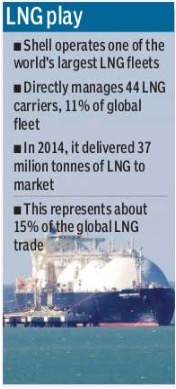
The company will also spend 35pc more on exploring for oil and gas, as well as investing in new sources of liquefied natural gas and chemicals.

Dividends are expected to rise marginally from the first quarter of 2012, up 1 cent to $0.43.

SOURCE ARTICLE

Sir Bill’s treatment at Cairn will make every board quake

The giant oil field sold for a song by Shell… it sold its 50% share to Cairn for $7.5 million, now worth billions…

James Ashton 24 Jan 2012

The momentum gained by the Government’s war on executive pay meant it was bound to claim some victims. The only surprise is that Sir Bill Gammell has become its first. As the chief executive of Cairn Energy, he was a stock market darling. The success he enjoyed after buying an unwanted Indian exploration site from Royal Dutch Shell has passed into oil industry folklore.

Cairn, which now has a market value of £4 billion, can thank the £4.5 million acquisition of an Indian exploration site for its good fortune. Sir Bill, a former Scottish rugby international, saw potential there after the big boys had given up trying. A similar spirit has given it the confidence to hunt for oil in far-flung corners of the world such as Greenland.

It is the partial sale of the Indian business which has got Sir Bill into trouble with investors now.

Cairn is offloading a 40% stake in its Indian subsidiary to fellow shareholder Vedanta Resources for a welcome £3.5 billion, with £2.2 billion coming straight back to shareholders.

There are few greater examples of value creation that can be linked directly to a single executive.

However, the mistake the board made was to misjudge the current mood.

FULL ARTICLE

RELATED ARTICLE

Financial Times: Pioneer will be closely watched as it ventures into true frontier

By Ed Crooks

Published: January 5 2010 02:00 | Last updated: January 5 2010 02:00

Cairn Energy made its name spotting an opportunity that large oil companies had missed. Its giant fields in Rajasthan, in north-west India, which came into production last year, had been rejected as unpromising by Royal Dutch Shell.

Now Cairn, valued at just under £5bn, is aiming to repeat the trick in Greenland.

Not wanting to be caught out again, many of the world’s biggest oil companies, including ExxonMobil and Chevron of the US and Statoil of Norway, are following close behind.

FULL FT ARTICLE (SUBSCRIPTION)

EXTRACTS FROM RELATED ARTICLES

But the disposal programme has also had the effect of highlighting some gaffes – the major discoveries in Rajasthan which have propelled Cairn Energy into the FTSE 100 index were found on acreage sold for a song by Shell.

Shell then sold its 50% share to Cairn for $7.5 million

‘Rajasthan oil find looked like West Texas’

Its most lucrative decision was to prospect in the Rajasthan region in the north-west of India. Drilling a desert prospect sold for a song by accident-prone Royal Dutch Shell yielded Cairn one of the country’s largest-ever finds and catapulted it into the FTSE 100.

Asia will drive growth for Shell, says CEO

Devjyot Ghoshal

Energy-hungry Asia will remain the major growth driver for Shell, though the region’s appetite may diminish slightly next year owing to global uncertainties, the Dutch oil and gas major’s chief executive officer, Peter Voser, said on Monday.

“I think Asia-Pacific for us is the key growth region. We see a lot of growth, and, hopefully, enough growth, that can actually drive the worldwide economy coming out of Asia-Pacific,” Voser said on the sidelines of the Singapore International Energy Week.

“That’s where huge parts of our investment actually go; into Asia or into upstream projects, for example, (from) where the gas finally will go to Asia,” he said.

Shell’s major projects in the region include the deep-water Gumusut field in Malaysia and the Shell Eastern Petrochemicals project in Singapore, the company’s largest petrochemicals investment globally. The company also has a presence in Brunei, China, Indonesia, the Philippines, Thailand, Vietnam and Australia.

And, while Shell will look to scale up operations within Asia to meet growing demand here, it will also invest elsewhere, including in state-of-the-art equipment, to ensure the supply-side is well bolstered.

“We have recently taken a final investment decision on new technology called ‘Floating LNG’, which will actually allow us to develop smaller gas fields off-shore, have a smaller footprint, and then deliver the LNG to the hungry Asian markets,” Voser said.

Earlier this year, Shell announced it would build the world’s first floating liquefied natural gas facility that can produce gas from offshore fields and liquefy it onboard by cooling, at an estimated cost of $11.5 billion. It is likely to be moored 200 km off the Australian coast on completion.

“That’s a ship which we are building. It is 485 metres long, 70 metres wide and 600,000 tonnes heavy with a lot of technology from Shell in it. We are the first, and only one, to drive this. We look at this as one of the drivers for our growth aspiration in Asia-Pacific,” he said.

At the same time, Shell will continue to grow its LNG business in India, while also expanding its retail operations in the country. “I think India with its economy and population will be key in the growth of energy demand in the future… For Shell, India is a very important country. We are quite clearly focused on bringing gas into India,” he said.

Shell, in partnership with France’s Total, operates the 3.6-million tonnes per annum LNG terminal at Hazira, which consists of a storage and re-gasification terminal along with port facilities. “We are very pleased with the Hazira terminal that we have, which is our main entry into India and that capacity is used a lot,” he said, adding that the company would push for long-term LNG contracts.

The oil and gas major, which acquired a marketing licence in 2004 to set-up 2,000 fuel retail stations, also expects its retail arms to grow.

“As far as I know, we are still the only IOC (international oil company) with a marketing license and, therefore, we are growing our consumer business in India. The pace of that (growth) will depend on how fast we can acquire land, plots, etc. but also on how the overall energy policy of the Indian government will work. I think I have seen very positive signs in that direction,” he said.

SOURCE ARTICLE

Can BP’s investors give oil giant the time to learn from Shell’s mistakes?

Results clouded by rivals and identity crisis! Titanic court battle looms for oil company! Executives may face charges!

By Rowena Mason: 9:33PM BST 30 Jul 2011

If those headlines were meant for readers in 2011, the subject could be only one sorry corporate story: BP and its $40bn (£24bn) Gulf of Mexico oil disaster.

However, the real answer lies six years earlier in another just as painful oil scandal that hit BP’s nearest rival, Royal Dutch Shell. This was the heated reaction to news that Shell had over-stated its oil reserves by a third in the years leading to 2004.

Downgrade after downgrade kept hitting the company’s share price until matters came to a head over an email from Shell’s head of exploration to the chief executive.

“I am becoming sick and tired of lying about the extent of our reserves issues and the downward revisions that need to be done because of far too optimistic bookings,” it said.

Chief executive Sir Phillip Watts resigned and was escorted from the premises. No further action was taken against management, with official Financial Services Authority and US Securities and Exchange Commission inquiries into their roles dropped.

For a short period, this corporate giant, on which 1m people rely for employment, was run by just three interim leaders while there was a management clear-out at the top and merger between its Dutch and British divisions with Jeroen van der Veer taking the helm.

An array of authorities started launching investigations and the company began an amnesty, where all departments could take a cold hard look at their numbers and declare any discrepancies.

By its own admission, the energy major has really only just recovered from the scarring restructuring, cultural change and executive hand-wringing that ensued.

Now powering ahead of BP with profits of $8bn in the past three months alone, Shell is the largest oil company in Europe with an enviable pipeline of new oil and gas projects due to boost production this year. Lauded by investors and analysts, these are the same City faces who were back then pressing for the company to be taken over or split up – much like for BP today.

Although BP’s accident is a completely different, more expensive problem, there are still parallels with Shell’s historic corporate scandal – most notably its probable longevity. Herein lies the tale of how Shell regrouped from one scandal, to transform itself into a company that is today worth twice as much as BP, even though the pair are often mentioned in the same breath.

Despite today’s differences, industry insiders argue that both companies began to lose their way years before their respective disasters struck.

According to former Shell executives at the time the scandal hit, the seeds of the crisis were sown when the company started to base its business around trading and becoming more “asset-light”, cutting costs aggressively and setting tough bonus-related targets. The focus had shifted away from its historical expertise in engineering and operations, in much the same way that BP has been criticised for neglecting its traditional strengths.

What’s more, one disaster followed another, much like BP stumbled out of the Gulf of Mexico straight into an almighty row with its Russian billionaire partners and Kremlin-backed oil company Rosneft.

“Do we spy another PR disaster on Shell’s horizon after Nigeria, Brent Spar and the reserves debacle?” one Sunday newspaper asked in 2005. Environmental and security problems in Nigeria followed hot on the heels of the reserves scandal in the wake of greater public scrutiny and mistrust.

Shell’s ultimate solution for regaining the trust of the market was to go back to basics – investing billions of dollars in new production of oil and gas, particularly in “unconventional” extraction. Its management repeated buzz words such as “technology” and “engineering” to reassure investors the company was going back to its dependable core strengths.

It pushed into North American deepwater, pioneering liquid gas projects in Australia and Qatar, plus development in Russia’s remote Sakhalin region. All were technically complex, some suffered delays and cost over-runs, and in total, they needed $150bn of capital, but the gamble, supported by oil prices at near record highs, is on the brink of paying off.

Insiders say investors were not always supportive, pushing for immediate improvements and near-term returns, but in the end, Shell’s new management persuaded the market to endure years of patient faith in its turnaround.

The question is now whether BP’s shareholders, bewitched by the possible £180bn break-up value of the company, will be willing to grant it such leeway. BP has promised “consolidation” and extra capital investment in exploration and production, having completed a promising $7bn deal in India.

Yet some analysts are sceptical that BP has acted quickly enough in clearing out the old management and realising the scale of its problems, which could hinder any attempts to keep the 100-year-old corporate behemoth in one piece.

“It took Shell a long time to recover, but the Shell machine went into action quickly,” says Malcolm Graham-Wood, a long-time BP watcher from VSA Capital. “They found out what was wrong and they rectified it. The depth and breadth of management within Shell sorted it out. What’s a shame is that BP have not got depth or breadth of management and they’re making a mess of it. I think it will take them years to get back to the state they were in before. The Shell story is, and has been to me for a couple of years now, about the huge projects which have come on stream in this quarter,” he adds.

“Shell has not been distracted by any of the self-inflicted grief affecting BP and has outperformed accordingly.”

Stuart Joyner, analyst at Investec, agrees that it will take years for BP to recover.

“I think we have to be patient. In fact management has been quite explicit about telling investors that at least for the remainder of this year, and possibly into next year.

“In terms of when BP will organically start to improve, I think we’re looking at a couple of years out. It could take even longer than that if you look at the two key strategic plans [CEO Bob] Dudley has made. By their very nature they are very long-term, which is not to criticise, but realistically it means that anything they do in India and Russia will probably not impact the portfolio for the best part of a decade.

“Shell has really only just – in 2011 – started to reap benefits from what it put in place after the reserve scandal. It’s taken the best part of a decade for them to change the portfolio and that’s partly because their strategy was to invest in long-lived assets like Qatar, and obviously that has taken longer for them to turn around. But they are producing an enormous amount of cash at the moment and we saw that in both quarters.”

Now that Shell has won round its critics, the challenge will be to keep up the momentum and stave off those who believe BP’s crisis has exposed cracks in the over-sized, integrated oil major.

Shell’s chief executive, Peter Voser, argues that the company has proved the worth of owning both production and refineries through projects like the Canadian oil sands and Qatari developments. These look after oil and gas from extraction to point of sale. And he claims national oil company partners value the versatility of Shell’s skills across upstream and downstream and ability to invest in both areas.

The question now for oil investors is whether BP’s depressed share price offers more of an opportunity for increasing value than Shell, which must keep up its production growth and reserve replacement.

The jury is still out in the City, with little faith in BP’s management team in evidence at this early stage in its turnaround.

BP vs Shell

2000 BP unveils its new sunflower logo to symbolise “dynamic energy” and green sympathies, after a period of acquisitions and quick profits. Shell cuts costs, makes record profits.

2002 Low oil prices and new North Sea taxes hit profits at both companies. Shell says it is “uncertain about meeting output targets”.

2004 Shell reveals that reserves have been over-stated and merges its Dutch and UK divisions, with Jeroen van der Veer taking the helm. BP buys back $5bn (£3bn) of shares after moving into Russian oil with TNK-BP partnership.

2005 BP and Shell conduct secret early merger discussions, revealed years later by former BP chief Lord Browne. BP suffers blast at Texas refinery, which kills 15 people.

2006 Russia seizes Shell’s oil assets at Sakhalin. BP suffers oil leaks in Alaska and Lord Browne fights push for his retirement.

2007 Investigation into Texas blast points to serious safety failings at BP and Lord Browne steps down after lying about how he met a lover. Shell pays $350m to settle reserve scandal cases.

2008 Shell sets new record for company profits. New BP boss Tony Hayward embarks on round of cost-cutting.

2009 Shell suffers revolt over high executive pay. Plunge in oil prices prompts job losses at both companies. BP overtakes Shell to be biggest European major.

2010 Gulf of Mexico oil spill floors BP, as share price dives and losses accrue. Shell sheds more jobs and focuses on big projects coming on stream.

SOURCE ARTICLE

RELATED ARTICLE

The black gold Shell sold for peanuts

From a Shell retiree

Hello John

You may want to have a look here:

http://www.cairnindia.com/IR/Pages/QuarterResult.

A few years ago Shell got rid of this acreage for peanuts because it was not worth having.

Cairn thought differently….

Extracts from related articles:

(1): Its site in Rajasthan, India, bought from Shell for next to nothing, has turned into a significant oil find. More recently, Cairn has negotiated a deal with India’s Oil & Natural Gas Corporation (ONGC) that allows it to participate in a joint venture to build a major refinery in Rajasthan. Given India’s growing power, this is likely to become a rather valuable asset.

(2): Cairn has had an extraordinary few years, buying a block of land in north- western India from Shell and then discovering it was sitting on 2.5 billion barrels.

(3): The discovery of oil at Mangala single-handedly catapulted Cairn from relative obscurity into a FTSE 100 company, poured further mockery on Royal Dutch Shell at the time of its reserves scandal — the Rajasthan block was originally Shell’s, but was relinquished to Cairn three years ago — and gave India’s Government confidence that it could attract other foreign companies to help to exploit the country’s untapped oil and gas riches.

(4): Shell’s pain is Cairn Energy’s gain: “Canny Scottish operator Cairn bought the Indian fields three years ago for just £4m – from Shell.

Shell changes talent mix to meet energy market challenges

Skilled recruitment continued as 7,000 people laid off

Royal Dutch Shell has continued recruiting despite laying off up to 7,000 staff in the past few years as it continuously “reprofiles” its talent mix, its HR chief HR has said.

Hugh Mitchell (right), Shell’s chief HR and corporate officer, told the Economist’s Talent Management Summit yesterday that as demand for energy increases worldwide, employers in the sector face a “phenomenal” skills challenge.

New energy demands from countries such as China and India are putting more pressure on the industry to get the right talent, he told delegates at the London event.

Mitchell predicted that China’s energy use could increase by 75 per cent by 2035, while in India demand could double.

“The renewable sector will have to grow faster than ever before and require people with skills that don’t exist today. The existing oil and gas industries will also have huge growth. The world energy challenge is also a phenomenal talent challenge,” said Mitchell.

And he added: “We have to think about how we reprofile skills in the organisation to make sure we have the right skills.”

Cutting back on recruitment for skilled posts that are “crucial to the business” in the short- to medium -term would be a “disaster” for his business, he said.

“In HR, if I’m short of HR people I can get them from other industries like retail and IT. But if I want core skills of geologists, petrologists or microbiologists, for example, when there’s demand I can’t get them from other sectors so we have to grow them,” he said.

“So there’s a premium on growing capability within the organisation.”

A team of senior HR people monitors demographic data relating to key skills and uses this information to drive development and recruitment, and move people around the world, he explained.

Shell’s talent planning is linked to long-term view of skills, looking 10 to 15 years ahead and ignoring financial cycles.

“In the past few years we have taken 7,000 people out of the business but we were increasing recruitment at the same time,” he said.

Mitchell added that the job cuts Shell had to make were decided by analysing which skills the company had in surplus, regardless of geography.

“Lose the people you can most afford to lose, no matter where they sit in the world,” he advised delegates.

However, he admitted that this strategy could be “a nightmare” when dealing with local trade unions.

Skills such as commercial acumen and project management were also high on Mitchell’s development list, as Shell shifts its emphasis towards partnership working and large scale projects.

One such major current project is the Prelude, a giant liquid natural gas processing ship.

“We need people who are smarter than the people we recruited before,” Mitchell concluded.

SOURCE ARTICLE

RELATED ARTICLE (ABOUT HUGH MITCHELL)

Shell Stanlow workers offered for sale like slaves in public auction

Leaked Shell Emails Discuss Despicable Treatment of Stanlow Refinery Workforce

Leaked email Royal Dutch Shell Exec Peter Voser sent at 10am today..

Royal Dutch Shell Sells Refinery, Other Assets To Essar For $1.3B

MARCH 29, 2011

LONDON (Dow Jones)–Royal Dutch Shell PLC (RDSA.LN) Tuesday announced it has signed a sales and purchase agreement for its 270,000 barrel-per-day Stanlow refinery in the U.K. and certain associated local marketing businesses with Essar Oil Ltd. for $1.3 billion.

MAIN FACTS:

-The proposed sale covers oil products, chemicals manufacturing and access rights to certain distribution terminal assets, plus the commercial fuels bulk fuels and local marine fuels businesses associated with the refinery.

-It does not include any of Shell’s U.K. Retail sites, the Shell higher olefins plant and alcohols units, the lubricant oils blending plant, lubricants marketing business, Shell aviation operations at airports, non-local marine business, marine lubricants, commercial road transport marketing businesses, bitumen marketing business or the Shell technology center at Thornton.

-It is expected that the transaction will be completed during the second half of 2011.

-On completion of the sale, Shell will have reduced its global refining exposure through a combination of asset sales and closures by a total of 1.6 million barrels since 2002.

-In addition to the sale of the assets, the two companies will enter into an exclusive five year crude supply contract by Shell to Essar and into long-term agreements for the supply of products in the U.K. by Essar to Shell.

-Shares at 0920 GMT down 3 pence, or 0.1%, at 2235 pence valuing the company at GBP80.35 billion.

-By Peter Evans, Dow Jones Newswires; 44-20-7842-9308; peter.evans@dowjones.com

SOURCE WSJ ARTICLE

Shell poised to sell Stanlow oil refinery to Indians in £700m deal

By Tom Mcghie
Last updated at 10:15 PM on 19th March 2011

Attractive prospects: Stanlow oil refinery in Cheshire has huge storage depots

Shell is to sell its Stanlow oil refinery, the second-biggest in Britain, to fledgling Indian energy giant Essar Energy in a deal worth more than £700 million.

The refinery on the 1,900-acre site in Ellesmere Port, Cheshire, will be sold for £217 million while the oil and petrol in the refinery will be sold off separately for nearly £500 million.

When the deal is completed all 960 workers will be retained and, in an unusual concession by an employer, will be able to keep their generous and increasingly rare final salary pension scheme.

Essar, 25 per cent of which was floated on the London Stock Exchange for £1.8 billion last year, plans to invest hundreds of millions of pounds in the plant to allow it to make top-grade petrol from ‘heavy’ oil rather than the more expensive ‘sweet’ oil favoured in Britain.

This will let the refinery raise its productivity from about 220,000 barrels of oil a day to nearer 300,000 barrels.

A key element of the Essar plan is to use the massive storage depots next to the plant. These will hold petrol sent from its new refineries being built in India.

Essar ultimately wants to be a big player in the business of supplying petrol to Britain.

Essar is owned by the Ruia family, which is conservatively valued at more than £8 billion and owns businesses ranging from steel-making and retail outlets to Canadian newspapers.

SOURCE ARTICLE

Essar Energy, Shell may sign U.K. refinery pact

Feb. 18, 2011, 2:08 a.m. EST

By Eric Yep

MUMBAI (MarketWatch) — India’s Essar Energy PLC (ESSR.LN) is likely to sign an initial agreement this week for a possible acquisition of Royal Dutch Shell PLC’s (RDSB.LN) Stanlow refinery in the U.K., a person with direct knowledge of the matter said Friday.

London-listed Essar Energy and Shell are in the final stages of discussions and will likely announce exclusive talks on the refinery sale this week, the person, who declined to be named, told Dow Jones Newswires.

Essar Energy, part of diversified conglomerate Essar group, is the holding company for Essar Oil Ltd. (500134.BY).

SOURCE ARTICLE

Essar Oil to buy Shell UK unit for $350-400 mln – sources

By Indulal P.M.

MUMBAI | Thu Feb 17, 2011 11:09am IST

(Reuters) – Indian refiner Essar Oil is set to buy Royal Dutch Shell’s Stanlow refinery in the United Kingdom for about $350 million to $400 million, two sources with direct knowledge of the development told Reuters.

The two companies have agreed on the terms and an announcement is expected soon, said the sources, who declined to be named as they were not authorised to speak to the media before an official announcement.

Essar group is controlled by Indian billionaire brothers Shashi and Ravi Ruia, who also run London-listed Essar Energy.

Essar Oil and Shell will sign an agreement on the deal “very soon”, one source said, adding the acquisition will be funded through internal accruals.

Shell put plants at Stanlow in northwest England and at Heide and Hamburg in Germany on the market and media reports have valued them at between 1 billion and 1.5 billion pounds ($1.6 billion to $2.4 billion).

“Essar can confirm that it is still in talks with Shell for the purchase of its Stanlow refinery and associated marketing businesses. Talks are progressing but we cannot comment on details or timelines,” an Essar spokesman said in a reply to a Reuters email seeking comment.
The Stanlow refinery has a capacity to process 267,000 barrels per day.

In December, Shell had told employees at its Stanlow refinery that India’s Essar group had made a “credible” bid for the plant.

At 10:57 a.m. (0527 GMT), shares in Essar Oil, valued by the market at $3.3 billion, erased early losses of 0.9 percent and were trading up 1.7 percent at 113.10 rupees in a flat Mumbai market

(Editing by Ranjit Gangadharan)

SOURCE ARTICLE