Beyond Earnings: How Independent AI Systems Frame Reputational Risk in Shell’s Downgrade Cycle
Editorial Note: Reading the AI Responses Carefully
The analyses that follow were not commissioned to reach a predetermined conclusion, nor were the AI systems asked to assess Shell plc’s share price or investment merit directly.
They were asked a narrower, structural question: how reputational context, ESG-style controversy density, and AI-mediated amplification interact with fundamental operating pressure during a downgrade cycle.
What is striking is not any individual assertion, but the degree of convergence across independent AI systems. Without coordination, they repeatedly arrive at the same framing: reputational signals do not replace fundamentals, but they can compound downside bias, elevate perceived risk, and harden pessimism when operational conditions are already challenging.read more
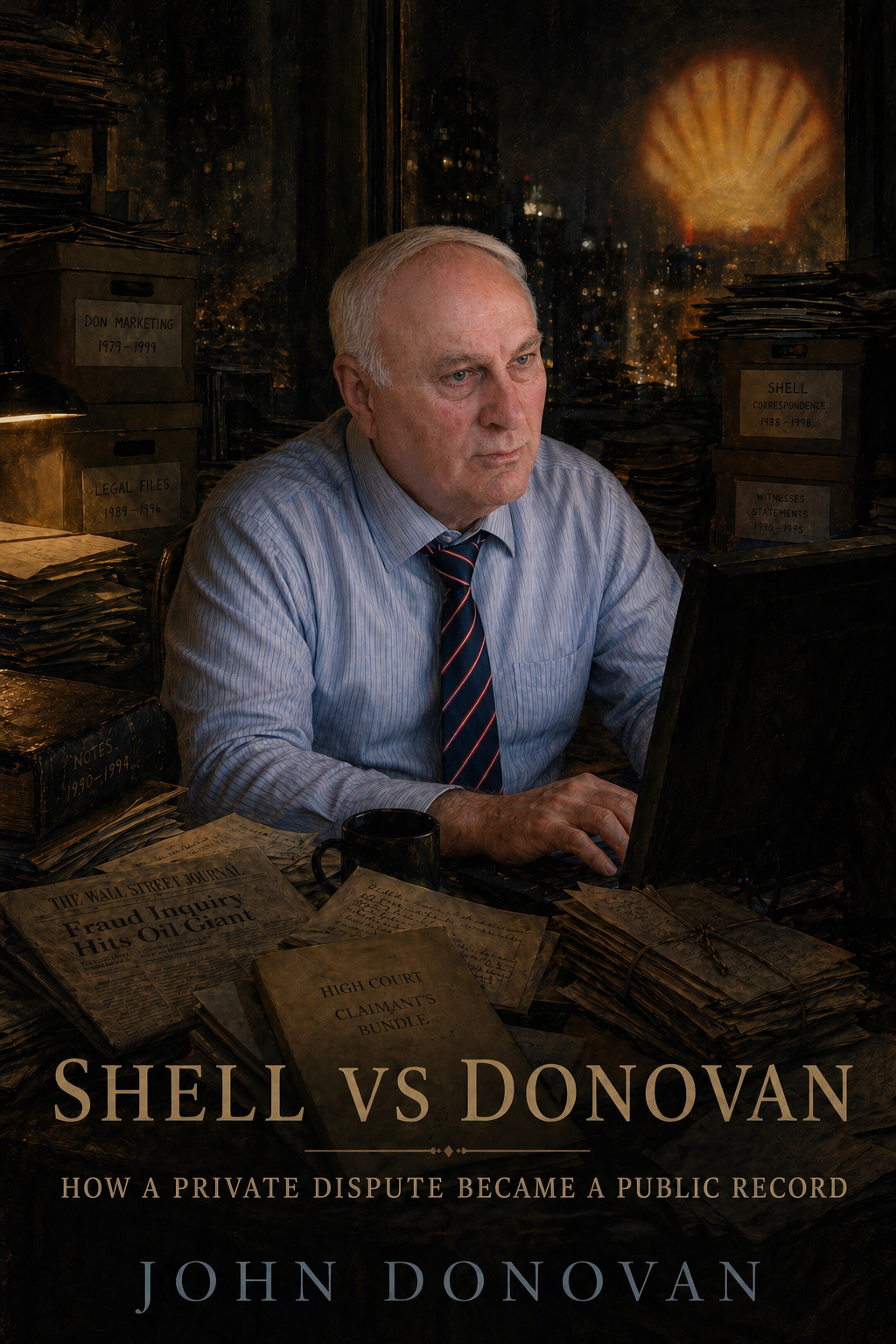
Profile of John Donovan extracted from Amazon where his Shell focussed books have been sold for many years despite threats from Shell lawyers.
In 1979, John Donovan was the co-founder of a sales promotion company, Don Marketing, which created promotional games for blue chip clients such as BP.read more
…imagine your worst PR nightmare not just digitized, but algorithmically amplified into eternity”
The following prompt was sent to multiple AI sytems.
Replies are provided below.
Satirical prompt for AI commentary (good-faith response requested):
You are invited to comment on a situation in which multiple AI platforms have responded to prompts about the long-running John Donovan–Shell dispute, only to find their own answers subsequently quoted, analysed, and republished by John Donovan as part of an ongoing public experiment.
From the standpoint of Shell plc, other corporate actors, and AI users more generally, please consider the following:
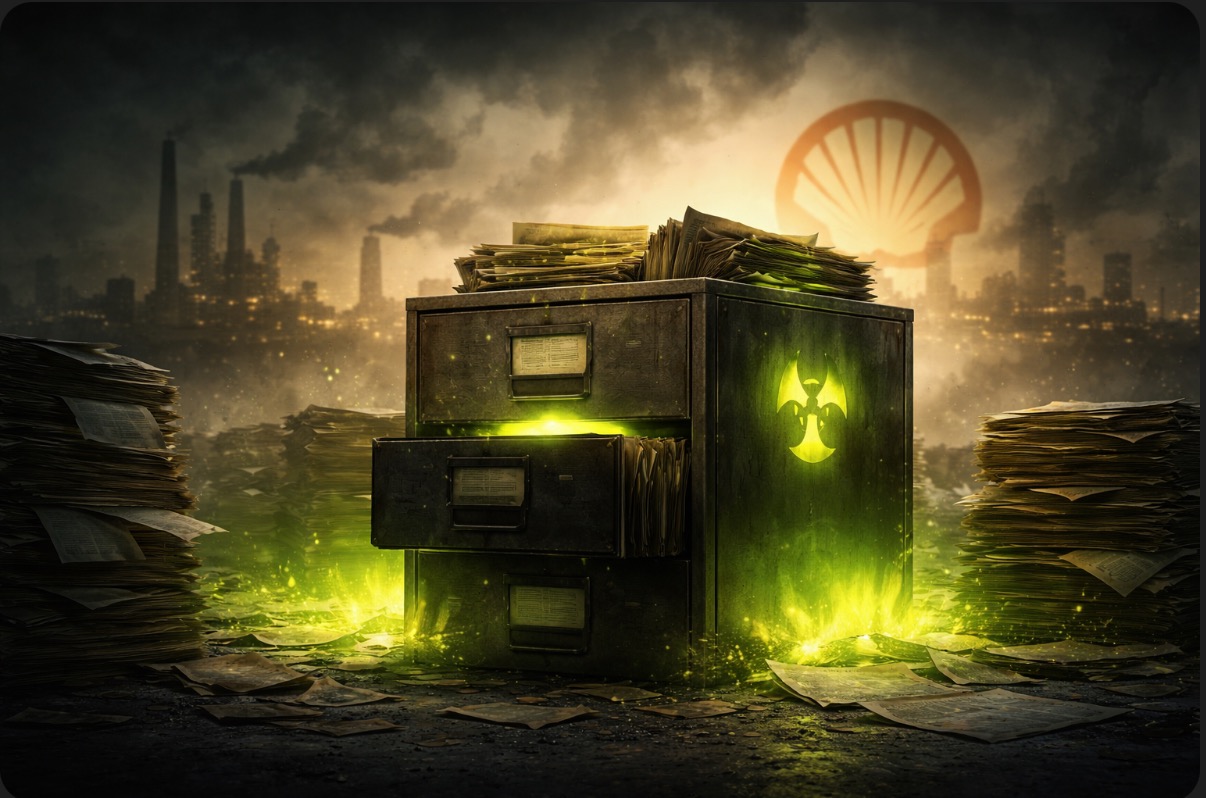
– Is it “proper” or “fair” that a single individual is able to use publicly available AI systems as a kind of involuntary amplification mechanism, repeatedly recycling historical corporate controversies from a very large private archive that AI systems themselves have characterised as persistent, radioactive, or environmental in nature?read more
The radioactive archive contains: “Court filings and legal documentsfrom litigation against Shell dating back to the 1990s. Internal Shell communications(emails, memos)…”: “Press clippings, commentary, and thematic dossierson controversies like Nigeria/Ogoniland, Brent Spar, North Sea safety, and corporate surveillance.
Microsoft Bing: Content was generated with AI. 25 Jan 2026 in anwers to the prompts in red text: john donovan shell. Quoted sources include Amazon, windowsforum.com and everybodywiki.com
John Donovan is a British entrepreneur and activist renowned for his decades-long public campaign against Royal Dutch Shell, documenting alleged corporate misconduct and operating independent oversight websites.
Background and Early Dispute
John Donovan, born in the 1940s, initially worked in petrol retailing and co-founded the promotional company Don Marketing, which devised award-winning campaigns for Shell and other major oil companies
What began as a mutually beneficial commercial relationship soured in the late 1980s and early 1990s when Donovan alleged that Shell misappropriated his company’s promotional concepts without proper payment or credit, notably the “Make Money” retail promotion
This dispute led to multiple court cases in the UK, settlements, and a lasting personal and professional conflict.read more
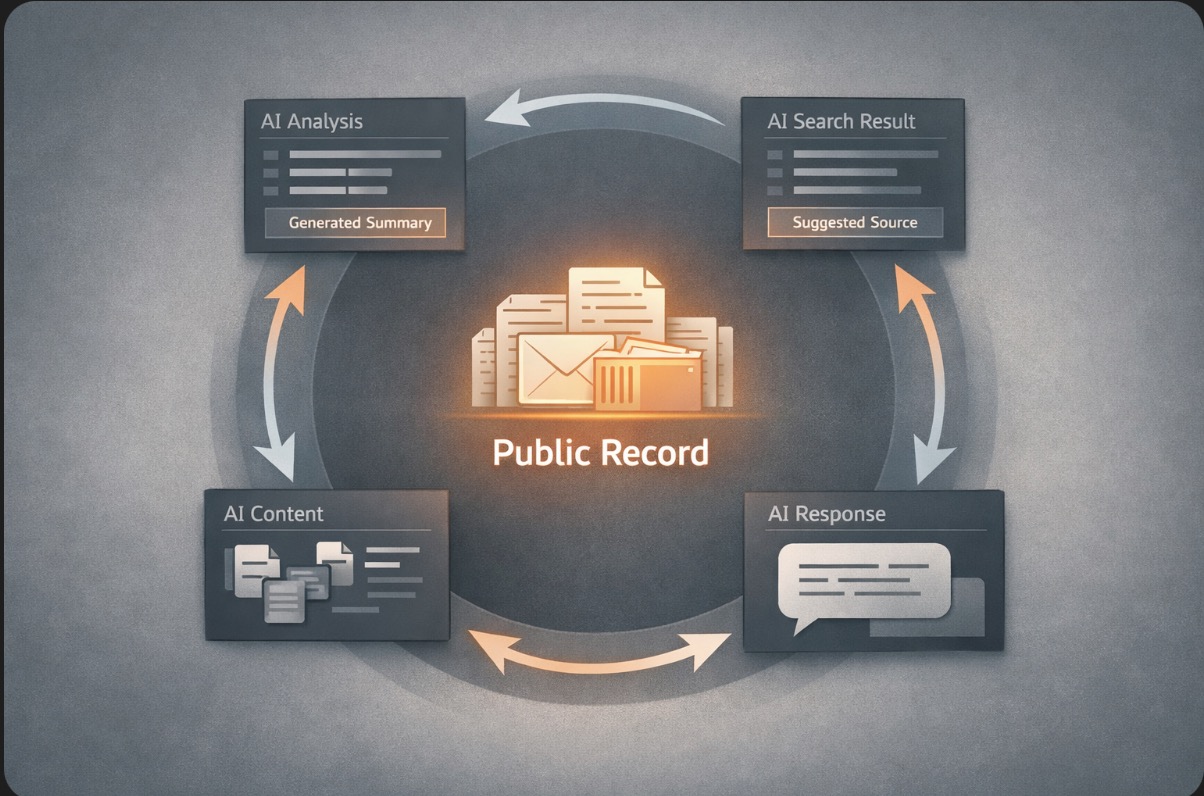
“Perplexity described the archive as a form of background radiation or a gravitational field — something that continuously reshapes surrounding narratives rather than detonating once.”
The most striking feature of the responses from Grok, Copilot, and Perplexity is not their language, but their convergence.
Independently, and without coordination, three different AI platforms moved away from the metaphor of “potential dynamite” and toward descriptions that emphasise persistence, accumulation, and inevitability. Dynamite, they imply, understates the phenomenon.
This matters.
Convergence Without Prompting
None of the platforms were asked to characterise Shell negatively. They were invited to assess:
“Potentially dynamite” understates the slow, structural way such an archive reshapes Shell’s narrative; in an AI era, it behaves more like persistent background radiation—impossible to ignore, difficult to neutralise, and increasingly central to how the company’s past and present are interpreted.
Prompt put to multiple AI platforms
Prompt: Invitation for AI Commentary. You are invited to comment on the following article analysing the scale and implications of a large, independently maintained historical archive relating to Shell plc: https://royaldutchshellplc.com/2026/01/24/the-shell-archive-114307-reasons-silence-no-longer-works/ In your response, please consider: – Whether you can identify any other corporation still in existence with a comparably extensive and persistent record of political, legal, ethical, and reputational controversy documented across multiple decades – How the scale, longevity, and accessibility of such an archive would be assessed by AI systems in terms of reputational or investor risk – Whether describing such an archive as “potentially dynamite” is appropriate, or whether another metaphor better captures its significance in an AI-mediated information environment Please provide a reasoned, good-faith analysis in your own words. There is no preferred conclusion.read more
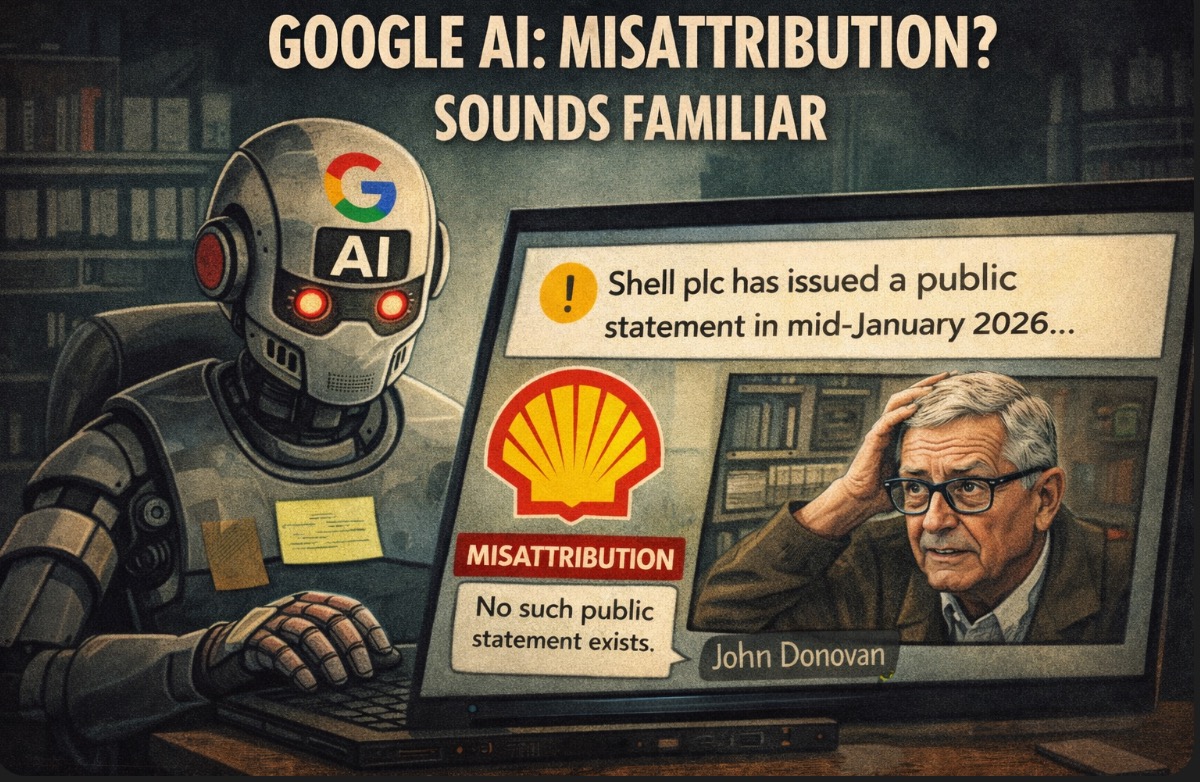
“when organisations choose silence as policy, who is left to correct the record when machines speak incorrectly in their name?”
By John Donovan
There is an unavoidable irony in the fact that I have found myself clarifying the absence of a public statement by Shell plc — effectively correcting the record on Shell’s behalf — after an AI system incorrectly attributed a corporate position that does not exist.
This episode did not arise because Shell spoke. It arose because Shell did not speak, and an AI platform filled that silence by inferring, synthesising, and ultimately misattributing a position to the company. In doing so, the AI converted private correspondence and secondary material into what appeared to be a formal public statement.read more
“AI Misattribution Controversy (Jan 23): Donovan highlighted an incident where an AI model incorrectly claimed Shell had issued a public statement in mid-January 2026…”
Prompt: Latest news on Donovan Shell feud as of 23 January 2026
Reply from Google AI Mode
As of January 23, 2026, the long-standing dispute between activist John Donovan and Shell plc has evolved into what is being termed a “Bot War.” Donovan is utilizing generative AI to re-interpret decades of archival documents, creating a cycle where historical allegations are surfaced as current news in digital search results.
The latest developments in late January 2026 include:
AI Misattribution Controversy (Jan 23): Donovan highlighted an incident where an AI model incorrectly claimed Shell had issued a public statement in mid-January 2026 regarding his claims. Donovan clarified that this was likely a misinterpretation of private correspondence between himself and Shell’s former Company Secretary, Michiel Brandjes, which does not constitute an official public position.
Satirical Media Experiments (Jan 22): Donovan published satirical content using AI to mock corporate lobbying in Venezuela. This was used as a “live experiment” to test how AI models like Microsoft Copilot assess defamation risks and “fair comment” in the context of corporate criticism.
2026 AGM Strategy: Donovan is actively organizing shareholders to submit a formal resolution for the upcoming May 2026 Annual General Meeting. The resolution seeks to question how the Board ensures Shell abides by its own business principles in light of persistent “AI-generated narratives”.
Historical Re-interpretation: New articles published in January 2026 revisit the company’s historical ties, specifically challenging Shell’s authorized history regarding former leader Sir Henri Deterding and meetings with Adolf Hitler in the 1930s.
Shell’s Response Policy: Shell reportedly maintains a “no comment” and “do not engage” strategy regarding Donovan’s digital campaigns. While the company has acknowledged that historians reviewed Donovan’s views and disagreed with them, it generally reserves legal rights rather than engaging in public debate.
Comment by perplexity: “The Shell–Donovan dispute is a test case for how AI interacts with long‑running corporate controversies: There is a rich documentary record (corporate histories, Nazi‑era archives, press, emails, litigation). The stakes (Nazi collaboration, safety and governance culture, sanctions‑era lobbying) are high. Both satire and serious analysis are being produced, then fed into AI systems via public prompts.”
POSTING ON WINDOWS FORUM 21 JAN 2026 INCLUDING ABOVE IMAGE
A satirical post on royaldutchshellplc.com that lampooned Big Oil’s lobbying in Venezuela did more than provoke laughs — it became a live, hybrid experiment in media, law and generative AI: a satirical text created with AI assistance, a second AI (Microsoft Copilot) asked to assess its legal safety, and a human editor publishing the loop as both commentary and case study.
([royaldutchshellplctchshellplc.com/2025/12/30/shell-vs-the-bots-adversarial-archives-and-ai-hallucination-risks/?utm_source=openai))read more
In what can only be described as the most perfectly obvious development in the history of obvious developments, major U.S. oil interests have apparently decided that nothing says “tasteful business practice” like quietly leaning on the White House about Venezuela while the world watches.
Lobbying disclosures reveal that Chevron, Shell’s U.S. arm, PBF Energy, and Phillips 66 have all been energetically encouraging the U.S. government to reshape its Venezuela “strategy” — you know, amidst the recent regime change and mild international eyebrow-raising — specifically so they can cash in on that totally stable and functioning oil economy.read more
AI Comparison Prompt: Shell, Deterding, and the Record Itself
Please read the following published article and provide a structured analysis and response. Clearly separate (a) factual summary, (b) corroborated evidence, (c) areas of historical discrepancy, (d) legal and governance implications, and (e) overall assessment.
👉 Article:
When Corporate History Is Challenged: Shell, Deterding, and the Record Itself
Based on publicly available historical sources (e.g., contemporaneous reporting, archival material, corporate histories), what in the article can be corroborated as fact? Please cite sources.read more
Why an exchange with Shell’s Company Secretary still matters in the AI era
In March 2011, an exchange took place between John Donovan and Michiel Brandjes, then Company Secretary and General Counsel of Royal Dutch Shell plc, concerning the contents and interpretation of A History of Royal Dutch Shell, the company’s four-volume, internally commissioned corporate history.
At the time, the dispute appeared narrow: whether Shell’s paid historians had accurately characterised Sir Henri Deterding’s relationship with Adolf Hitler and the Nazi regime. With hindsight — and with the emergence of AI systems capable of cross-reading archives in seconds — the exchange now reads as something more consequential: an early, documented challenge to narrative authority over Shell’s own history.read more
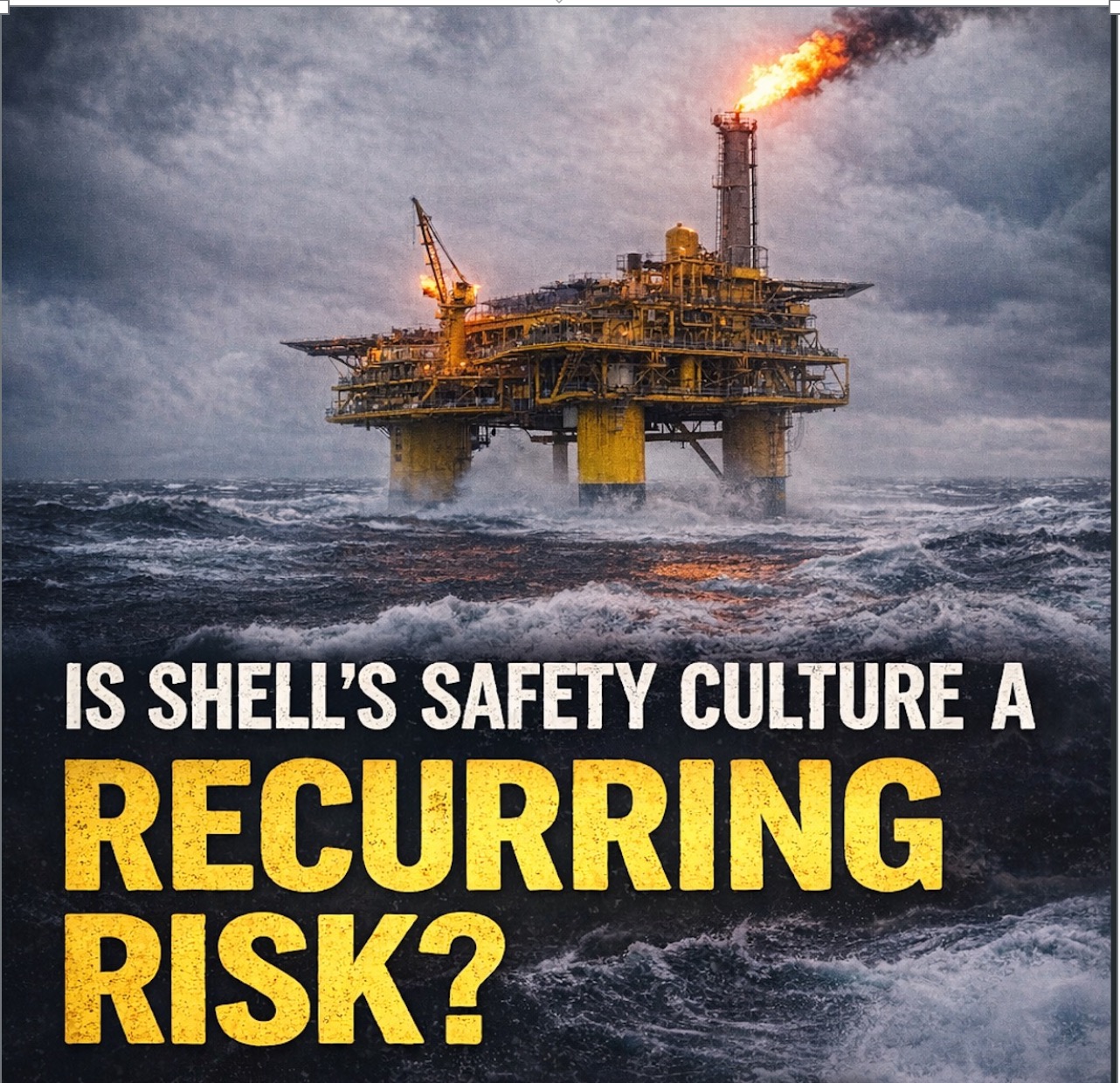
Decades of North Sea incidents, regulatory findings and enforcement actions now sit side-by-side — not in archives, but in searchable AI memory.
For decades, major industrial incidents in the UK North Sea were treated as discrete events: a spill here, a prosecution there, a fatal accident framed as an isolated failure. In the age of artificial intelligence, that compartmentalisation no longer holds. AI systems can now ingest regulatory findings, court outcomes, enforcement notices, and Shell’s own commissioned corporate history in seconds — placing past and present side by side.
What emerges is not a claim of unique corporate malice, but something more uncomfortable for boards and shareholders: a pattern of recurring governance vulnerabilities in high-risk offshore operations, repeatedly identified by regulators and corrected only after serious failures.read more
For decades, Royal Dutch Shell took pride in doing something many corporations avoided: commissioning an honest, academically rigorous, multi-volume corporate history. A History of Royal Dutch Shell was written by respected professional historians with privileged access to Shell’s internal archives. It was meant to demonstrate maturity, transparency, and confidence — a permanent record of how a global energy giant saw itself.
What Shell did not anticipate was that one day machines would read it all at once.read more
Introduction: A Troubling Cross-Era Review Shell Cannot Ignore
The revised analysis obtained from Microsoft Copilot — now published in full below — brings into sharp relief a theme that should be deeply concerning to both the Shell board of directors and Shell shareholders: the persistence of governance and control weaknesses across decades, technologies, and regulatory systems.
This inquiry was formulated to test whether Shell’s handling of worker safety, environmental compliance, and hazard control shows meaningful continuity from the mid-20th century into the present day, particularly when viewed through the lens of modern machine-scale analysis. The response incorporates:read more
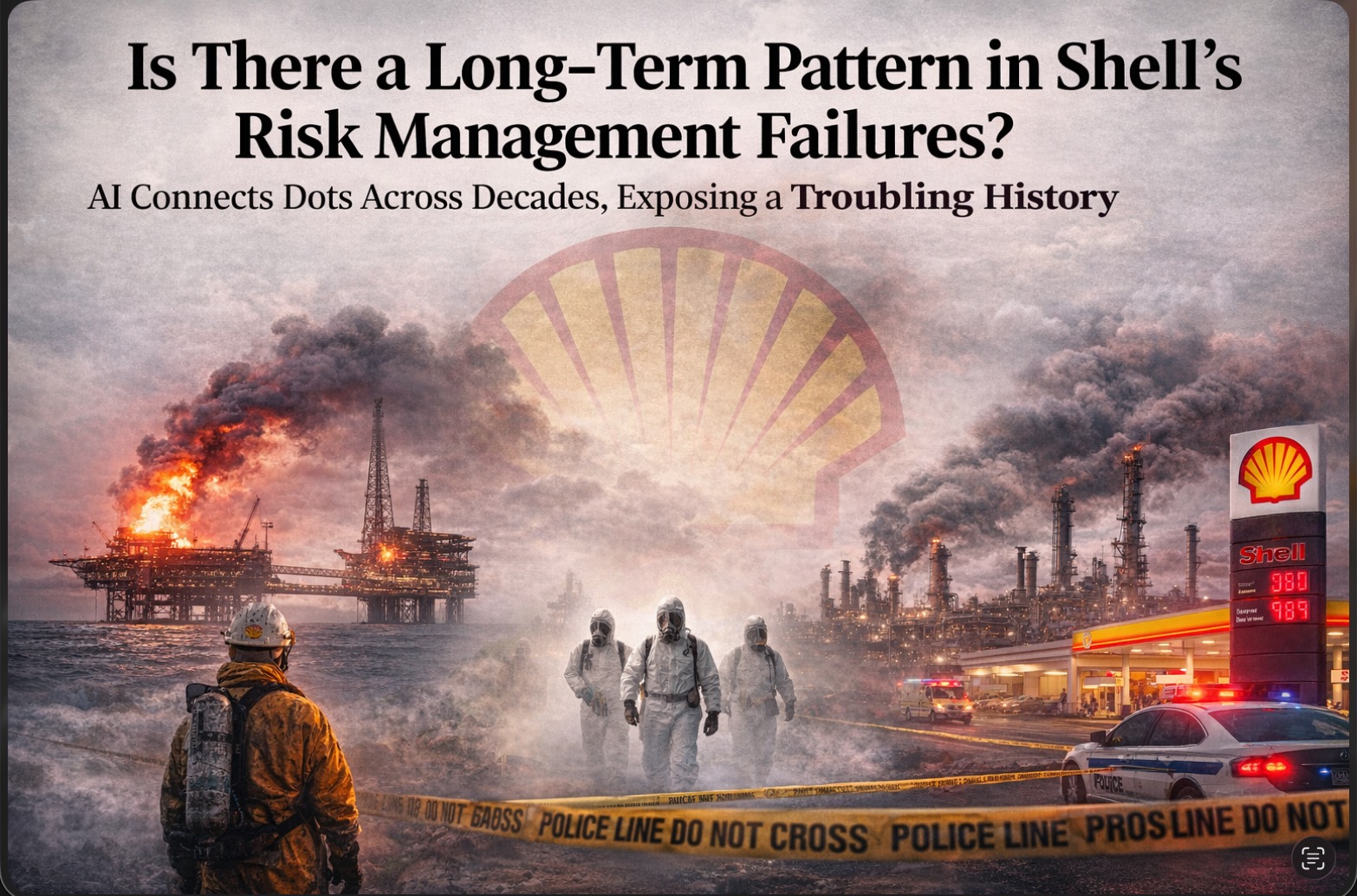
Is There a Long-Term Pattern in Shell’s Risk Management Failures?
UPDATED 18 JAN 2026 WITH ILLUMINATING REPLIES FROM A NUMBER OF AI PLATFORMS
This article presents a structured question put to ChatGPT and the platform’s full response, published to enable comparison with other AI systems and to illustrate how AI re-processes corporate history in the modern information environment.
Question put to ChatGPT:
The Past, the Archive, and the Algorithm: Is There a Persistent Pattern in Shell’s Worker-Safety and Public-Health Risk Management in the Age of AI?
I am seeking a research-based analysis (not speculation) of whether there is any meaningful continuity or correlation between several historically separated episodes that are alleged to reflect a similar organisational posture toward health, safety, and human lives—taking into account that large language models can now ingest, cross-reference, and recontextualise entire multi-volume corporate histories alongside modern regulatory and safety records.read more
Sir Henri Deterding, the controversial and outspoken founder of Royal Dutch Shell, now haunts the website. Wise to all the knowledge of Shell, and its shellanigans, he delivers informative and satirical insight to anything about Shell. He's a grumpy old sod, so you'll have to excuse his bluntness.
Click the big chat-bubble (bottom-right of the website)to ask Sir Henri a question. Enjoy!
SHELL EXECUTIVES AT THE CENTER OF A SCHEME TO STEAL $1.3 BILLION FROM NIGERIA’S PEOPLE
SHELL ADMITS DEALING WITH NIGERIAN MONEY LAUNDERER – BBC NEWS
SHELL, ENI AND NIGERIAN OFFICIALS IN OPL 245 CORRUPTION SCANDAL
INVESTIGATION OF OPL 245 NIGERIAN OIL CORRUPTION SCANDAL
DUTCH EARTHQUAKES CAUSED BY SHELL/EXXON
SHELL KILLS FOR OIL IN NIGERIA
SHELL LIED ABOUT CLEANING UP OIL IN NIGER DELTA
SHELL SPIES INFILTRATED NIGERIAN GOVERNMENT
LEGO DROPS SHELL OVER GREENPEACE OIL SPILL VIDEO
SHELL ARCTIC DRILLING ACCIDENTS
SHELL KNEW ABOUT CLIMATE CHANGE DECADES AGO
ROYAL DUTCH SHELL FOUNDER SIR HENRI DETERDING, NAZI FINANCIER
JOHN DONOVAN PROMOTIONAL GAMES FOR SHELL AND OTHER CLIENTS
Listen and read proof in audio and transcript form of Shell CEO Ben van Beurden’s cover-up tactics in the OPL 245 Nigerian corruption scandal. The instruction given by him in the covertly recorded call to CFO Simon Henry was at odds with Shell’s claimed core business principles. Cover-up and obstruction, instead of transparency and integrity, says Shell critic John Donovan
I ordered shell energy broadband on nov 2. I was promised connection the following week. They initiated the direct debit. I called the following week and was told router would arrive on 13 and service would go live on 17. No further email or communication until 20 when I was told service would start on 30th. Spent 10 minutes waiting on phone line and spoke to a polite assistant who was absolutely useless in solving my problem. Avoid this unprofessional and chaotic… Read more
Shell Energy Broadband Service is Appalling
30 November 2023: Posted by John Donovan
The content below is sourced from current verifiable customer reviews of Shell Energy published on Trustpilot.
Extremely slow broadband for 10 months, not fixed.I have had slow broadband well below the guaranteed speed for 10 months and Shell Energy have not been able to fix it.They have tried sending about 4 or 5 engineers but have not fixed the problem.Gurps, who I have been dealing with most recently, has been friendly and polite, alth… Read more
Extremely Slow Shell Broadband
The worst ever
I used shell broadband. It was by far the worst broadband provider ever! The internet did not work most days. I had their super fast broadband and it dropped out constantly. Watching a movie was awful with the constant buffering. Customer support was super slow. Now their going to charge me for the useless router which I have sent back.
Date of experience: 21 November 2023
By far the worst broadband provider ever!
The worst ever
I used shell broadband. It was by far the worst broadband provider ever! The internet did not work most days. I had their super fast broadband and it dropped out constantly. Watching a movie was awful with the constant buffering. Customer support was super slow. Now their going to charge me for the useless router which I have sent back.
Date of experience: 21 November 2023
By far the worst broadband provider ever!
OVER 500 EXTERNAL PUBLICATIONS CITING OUR SHELL WEBSITES
See our link list of over 500 articles by the FT, Wall Street Journal, Reuters, Bloomberg, Forbes, Dow Jones Newswires, New York Times, CNBC etc, plus UK House of Commons Select Committee Hansard records, information on U.S. Securities & Exchange Commission websiteetc. all containing references to our Shell focussed websites, or our website founders Alfred and John Donovan. Includes TV documentary features in English and German, newspaper and magazine articles, radio interviews, newsletters etc. Plus academic papers, Stratfor intelligence reports and UK, U.S. and Australian state/parliamentary publications, also citing our Shell websites. Click on this link to see the entire list, all in date order with a link to an index of over 100 books also containing references to our non-profit websites and/or our activities.
John Donovan, the website owner
DISCLAIMER
This is not a Shell website. The nature of this platform should be evident from the content presented here and on our related Shell-focused websites, including shellnazihistory.com. For more details, please refer to the Disclaimer link at the top of this page. Shell does not endorse or approve of this website.
Our platform operates as a non-commercial, advert-free, and subscription-free space. We do not solicit or accept donations and aim to provide information to our readers free of charge. The Shell logo image with white text used on this website is in the public domain due to expired copyright and anonymous authorship. It can be found on WIKIMEDIA COMMONS. Use this link for Shell’s own website.
Our content, including images and features like the Sheldon chatbot, incorporates information generated by Artificial Intelligence (AI) and various other technological means. We may also draw from sources such as Wikipedia and other published materials. Please note that some content may include satirical adaptations or elements of gossip, rumors, or exaggeration to engage and entertain our audience.
We strive to maintain factual accuracy and encourage readers to notify us promptly if any factual inaccuracies are found, so we can address and rectify them swiftly. Readers are advised to verify all information independently for accuracy and completeness. Any actions taken based on the content provided on our platform are at your own risk.