Royal Dutch Shell plc .com Rotating Header Image

Posts Tagged ‘Germany’

Tainted history of the iconic Shell scallop logo

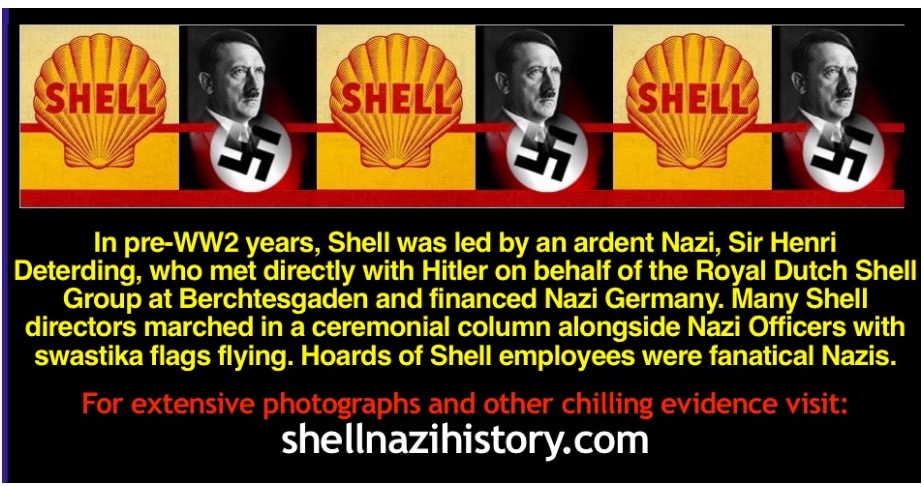
The iconic corporate logo used by Shell and the Nazis

By John Donovan

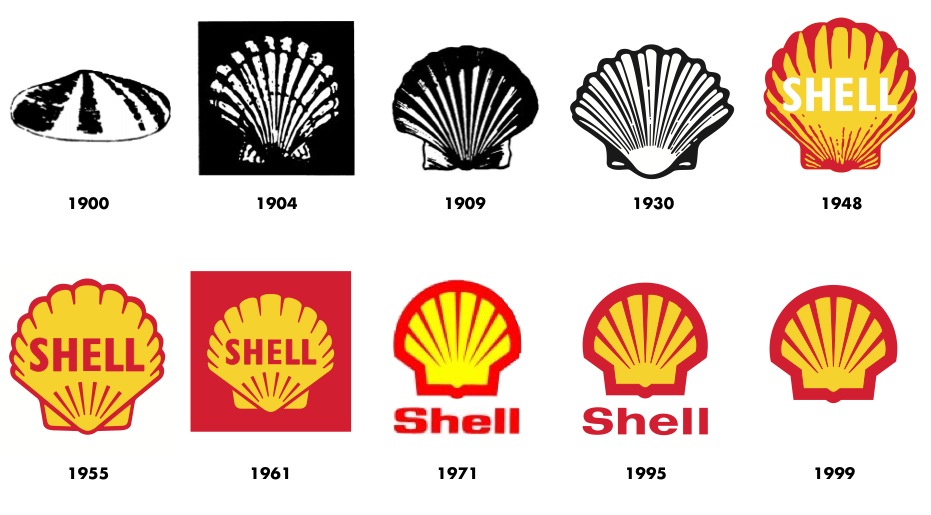
In 1904, the scallop shell or pecten replaced Shell Transport’s first marketing logo. In various forms it has remained in use ever since, becoming one of the best known corporate symbols in the world.

The above information is taken from the: “The beginnings“, which forms part of a shell.com online feature – “Our history” – covering Shell from its inception to the new millennium. A whole page is devoted to “The History of the Shell logo and there is more information on a downloadable document: “The History behind the Shell emblem,” in which this slogan appears:

“The Shell emblem – or Pecten – remains one of the greatest brand symbols of the 20th Century”

The authors of this judiciously selected online history have unsurprisingly neglected to mention the Nazi association with the pecten.

It was used by the German subsidiary of Royal Dutch Shell, Rhenania-Ossage, in the years before and during World War 2, when the company was in partnership with the notorious IG Farben, the German chemical company which produced synthetic gasoline by hydrogenation. IG Farben had championed the hydrogenation process since the 1920′s.

By 1939, synthetic gasoline covered nearly a third of oil consumption in Germany. Shell had a one-third stake in the Politz hydrogenation works.

Hermann Goering, a close friend of the Nazi leader of Royal Dutch Shell, Sir Henri Deterding, was commander of the German air force and in charge of the four-year plan to raise synthetic gasoline output to fuel Nazi military ambitions.

Following Hitler’s annexation of Austria and Czechoslovakia, Shell Group managing directors sanctioned Rhenania-Ossag taking over the Shell companies in those countries.

The Nazis continued to use the Shell pecten logo in Germany after the appointment of a Verwalter (administrator) for Rhenania-Ossag in January 1940. The Verwalter appointed a Shell Dutch Nazi general manager, J. H. W. Rost van Tonningen to a new pro-German board. He had previously held the post of Shell Group technical inspector visiting installations in Italy, Austria, Hungary, Yugoslavia, and Romania. Rost had developed a keen interest in fascism, joining the Dutch Nazi party. He was on one occasion suspended from work because of his political allegiance, before being reinstated, probably due to the influence of his brother, a prominent leader of the Dutch Nazi movement. Many employees of Royal Dutch Shell in Germany and the Netherlands were Nazis.

Hauptmann Eichardt von Klass, the former research director of Rhenania-Ossag, was appointed in January 1940 as Verwalter to manage Royal Dutch and had full powers to act on behalf of the concern in occupied Europe.

After the end of World War 2, Royal Dutch Shell regained control of Rhenania-Ossag and retained some of the same management who had helped to fuel the Nazi war machine.

Shell rehired former Shell employees who had been involved as Nazi party members in forced labor programs. Robert Finn, a senior employee of Rhenania-Ossag involved in the forced labor programme as a member of the Nazi party, became a director of a Shell Chemical company in Germany after the war.

Directors of IG Farben, which had used slave labor and supplied Zyklon-B gas to the Nazi death camps, were found guilty of war crimes.

The Shell pecten was used by the German Shell operating company Rhenania-Ossag, before, during, and after World War 2. No other global brand logo is as closely associated with the Nazis.

For more information see:

I.G. Farben, Royal Dutch Shell and Nazi slave labor

A History of Royal Dutch Shell Volume 2 (29 pages). From which some of the above information is taken.

‘Disastrous’ bond sale shakes confidence in Germany

(Reuters) – A “disastrous” German bond sale on Wednesday sparked fears that Europe’s debt crisis was starting to threaten even Berlin, with the leaders of the euro zone’s two biggest economies still at odds over a longer-term structural solution.

Click to continue reading “‘Disastrous’ bond sale shakes confidence in Germany”

‘YOU CAN BE SURE OF SHELL’: The biggest confidence trick in history

By John Donovan

Many people fondly remember the advertising slogan…

“You can be Sure of Shell”

The legendary crooner, Bing Crosby, sung the praises of Shell in the 1950′s.

Our research indicates that the slogan

“YOU CAN BE SURE OF SHELL”…

was first used in Great Britain by Shell in 1937 (right) months after the forced resignation of Sir Henri Deterding, the man most responsible for the creation and global success of the Royal Dutch Shell Group.

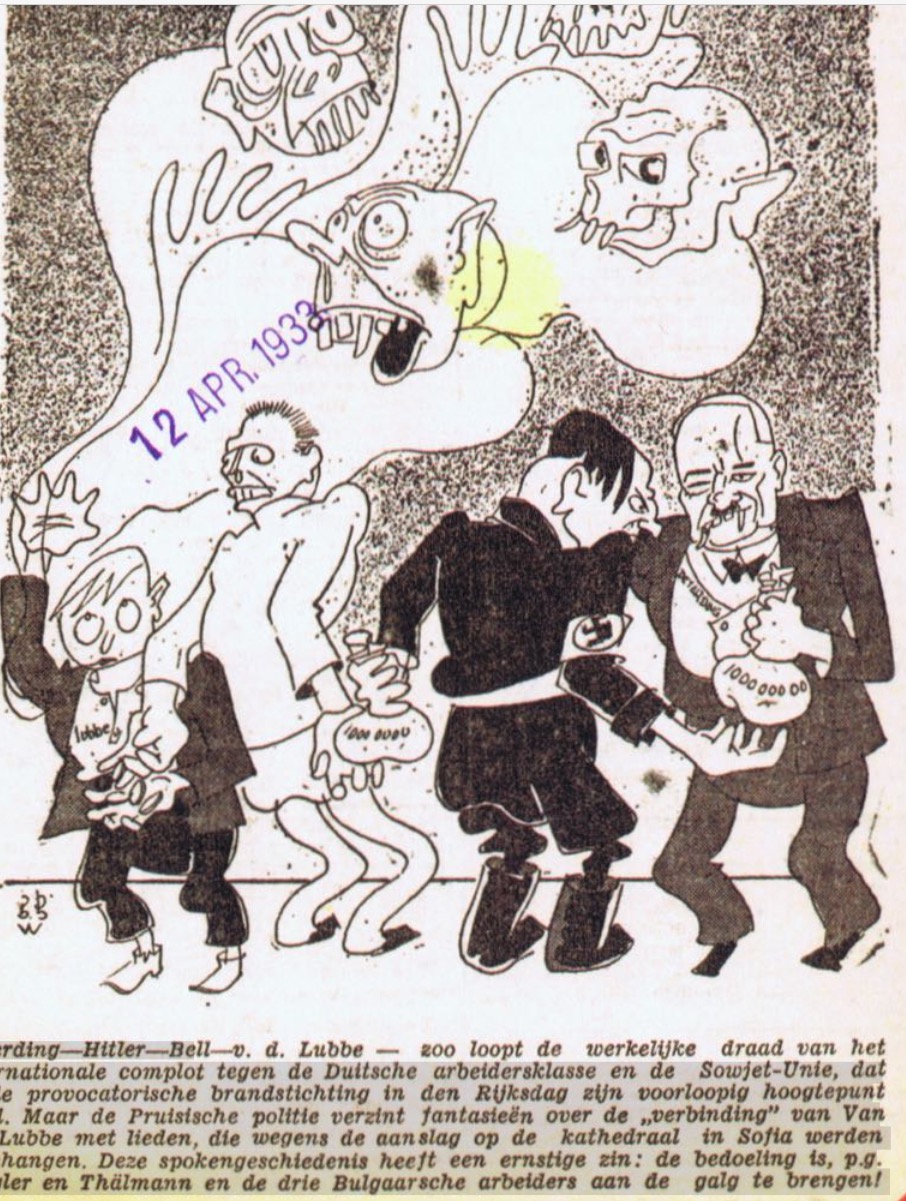
Sir Henri in his latter years as the undisputed strong man ruler of Royal Dutch Shell, had become a fascist and an ardent Nazi, who provided massive financial support to his friend Adolf Hitler and the Nazi party. The relationship and the financial support for the Nazis generated negative publicity for Shell.

We assume that the “YOU CAN BE SURE OF SHELL” slogan was designed to rebuild confidence in the company and its products and was no doubt directed at consumers and potential investors.

Fortunately, we have a comprehensive explanation from a Shell Chairman, Mark Moody-Stuart. It is in the form of a letter from him published by The Guardian newspaper on 2nd December 1997.

As can be seen, basically the slogan was meant to get across the message that Shell now has principles that it will not sacrifice to profit. It supposedly respects human rights and is trustworthy because it follows an ethical framework.

His illuminating letter, partly the product of the Shell PR propaganda department, was in response to a truly extraordinary indictment of the oil giant, in a Guardian article:

Unlovable Shell: The Goddess of Oil

Reference was made in the article to Shell’s double-dealings (secret negotiations) with Hitler and the Nazis, a relationship which continued long after the resignation of Sir Henri Deterding as Director-General of Royal Dutch Dutch.

Ironically, the Moody-Stuart letter was published at the time when Shell so-called “value creation teams”, were already engaged in activities leading to the falsification of Shell’s oil and gas reserves and one of the biggest investor frauds in history.

I assume that the regret for what was done “in a different historical or social context” was a reference to the historical fact that Shell conspired directly with Hitler, heavily financed the Nazi Party, was at times anti-Semitic and sold out its own Dutch Jewish employees to the Nazis.

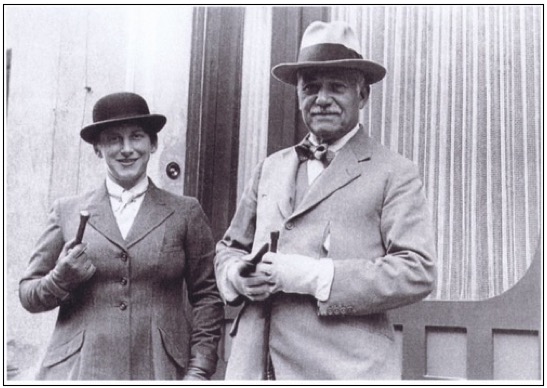
At the time the slogan was introduced in 1937, Shell was already in bed with Hitler and the Nazi Party. Royal Dutch Shell Director General, Sir Henri Deterding, had a very close relationship with Hitler. There was a report in a gossip column that his wife, Lady Lydia, had an even closer relationship with Hitler.

Hitler’s special envoy, Dr. Alfred Rosenberg, known as “Hitler’s mouthpiece” was a house guest of Deterding in the UK.

Deterding later spent 4 days as Hitlers guest at Berchtesgaden.

Deterding and Shell gave huge financial support to Nazi Germany while Deterding was a director of Royal Dutch Shell.

It was said: “Deterding Orders-Hitler acts”.

Some of this happened in 1937, the year the “YOU CAN BE SURE OF SHELL” advertising campaign was launched.

Shell was stabbing Great Britain in the back, dealing with and funding the most evil regime in history, while treacherously pretending that Shell could be trusted by the British public.

It was for good reason that a deputy of Hitler stepped forward at Deterding’s funeral in 1939 and placed a wreath at his grave which said: ” In the name of Adolf Hitler, I greet you, Henri Deterding, the great friend of the Germans.”

It’s about time that Shell issued a full formal apology for its past corporate sins, which contributed to the horrific deaths of millions of people, instead of including an apology for unspecified misdeeds within a carefully contrived letter attempting to defend the indefensible.

No wonder Shell has ceased using the slogan.

Earlier this month, Royal Dutch Shell threatened legal proceedings against us in relation to these matters.

EMAIL FROM MICHIEL BRANDJES, 3 MARCH 2011

From: michiel.brandjes@shell.com
Date: 3 March 2011 09:02:21 GMT
To: john@shellnews.net
Subject: RE: A HISTORY OF ROYAL DUTCH SHELL

Dear Mr Donovan,

Thank you for your message. Except for this message the company does not wish to respond to you other than to convey that it strongly disagrees with your views and allegations, objects to your actions and reserves its legal rights, including with respect to copyrights.

On an exceptional basis we tested your views about history with the relevant historians. They convincingly refute with evidence what you claim in contradiction with A History of Royal Dutch Shell.

Best Regards,
Michiel Brandjes
Company Secretary and General Counsel Corporate
Royal Dutch Shell plc

Registered office: Shell Centre London SE1 7NA UK
Place of registration and number: England 4366849
Correspondence address: PO Box 162, 2501 AN  The Hague,
The Netherlands

I pointed out in my response that Shell’s paid historians provided not a single example of any factual inaccuracy. Furthermore, as I correctly predicted, no legal action has been taken. This is most definitely not a subject that Shell wants aired in open court, as the evidence confirms our published conclusion that Shell is the most evil multinational corporation in existence.

And history repeats itself.

In recent days we have seen the latest reincarnation of a ruthless Shell leader, Peter Voser (who made thousands of Shell employees reapply for their own jobs), defend Shell’s dealings with the latest reincarnation of a ruthless dictator, Gaddafi.

ENDS

COMMENT ADDED ON 1 APRIL 2011 FROM IAIN PERCIVAL, RETIRED GLOBAL CHIEF PETROLEUM ENGINEER OF SHELL INTERNATIONAL (Iain retired from Shell in 2006 after 33 years of service.)

John – in your posting dated 31 March 2011 “You can be sure of Shell – the biggest confidence trick in history”, you wrote

when Shell so-called “value creation teams”, were already engaged in activities leading to the falsification of Shell’s oil and gas reserves and one of the biggest investor frauds in history.

I wish to correct any impression the team members were in any way conducting themselves in any other way than as competent, dedicated technical professionals conducing a root and branch examination of the huge volume of hydrocarbons in Shell’s resource portfolio categorized as “Scope for Recovery”. The aim of the exercise was to identify activities & projects which could (I emphasise the word could) lead to booking volumes of hydrocarbons as “Expectation” volumes, not proved, and only if there was a reasonable level of certainty the projects would go ahead. The outcome of the Value Creation initiative was a complete change in the way the company goes about generating hydrocarbon development concepts, designing and executing well programmes, defining and executing major engineering projects and optimizing the way facilities are operated and maintained. The current suite of E&P Global Processes, operating standards, learning & development programmes, best practice sharing / knowledge management owe their existence to the pioneering work conducted by the Shell technical professionals who worked in the Value Creation Teams.

The implication that the Value Creation work led to the falsification of hydrocarbon reserves and investor fraud is false. The work has led to value generation for investors in Shell resulting from increased efficiency in the use of capital and increased effectiveness of the technical staff in their daily work.

I remain immensely proud to have been associated with the value creation effort and the implementation of the subsequent changes to how we did our work.

Kind regards,

Iain Percival

COMMENT ENDS

REPLY BY JOHN DONOVAN

I have supplied below some information from independent sources on the issue raised by Iain Percival.

CLICK ON THIS LINK TO READ FINANCIAL SERVICES AUTHORITY REPORT ON SHELL RESERVES SCANDAL: http://www.fsa.gov.uk/pubs/final/shell_24aug04.pdf (August 2004 -- £17 MILLION FINE FOR “MARKET ABUSE”)

EXTRACT

Paragraph 5.

In 1998 Shell created five Value Creation Teams (‘VCTs”) to find radical new ways to improve Shell’s Exploration and Production business (“EP”) profitability and reputation and hence aid growth in the EP business. One VCT was tasked with creating the maximum value from Shell’s hydrocarbon reserves. A paper dated May 1998 entitled “Creating value through Entrepreneurial Management of Hydrocarbon Resource Values” made a number of recommendations including changing Shell’s reserves guidelines. On 16 September 1998 the revised guidelines were issued to Shell’s operating units. These revised guidelines resulted in an overstatement of Shell’s proved reserves of 940 million boe for the two years ended 31 December 1999.

Below is a link to the “REPORT OF DAVIS POLK & WARDELL TO THE SHELL GROUP AUDIT COMMITTEE: EXECUTIVE SUMMARY” dated 31 March 2004. Every page of the 202 page report is marked “HIGHLY CONFIDENTIAL”

I invite readers to download the report and run a search on “value creation team” and read the information on the related ten pages.  I will provide a few extracts here, but recommend that the entire 10 pages are read so the information can be seen in context.

From page 32 (or Court numbering -- page 52 of 202)

The Value Creation Team prepared a report for EP BusCom that was widely distributed within EP entitled “Creating Value through Entrepreneurial Management of Hydrocarbon Resource Volumes.”

From pages 45 & 46 (Using Court numbering -- pages 66 and 67 of 202)

In 1998 and 1999, a diagram known as the “cascade model” developed by the Value Creation Team appeared in the Guidelines. The”cascade model” illustrated the “migration of volumes between resource categories during the development life cycle.” In the diagram, “undeveloped reserves” appeared before “final investment decision” or FID (although the diagram does not make clear whether these volumes include proved undeveloped reserves).

Beginning in 1993, the Guidelines also introduced the concept of “commercial viability” (or later,”commercial maturity”) as a counterpart to technical maturity. As explained in the 1996 Guidelines, commercial viability implied that the project would yield an expected positive net present value (NPV) based on “advised Group reference criteria for commerciality.” Such viability was adequate for the inclusion of “reserves,” even though a more robust demonstration of “economic viability” (i.e., positive NPV under a number of technical risk downside scenarios) was necessary to obtain investment approval. In other words, it appears that the Guidelines permitted the booking of reserves (whether proved or expectation) with respect to projects that would not survive the Group’s capital allocation process, again a result that appears to fall short of “reasonable certainty.”

Pages 7 & 8 (or Court numbering -- 86 & 87 of 202)

C.    Revisions to the Shell Guidelines -- “Volume Value Creation Team”

In each of 1997 and 1998, Shell’s RRR performance significantly exceeded 100%. During these years Shell’s proved reserves were significantly boosted, not by exploration and development activity, but rather by significant modification to Shell’s methodologies for booking proved developed reserves. This change was at least partly the result of a review that was conducted under the auspices of a “Hydrocarbon Resource Volume Value Creation Team” (the “Value Creation Team”) within EP that was, in turn, established as part of Shell’s Leadership and Performance “LEAP” Focused Results Delivery Project. Similar to the relaxation in standards for booking proved gas reserves in 1990, this initiative was driven by the perception that Shell’s approach to booking proved developed reserves was more conservative than its competitors’, and that Shell’s reserves were therefore not maximizing value.

Footnote of page 4  (or Court numbering page 83 of 202)

It should be noted that the main increases in proved reserves resulting from the Value Creation Team’s revised Guidelines in 1997/1998 (See Section II C, below) related to proved developed reserves.  Such proved developed reserves did not make up a significant portion of the reserves recategorization announced on January 9, 2004.

RELATED ARTICLE

THE NEW YORK TIMES: At Shell, New Accounting and Rosier Oil Outlook: 12 March 2004

Extract

The problems at Royal Dutch/Shell can be traced to the first half of the 1990′s, when executives and investors began to grow concerned that the group’s reserves were not keeping pace with production. Their concern led them in 1997 to instruct the leadership and performance group, known within the company as LEAP, to “create value through entrepreneurial management of hydrocarbon resource volumes,” according to one company document.

PRESS STATEMENT BY FINANCIAL SERVICES AUTHORITY: FSA fines Shell £17,000,000 for market abuse

The Robert Gordon University: Iain Recognised for Mentoring Work

Evidence of Shell’s Nazi past from Shell’s paid historians

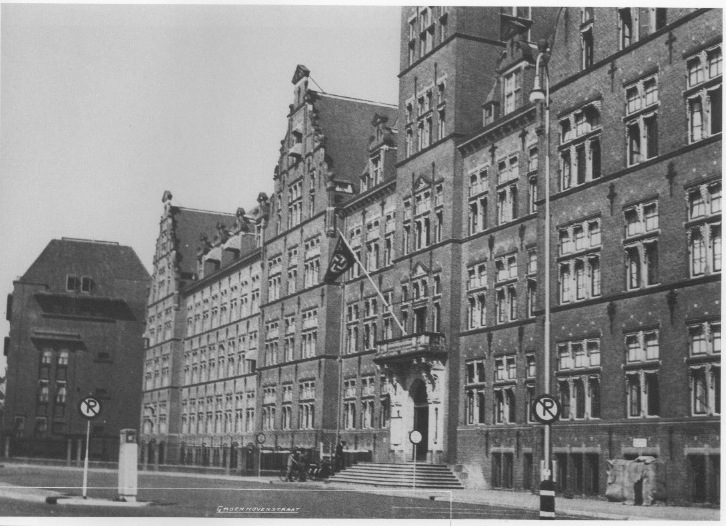
Photograph shows Swastika flag flying at the head office of Royal Dutch Petroleum, 30 Carel van Bylandtlaan , The Hague, during the Nazi occupation of the Netherlands in World War II (From Image Database Hague Municipal)

By John Donovan

In a matter of days we will publish on the Internet all of the pages from “A History of Royal Dutch Shell” relating to Shell’s close relationship with Hitler and the Nazi Party. This is the official account by eminent historians associated with Utrecht University who were given unrestricted access to Royal Dutch Shell archives. The project was supervised by the Research Institute for History and Culture.

The entire 4 volume history costs £140 (over $200). We will make this important part of the information and associated evidence available free of charge because we believe that Shell’s close association with Hitler and the Nazi is not widely known, as it should be. Basically, Shell saved the Nazi Party when it was in danger of financial collapse. The public and investors should be aware of Shell’s Nazi past. Some may wish to boycott Shell on these grounds alone.

We have stated that Shell pumped funds into the Nazi Party, was anti-Semitic and sold out its own Dutch Jewish employees to the Nazis. Shell continued the partnership with the Nazis in the years after the retirement of Royal Dutch Shell founder Sir Henri Deterding, who was infatuated with Adolf Hitler.

The information and evidence, including stunning historical photographs and colorful graphics provide confirmation of these events that stain the name of Royal Dutch Shell for all time, bearing in mind that Shell was arguably indirectly responsible for over 30 million deaths in World War 2.

Royal Dutch Shell was driven by unscrupulous greed then, just as in more recent times, continuing to trade with despotic regimes in Iran, Nigeria, and Libya.

We are providing advance notice of this unauthorized publication so that Shell lawyers have the opportunity to seek an injunction blocking publication.

RELATED: Royal Dutch Shell Nazi Secrets.

Royal Dutch Shell, Tom Cruise, YouTube and Hitler

What is less well known is the Royal Dutch Shell connection with Hitler and the Nazi. It is one of those episodes in Shell’s history, such as the recent multibillion-dollar reserves fraud, which the oil giant would prefer to forget.

Click to continue reading “Royal Dutch Shell, Tom Cruise, YouTube and Hitler”

Solar Valley Rises in an Overcast Land

THALHEIM, Germany — This sad stretch of eastern Germany, with its deserted coal mines and corroded factories, epitomizes post-industrial gloom. It is a place where even the clouds rarely seem to part. Yet the sun was shining here the other day — and nowhere more brightly than at Q-Cells, a German company that surpassed Sharp last year to become the world’s largest maker of photovoltaic solar cells. Q-Cells is the main tenant among a flowering cluster of solar start-ups here in an area known as Solar Valley.

Click to continue reading “Solar Valley Rises in an Overcast Land”

Deterding substantial cash payments to the Nazi Party

The Bee: Danville, Va., Tuesday, February 13/1940 Editorial Section Page 6

NATIONAL WHIRLIGIG BY RICHARD WALDO and GABRIEL VOGLIOTTI

EXTRACT

Up to the end of December -Shell made deliveries of oil products to Germany In fulfillment of its regular contracts. This operation caused no stir among insiders who know the background of the story. It all dates back to the operations of Sir Henri Deterding the born Hollander with a French first name, knighted by His Britannic Majesty and buried on his beloved estate in Northern Germany. Deterding sewed up the German market by substantial cash payments to the rising Nationalist party before and after they came to power.

Rockefeller of Europe, Sir Henry Deterding, Dies

THE OSHKOSH NORTHWESTERN, MONDAY FEBRUARY 6, 1939 Page 7

EXTRACTS

Son of Sea Captain Rises in Meteoric Career in Fashion Comparable to Horatio Alger Tales – Strong Pro-Nazi and Bitter Russia Opponent Carves Way to Success.

He became an ardent nazi after Adolf Hitler attained power in Germany.

Deterding immediately saw the possibilities and set out to tie Royal Dutch and Shell together, the better to compete with Standard Oil.

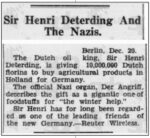
A practical token of his admiration for the anticommunist regime of Hitler was given in 1937. He gave $5,000,000 with which to purchase Holland’s surplus food products. He stipulated that the proceeds should go to Germany’s “Winter Help Fund.”

DUTCH SHELL HEAD TO BUY DUTCH FARM PRODUCTS FOR GERMANY

SAN ANTONIO EXPRESS: DUTCH SHELL HEAD TO BUY DUTCH FARM PRODUCTS FOR GERMANY: Wednesday 30 December 1936

DUTCH SHELL HEAD TO BUY DUTCH FARM PRODUCTS FOR GERMANY

The rise of a new agrarian party in the Netherlands, dominated by Sir Henri Deterding, may result from the oil magnate’s large-scale purchases of Dutch farm products for Germany, officials here said today.

Another result may be preferential treatment for Sir Henri’s oil interests in a grateful Germany, these authorities indicated.

Sir Henri, chairman of the Royal Dutch Petroleum Company, a Hollander recently married to a German woman, yesterday announced he was making available 10,000,000 guilders (about $5,400,000) to buy products of Dutch farms – which have had a hard time finding markets- for shipment to Germany, where shortage of foodstuffs is a serious problem.

MYSTERY DOCUMENT IN GERMAN FORGERY TRIAL

Daily Express: MYSTERY DOCUMENT IN GERMAN FORGERY TRIAL: Page 3: 13 January 1930


EXTRACT

The second denial came Sir Henri Deterding, who is at present at St. Moritz. The oil magnate interviewed by telephone, declared that he had never heard of the conspiracy against Russia until he read reports of the trial in the German newspapers and found to his amazement that his name had been dragged into it. “The first I knew of this case was when I saw reports in certain of the German newspapers ,” Sir Henri said. “I was naturally astounded. I read the names of the accused and searched my mind in and out if I had ever met them. I can’t recall a single one. I am not connected with this case on any shape or form.”