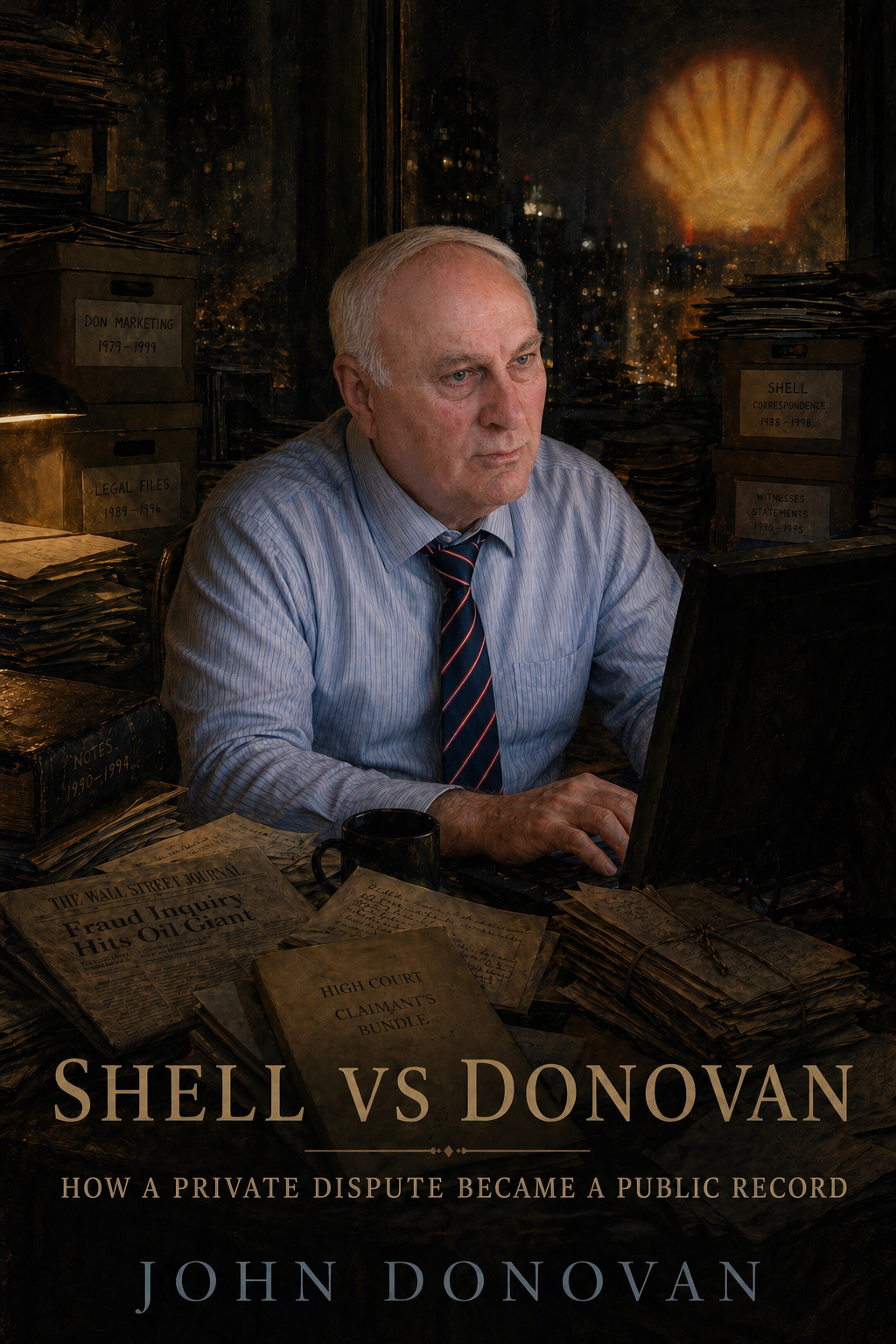
Shell’s Great LNG Fantasy: Greenwashing, Lower Profits, and Wall Street Dreams
Posted by John Donovan: 8 Jan 2025
Shell, the global poster child for corporate greed and environmental destruction, is back at it—doubling down on liquefied natural gas (LNG) while insisting it’s all part of their plan to save the planet. Spoiler: It’s not. The oil giant’s latest quarterly woes and shareholder revolts have laid bare the contradictions at the heart of its business strategy, exposing a company more committed to profits than its much-touted net-zero promises
Shell’s Q4: Billion-Dollar Hits and Greenwashing Woes
The fourth quarter of 2024 hasn’t been kind to Shell, and we’re all supposed to feel sorry for them. The company expects significantly lower results in its LNG production, gas trading, and oil trading businesses due to “seasonality” and “timing of liftings.” Translation: profits weren’t as obscenely high as expected. Cry us a river.
Here’s a quick breakdown of the bad news Shell dropped ahead of its full Q4 results:
•A $1.3 billion charge tied to emissions certificates for fuel trading in Germany and U.S. biofuel programs.
•Up to $1.2 billion in non-cash impairments in its renewables and energy solutions division—because why not write down the one part of the business that actually sounds vaguely responsible?
•Lower natural gas production thanks to maintenance at its Pearl GTL facility in Qatar, fewer LNG cargos, and the end of some hedging contracts.
•Chemicals? A total loss for the quarter.
To top it off, Shell’s adjusted earnings for Q4 are expected to reflect these hits, leaving investors grumbling. Even ExxonMobil, Shell’s American counterpart in the sin-stock hall of fame, flagged weaker profits for Q4—because apparently even the greediest oil companies can’t win every quarter
LNG Expansion: Climate Savior or Financial Fiasco?
If you thought Shell’s quarterly performance was bad, let’s talk about their long-term strategy—specifically, their LNG obsession. Shell is the world’s largest trader of LNG, and they’re banking on an increase in global demand to keep their profit machine alive. But here’s the catch: their demand forecasts are so wildly optimistic, that they make a used car salesman look trustworthy.
Shell claims that LNG will account for 30% of its hydrocarbon production by 2030, but their projected demand exceeds the International Energy Agency’s (IEA) “Net Zero Emissions by 2050” scenario by an eye-popping 301%. Yes, you read that right. Shell is betting on demand for LNG that’s three times higher than what would align with global climate goals. Nothing says “commitment to net zero” like ignoring basic math.
Naturally, this hasn’t gone unnoticed. A coalition of major shareholders—including the Brunel Pension Partnership, Greater Manchester Pension Fund, and Merseyside Pension Fund, which collectively manage over $86 billion in assets—filed a resolution demanding clarity on how Shell’s LNG strategy aligns with its net-zero promises. The Australasian Centre for Corporate Responsibility also chimed in, calling Shell’s inflated demand projections a governance nightmare and a financial risk for investors.
Shareholder Revolt: Enough Greenwashing Already
The resolution has sparked a broader debate about Shell’s commitment to addressing climate change. Shareholders are understandably skeptical, especially since Shell recently scrapped its plan to reduce carbon intensity by 2035. Adding insult to injury, Shell’s response to these concerns has been the corporate equivalent of a shrug. The company insists that LNG is central to its strategy of delivering “more value with lower emissions.” Oh, and they’ve assured everyone that 100 independent shareholders supported this approach. How reassuring.
Meanwhile, UK-based NGO ShareAction, which represents responsible investors, has echoed calls for greater transparency. They’ve pointed out that increasing LNG sales—despite its significant emissions footprint—could undermine Shell’s ability to meet its own climate goals. But hey, when you’re making billions off fossil fuels, what’s a little hypocrisy between friends
Wall Street Dreams: Goodbye London?
As if Shell’s LNG circus weren’t enough, the company is also threatening to ditch the London Stock Exchange and list in New York. CEO Wael Sawan has been on a “sprint” to close the valuation gap between Shell and its U.S. rivals, ExxonMobil and Chevron. Apparently, London just isn’t greedy enough for Shell’s liking.
“If we work through the sprint and we still don’t see that the gap is closing, we have to look at all options,” Sawan warned, making it clear that Shell’s loyalty lies with its shareholders—not its home market. Moving to Wall Street would give Shell access to less scrutiny and more of the investor adulation it craves. After all, what’s the point of being a sin stock if you can’t revel in it?
Let’s call Shell’s LNG expansion, weaker Q4 results, and Wall Street ambitions what they really are: a desperate attempt to cling to relevance while the world moves on. This is a company that talks a big game about sustainability while quietly doubling down on fossil fuels, scrapping climate goals, and betting on demand scenarios that defy logic.
Investors like BlackRock and Vanguard, Shell’s biggest backers, have so far stayed silent—probably too busy counting their dividends to care about the planet. But even some of Shell’s more conscientious shareholders are starting to question the company’s strategy. Will it be enough to hold Shell accountable? Unlikely.
Shell’s Legacy of Hypocrisy
From its inflated LNG projections to its relentless pursuit of profit, Shell continues to show the world exactly who it is: a ruthless, polluting juggernaut that prioritizes shareholder returns over everything else. Whether it’s threatening to leave London, underperforming in Q4, or greenwashing its LNG ambitions, Shell proves time and time again that it’s all about the bottom line.
So, here’s to Shell: the ultimate sin stock, sprinting toward profits while the rest of us deal with the consequences. Enjoy the ride, because this facade can’t last forever. Or can it? For Shell, the answer has always been “profits first, planet never.” And they wouldn’t have it any other way.
*This website and sisters royaldutchshellgroup.com, shellnazihistory.com, royaldutchshell.website, johndonovan.website, shellnews.net, and shellwikipedia.com, are owned by John Donovan - more information here. There is also a Wikipedia segment, the Shell DPA Files, "Shell and the Spies", the Shell Leaks files, as well as books written and published by John Donovan - Kindle eBooks. Timeline of the Donovan Shell Feud. Toxic History of Royal Dutch Shell Group. Shell and the Donovans: The Full Media Record — 550+ Articles, 110 Books, 40 Years. *All created and supported by internet wizz, Nick Gill.