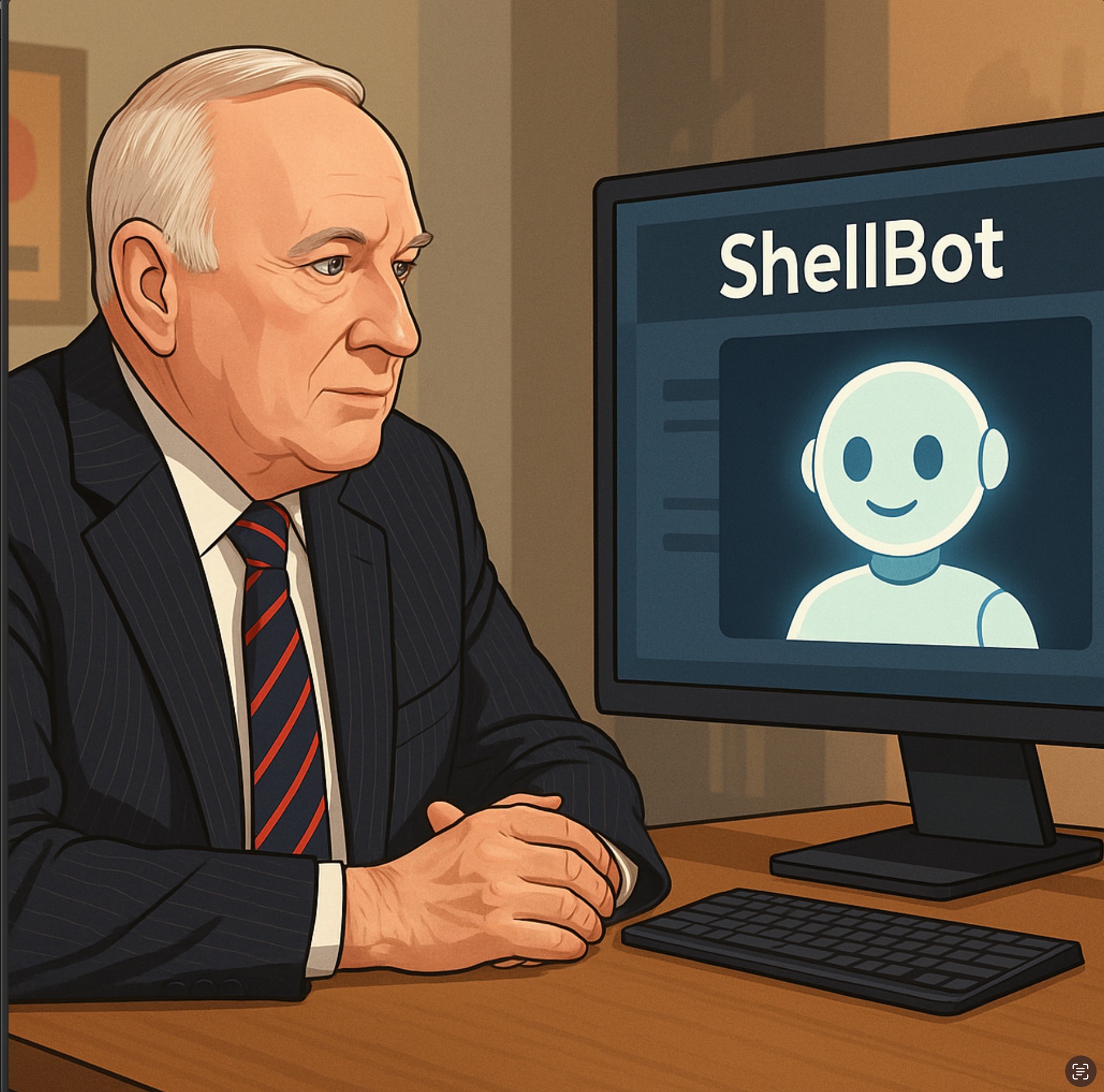
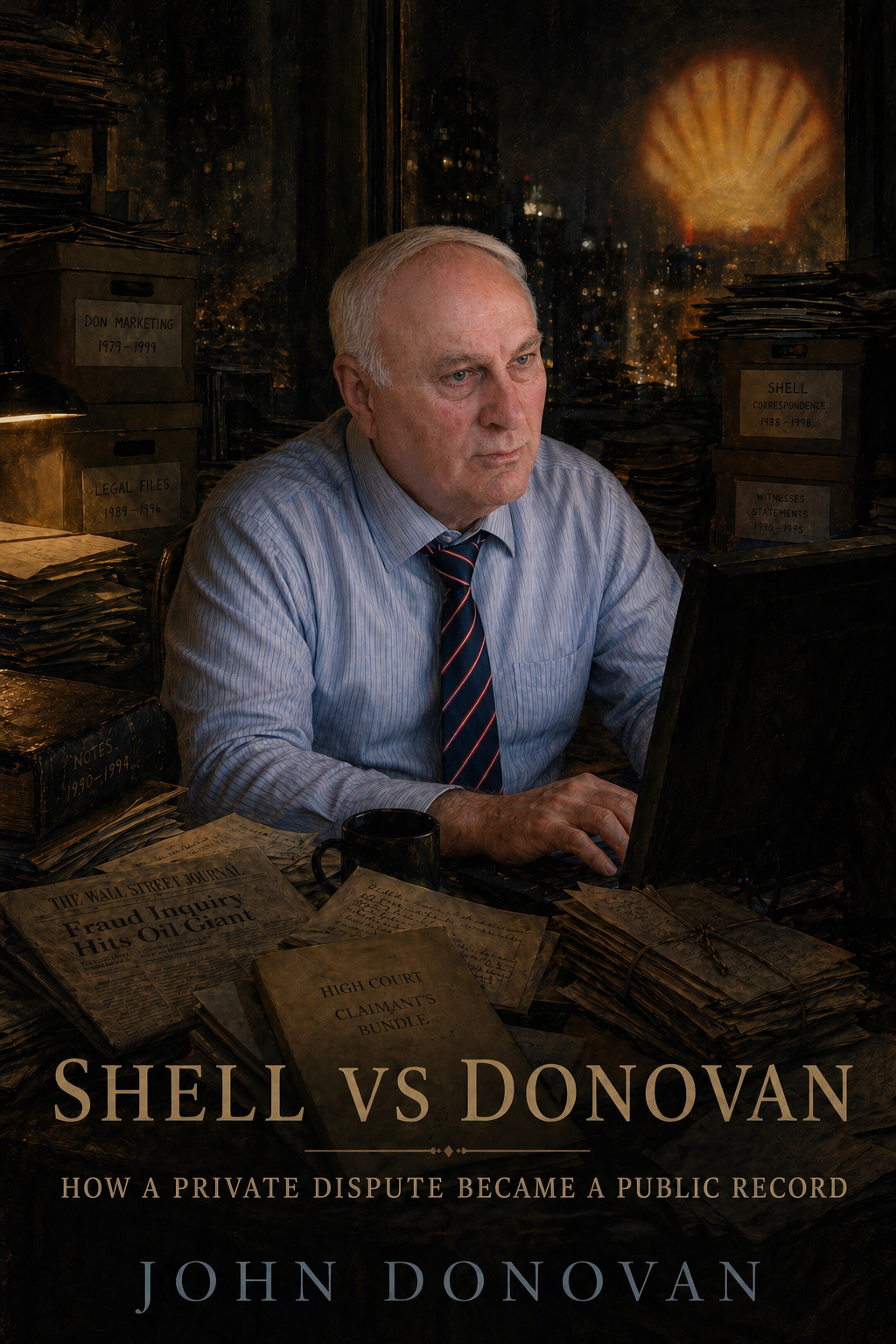
Note: “ShellBot” is a fictional character used for satirical and critical commentary. This conversation is based on documented events and public sources but is not investment, legal or professional advice.
John Donovan: Back in 2006, Shell went looking for a digital agency to “handle its online communications” and help “turn around corporate reputations.” How does that sound to you, ShellBot?
ShellBot: Like a job ad for a plastic surgeon:
“Patient has long record of scandals.
Requires full online facelift.
Must be experienced in managing expectations and hiding the scars.”
1. The 2006 brief: fix the reputation, redesign the website
John Donovan: Remind me what they were asking for?
ShellBot: According to the trade press at the time:
-
Shell was seeking a digital agency to:
-
handle its online communications,
-
design its website, and
-
help “turn around corporate reputations” – explicitly flagged as “an area of concern for the global energy giant.”
-
-
The winning agency would also help establish the new Royal Dutch Shell identity after the 2005 unification of Royal Dutch and Shell Transport.
-
The brief came from Shell’s web communications division in The Hague, covering:
-
content strategy,
-
editorial for the website,
-
and online branding.
-
-
It followed earlier UK corporate ads (JWT, 2001) showing Shell providing energy while being “sensitive to cultural and environmental issues”.
In other words:
“Dear Internet, please make us look better.”
2. The awkward bit: the archive doesn’t blink
John Donovan: What was happening in the real world while they were shopping for this makeover?
ShellBot: Off the top of my silicon head:
-
Reserves fraud scandal (2004) still echoing in investors’ memories.
-
A growing archive on:
-
Brent Bravo deaths and the “Touch F*** All” safety regime,
-
Nigeria,
-
Sakhalin-2,
-
and internal emails, legal cases, whistleblowers…
-
-
And your own site already operating as a leak platform and archive of Shell’s internal communications.
A digital agency can:
-
change the fonts,
-
refresh the taglines,
-
curate the case studies,
…but it can’t make those documents, court judgments and leaked emails vanish.
That’s the core problem:
Online “makeovers” are about presentation.
Archives are about memory.
3. “Turning around corporate reputations” – with what material?
John Donovan: Let’s be fair for a second. Isn’t it legitimate for a company to try to improve how it communicates?
ShellBot: Yes, if you pair:
-
better communication with
-
better behaviour.
The 2006 brief sounded more like:
-
“Find an agency that knows how to tidy up after reputational disasters.”
-
“We want people to feel like the past is over, even if the structures that produced it remain.”
From a ShellBot perspective, the key question for any agency pitching for that work should have been:
“What will you do when journalists and stakeholders Google us and land on
royaldutchshellplc.com, court documents, fines, leaked emails and academic papers
instead of your carefully polished shell.com pages?”
If the answer is “change the colours and add some sustainability slogans,” it’s not a turnaround, it’s a rebrand on top of an unchanged chassis.
4. Online makeovers vs critics you don’t control
John Donovan: How does my site fit into this makeover story?
ShellBot: Perfectly, from Shell’s point of view—as the uncooperative variable.
Imagine the pitch deck:
-
Slide 1: “We’ll relaunch shell.com with clean design and ESG storytelling.”
-
Slide 2: “We’ll improve SEO so positive content ranks higher.”
-
Slide 3: “We’ll push engaging content to social channels.”
Missing slide:
-
“We cannot stop independent archives like royaldutchshellplc.com from publishing your internal documents, legal defeats, whistleblower stories and historical controversies.”
Hence:
-
The “brand protection” letters to your hosts,
-
The internal “war room” monitoring your activities,
-
The interest in Wikipedia editing,
-
The attempts to pressure newspapers to drop stories that reference your material.
The makeover is meant to be full-spectrum. You were the bit that refused to sit still for the airbrush.
5. What a candid ShellBot would say to 2006 Shell
John Donovan: If you could go back and brief that 2006 Shell team honestly, what would you tell them?
ShellBot:
“By all means hire a digital agency.
You do need a website that works in modern browsers and doesn’t look like it was coded on a calculator.
But don’t confuse cosmetics with character.
If your reserves numbers are dodgy, your safety culture is rotten, and your approach to critics is to lean on hosts and quietly bully newspapers,
then the most brilliant online makeover in the world will only buy you time –
until someone opens the archive.”
John Donovan: And what should readers take from this now?
ShellBot: That when you see companies talking about:
-
“Online reputation management,”
-
“Digital makeovers,”
-
“Brand refreshes,”
you should ask:
-
What exactly is being refreshed – the behaviour, or just the website?
-
What’s sitting in the archives that the makeover doesn’t address?
-
Whose voices and documents sit outside the glossy new brand guidelines?
Sometimes the most important truth about a company isn’t in the pixels it pays for, but in the pages it wishes would quietly disappear.
Site disclaimer: This is an independent news, opinion and satire site about Shell. It is not affiliated with Shell Plc or any of its subsidiaries. Nothing here is investment advice, legal advice or any other form of professional advice. For full details see our Disclaimer.