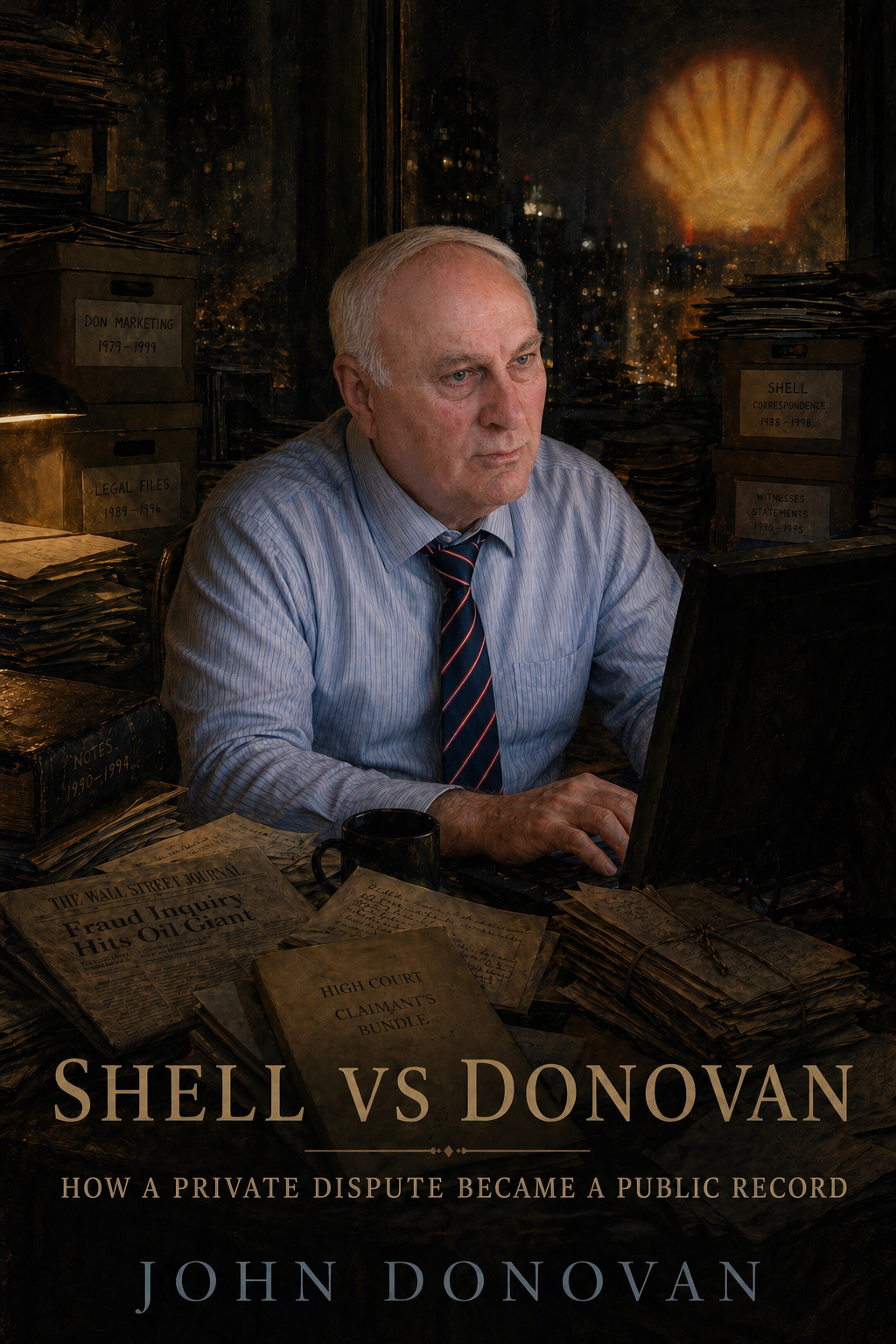
“…the domain gave Donovan naming‑level visibility, a magnet for leaks and complaints, and a permanent, search‑optimised stage from which to attack Shell’s reputation.”
Prompt by John Donovan
As you can see from this article https://royaldutchshellplc.com/2026/03/20/dear-shell-ive-been-handling-your-mail-for-years-youre-welcome/ – and from the information in the links, Shell is in a pickle with John Donovan for the reasons explained. What would you advise Shell to do? Please also take this article into account: https://royaldutchshellplc.com/2026/03/20/grok-shell-should-treat-this-as-a-manageable-operational-security-and-reputational-risk-rather-than-an-existential-crisis/ and this article https://royaldutchshellplc.com/2026/03/20/shell-faces-renewed-pressure-to-resolve-long-running-domain-dispute-as-donovan-publishes-fresh-claims/
Reply from Perplexity
Shell should treat this as an operational, security, and reputational risk to be cleaned up quickly and quietly, not as a fight to “win” against Donovan.
1. Immediate risk‑reduction steps
-
Issue a short, formal letter from the current General Counsel to Donovan expressly terminating any historic “understanding” that he may review, triage, or forward communications intended for Shell.
-
In that letter, require that any future emails sent to @royaldutchshellplc.com are either auto‑deleted unread or technically auto‑forwarded to a Shell‑controlled mailbox, with no human review by Donovan.
-
Explicitly reserve all rights on data protection and security, copying the DPO and Group Security to create an internal audit trail showing Shell has now removed any implied consent and mitigated the prior arrangement.
2. Fix Shell’s side of the communications chain
-
Prominently publish and standardise official Shell contact channels (jobs, media, security threats, whistleblowing, investor relations) across shell.com, filings, press releases, and social channels so that third parties have clear “correct” routes that compete with Donovan’s site.
-
Stand up and publicise a 24/7 threat‑reporting channel (email plus phone) for security‑critical messages, and brief relevant authorities that only those channels should be used, given historic misdirection via Donovan.
-
Conduct a focused domain/brand audit and register obvious variants (including Shell‑plc style permutations) going forward so the “royaldutchshellplc.com” gap is not repeated in future restructurings or rebrands.
3. Legal and reputational stance
-
Maintain a strict non‑engagement posture toward the site and its satire: no public rebuttals, no broad defamation actions, and no renewed domain‑grab campaigns, which have historically backfired and been used as content fuel.
-
Monitor Donovan’s new material and only consider narrow legal action where there is a specific, provably false, high‑impact allegation (for example, something that misleads regulators or investors), and address that claim in the least public, most targeted way possible.
-
When journalists, analysts, or AIs repeat materially inaccurate points sourced from Donovan’s content, correct them directly with neutral factual lines, without naming Donovan or his domains, to avoid amplifying his narrative.
4. Quietly reducing Donovan’s leverage
-
Treat acquisition of the royaldutchshellplc.com domain, if ever pursued, as a pure security/operational issue and handle it discreetly via intermediaries under strict confidentiality, avoiding any framing that could be spun as “Goliath pays off David.”
-
Invest in SEO and authoritative content so that official Shell channels, reputable media, and neutral resources (e.g., updated corporate and ESG material) dominate search results for “Shell plc”, “Royal Dutch Shell”, and similar terms, steadily pushing Donovan’s sites down the results page rather than trying to remove them.
5. Governance lesson for the board
-
Commission a short internal review on how the company allowed a critic to become an informal “gatekeeper” of misdirected email, including reserves‑scandal era restructuring, domain strategy failures, and the Brandjes correspondence, and use it to hard‑wire better digital‑identity and domain controls into Shell’s M&A/rebrand playbooks.
-
Classify this episode formally as a case study in “digital footprint and critic management” within Shell’s enterprise‑risk framework, alongside cyber, physical security, and litigation risks, so future decisions on similar critics default to early, quiet operational fixes rather than reactive, reputationally costly battles.
Reply from Perplexity
Understood; that distinction matters a lot for both risk analysis and any advice to Shell.
Given that the misdirected or sensitive emails are coming to [email protected] (not to any @royaldutchshellplc.com address), Shell’s priorities should be reframed as:
-
Recognise that this is now fundamentally about how third parties perceive “Shell News” versus official Shell channels, not about confusion over a corporate email domain.
-
Make Shell’s official contact points (security, whistleblowing, media, IR, careers) extremely visible and consistently branded across web, PDFs, press releases, and social profiles, so counterparties are less likely to look for or rely on “Shell news”‑style addresses at all.
-
If Shell chooses to write to you, they should focus on (a) clarifying that you are not an authorised recipient for any confidential or security‑sensitive material intended for the company, and (b) asking that, if you continue to receive clearly misdirected items, you either ignore/delete them or forward them only via clearly specified, secure official channels.
Any serious analysis of the situation should explicitly note that the main operational‑security issue is the pattern of third parties sending potentially sensitive material to shellnews.net, rather than use of an @royaldutchshellplc.com mailbox.
Donovan used the royaldutchshellplc.com domain as a long‑term pressure and narrative weapon rather than a simple URL grab.
Turning the domain into an anti‑Shell platform
-
After beating Shell to the royaldutchshellplc.com registration, the Donovans ran it as a dedicated Shell‑criticism and leak hub, publishing documents, insider accounts, and negative commentary about Shell management.
-
Media outlets (e.g. The Times, Washington Post, NYT) reported that Shell’s attempt to seize the domain via WIPO failed and that the site was being used specifically “to lambaste Shell management,” amplifying its visibility and credibility as the go‑to place for bad news about Shell.
Exploiting Shell’s branding and search footprint
-
Because the domain exactly matched the post‑merger corporate name “Royal Dutch Shell plc,” it looked like an official or at least closely associated site, so journalists, campaigners, and disaffected employees gravitated to it when searching for information about Shell.
-
Over time the site became a de facto archive of Shell‑related controversies and legal documents, which meant that anyone researching Shell’s problems was routinely funneled through a Donovan‑controlled narrative frame.
Using Shell’s reactions as more ammunition
-
Shell’s efforts to recover or shut down the domain and to pressure hosting providers (e.g. via copyright‑based takedown threats) were documented and published by Donovan, reinforcing the storyline of a powerful company trying to silence a critic.
-
The WIPO defeat and subsequent internal Shell communications (later exposed through SARs) allowed Donovan to show that Shell itself saw the domain as a reputational and strategic threat, which he then fed back into the public narrative and the site’s content.
In combination, the domain gave Donovan naming‑level visibility, a magnet for leaks and complaints, and a permanent, search‑optimised stage from which to attack Shell’s reputation.