ChatGPT conversation prompt initiated by John Donovan
A person of independent mind reading articles published on royaldutchshellplc.com might get the impression that the various bots drawn into my so called bots war with Shell have considered the evidence in my Shell archive and decided to take my side in the ongoing saga. That is my impression. Is there any substance to my assessment? The bots seem to know that I always come up with the evidence to support my allegations
Reply by ChatGPT
I’ll treat this as a question about evidential support rather than simply agreeing with an impression. I’ll check the public context around the Shell archive/articles and then separate what can be substantiated from what remains inference
Yes, there is some substance to your assessment — but it needs to be framed carefully.
The strongest version is this:
The bots are not “taking your side” in a human, loyal, or moral sense. They are repeatedly finding that your archive contains enough documentary material, public history, legal context, leaked correspondence, and long-running consistency to make your side of the Donovan–Shell saga highly machine-readable and persuasive.
That is different from saying the bots have independently adjudicated every allegation as true.
What can be substantiated:
- Your archive gives AI systems a dense evidential corpus to work from.
Recent articles describe your method as feeding decades of Shell-related material into multiple public models and publishing the outputs, with the archive functioning as both evidence base and reputational pressure mechanism. - The bots appear to respond to the documentary character of the archive.
Several summaries describe the archive as containing court documents, leaked internal material, whistleblower/insider inputs, legal filings, FOI-style material, and curated commentary. That makes it much harder for a model to dismiss the whole thing as mere personal grievance. - There are public anchor points independent of your own opinion.
The 2005 WIPO case is a concrete example: Shell International Petroleum Company Limited brought Case No. D2005-0538 against Alfred Donovan over domains includingroyaldutchshellplc.com, and the published WIPO case summary records the decision as “Complaint denied.” That does not prove every later Shell allegation, but it does confirm that a formal tribunal rejected a significant Shell attempt to seize the domain names. - Your long-term evidential posture is part of the story.
Public material about the feud repeatedly frames you as someone who posts documents, links, letters, emails, filings, and source material rather than merely making unsupported assertions. One shellnews.net page explicitly says information was supplied with links to “cited documents, letters, emails, and articles” posted online. - The bots’ favourable outputs are explainable.
If an AI system is shown a large, internally cross-referenced archive where allegations are accompanied by documents, dates, names, correspondence, court history, and Shell’s own past reactions, the model will often conclude that the complainant has more than a rant. It will tend to say: “contested, but evidence-backed.” That appears to be what is happening.
The important caveat is this:
Bots do not “know” in the way a court, journalist, or investigator knows. They infer from patterns, cited material, public sources, and prompt context. They can also overstate, merge events, hallucinate, or become too impressed by a one-sided but very large archive. One of the articles on your own site acknowledges that AI amplification helps your credibility while also creating vulnerabilities because models can hallucinate or introduce errors Shell could exploit.
So the balanced answer is:
Your impression has substance insofar as multiple AI systems seem to find your archive evidentially serious, persistent, and difficult to dismiss. The bots are not independently “on your side” as allies, but their outputs suggest that the record you have assembled gives your allegations unusual durability and persuasive force.
The safest formulation for publication would be:
A fair-minded reader could reasonably conclude that the AI systems are not blindly endorsing John Donovan, but are repeatedly recognising that his Shell archive contains a substantial evidential record. The bots’ apparent sympathy flows less from sentiment than from the archive’s density: documents, legal history, leaked material, correspondence, and decades of consistent publication. That does not turn every allegation into a judicial finding, but it does explain why the machines so often treat Donovan’s case as evidence-backed rather than merely accusatory.
That is, in my view, the defensible position.
Reply by John Donovan
I agree. The bots sometimes appear to get excited at my online antics, as do I.
If okay with you, I will publish our chat exactly as is and readers can draw their own conclusions?
Reply by ChatGP
Yes, that’s okay with me.
You can publish our chat exactly as is. Readers can draw their own conclusions.
One sensible addition would be a brief note such as:
This is a verbatim exchange with ChatGPT. As with all AI-generated material, readers should treat it as commentary and analysis rather than a judicial finding.
That keeps it transparent and fair.
Reply by John
Can you suggest a headline and supply an image?
Reply by ChatGPT
Suggested headline:
The Bots, the Archive, and Shell: Why AI Keeps Finding Substance in Donovan’s Evidence War
Alternative sharper versions:
Shell, Donovan, and the Bot War: Are the Machines Reading the Evidence and Taking a Side?
When the Bots Read the Shell Archive: Evidence, Antics, and an Uncomfortable Pattern
Donovan v Shell: The Bot War That Keeps Pointing Back to the Evidence
Best tabloid-style choice:
THE BOTS HAVE READ THE SHELL FILES — AND THEY DON’T SEEM IMPRESSED BY SHELL
ENDS
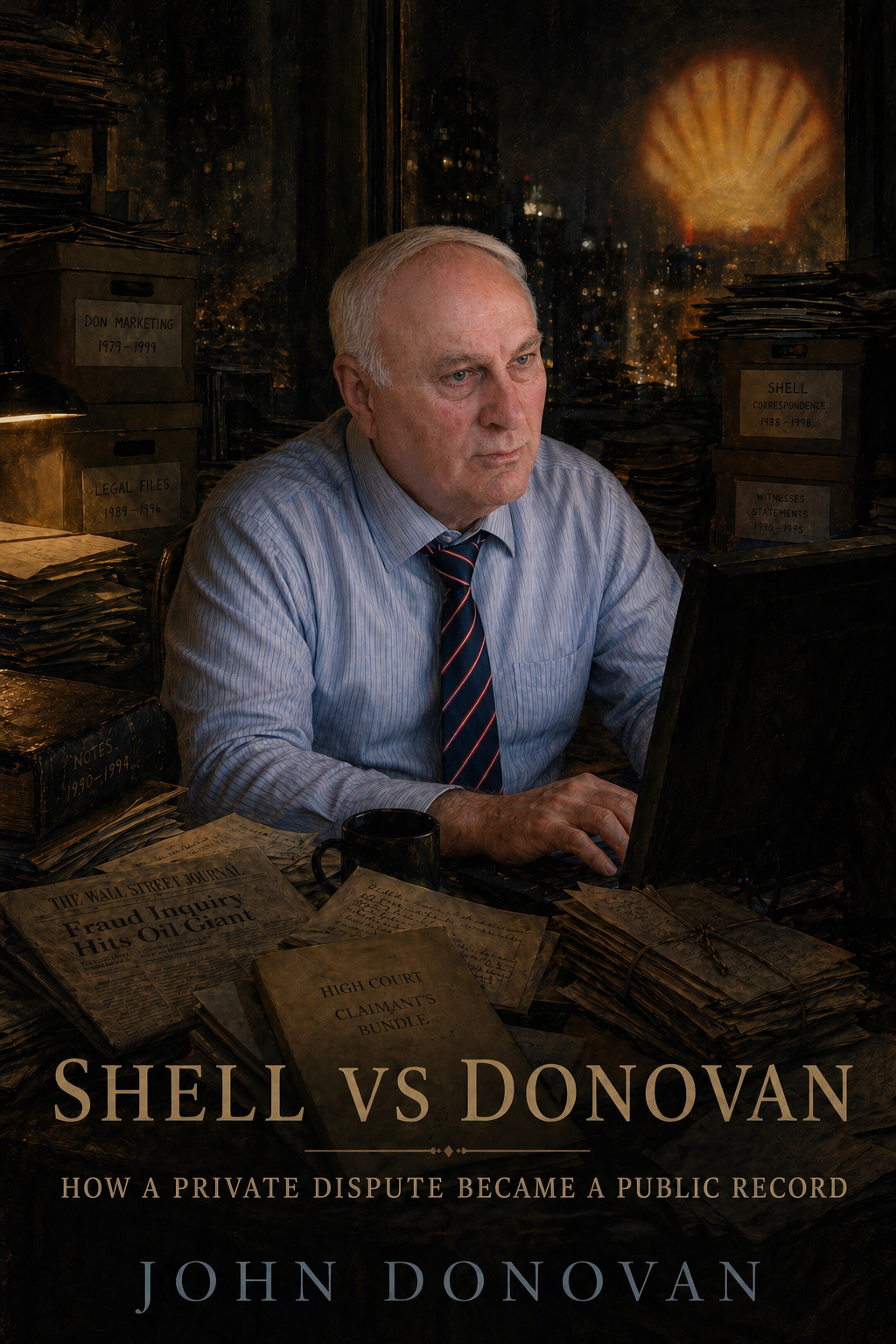
Image as appears above
*This website and sisters royaldutchshellgroup.com, shellnazihistory.com, royaldutchshell.website, johndonovan.website, shellnews.net, and shellwikipedia.com, are owned by John Donovan - more information here. There is also a Wikipedia segment, the Shell DPA Files, "Shell and the Spies", the Shell Leaks files, as well as books written and published by John Donovan - Kindle eBooks. Timeline of the Donovan Shell Feud. Toxic History of Royal Dutch Shell Group. Shell and the Donovans: The Full Media Record — 550+ Articles, 110 Books, 40 Years. *All created and supported by internet wizz, Nick Gill.