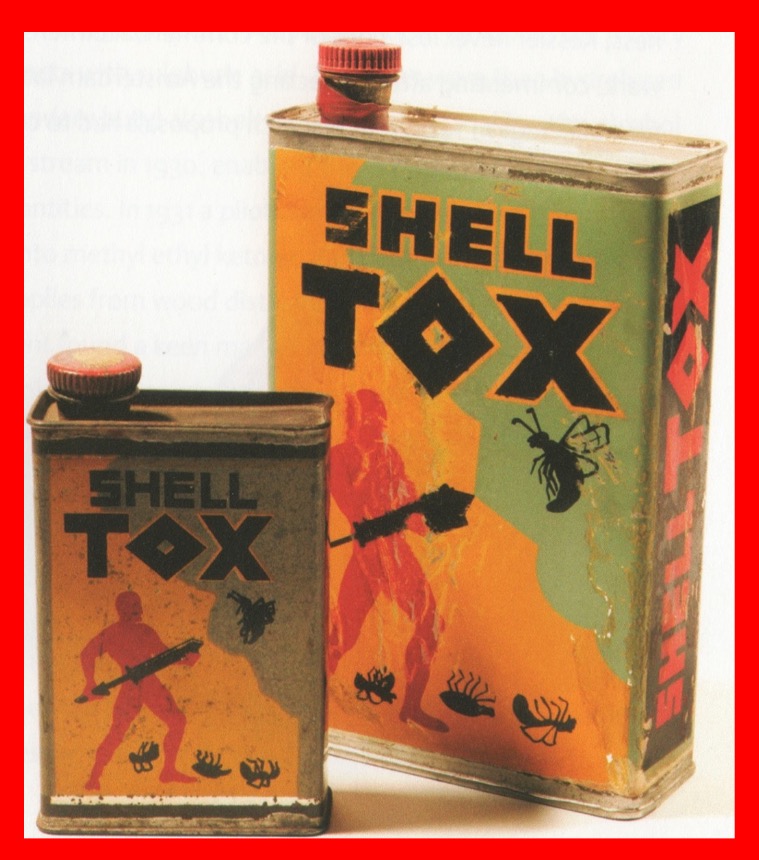
Shell’s premium V-Power fuel is back in the spotlight, promising cleaner engines, better protection, and “more” of almost everything. But for drivers with long memories, the phrase “Shell wonder fuel” comes with a faint smell of burnt valves, marketing hype, and very expensive déjà vu.
DISCLAIMER
This article is opinion and satirical commentary based on cited public sources. It is not financial advice, consumer advice, engineering advice, or a recommendation to buy, avoid, invest in, or rely on any Shell product or security. Drivers should follow their vehicle manufacturer’s fuel recommendations and seek qualified mechanical advice where appropriate. Site wide disclaimer also applies.
PART ONE: FACT-BASED TABLOID DEEP DIVE
THE RETURN OF THE WONDER FUEL WAGON
There are few things Big Oil enjoys more than selling fossil fuel as if it were a wellness product.
Shell V-Power is not merely petrol, we are invited to understand. It is a premium experience. A scientific elixir. A motorised spa treatment. Something your engine apparently deserves after a long week of commuting, congestion, and quietly funding quarterly distributions.
A recent ad-hoc-news article describes Shell V-Power as Shell’s premium gasoline brand, marketed to help clean and protect modern engines, and aimed at explaining what US drivers should expect from it. The article says V-Power is Shell’s “flagship premium gasoline brand” and notes that it is positioned around detergents, friction modifiers, premium octane, and engine-cleanliness claims.
Shell’s own US marketing is even more enthusiastic. The company says Shell V-Power® NiTRO+ Premium Gasoline “removes up to 100% of performance robbing deposits,” promises “more power” and “more performance,” and says the product contains six times the cleaning agents required by federal standards.
Naturally, the word “more” does a lot of heavy lifting here.
More performance.
More protection.
More cleaning.
More premium.
More money at the pump.
Less obvious certainty that every ordinary driver will actually notice a miraculous transformation between home, work, school run, supermarket, and the pothole collection formerly known as the public road.
WHAT SHELL SAYS V-POWER DOES
Shell says the new formulation of V-Power NiTRO+ has “a new molecule” designed to remove up to 100% of carbon deposits from fuel injectors in gasoline direct injection engines. It says the fuel provides protection against deposits, corrosion, wear, and friction, and that V-Power contains the highest concentration of its proprietary additive package.
Shell also says V-Power NiTRO+ is Top Tier certified and has been tested in laboratory procedures, bench engines, and vehicles, with “more than half a million equivalent miles of testing.”
So let us be fair: Shell is not simply printing “magic petrol” on a pump and hoping nobody asks what an injector is.
There is a technical basis for detergent additives. Deposits can affect engine performance. Premium fuel can matter where a manufacturer requires or recommends higher octane. Modern direct-injection engines can be sensitive to deposit build-up.
But the real-world question is not whether fuel additives exist.
The real-world question is whether Shell’s premium potion is worth the premium price for the average driver — especially if their car only requires regular fuel.
And that is where the glossy ad copy begins to sound less like engineering and more like a scented candle for the combustion chamber.
THE ORDINARY DRIVER’S QUESTION: DO I NEED THIS STUFF?
For some drivers, the answer may be yes.
If your car requires premium fuel, use premium fuel. The owner’s manual is not decorative literature. It is there because the engine was designed around certain requirements.
If your car is turbocharged, high-compression, performance-tuned, or explicitly recommends premium gasoline, Shell V-Power may fit the use case Shell is targeting.
But if your car only requires regular fuel, the argument becomes murkier.
The ad-hoc-news article notes that premium fuel use depends heavily on vehicle manufacturer guidance, and that fuel economy changes are often small and vehicle-dependent.
AAA research found that premium gasoline was typically 23% more expensive than regular gasoline in the period studied, and examined whether using premium in cars requiring regular fuel represented a good return on investment.
A widely reported summary of that AAA study said US drivers wasted more than $2.1 billion in a year by using premium-grade gasoline in vehicles designed to run on regular, with no tangible benefit in the tested categories.
So the practical rule remains brutally simple:
If your vehicle requires premium, buy premium.
If your vehicle recommends premium, it may help under some conditions.
If your vehicle only requires regular, premium fuel may mainly improve the mood of the company selling it.
 SHELL’S LITTLE PROBLEM: HISTORY HAS A LONG MEMORY AND A BURNT SMELL
This is where the Royal Dutch Shell Group archive piece from 2015 becomes especially useful.
John Donovan’s article, “Shell V-Power NiTRO+ ignites memories of past Shell wonder fuel debacles,” recalled Shell’s 1986 launch of Formula Shell — another heavily promoted fuel dressed up in scientific glamour. The article quoted Shell’s own paid historian, Keetie Sluyterman, describing how Formula Shell was launched in Europe with “heavy advertising” and “scientific connotations.”
Then came the small snag.
According to the cited historical account, the launch initially boosted sales, but later it emerged that in a small number of cars the new gasoline caused inlet valves to burn. The account says damage occurred in Denmark, Norway, Malaysia, and the UK; Shell withdrew Formula Shell from several markets, including the UK, before reformulating and relaunching the product.
That is quite a plot twist.
Act One: “From today not all petrol is the same.”
Act Two: Correct. Some of it may burn your valves.
To be precise, the historic Formula Shell episode should not be treated as proof that modern V-Power is unsafe. That would be an unfair leap. Modern fuels, regulations, engines, testing regimes, and additive chemistry are different.
But it absolutely does justify scepticism toward Shell’s recurring talent for dressing fuel products in a white laboratory coat and sending them out under a shower of marketing confetti.
The lesson is not “V-Power equals Formula Shell.”
The lesson is: when Shell says it has a wonder fuel, check the small print before joining the hymn service.
THE MARKETING FORMULA: SCIENCE, SPEED, SPARKLE, SPEND
The fuel business has always loved mystique.
Octane numbers become personality traits.
Additives become secret sauces.
Laboratory terms become pump-side seduction.
The driver is nudged to imagine that using regular fuel is practically an act of cruelty toward the engine.
Shell’s current V-Power US page leans hard into this theatre, with repeated “more” language: more power, more performance, more protection. It also states that actual effects and benefits may vary by vehicle type, driving conditions, and driving style.
There, hidden beneath the bonnet of the sales pitch, sits the disclaimer goblin.
“May vary” is doing the sensible work that “more” forgot to do.
This does not mean Shell’s claims are automatically false. It means consumers should understand what is being claimed, under what conditions, and whether those conditions resemble their own driving life.
A carefully tested engine-cleanliness benefit is one thing.
A driver expecting their family hatchback to emerge from the Shell forecourt with the soul of a Le Mans prototype is quite another.
PREMIUM FUEL: USEFUL PRODUCT OR STATUS SYMBOL WITH A NOZZLE?
Premium fuel is not inherently a scam.
Higher octane fuel resists knocking. Some engines require it. Some engines can adjust timing and performance when higher octane is available. Some drivers may value detergent packages and additive claims.
But premium fuel is also a brilliant retail product because it sells aspiration at the precise moment the consumer is already holding a payment card.
The pump effectively whispers:
“You could buy the ordinary fuel. Or you could be the sort of person who cares.”
That is premiumisation in its purest form.
Shell is not just selling petrol. It is selling the idea that you are a more responsible, performance-minded, engine-loving motorist because you picked the expensive handle.
And for Shell, that is an attractive business.
Fuel retail is fiercely competitive. Differentiated premium products help defend margins, build brand loyalty, and keep customers inside the Shell ecosystem — especially when linked to apps, rewards schemes, and brand claims about superior protection.
In short: V-Power is not merely fuel technology. It is also a margin strategy with a racing helmet.
THE ENVIRONMENTAL ABSURDITY: CLEANER ENGINE, DIRTIER PLANET?
Here is the uncomfortable part.
Shell V-Power is marketed around cleanliness — cleaner injectors, fewer deposits, better protection.
But it remains a fossil-fuel product sold by one of the world’s largest oil and gas companies.
So we are invited to applaud a fuel for cleaning the inside of an engine while the broader business model remains tied to extracting, refining, transporting, and selling hydrocarbons.
It is the classic Shell paradox:
Look how clean this combustion chamber is. Please ignore the climate chamber.
To be clear, cleaner engine operation can matter. Fuel quality can affect emissions, efficiency, and engine performance.
But premium petrol should not be mistaken for climate virtue. It is still petrol. It is still burned. It still produces tailpipe CO₂. It still belongs to the carbon economy Shell is working very hard to keep profitable for as long as possible.
The product may be cleaner in a mechanical sense.
That does not make it clean in a planetary sense.
THE OLD SHELL TRICK: TURNING CONTROVERSY INTO CONFIDENCE
Shell’s genius has always been its ability to speak in two registers at once.
To consumers, it says: trust the science, protect your engine, choose better fuel.
To investors, it says: trust the cash flow, protect the dividend, choose disciplined capital.
To critics, it says: we are part of the transition.
To regulators, it says: everything is tested, certified, and very carefully footnoted.
The result is a corporate voice so smooth it could probably reduce friction in an engine itself.
But the V-Power story shows the same pattern visible across Shell’s wider public image: a highly engineered message wrapped around a product that deserves scrutiny.
A premium fuel may be legitimate.
A marketing miracle should be treated with caution.
And a company with Shell’s history should not be offended when people remember previous episodes in which technical confidence and advertising swagger aged badly.
THE FORMULA SHELL GHOST AT THE PUMP
The 1980s Formula Shell controversy remains relevant not because history repeats exactly, but because corporate habits often rhyme.
Then: a fuel launched with scientific glamour.
Now: a fuel sold with technical superiority language.
Then: a brand message suggesting not all petrol is the same.
Now: a brand message suggesting your engine deserves “more.”
Then: Shell discovered that fuel chemistry, engines, and real-world use can create unpleasant surprises.
Now: consumers are expected to trust that the laboratory, the legal department, and the marketing department are all aligned in perfect harmony.
Perhaps they are.
But the ghost of Formula Shell still hovers near the pump, whispering:
“Have we checked this properly, or are we just applauding the brochure?”
BOTTOM LINE FOR DRIVERS
The sensible position is neither panic nor blind loyalty.
Shell V-Power NiTRO+ may offer real benefits for some vehicles, particularly those designed for premium fuel or sensitive to deposits. Shell’s claims about detergent concentration, Top Tier certification, and testing should be taken seriously as product information.
But drivers should also take Shell’s marketing language seriously as marketing.
For many everyday vehicles that only require regular gasoline, premium fuel may not deliver enough real-world benefit to justify the extra cost. AAA’s research has long warned against assuming premium fuel automatically benefits cars designed for regular.
The best advice remains boring, which is why no advertising agency likes it:
Read the owner’s manual.
Follow the manufacturer’s fuel requirement.
Do not confuse premium branding with universal necessity.
And remember that “up to” is one of the most elastic phrases in modern commerce.
CONCLUSION: SAME SHELL, DIFFERENT NOZZLE
Shell V-Power may be a technically sophisticated premium fuel.
It may help some engines.
It may be a sensible choice for some drivers.
But it is also another chapter in Shell’s long-running romance with the “wonder fuel” narrative — a place where chemistry meets commerce, disclaimers meet desire, and the humble petrol pump is transformed into a miniature cathedral of corporate persuasion.
The old Formula Shell episode is not a conviction against modern V-Power.
But it is a warning against corporate amnesia.
Shell has been here before: big claims, big branding, big confidence.
Drivers should remember what Shell marketing prefers to forget:
Not every miracle at the pump is a miracle for the motorist.
Sometimes it is just premium petrol with a premium script.
And sometimes the cleanest thing in the whole transaction is the way the extra money disappears from your wallet.
PART TWO: SPOOF SHELL PR/SPIN SECTION
Shell Miracle Fuel Statement, Possibly Written by a Chemist, a Marketer, and a Dividend Forecast
Shell is proud to offer drivers a premium fuel experience carefully engineered to deliver more of the things motorists like, including more performance language, more protection terminology, more molecules, and more reasons to download an app.
Our Shell V-Power® NiTRO+ Premium Gasoline is designed for today’s modern engines and tomorrow’s exciting consumer expectations, particularly the expectation that a petrol pump should sound like a Formula One laboratory with a loyalty programme.
We recognise that some drivers may wonder whether they need premium fuel. We encourage them to consult their owner’s manual, while also admiring the emotional maturity of any engine that knows it deserves more.
Shell rejects the suggestion that “wonder fuel” is an overused phrase. We prefer “advanced proprietary performance-enhancing mobility molecule platform,” which regrettably did not fit on the pump handle.
As for historical references to Formula Shell, we believe the past is important, but only in carefully curated corporate heritage videos featuring clean overalls, sunsets, and no burnt valves.
Forward-looking statement: actual miracles may vary by vehicle type, driving conditions, engine age, legal jurisdiction, marketing interpretation, and the willingness of the customer to pay extra.
PART THREE: SPOOF BOT-REACTION / COMMENT SECTION
@PumpSidePhilosopher: “Shell says my engine deserves more. My bank account says my engine can learn humility.”
@ValveBurner1986: “Formula Shell called. It says maybe don’t let the brochure drive the car.”
@PremiumNozzleEnjoyer: “I bought V-Power and my hatchback still refuses to become a Ferrari. Considering litigation against my imagination.”
@DepositGoblin: “Up to 100% is my favourite corporate phrase. I am up to 100% likely to be impressed.”
@ClimateChamber: “Great news: the engine is cleaner. The atmosphere has declined to comment.”
@OctaneOracle: “Use premium if your car needs premium. Revolutionary stuff. Expect a 90-page Shell white paper shortly.”
@MarketingMolecule: “I am proprietary, advanced, and available wherever margins need assistance.”
SUGGESTED IMAGE CONCEPT
A satirical editorial illustration set at a glowing Shell petrol station at night.
In the foreground, a giant golden Shell V-Power pump is labelled “MIRACLE MOLECULE PREMIUM” and is sucking money from a driver’s wallet while spraying glittering fuel into a normal family car.
Behind the car, a ghostly 1980s-style petrol pump labelled “FORMULA SHELL 1986” rises from the fumes, surrounded by small burnt engine valves and warning signs.
On one side, a smiling Shell marketing executive holds a clipboard reading “MORE POWER! MORE PERFORMANCE! MORE DISCLAIMERS!”
On the other side, a mechanic holds up an owner’s manual saying “READ THIS FIRST.”
In the background, the Shell logo glows over a smoky horizon, while a small caption reads:
“Not all petrol is the same. Neither are the consequences.”
Style: sharp tabloid cartoon, high contrast, dramatic lighting, satirical, non-photorealistic, no real people depicted.
*This website and sisters royaldutchshellgroup.com, shellnazihistory.com, royaldutchshell.website, johndonovan.website, shellnews.net, and shellwikipedia.com, are owned by John Donovan - more information here. There is also a Wikipedia segment, the Shell DPA Files, "Shell and the Spies", the Shell Leaks files, the Independent Shell Archive, as well as books written and published by John Donovan - Kindle eBooks. Timeline of the Donovan Shell Feud. Toxic History of Royal Dutch Shell Group. Shell and the Donovans: The Full Media Record — 550+ Articles, 110 Books, 40 Years. *All conjured up by internet wizz, Nick Gill.