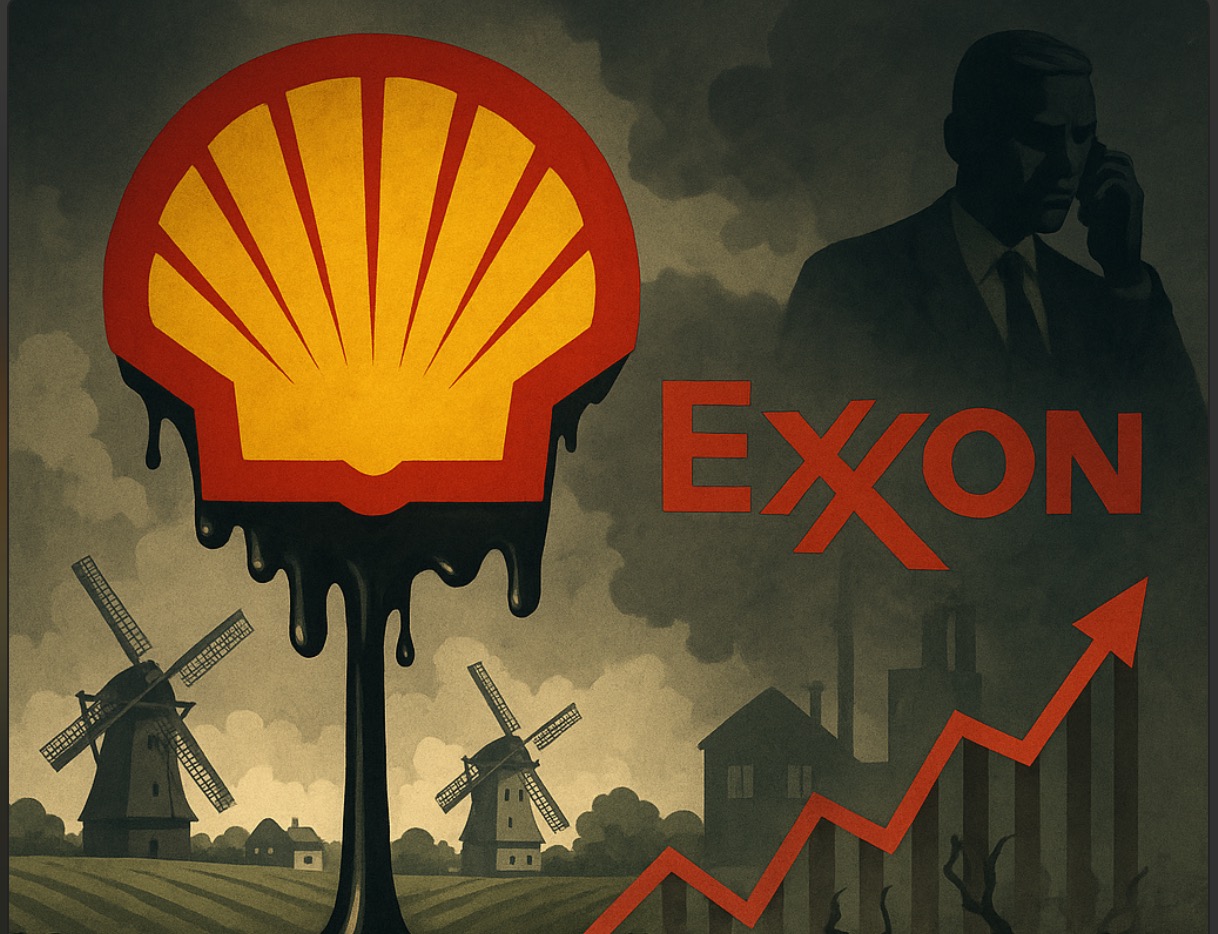
Move over Sakhalin, step aside Niger Delta—Shell and Exxon’s Dutch joint venture NAM (Nederlandse Aardolie Maatschappij) has managed to dump itself into yet another scandal. This time, prosecutors allege the company secretly injected hazardous waste into empty gas fields in Groningen for over a decade.
 The Charges
Dutch prosecutors have recommended a €20 million fine against NAM for a long list of environmental breaches, including:
-
Secretly dumping hazardous wastewater laced with mercury into empty underground gas fields near Borgsweer, Groningen.
-
Handling hazardous substances without permits, at sites where they had no business storing them.
-
Profiting over €5 million by cutting corners on proper hazardous waste treatment.
The Public Prosecution Service (OM) said bluntly:
“The key question is not whether environmental damage occurred, but rather transparency.” (NL Times)
So no, Groningen wasn’t immediately poisoned—but yes, laws were broken, trust was trashed, and transparency was bulldozed.
The Timeline of Abuse
According to prosecutors, these abuses ran from 2010 to 2022. For 12 years, NAM allegedly labeled wastewater from North Sea gas processing as “regular water” and quietly pumped it into the ground. The catch? The water contained mercury, making it legally hazardous.
The Political Stench
If that weren’t enough, tapped phone calls revealed that NAM tried to influence prosecutors through none other than former Prime Minister Mark Rutte. Yes, the joint venture apparently thought it could make court cases disappear with a call to the top. Prosecutors, thankfully, didn’t buy it.
Earlier, OM even considered prosecuting individual NAM executives—but dropped the idea for lack of grounds. What’s left is corporate blame, corporate denial, and (potentially) corporate fines.
Shell & Exxon’s “Administrative Errors”
NAM’s Noord-Nederland director Martijn Kleverlaan tried to downplay things:
“In some cases, the substances were not hazardous or NAM had the proper permits … in other points, we made administrative errors.” (NL Times)
Translation: dumping mercury-laced wastewater into gas fields for over a decade wasn’t corporate negligence, it was paperwork hiccups. Sure.
Exxon + Shell = Partners in Pollution
NAM is co-owned by Royal Dutch Shell and ExxonMobil. Whenever toxic legacies, shady politics, or ecological nightmares surface, these two seem to be holding hands. From the Niger Delta oil spills to the Al-Yamamah oil-for-arms laundering, and now Groningen’s gas graveyard—Shell and Exxon keep proving that when it comes to shoddy dealings, partnership is tradition.
Investors Watching with ESG Glasses
Shell’s biggest institutional shareholders—BlackRock, Vanguard, and sovereign wealth funds—like to lecture companies about ESG (environmental, social, governance). But here’s Shell, again, accused of illegal waste dumping and political interference. Investors ought to ask: when does “ESG risk” become “we’re complicit in funding serial polluters”?
WTF Shell?
-
Secret mercury dumps.
-
Influence peddling via former prime ministers.
-
Billions in profits alongside “administrative errors.”
This isn’t an oil company trying to transition. This is an oil company trying to get away with whatever it can until someone notices.
*This website and sisters royaldutchshellgroup.com, shellnazihistory.com, royaldutchshell.website, johndonovan.website, shellnews.net, and shellwikipedia.com, are owned by John Donovan - more information here. There is also a Wikipedia segment, the Shell DPA Files, "Shell and the Spies", the Shell Leaks files, the Independent Shell Archive, as well as books written and published by John Donovan - Kindle eBooks. Timeline of the Donovan Shell Feud. Toxic History of Royal Dutch Shell Group. Shell and the Donovans: The Full Media Record — 550+ Articles, 110 Books, 40 Years. *All conjured up by internet wizz, Nick Gill.







