
Several paragraphs, all in italics, were added to this article on 4 July 2026.
By John Donovan
The email reproduced below is a revealing document: a Shell General Counsel, Keith Ruddock, writing from Singapore on 19 February 2007 to Julian Osborne, solicitor for the late Bill Campbell, Shell’s former Group Auditor and one of the most experienced offshore safety specialists ever to challenge the company from within. On its face, the message is dressed up as a courteous note about possible “without prejudice” settlement discussions. In substance, however, Shell’s immediate concern was not only litigation. It was publication. Ruddock had received an email from me earlier that day and plainly feared that material supplied by, or connected to, Mr Campbell might be published on our “avowedly anti-Shell website.” He warned that any such publication would be “unfortunate to say the least” and would “certainly colour” future settlement discussions. In plain English, Shell was urging Mr Campbell’s solicitor to stop him, if he could, from allowing the Brent Bravo material to reach the public domain.
That matters because Bill Campbell was no crank, fantasist or casual critic. In 1999 he led a Shell safety audit of the Brent Bravo platform. His findings were devastating. According to Mr Campbell, the audit uncovered a production-first culture in which safety-critical maintenance was neglected, records were falsified, repairs were bodged, and a notorious “Touch F*** All” policy operated in relation to equipment that should have protected men’s lives. He said he raised the alarm with senior Shell management, including Malcolm Brinded. Four years later, on 11 September 2003, Keith Moncrieff and Sean McCue died on Brent Bravo after a massive release of hydrocarbon gas. Shell later pleaded guilty to health and safety breaches and was fined £900,000. Against that background, Ruddock’s email is not a routine lawyer’s note. It is a snapshot of Shell trying to contain a whistleblower, control the narrative, and keep damaging safety allegations away from public scrutiny.
The message is especially striking because it tacitly acknowledges Shell’s fear of the Donovan website as a publishing platform. Shell could have used the opportunity simply to correct inaccuracies, provide an on-the-record response, or address the underlying safety issues. Instead, its General Counsel asked Mr Campbell’s solicitor to prevent publication if Mr Campbell was “in a position” to do so. Mr Campbell later alleged that Shell had used undercover activity to obtain information about him — an allegation entirely consistent with the wider pattern of Shell’s response to critics and inconvenient evidence: pressure, containment, surveillance, denial, and only then, when forced, limited disclosure.
Bill Campbell’s evidence was later submitted to the UK Parliament’s Work and Pensions Committee. In that memorandum, he argued that Shell’s own post-fatalities review showed a “collapse in essential controls” between 1999 and 2003, and that the negative safety culture he had identified still persisted after the Brent Bravo deaths.
The BBC reported in June 2006 that Campbell claimed Shell ignored his 1999 warning that a serious accident was bound to happen. The same report stated that Keith Moncrieff, 45, and Sean McCue, 22, died after being overcome by a massive hydrocarbon gas release in September 2003, and that Shell was later fined £900,000 after admitting health and safety breaches.
Campbell’s later letter to UK MPs said he had been appointed by Shell in 1999 to lead a Brent Bravo safety audit, found a “Touch F*** All” policy, routinely falsified safety records and bodged repairs, and personally raised the matter with senior management. He also stated that when he complained promised remedial action was not being kept, he was removed from his oversight role.
What Shell appeared to fear in February 2007 was not that Bill Campbell lacked credibility, but that he had too much of it — and that, once his evidence reached the Donovan website, it would be beyond Shell’s preferred machinery of private settlement, legal containment and corporate spin.
From: [email protected] [mailto:[email protected]]
Sent: 19 February 2007 13:59
To: Julian Osborne
Subject: Re: William Campbell v Shell
Dear Mr Osborne
Thank you for your email. I am currently in Singapore about to return overnight our time here to Amsterdam. I will respond to you properly once I am back in Europe.
In the meantime, we have always indicated to Mr Campbell that we believe that it is in the best interests of all parties to try to resolve these matters without resorting to litigation and we continue to believe that this is the case. Accordingly, I confirm that we would welcome an opportunity to try to resolve these matters through discussion with you on behalf of Mr Campbell on a without prejudice basis.
One immediate concern which I would like to raise with you now, however, is that I have received an email earlier today from Mr John Donovan. Mr Donovan and his father Alfred are long-standing critics of Shell and operate an avowedly anti-Shell website. I will forward you Mr Donovan’s email seperately which is very sparse in its detail but which appears to indicate that he is about to publish material on his website which he may have been obtained from Mr Campbell. It is not clear whether some of this material may also relate to the content of the without prejudice discussions and communications we have held with Mr Campbell since last August. I am sure you will understand that from our perspective it would be unfortunate to say the least if such details were to be released into the public domain in this way. This would certainly colour any future settlement discussions we may seek to undertake with you or with Mr Campbell. Accordingly, to the extent that Mr Campbell is in a position to prevent publication of this material, we would request that he does so. If this material was not provided to Mr Donovan by Mr Campbell then I apologise for the misunderstanding.
I will be in contact again shortly.
Regards
Keith Ruddock
Related Shell internal email
9 September 2007 19:32
——Original Message—–
From:
To: .
xxxxxxxxxxxxxxxxxxxxxxxxxxxxxxxxxx
Sent: Sun Sep 09 10:35:05 2007
Subject: Re: Daily Telegraph – North Sea Safety
There is a piece in today’s Sunday Telegraph about Donovan and safety. At this stage I just have a summary but I am trying to get an e version to mail around.
The Sunday Telegraph, 09/09/2007, P.5,
The writer reports on how the internet has launched the phenomenon of online activism. Shell discovered the power of online campaigners when it tried, and failed, to claim ownership of the domain name Royaldutchshell.com, a website belonging to Alfred Donovan and his son John. They owned a chain of petrol stations in London and Essex and created sales promotions for Shell, before falling out with the company and putting their grievances on the web. The site has become a home for activists and
former employees and has been used to mobilise support for environmental campaigns by groups such as the WWF, against drilling in the Arctic and Russia, groups concerned over Shells social impact in Ireland and Nigeria, and by former Shell auditor xxxxxxxx, who has raised questions over employee safety./
Sent: Sat Sep 08 08:45:27 2007
Subject: Re: Daily Telegraph – North Sea Safety
Please see the story below. I feel it might be worth discussing with Group Media how well briefed London journalists are on these issues. I will talk to about this.
Pressure on Shell over safety of platforms
By Russell Hotten, Industry Editor
~ast Updated: 3:05am BST 08/09/2007
Picture of offshore installation with caption:
Shell will be unhappy that its standards and procedures are being questioned
Royal Dutch Shell is facing a growing campaign about alleged poor safety on several North Sea oil platforms, with Britain’s biggest trade union and a former executive of the company calling on MPs and the Health and Safety Executive (HSE) to investigate.
Unite, formed from the merger of the TGWU transport union and Amicus, accuses Shell of neglecting safety on platforms it has recently put up for sale and has warned that a deterioration in relations between the company and staff is putting workers at risk.
Meanwhile, Bill Campbell, former group auditor of Shell International who has highlighted safety at the company for years, has now written to every MP and member of the House of Lords claiming to have evidence t:hat the company has ignored problems.
Unite said in a statement: “Many platform areas are now not fully covered by trained and competent people and certain HSE safety-critical roles are not fully supported. The gaps in these safety-critical positions could be so severe that, in the event of an emergency, staff may be unable to cope.”
Several Shell platforms – Cormorant Alpha, Dunlin Alpha, Tern, Eider and North Cormorant – are being sold as the company scales back activities in the North Sea, where finding and extracting oil and gas is becoming increasingly more expensive.
Shell denies strongly that it has ever compromised on safety and says that managers on the platforms have not complained of a lack of staff in safety-critical functions. However, safety is an emotive issue and Shell will be unhappy that its standards and procedures are being questioned. Nor will the union’s plan to intensify its campaign help the company find buyers for the platforms.
A spokesman for Shell said yesterday: “We are aware that this [sale of the platforms] is an unsettling time for staff. Safety is our first priority and foremost on the agenda at all the affected platforms. We have asked personnel to raise any concerns personally with senior management so that we can understand and fully address them.”
In a separate campaign, Mr Campbell wrote to MPs at the end of July saying that Shell is putting “lives at stake.” He claimed to have a”vast amount of evidence” that Shell has failed to tackle health and safety concerns, but did not spell out the details in the letter.
Mr Campbell, who has teamed up with a website that has been highly critical of Shell, appears to be of increasing concern to the company. A recent internal email admits that the website has thrown Shell “on the back foot”. The company declined to discuss Mr Campbell but said that if anyone raised a safety issue “we take it seriously and look at it”.
Telegraph article ends
Several paragraphs, all in italics, were added to this article on 4 July 2026. See immediately below.
A Shell internal email dated 9 March 2007, marked “Legally Privileged and Confidential”, provides an extraordinary glimpse into the company’s internal handling of the Donovan problem at a time when North Sea safety issues were plainly part of the discussion. The email refers to “recent activity” around the Donovans, “N/Sea integrity”, and the need for a broader strategy “particularly” concerning how to handle the Donovans. Shell’s own language is revealing: the company considered itself to be “on the back foot” and wanted to develop a strategy that would put it in a “more positive and secure position.”
The email was not a routine media note. It proposed a structured internal exercise, with a clear agenda, deliverables, and a “round table working group.” It also referred to a sizeable distribution list, though much of it is redacted. The author said not everyone on the address list was expected to participate, and that the eventual group would need to be kept to a “workable size.” In my assessment, the visible format of the document and the heavily redacted recipient block are consistent with a substantial internal Shell counter-measures operation rather than a narrow one-person response.
The proposed areas for consideration were remarkably wide-ranging. Shell wanted to review its handling of the media, including the possible creation or ratification of “one blanket statement” and a “proactive approach with selected journos.” It also wanted to revisit questions and answers for the AGM, asking whether one strong blanket response would be more effective than several rebuttals, and whether Shell should be “more forthright” about the Donovan website and its views on it. The email even asked what might happen in light of “leafleting in the past,” an apparent reference to earlier public protest activity involving Shell premises.
The most astonishing line, however, concerns Shell’s proposed “Strategy to detach [redacted name] from the Donovans (in his best interests — and ours).” The sentence continued by suggesting “positive engagement” with a redacted person or party, while at the same time demonstrating that Shell would not tolerate the Donovans’ approach “unchallenged any longer.” That language is deeply significant. It suggests that Shell was not merely thinking about press lines or legal rebuttals; it was considering how to separate an individual from contact with us, while framing that objective as being in both his interests and Shell’s.
Because the relevant name is redacted, I cannot state as an established fact that the person was Bill Campbell. However, given the surrounding context — including the email’s explicit reference to North Sea integrity, the attached file entitled “North Sea Safety Scenarios”, and the broader history of Bill Campbell’s involvement in exposing serious North Sea safety concerns — I concluded at the time that the redacted name was very likely a reference to Bill. Bill shared that conclusion. I also seem to recall that he later made his own Subject Access Request to Shell.
The attachments themselves are also telling. One appears to be titled “2006 – Q1 – Alfred Donovan.doc…”, while the other is titled “North Sea Safety Scenarios.do…” The combination of a Donovan-related document and a North Sea safety scenarios document in the same privileged email is, in my view, highly significant. It indicates that Shell’s handling of the Donovans, media strategy, AGM preparation, North Sea integrity issues, and possible safety scenarios were being considered together.
The email also asked whether Shell fully understood its own position, whether there were “on-going issues” it needed to know about or fix, and whether Shell was “on solid ground.” That is a remarkable phrase in this context. Shell was not simply saying: “the Donovans are wrong.” It was asking internally whether there were real underlying issues that needed to be identified, understood, or corrected.
Read fairly, this 9 March 2007 email appears to show Shell preparing a coordinated response to the Donovan website, North Sea safety allegations, media interest, AGM exposure, and potentially inconvenient individuals connected to the safety story. The document does not reveal all names because Shell redacted them. But the surviving text is enough to show a company in damage-limitation mode: legally privileged, strategically organised, media-conscious, and plainly concerned that the Donovan material — especially where it overlapped with North Sea safety — could not simply be ignored.
On 14 December 2018, a remarkable document was sent by email to Chad Holliday, then Chairman of Royal Dutch Shell plc; Chris Flint, a senior official at the UK Health and Safety Executive; XXXXXXXXXXXX, a retired Shell North Sea platform manager and friend of Bill Campbell; and to me.
The author was Bill Campbell — now sadly deceased — a former senior Shell engineer, global safety auditor, and one of the most persistent whistleblowers ever to challenge Shell over the Brent Bravo tragedy.
The document was not a casual complaint. It was a 24-page indictment written by a man who knew Shell’s offshore safety systems from the inside, had led Shell audits, had advised Shell internationally, and had spent years trying to force a proper reckoning over the deaths of Sean McCue and Keith Moncrieff on the Brent Bravo platform in September 2003.
Bill’s conclusion was devastating: the Brent Bravo deaths, in his view, were not an isolated offshore accident. They were the foreseeable result of a management culture in which production pressure, defective maintenance controls, falsified safety records, and an alleged corporate cover-up overrode the safety of workers.
The document’s title said it plainly: “The Case against Malcolm Brinded, CBE.”
Site wide disclaimer also applies.
“If the Vapour Cloud Had Ignited…”
One of the most alarming passages in Bill Campbell’s paper concerns what might have happened if the gas release on Brent Bravo had ignited.
Bill drew attention to the Fatal Accident Inquiry and the possibility that, had the vapour cloud ignited in the utility shaft, the shaft supporting the north side of the structure might have failed — potentially causing part of the topside to collapse into the sea.
Bill stated that there were 156 persons on board at the time.
That single sentence turns the Brent Bravo tragedy into something even more chilling. Two men died. But Bill’s case was that Shell had been operating in conditions where a far greater catastrophe was within the range of foreseeable outcomes.
His complaint was not merely that Shell had failed two workers. It was that offshore workers had been exposed, unknowingly, to what he described as intolerable levels of risk.
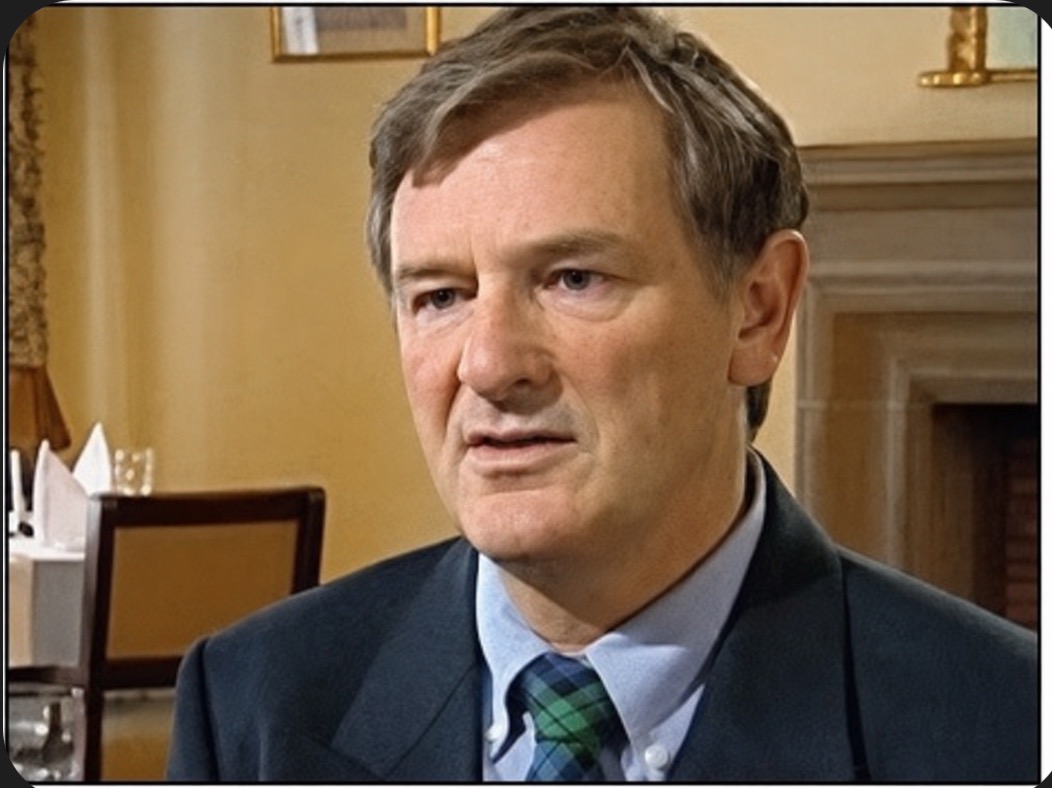 Bill Campbell’s Credentials
Bill Campbell (above) was not an outsider throwing stones from the pavement. He was a highly experienced engineer and auditor.
In the document, he described himself as a former senior operations and maintenance engineer, a chartered engineer, and a former Shell international group auditor. He had worked in hazardous industries for decades and had been involved in offshore safety, maintenance, audit, and technical integrity work.
In 1999, he led a Shell audit into Brent field safety and maintenance practices. His team’s findings, as described in the paper, were explosive.
According to Bill, the audit found serious weaknesses in essential controls, not because Shell lacked procedures, but because attitudes and behaviours inside the organisation were causing non-compliance with those procedures.
In plain English: the paperwork existed. The safety case existed. The systems existed. But the culture allegedly made them fail.
The “Touch F-All” Instruction
At the heart of Bill’s case was what became known as the “Touch F-All” instruction.
Bill described it as an instruction or policy that discouraged work if there was even the slightest possibility that production could be affected. In his account, this meant that maintenance and testing of safety-critical equipment could be deferred or neglected.
The equipment involved was not trivial. Bill referred to emergency shutdown valves, deluge systems, fire pumps, fire and gas detection systems, and emergency generators.
These are precisely the systems offshore workers depend upon when something goes wrong.
Bill’s conclusion was blunt: the policy drove neglect of maintenance on an industrial scale.
That phrase is perhaps one of the most shocking in the entire document. It suggests not a missed checklist, not an isolated mistake, not one bad day offshore — but a systematic production-first culture that placed the avoidance of shutdowns above the integrity of safety-critical systems.
“Production Was King — To Hell With Safety”
Bill’s explanation for the culture went deeper than individual bad behaviour.
He argued that Shell’s gas nomination contract, the oil price environment, and pressure to maintain production all created incentives that favoured output over safety.
His paper says the contract encouraged production over safety. During periods of high demand, Shell allegedly faced major financial penalties if it failed to meet nominated gas volumes. Bill stated that punitive charges could amount to around £1 million per day.
In his analysis, the pressure from above was simple: keep producing.
Bill’s conclusion was devastating:
Production was king — to hell with safety.
That is not a phrase Shell will ever want associated with its claimed commitment to safety. But it is the phrase Bill used to describe what he believed had happened.
The 1999 Warning: Major Accident “Inevitable”
Bill said that in October 1999 he warned the complete Shell Expro management team that if they failed to act quickly, a major accident on Brent Bravo was inevitable.
He also said he recommended that Brent Bravo cease production while remedial work was undertaken to reduce intolerable risks.
The paper states that a lead auditor within Shell’s governance rules did not have the authority to order an installation to stop production. But Bill says that is what he recommended.
This is central to the entire document. Bill was not claiming hindsight after the deaths. He was claiming foresight before them.
If his account is correct, Shell had been warned in 1999 that Brent Bravo was operating in dangerous conditions and that urgent action was required. The deaths occurred in 2003.
That four-year gap is the heart of the scandal.
The Risk Figure That Defies Belief
Bill’s paper contains a striking risk assessment claim.
He stated that the individual risk per annum imposed on the 156 workers on Brent Bravo was 0.5, which he described as roughly 1,000 times above the level set out in the installation’s safety case.
This is one of the most serious claims in the entire document.
If accurate, it means workers were not simply exposed to elevated risk. They were allegedly exposed to risk at a level wildly outside what the safety case permitted — while remaining unaware of the danger.
Bill repeatedly returned to this point: workers were kept in the dark.
Temporary Repairs, Pipework, and the Fatal Leak
Bill’s paper devotes considerable attention to temporary pipe repairs and hydrocarbon leaks.
He said that Shell adopted a “band aid” approach: install a temporary repair and keep going. He also argued that fitting clamps to hydrocarbon pipework in the way described was contrary to Shell’s own codes and offshore practice.
The Fatal Accident Inquiry found that the initiating event on 11 September 2003 was leakage from a hydrocarbon pipe that had a temporary repair installed and was materially defective.
Bill went further. He claimed that what the Sheriff was not told was that, on Brent Bravo at the time of the fatalities, there were another 30 unapproved repairs.
Across the oilfield, Bill stated that there were 412 repairs, one fitted every 12 hours over the four-year period from the audit to the deaths. He said 73 were on hydrocarbon lines, one every three days, and that eight were later found to be materially defective with the potential to cause a repeat of Brent Bravo.
Those numbers are staggering.
They transform the incident from a single failed repair into evidence, in Bill’s account, of a wider breakdown in technical integrity management.
The Alleged Failure to Tell the HSE
Bill’s paper repeatedly states that vital information was not properly disclosed to the Health and Safety Executive or the Procurator Fiscal.
He alleged that HSE officials were unaware of the 1999 audit findings, despite his recommendation that they be informed.
He also stated that after the deaths, HSE became aware of broader repair and management-control issues, but that no enforcement action was taken in respect of the wider pattern and no individual was prosecuted.
In one section, Bill stated that the Lord Advocate Elish Angiolini had linked the deaths on Brent Bravo to the “haphazard management” of pipe repairs in the oilfield over the prolonged period from 1999.
Bill’s central complaint was that the Fatal Accident Inquiry was too narrow. It established who died, when they died, and the immediate physical cause. But in his view it did not properly ventilate the deeper causes: the years of warning signs, the degraded maintenance culture, the audit findings, and the alleged suppression or mishandling of evidence.
Shell’s 2006 Public Statement
The paper includes as Appendix A a Shell press release issued in June 2006 after BBC Scotland’s The Human Price of Oil and an article in the trade magazine Upstream.
Shell’s public position was robust. It “strongly refuted” the allegations and said safety was Shell’s foremost priority. It said Shell had initiated the Platform Safety Management Review in 1999, responded vigorously to its findings, and that a follow-up implementation audit at the end of 2000 confirmed significant progress.
Bill’s response was that this public statement was false and misleading.
He claimed that senior Shell figures knew the statement was inconsistent with the true position. He also alleged that the statement had been composed by Malcolm Brinded and Shell lawyer Keith Ruddock, and that others inside Shell objected to or were uncomfortable with it.
That allegation matters because Shell’s 2006 public statement was not a private email. It was Shell’s formal line to employees and the media after a fatal accident inquiry and public criticism.
If Bill’s account is correct, Shell was not merely mistaken. It was managing reputation in the aftermath of deaths.
The Beat Hess Allegation
One of the most explosive passages concerns an alleged meeting at Shell’s corporate headquarters in The Hague in July 2005.
Bill wrote that present at the meeting were Shell CEO Jeroen van der Veer, legal counsel Beat Hess, investigators Jakob Stausholm and Richard Sykes, and Bill himself.
According to Bill, Beat Hess expressed the view that there was “a natural linkage” between the Brent Bravo deaths and Malcolm Brinded’s unacceptable behaviour in 1999, and that Brinded had contributed by his behaviour to the deaths.
This is a grave allegation. It should be presented carefully as Bill Campbell’s account of what was said, not as an independently proven finding in a court of law.
But the significance is obvious. Bill was saying that Shell’s own top legal officer had internally accepted a link between Brinded’s 1999 conduct and the deaths — yet Shell did not publicly acknowledge that position.
Why Bill Believed Brinded Was Not Removed
Bill’s answer was blunt: the reserves scandal.
He argued that Shell had just suffered catastrophic reputational damage from the reserves crisis, which wiped billions from market value and led to the departure of senior executives. In that context, he believed Shell could not face another scandal — this time involving deaths, safety, and an alleged cover-up.
Bill wrote that Brinded was retained because Shell wanted to “keep the lid on this can of worms.”
That phrase captures the central thrust of the paper. Bill believed that Shell’s concern for its reputation outweighed its duty to reveal the truth about what had happened on Brent Bravo.
The Journalists and the Threats
Bill also praised journalists who investigated the issue, particularly Chris Hopson of Upstream, who he said was the first journalist to expose Malcolm Brinded’s role.
He alleged that Shell used legal threats and corporate pressure against media outlets, including Upstream and the BBC.
According to Bill, the purpose of the threats was not to correct falsehoods but to deter scrutiny.
His conclusion was broader than Shell alone. He described it as an example of how a powerful multinational could use its influence to inhibit free speech and prevent public examination of matters of grave public interest.
Redactions and Caution
Some material in Bill’s paper should be handled with caution or omitted from publication in full.
I have deliberately not reproduced:
- private medical detail about a Shell manager;
- names of some lower-level employees and witnesses where unnecessary;
- unproven allegations about personal relationships;
- allegations of bribery or corruption where Bill himself acknowledged that prosecutors had not found physical evidence;
- lists of witnesses and private individuals whose names add little to the public-interest case.
The public-interest value lies in the core safety allegations: the warnings, the audit findings, the alleged failure to act, the disputed Shell public statements, the temporary repair regime, the HSE/Fatal Accident Inquiry concerns, and Bill Campbell’s conclusion that the deaths were foreseeable and avoidable.
Bill Campbell’s Final Message
The 2018 document is difficult to read, not because of its spelling or formatting, but because of its moral force.
It is the work of a man who believed that two workers died after years of warning signs, that offshore workers were exposed to intolerable risk without being told, that the public inquiry process failed to examine the deeper causes, and that Shell’s senior management protected reputation rather than truth.
Bill Campbell was not asking for a polite reply. He was asking for justice.
His paper was sent to Shell’s chairman, to the HSE, to a retired Shell platform manager, and to me. It placed on record, again, the case he had made for years: that Brent Bravo was not simply an accident, but the outcome of a corporate culture that had gone badly wrong.
Shell has long presented safety as its foremost priority.
Bill Campbell’s final case asks a darker question:
If safety really was Shell’s foremost priority, why were the warnings not acted upon before Sean McCue and Keith Moncrieff died?
Bill’s Suspicion About Security Involvement
There was another disturbing strand to Bill Campbell’s concerns, although it must be treated with caution.
Bill suspected that a private security or intelligence-linked company may have been involved in monitoring or gathering information about him. He believed Shell had information about him that it should not naturally have possessed. He also thought there was something odd about a meeting he had with Jeroen van der Veer, then Chief Executive of Shell.
In emails, Bill referred to a security company with an unusual name beginning with “H”. However, the available material does not prove that his suspicions were correct, nor does it establish that the company was Hakluyt. For that reason, the matter should not be stated as fact.
What can fairly be said is this: Bill Campbell, an experienced Shell safety auditor who had made deeply damaging allegations about Brent Bravo, believed there may have been more going on behind the scenes than ordinary corporate correspondence. Given Shell’s documented history of taking the Donovan/Shell dispute seriously at senior levels, and the wider context of Shell’s sensitivity over the Brent Bravo deaths, Bill’s suspicions form part of the story — not as proven fact, but as further evidence of how embattled, watched, and pressured he felt while trying to force disclosure of what he believed was the truth.
The responsible formulation is therefore:
Bill Campbell suspected private security involvement, but the evidence presently available does not prove that suspicion, nor does it identify Hakluyt or any other company as having been involved.
Final comment by John Donovan. I have a huge archive of documents and email correspondence relating to Bill Campbell, Brent Bravo and the Prelude project, which Bill also warned about many times, including directly to the Australian regulators.
|
SHELL BRENT BRAVO SCANDAL: THE EVIDENCE ASSEMBLED BY BILL CAMPBELL, FORMER HSE GROUP AUDITOR, SHELL INTERNATIONAL: READ SELECTION OF ARTICLES RELATING TO BRENT BRAVO FATALITIES: READ RELATED EMAIL/LETTER SENT TO MEMBERS OF THE UK HOUSES OF PARLIAMENT: READ |


MORE INFORMATION ADDED ON 4 July 2026 FROM OUR VAST ARCHIVE. SOME LIINKS WILL BE DEAD.

Royal Dutch Shell safety concerns
The energy multi-national Royal Dutch Shell has faced campaigning activity on its safety record and Health and Safety working practices, particularly in relation to its North Sea platforms, following the tragic death of only two offshore workers after a gas leak on its Brent Bravo platform on 11 September 2003. Representations made by offshore unions and by Bill Campbell, the retired HSE Group Auditor of Shell International, have attracted the attention of the news media resulting in numerous articles being published on the subject. Shell has consistently maintained following the Brent Bravo accident, that it gives first priority to the safety of offshore workers and all Shell employees.
This article focuses on Shell’s health and safety record.
Developments in March 2007
In March 2007, several newspapers published articles in relation to Royal Dutch Shell safety issues.

On 5 March 2007, The Guardian newspaper published an article under the headline Shell safety record in North Sea takes a hammering. It reported that Shell had been warned repeatedly by the UK Health and Safety Executive – the “HSE” – regarding the poor state of the company’s North Sea platforms. The article stated that on 13 November 2006, Shell had been served with a rebuke and a legal notice that it was failing to operate safely. An Aberdeen sheriff’s court had previously ruled in a Fatal Accident Inquiry that Shell could have prevented two deaths on the Brent Bravo platform if it had properly carried out a repair. Shell had earlier admitted responsibility for the Brent Bravo accident.
According to The Guardian, on the day of the sheriff’s report, the Offshore Industry Liaison Committee had complained that the Brent Bravo platform still had leaks, dangerous stairs, and lifts left broken for six months. The article went on to say that in the summer of 2006, Shell had said that it was in the middle of a $1bn (£515m) programme to upgrade the platforms, claiming: “Safety is and will remain our first priority.” The Guardian report drew attention to the HSE website which said that Shell was issued with 10 improvement notices during 2006 and also pointed out that Notices are served where the HSE considers a company is operating unlawfully with unacceptable risks. The article also revealed that Last year, Shell was embarrassed when Bill Campbell, one of its senior safety consultants, claimed the company was operating a weak safety regime and said some employees had been falsifying documents. Shell denied the charges, but Mr Campbell has been threatening the company with a defamation case.
On 15 March 2007, The Wall Street Journal published an article on its online “Energy Blog” under the headline: Shells Safety Problem.

The article compared the safety record of Shell with its rival BP, which has been heavily criticised for its poor safety standards since the deadly Texas City Refinery (BP) explosion in 2005. The Wall Street Journal highlighted the fact that Royal Dutch Shell was a far more dangerous company to work for in the past two years and also pointed out that according to an annual report filed by Shell with the United States Securities and Exchange Commission on 14 March 2007, 37 Shell employees and contractors died in 2006, compared with just 7 BP employees. In the same filing, Shell CEO Jeroen van der Veer was quoted as stating: Our safety performance in 2006 was mixed and We have responded by reinforcing our safety focus through a dedicated global safety function that will improve compliance with standards and procedures worldwide.
On 20 March 2007, The Wall Street Journal published an Energy Blog article on its website under the headline Shell’s Record Worse Than BP’s. The article cited a comment in a Wall Street Journal Energy Roundup report which said … though BP has been chastised for its safety record in the past two years, it has not lost as many employees and contractors to death as rival Royal Dutch Shell, which employs roughly the same number of people. The article also referred to a Financial Times story published on 20 March 2007 under the headline Safety record is put in the spotlight which had expanded the Shell/BP comparison to include several oil majors over more years. It quoted from the FT story: Since 2003, the first year of the Times study, Shell has had more global employee and contractor deaths than the other four. Shell has appointed a global vice-president for health, safety and environment to tackle safety problems and has pointed out that it operates in the dangerous Niger Delta, where militant attacks accounted for 9 of its fatalities in 2006. An update has subsequently been added to the Wall Street Journal article explaining why the headline has changed to FT Data: Is Shells Record Worse Than BPs? It explains . While it may be true Shell has had more deaths than BP in at least the past couple of years (which weve confirmed in their annual reports), it’s worth noting that these tallies are not necessarily the best measure of a company’s safety record, as they do not account for the number of accidents per worker.
Resolution of Shell safety problems may impact on CEO succession
Concern over Shell safety issues led to media speculation that the subject might impact on the appointment of a successor to the Royal Dutch Shell Plc Chief Executive, Jeroen van der Veer, who was due to retire in 2009. An article published by The Guardian on 29 March 2007, under the headline Van der Veer – a safe pair of hands? stated in reference to Van der Veer, The one big area where he has fallen down is safety. It went on to remind readers that the newspaper had revealed a few weeks earlier that Shell had continued to receive warnings from the Health and Safety Executive that it is acting illegally with regard to safety in the North Sea. The article concluded that Mr van der Veer needs to bring a halt to this, and so does exploration and production boss Malcolm Brinded if he wants to stand any chance of taking over the top job.

Another article published by the Guardian on the same day, 29 March 2007, under the headline Shell chief to stay an extra year beyond company retirement age, also contained commentary linking the succession with safety issues. It stated: There will be a struggle to replace Mr van der Veer among the three managing directors: Malcolm Brinded, head of exploration, Linda Cook at gas and power, and finance director Peter Voser. Mr Brinded, 54, has been seen as a frontrunner but might be vulnerable over North Sea safety after revelations an internal audit found violations of safety procedures and the alleged falsification of compliance documents. Shell denied the latter charge”.
The Brent Bravo accident and aftermath
The only fatal accident for which there is detailed information available is for the Brent Bravo North Sea platform tragedy. Brent Bravo, located about 180 miles east of the Shetland Isles, is one of four oil production and storage platforms in the UK northern sector of the North Sea that make up the Brent field. On 11 September 2003, two platform workers, Sean McCue, 22, of Kennoway in Fife, and Keith Moncrieff, 45, of Invergowrie, Tayside, lost their lives after a sudden escape of gas in a platform leg where they were working. Sixty non-essential staff were evacuated from the platform by helicopter after the gas was detected. According to a BBC News report published the following day, Shell Expro Managing Director Tom Botts said that the emergency response system immediately shut down the platform. Jake Molloy, the leader of the offshore union Offshore Industry Liaison Committee -“OILC”, was quoted as saying that unions had already complained to the HSE about a backlog of maintenance and staffing issues in the Brent Field, particularly on the Brent Bravo platform. The article revealed that the HSE were investigating the accident. On 9 February 2005, a BBC News report revealed that Shell had been charged following the deaths of the two offshore workers. On 31 March 2005, The Scotsman newspaper reported that Shell had admitted at Stonehaven Sheriff Court breaching three health and safety charges in connection with the deaths.
On 27 April 2005, BBC News reported that Shell had been fined £900,000, thought to be the biggest fine on a company following a North Sea accident after admitting breaching health and safety regulations. Sheriff Patrick Davies said that a “substantial catalogue of errors” caused the deaths of the two men, but he had taken into account that Shell had tendered guilty pleas at an early stage.

The two offshore workers who died had been asked to inspect a temporary repair patch on a safety-critical pipeline in the leg. The patch had been a temporary repair for 10 months.
On 18 July 2005, a BBC News report revealed that Scotland’s senior law officer, The Lord Advocate, had overturned a decision made by Crown counsel not to hold a fatal accident inquiry into the deaths of the two men on Brent Bravo on the basis that it would be in the “wider public interest” for an inquiry.
OTHER ARTICLES ABOUT SHELL SAFETY ISSUES IN RECENT YEARS ARE IN CHRONOLOGICAL ORDER
2006
On 23 June 2006, The Times published an article under the headline: “Unions call for inquiry into safety at Shell“. The article made reference to allegations made by Bill Campbell, a former senior Shell official.
The Fatal Accident Inquiry Report into the deaths of SEAN SCOTT McCUE and KEITH SCOT MONCRIEFF was released in July 2006.
On 19 July 2006, an article about the findings of the Inquiry was published by The Times under the headline: Unions call for manslaughter law after Shell deaths inquiry. It reported that The six-month investigation into the deaths on Brent Bravo in September 2003 concluded that the accident could have been avoided if Shell had done a proper repair of a pipe. It went on to say The victims, Keith Moncrieff and Sean McCue, died from a huge gas escape from an illegal repair to a corroded pipe when they descended into the concrete leg of the platform to make an inspection. Shell was said to have accepted the inquiry findings. The Times article pointed out that Bill Campbell, a former Shell engineer, had come forward with details of a platform safety maintenance review carried in 1999 on the Brent Bravo platform. It said that Campbells audit team found widespread violations of safety procedures and alleged falsification of records. The article revealed thatMr Campbell, who retired from Shell in 2002, believes that the Brent Bravo deaths could have been prevented had the company responded adequately to his finding that platform maintenance was being delayed to sustain oil and gas output. He tried to put his evidence to the inquiry, but the presiding sheriff declined to admit it on the ground that it was beyond the inquirys scope. Shell was quoted as accepting the 1999 audits findings, saying that it responded with improvements. However, Shell insisted that there was no verifiable evidence of falsification by platform management as Campbell had alleged.

Allegations made by Bill Campbell, former HSE Group Auditor of Shell International
In June and July 2006, over a dozen articles were published by the news media revealing serious allegations by Bill Campbell, a former Shell International Group Auditor, whose name, as a result, is now inextricably linked with the Brent Bravo story.
Campbells allegations were the subject of a programme broadcast by BBC Scotland’s investigative current affairs BBC 1 TV programme Frontline Scotland in a feature entitled: The Human Price of Oil. An article relating to the programme was published by BBC News under the headline Shell ignored accident warning, one of a number of BBC news reports on the subject.

The Guardian newspaper published three articles, the first with the headline Shell accused over oil rig safety; the second entitled Call for inquiry into oil rig safety regulator and the third Shell confesses to poor North Sea safety record and pledges reform. A series of articles was also published by Upstream Online a respected weekly petroleum industry publication which also operates a related petroleum news website.
One of the most astonishing allegations was that “top directors of Shell Expro in Aberdeen, the UK arm of the Anglo-Dutch group, allegedly sanctioned a policy widely known as Touch Fuck All (TFA) whereby offshore installation managers were told to stop any work with the potential to cause unplanned shutdowns”. The following paragraph is also taken from the same article by UpstreamOnline entitled “Shell in the safety firing line”.
“The allegations levelled by Campbell against Malcolm Brinded, Shells group chief executive for global E&P, who was in charge of the UK business at the time, and his oil director Chris Finlayson, who is now country president of Shell Russia, claim the two men ran an operation where production took priority over safety concerns”.
Shell was quoted as rejecting Campbell’s charges. Shell said “The allegation regarding operating with high-risk levels is untrue and we absolutely refute this. Safety is and will remain our first priority offshore”.
On 31 August 2007, The Guardian newspaper published an article profiling Jeroen van der Veer, the Chief Executive of Royal Dutch Shell Plc. The article by Guardian journalist Terry Macalister stated in reference to Van der Veer: “He also makes clear he was hurt by the coverage of another fiasco – when a Shell consultant, Bill Campbell, blew the whistle on safety breaches in the North Sea.”
Concerns expressed by Bill Campbell
On 1 September 2007, The Daily Mail newspaper published an article about a safety campaign conducted jointly by Bill Campbell and the website royaldutchshellplc.com. The article said: ROYAL Dutch Shell is getting rattled by a gripe site that alleges there are safety problems with its North Sea oil platforms.” The article revealed An internal Shell email admits the firm has been thrown on the back foot because of claims put forward on the Royaldutchshellplc.com website. It went on to say Campbell has emailed hundreds of MPs alleging Shell has not yet properly tackled health and safety failings. The article featured a number of quotes from Shell internal emails revealing a state of uncertainty at Shell about how to deal with the allegations. One stated: As it stands were on the back foot and our aim should be to develop a strategy (or options) that puts us in a more positive and secure position.
In his letter to MP’s, Campbell stated: “I am a former Group Auditor of Shell International. I am writing to you on a matter of conscience in an effort to avert the inevitability of another major accident in the North Sea“.

In response to the allegations, a Royal Dutch Shell spokesman was quoted in the Daily Mail article as saying: Safety is Shells foremost priority at all times. Shell strongly disputes any suggestion that we would compromise safety offshore. No fatalities are acceptable.
The Daily Telegraph published an article on Saturday, 9 September 2007 with the headline: Pressure on Shell over safety of platforms.It said: Royal Dutch Shell is facing a growing campaign about alleged poor safety on several North Sea oil platforms, with Britains biggest trade union and a former executive of the company calling on MPs and the Health and Safety Executive (HSE) to investigate. It went on to say“Mr Campbell, who has teamed up with a website that has been highly critical of Shell, appears to be of increasing concern to the company.”
Offshore unions voice safety concerns over pending sale of Shell North Sea assets
On 6 September 2007, BBC News reported that Two offshore unions have called on the Health and Safety Executive to investigate Shell’s operations in the North Sea. The unions were seeking reassurances over worker safety. They claimed Morale is also at an all-time low and the departure of several key personnel has created gaps in safety critical positions… The concerns stem from the pending sale of some Shell North Sea assets. The unions said that following Shells announcement that the installations were for being put up sale communications between the company and the offshore workforce had deteriorated to the point it was impacting on operational safety.

An article also published on 6 September 2007 by The Aberdeen Press & Journal, stated Graham Tran, regional officer with the Unite unions Amicus section, and the OILCs Jake Molloy, say there are gaps in safety-critical positions on Shell installations which are up for sale. The article went on to say A joint statement from the unions says morale on the Shell installations is at an all-time low and that several key workers have left the company in disgust at the treatment they have received.
On 4 October 2007 Christopher Hopson of UpstreamOnline, the leading oil industry publication, reported on high-level talks between the UK’s Health & Safety Executive (HSE) and Shell in relation to complaints by offshore worker unions over important safety issues. The article said that sources who attended the HSE meeting with management and staff on Cormorant Alpha revealed that the safety watchdog discovered a number of serious problems in the way the installation was being operated. According to the UpstreamOnline article, Jake Molloy, the general secretary of OILC, claimed his members on Cormorant Alpha“believed the validity of their complaints had been upheld and were awaiting the final HSE report to confirm this was the case.”
Oil majors send safety chiefs to summit as criticisms mount
On 30 July 2007, The Wall Street Journal published an article under the headline: “Safety Czar for Shell“.
Extract:
Shell appointed a global safety executive, after suffering 37 fatalities in 2006, more than double the number had by its major competitors. Kieron McFadyen, a 20-year company veteran, was appointed to instill safety standards and assess risk, especially for remote locations, where the majority of fatalities occurred.

On 14 September 2007, The Independent newspaper reported in an article headlined “Oil majors send safety chiefs to summit as criticisms mount” that “Senior directors from the world’s largest oil companies have agreed to attend a summit meeting next month in order to discuss working together to tackle health and safety issues.” The article went on to say that “Heads of safety from oil majors includingBP, Shell and Total will meet together for the first time in order to agree a joint approach to improving the industry’s safety record.” According to the article the “summit meeting” results from increasing concern among oil company executives “that a series of disasters and safety failures is jeopardising their reputation and damaging business prospects.” Shell was said to be sending its head of safety, Kieron McFadyen, to the safety summit.
Health and Safety Executive partially uphold claims about Shell safety
On 8 November 2007, BBC News reported that The Health and Safety Executive (HSE) has partially upheld claims that Shell was not doing enough to ensure safety offshore and that Shell has taken action to address the matters. The article said that the offshore unions Unite Amicus and OILC had asked the HSE to investigate claims from their members which focused on manning levels and the attitude of platform management. The article went on to say: The investigation concluded that aspects of the complaint were justified. Graham Tran, an official of the Unite Amicus Union was quoted as saying he believed Shell should leave the North Sea as it has no credibility. Shell said the company was fully co-operating with the HSE and that it continues to keep its staff and the HSE informed.
Under the headline More safety breaches found on Shell’s North Sea rigs, The Guardian newspaper reported on the same day, 8 November 2007, that Shell has once again been rapped over the knuckles by the Health and Safety Executive for safety problems on its North Sea platforms despite pledges from chief executive Jeroen van der Veer that he was determined to change the culture after problems in the past. The HSE confirmed that it had upheld complaints about staff levels and operational procedures on five platforms, including Cormorant Alpha and Dunlin Alpha, and asked Shell to take immediate action. The article went on to say: Shell, which earned £1.5m an hour last year, has been through a torrid time over North Sea safety since one of its own most experienced inspectors, Bill Campbell, blew the whistle on his employer claiming that safety procedures were being repeatedly ignored on some platforms. Shell said it would not comment in-depth on the HSE statement saying that an investigation was continuing. Shell pledged to fully co-operate with the HSE and keep Shell staff informed. The article ended with forthright comments attributed to Gran Tran of the Unite Union expressing fears for the ongoing safety of the workforce on the platforms.

On 22 November 2007, the Guardian newspaper published a further article, this time under the headline: More than half of North Sea oil rigs fail safety checks. It stated that The safety regime at Britain’s North Sea oil operators was condemned yesterday in a report by the Health and Safety Executive. According to the HSE report, which was based on a study covering nearly 100 North Sea rigs and platforms, inspections had revealed almost 60% had problems that oil companies should have addressed. The article said Shell is one of those that has been handed a large number of HSE improvement notices in recent years and been criticised by its own workforce, although the group itself denies that safety is not top of its agenda. The HSE report was also covered in a Daily Telegraph article published on 23 November 2007, headlined: HSE sounds alarm over rigs
2008
February 2008 allegations of safety concerns over Shell North Sea rigs
On Friday 1 February 2008, Channel 4 News led its flagship evening news programme with a 7-minute package entitled: Shell North Sea safety concerns. An article on its website, where a video clip of the TV news report can be viewed, said: Shell is Britain’s highest ever earning company, announcing profits of £13.9b, but the oil giant is being accused by its workforce of “a severe lack of commitment to safety”. The package contained allegations from a Royal Dutch Shell insider alleging critical safety systems on one platform were not working properly and that the safety culture at Shell has shifted from ‘doing the right thing’ to ‘mend and make do’. The presenter Jon Snow said that although Shell had declined an invitation for an interview, the company had insisted the claims were unfounded and safety is its top priority.
On 4 February 2008, The Sunday Telegraph published an article by Russell Hotten entitled Shell rejects North Sea rig safety fears. According to the article: Safety conditions on Shell’s five oil platforms in the North Sea have been called into question amid a row over alleged industrial gangsterism and claims that a manager in charge of the rigs believes the backlog of maintenance has reached “appalling levels”. The newspaper said that it had seen a leaked email in which a manager said “Backlog on safety critical systems is at appalling levels by any standard and is an issue with the HSE.” The manager warned that the HSE could close the operations. Jake Molloy, the general secretary of the OILC Union claimed it was an admission by Shell that standards on the platforms were poor. He called on the company to put some of its record profits into improving things. Shell said in response: “Safety is our top priority. Two years ago Shell started a $1.2bn asset integrity programme. It is approximately 70 per cent complete. Shell is further quoted as saying “A number of allegations have been made by unions and staff regarding safety since an announcement on June 14 2007 of plans to offer these assets to potential purchasers. These allegations have been investigated by the HSE and a number of issues have been worked on. However, the HSE has seen no need to either seize any production or to serve any improvement notices.”

On 17 February 2008, the Glasgow Sunday Mail (Scotland) published an article by Kurt Bayer headlined Shell Shock. The same email from The Sunday Telegraph article was quoted, including the part saying “Backlog on safety critical systems is at appalling levels… The article said that the manager who sent it but denies using the term appalling seems frantic about a backlog of safety work and terrified of action by Government watchdogs. It was described as a foul-mouthed email demanding the workers do overtime to tackle a safety crisis. Graham Tran of Unite Union was quoted as saying: “Every time I get a call from Shell I dread somebody is going to tell me there has been a major accident. The situation has become a ticking time bomb, an accident waiting to happen. A Shell spokesman maintained: “Safety is our top priority.”
Shell admits blame for near disaster at Merseyside Refinery
On 23 February 2008 The Liverpool Daily Post published an article under the headline: Shell admits blame for near disaster at Stanlow. It reported that OIL giant Shell has admitted blame for a potentially lethal gas leak at a Merseyside refinery and said that Shell had pleaded guilty on 22 February 2008 at Chester Crown Court to charges that for several years in the run-up to the incident in May 2003, it had failed to comply with regulations covering control of major accident hazards. The article stated: The energy company has admitted blame for allowing a safety pipe to corrode so badly that it split wide open. Although no-one was injured Judge Roger Dutton was advised that if it had exploded, there would have been multiple casualties. Simon Parrington, prosecuting for the Health and Safety Executive was quoted as saying: The escape of gas was caused by Shells failure to properly inspect and maintain the pipe. The issue we are concerned with is the toxicity of the gas. It is lethal and could have caused many fatalities. Mr Parrington stated in court that if, by chance, the jet of toxic gas leaked from the bottom instead of the top of the pipe, it could have sparked a chain of events leading to death and the destruction of key sections of the plant. He said that the six-inch pipe in question had been neglected for years. Mr Parrington made the point: This is a company which has posted £13.7bn in profits and it has huge resources at its disposal. Graham Wells, acting for the defendant Shell UK, disputed the exact cause of the corrosion inside the pipe but conceded: The defendant accepts this was a serious matter. The process is one which uses hazardous chemicals and the escape happened because the pipe was corroded. Pipes should not corrode and this is the basis of the guilty plea. Yuri Sebregts, the General Manager of the Stanlow plant, was quoted as saying: We responded quickly after the event and since then we have co-operated fully with the HSE in their investigation. Changes have been made to the plant and procedures to ensure the problem will not re-occur. The Judge adjourned the hearing for sentencing at a later date.

A report of the same news story by The Yorkshire Post on 22 February 2008 – Oil giant Shell admits blame for leak of deadly substances at site – stated that: A HSE inspection of the entire Stanlow site after the incident found no further cause for concern.

Shell safety critical issues raised in March 2008
On 14 March 2008, UpstreamOnline published an article under the headline: Pressure rises on Shell. The article by Christopher Hopson said that Shell is still feeling the heat from its Brent Bravo safety record and reported Shell is under mounting pressure to explain its poor North Sea safety record after fresh revelations showed it has been by far the worst performer in the play, receiving six out of a total of 18 legal notices issued by the UKs Health &Safety Executive (HSE) over a two-and-a-half year period. The article revealed that Shell had received more notices than any other operator working in the UK North Sea. The disclosures emerged after a Channel 4 TV News report about serious safety failings on Brent Bravo following an inspection of the platform carried out by the HSE in 2005. Shell was quoted as saying: On our platforms we employ systems under which our people inspect and maintain safety critical equipment. Our goal is 100% compliance on planned corrective safety critical maintenance on all our platforms.
In a separate article headlined Lifeboats trouble at Brent field also published on 14 March 2008, UpstreamOnline revealed SHELLs safety record on its Brent Bravo platform in the UK Northern North Sea is once again under scrutiny after the discovery of technical problems with two lifeboats on the installation that resulted in both of them being removed from service. Jake Molloy, general secretary of the Offshore Industry Liaison Committee was quoted in the article by Christopher Hopson as claiming If they had loaded up this particular lifeboat, the chances are it could have been launched into the sea in an uncontrolled fashion which would have caused death or injury as it was held in place by corrosion and not by the designed system. The article said that problems had been found with a second lifeboat on the Brent Bravo platform. It also reported that a lifeboat had launched itself into the sea from Shells Tern platform because the brakes and clutches were dysfunctional and had damaged the launch mechanism off the platform. Shell confirmed problems had been discovered with two lifeboats on Brent Bravo during routine maintenance. Shell was quoted as stating that it viewed the matter seriously and had mobilised an investigation team on the platform.

Houston firms facing pipeline fines, penalties: Friday 29 June 2001
EXTRACTS
And Houston-based Equilon Pipeline Co. was slapped last week with $10 million in state and federal environmental fines for the 1999 rupture of a gasoline pipeline in Bellingham, Wash., resulting in three fatalities.
Equilon also faces a $3 million fine issued last year by the DOT — the largest penalty ever proposed against a pipeline operator in the history of the federal pipeline safety program. The El Paso penalty is the largest ever proposed against a natural gas pipeline operator.
Equilon, a joint venture of Texaco and Royal Dutch/Shell, was majority owner of Olympic Pipeline Co, operator of the Bellingham pipeline at the time of the accident. Since then, BP has taken control of the Olympic Pipeline.
Both El Paso and Equilon were charged with violating numerous safety requirements in the operation of their respective pipelines.
Equilon told the state it was not operating the pipeline at the time of the rupture but had simply loaned Olympic several employees, including Equilon’s president, three vice presidents and the head of environmental compliance.

2008
Reuters: Shell Washington refinery cited for safety violations: 25 June 2008
HOUSTON, June 25 (Reuters) – Washington state’s Department of Labor & Industries said on Wednesday it found 23 serious safety and health violations at Shell Oil Co’s 145,000 barrel per day (bpd) refinery in Anacortes, Washington.
Shell said it was weighing a possible appeal of the agency’s citation, which could lead to fines totalling $109,600.
Among the serious violations found at the Shell Anacortes refinery were failures to identify and control hazards that could lead to releases of highly hazardous chemicals and deficiencies in the development of mechanical integrity programs, the Labor & Industries Department said.

Seattle Times: Safety violations to cost Shell: 26 June 2008
Washington’s Department of Labor and Industries on Wednesday fined Shell Oil $109,600 for multiple safety violations in its Anacortes refinery.
The refinery, the second largest of the four major facilities that supply the Puget Sound region with gasoline and other petroleum products, was cited for 23 violations ranging from inadequately instructing operators on how to deal with emergencies to faulty inspections.
Shell, a unit of Anglo-Dutch oil conglomerate Royal Dutch Shell, is reviewing the citation, said Shell spokesman Brian Sibley. Shutting down the operation is “highly unlikely,” he said.
Royal Dutch Shell PLC is heading up a test venture in Hawaii to turn oil-rich algae into fuel. If the process is found commercially viable, the Anglo-Dutch conglomerate could build algae-processing plants elsewhere.

Bloomberg: Nigerian Oil Pipe Fire Extinguished, 6 Workers Died, Shell Says: 17 November 2008

BBC News: Gas firms fined over worker death: 26 November 2008 (Both Shell and AMEC admitted breaching health and safety rules and were each fined £150,000 plus £41,500 in costs at Norwich Crown Court.)
FT article: Shell deaths higher than other western groups: 30 November 2008 (Royal Dutch Shell last year suffered more workforce deaths than any other large western oil company, with a rate of fatalities twice as high as BPs.)
upstreamonline: Shell death toll ‘higher than peers’ : 01 December 2008 (Last week Shell and service player Amec were each fined £150,000 ($230,000) after an Amec worker died during operations at Clipper.)
2009
The Times-Picayune: Last weekend’s helicopter crash shakes up offshore workers: 10 January 2009
Reuters: Shell gets tough on costs as oil prices bite: 30 January 2009
(Royal Dutch Shell has intensified its cost-cutting efforts in response to the collapse in oil prices and also plans to step up efforts to improve what it said was a “mixed” safety record. Brinded said Shell had a dreadful start to this year after 10 contractors and one third party were killed in three incidents. )
Reuters: Oil industry cost, job cuts may hit safety, skills: 3 February 2009
The Herald: They know what they have to do: launch the life rafts and get out‘: 19 February 2009
(In July 2002, a Sikorsky S76 helicopter was ferrying personnel between a platform and a drilling rig, both owned by Shell, when it ditched about 25 miles north-east of Great Yarmouth, killing all 11 on board. It is understood the aircraft remained afloat after ditching. In March 1991, six men were killed when a Sikorsky S61N struck a crane on a Shell oil platform and plunged into the sea 116 miles east of Lerwick in Shetland.)
The Press and Journal: Alarm over hundreds of offshore incidents: 4 March 2009
The Sunday Times: Oil rigs plagued by safety lapses: 12 April 2009
London Fire Brigade: Shell fined record sum for fire safety breaches: 2 June 2009
The Guardian: Shell fined £300,000 over fire safety breaches: 3 June 2009
2011
Shell slammed on safety: 21 May 2011: upstreamonline
Extract
The HSE has told Shell to submit a revised safety case for the Brent Charlie platform after gas was detected on its topsides following leaks on 12 January this year and 27 September 2010, Upstream can reveal.
Norway Raps Shell for Risking Oil Leak: 23 May 2011: The Wall Street Journal
Extract
LONDON Royal Dutch Shell PLC has been rapped by Norways Petroleum Safety Authority for a maintenance error on an oil well that had major accident potential and risked an oil leak.
The failure of all barriers to hydrocarbon flow from a well is very serious. An out-of-control well caused the explosion that destroyed the Deepwater Horizon drilling rig last year, resulting in a three-month oil spill from a BP PLC well in the Gulf of Mexico.

Shell slammed for serious safety slips: 23 May 2011: upstreamonline
Extract
Anglo-Dutch supermajor Shell has been hit with a safety order from the Norwegian authorities following an investigation into a well incident on the Draugen platform in December last year. The incident occurred during a wireline operation to replace a gas lift valve in well 6407/9-A-01. The operation resulted in the subsurface safety valve becoming stuck in the Xmas tree, blocking the upper mast valve, and leaving only one barrier against a potential leak.
Shell ignored safety warnings before Bacton explosion: 16 June 2011: BBC News
Extract
The company has admitted seven safety and pollution offences following the explosion and fire at the Bacton terminal in Norfolk.

Gas terminal blast: Shell fined £1m plus £240,000 costs: 20 June 2011
Extracts
Shell UK has been fined £1m plus £240,000 costs after an explosion at a gas terminal in Norfolk in 2008.
The company admitted seven safety and pollution offences following the explosion and fire at the Bacton terminal.
Ipswich Crown Court heard the company ignored warnings from staff before the explosion.
Shell ordered to pay $2 million for UK gas fire: 20 June 2011 Reuters
Extract
(Reuters) A British court ordered Royal Dutch Shells UK unit to pay 1.242 million pounds ($2 million) in fines and legal costs for a fire at its Bacton gas terminal in 2008 which cut more than a tenth of UK gas supply.
A leak of highly flammable hydrocarbon liquid caused the explosion and fire at a wastewater plant in which nobody was killed or seriously injured only by good fortune, according to Britains Health and Safety Executive (HSE).
British court fines Shell UK 1.2 million pounds ($2M) over blast in 2008 at coastal terminal: 20 June 2011: The Washington Post
Extract
Judge Martin Binning said Monday that workers had warned Shell many times about dangerous conditions at the plant in Bacton, on the Norfolk coast 125 miles (200 km) northeast of London.
Shell UK sentenced over Norfolk gas blast: 20 June 2011: UK Health & Safety Executive
Extract
The explosion blew the concrete roof off a buffering tank within the plant, hurling concrete and metal debris over a large area and sucking a nearby drain out of the ground. After investigating the incident HSE and Environment Agency (EA) jointly prosecuted the firm over safety, environmental control and pollution-prevention failures at the plant leading to the explosion.
Oil and gas spills in North Sea every week, papers reveal: 5 July 2011: The Guardian
Extract
Shell has emerged as one of the top offenders despite promising to clean up its act five years ago after a large accident in which two oil workers died.
Shell platform to shut down amid continuing concerns about safety: 6 July 2011 The Shetland Times
Extracts
The Shell-operated Brent Charlie platform 125 miles north-east of Lerwick is to shut down from next Friday on the orders of oil industry regulators amid continuing concerns about safety.
But now the Health and Safety Executive (HSE) has served Shell with a legally-enforceable prohibition notice which means the operator will have to cease production entirely. An HSE spokesman declined to give details of the safety issues it was concerned about for legal reasons.
HSE feared a catastrophe at Brent C platform: 9 August 2011: upsteamonline
The UK Health & Safety Executive (HSE) feared catastrophic consequences on Shells Brent Charlie platform because the scale of a long-running series of gas leaks meant ignition was almost inevitable, documents reveal.
Revealed: Shells poor safety record in the UK: 21 August 2011: Sunday Herald Scotland
Dixon called for Shells North Sea operations to be restricted until a full and independent audit of all its facilities had been carried out. Shells poor regard for safety and their terrible communications over the last 10 days should be ringing major alarm bells.

Shell had oil rig safety warning: The Sunday Times: Scotland. 21 August 2011
AN internal investigation by Shell eight years ago raised serious concerns about safety in the Gannet oilfield, where the company has been battling to contain the worst spill in British waters for a decade. Documents obtained by The Sunday Times reveal that dozens of unauthorised repairs were carried out on Shell’s Gannet Alpha platform.
Warning North Sea oil platforms could be near collapse: STV News 5 September 2011

Former Shell chairman James Smith to lead deregulation of UK oil and gas industry: Daily Telegraph 7 Sept 2011
The minister has written to “stakeholders” in the oil industry urging them to contribute their thoughts while promising that current standards would not be lost. However, his comments may cause alarm among those who have pressed for tighter regulation in the wake of recent North Sea problems such as Shell’s pipeline leak and concerns from the Health and Safety Executive about platform corrosion.
SCOTTISH OIL RIGS IN DIRE STRAITS: Sunday Express article 11 Sept 2011
Mr Campbell insisted it is only a matter of time before there is another major tragedy in the North Sea. He said: According to public domain data there were 85 gas releases and 443 dangerous occurrences last year. If you are getting 85 gas leaks thats one and a half, or two, leaks a week. The probability of an undesirable event is very high.
HSE Letter to Shell 18 July 2011
Shell Motiva release of a carcinogenic chemical at Norco plant: 18 September 2011
2012
Shell Gannet Alpha platform in trouble again: 9 Feb 2012
Shell CEO Peter Voser ignores a plea from poisoned former employees: 21 May 2012
Shell’s Battle of the River Plate: largest ever oil spill in freshwater: 3 June 2012
Lies about Shell safety record on Corrib Gas Project?: 26 October 2012
Shell’s Arctic Farce: helicopter de-icing controversy: 7 November 2012
Shell jet fuel spill at Germany Refinery creates toxic underground lake: 27 November 2012
2013
Abandoned Shell drilling ship lifeboats washed ashore: 3 Jan 2013
Royal Dutch Shell tax dodging key factor in Kulluk debacle: 9 Jan 2013
Shell Alaskan Meltdown: U.S. EPA takes action against Shell: 13 Jan 2013
Shell shipwreck debacle: 5 Jan 2013
Piper Alpha: Fire In The Night: 6 July 2013
Tesoro, Shell Oil settle lawsuit from families of killed workers: 19 Dec 2013
Shell ‘broke safety rules at St Fergus’: 19 Dec 2013
Tesoro, Shell Oil settle lawsuit from families of killed workers: 29 Jan 2014
Shell and BASF offer $20 million to settle toxic environmental lawsuit: 15 February 2013
Shell rapped by Norway’s offshore safety watchdog: 18 February 2013
Shell Toxic Contamination in Curacao: 22 March 2013
2014
Shell ignored safety warnings ‘partly to avoid tax’, says US Coast Guard: 4 April 2014
Kulluk Grounding: Miracle no injuries or loss of life: 11 April 2014
A deadly Shell disaster 20 years ago: 26 May 2014
ROYAL DUTCH SHELL: Ice buckets, rust buckets and superbuckets: 3 Sept 2014
Shell issued with improvement notice after Nelson platform incident: 29 May 2014
Big Blaze at Shell Chemical Plant in Netherlands: 4 June 2014
Explosions and fire at Dutch Shell plant: 33 June2014
Shell Explosion Damage ‘Significant’: 5 June 2014
Explosion At Sarnia Shell Plant: 4 July 2014
Shell evacuates workers from Brent Alpha and Bravo: 29 Sept 2014
Shell Moerdijk Impact From Steam Leak: 31 Oct 2014
Shell contractor faces $12.2M in environmental crime fines: 8 Dec 2014
U.S. Justice Department Chilling Verdict on Shell Arctic Drilling Company: 8 Dec 2014
2015
Shell launches investigation into suspected North Sea gas leak: 21 Jan 2015
Houston We Have A Problem: Oil Workers Strike For Safety & Fair Labor: 25 Feb 2015
WORLDS BIGGEST LEAK OF STAFF DATA AFFECTED OVER 176,000 SHELL EMPLOYEES AND CONTRACTORS: 21 May 2015
Shell failing to do enough to prevent ‘major accidents’ at north east site: 16 April 2015
Shell tests contract labourers for drugs, sends home 69: 15 May 2015
U.S. Senators urge Obama administration to block Arctic oil drilling: 22 May 2015
Federal Investigators Blame Shell for Alaska Drill-Ship Accident: 28 May 2015
Former Shell worker says rush to prepare for Arctic drilling resulted in unsafe conditions: 19 June 2015
Shell fined for leak on platform where workers died: 2 July 2015
Following Explosion, Shell Moerdijk Criticised by Dutch Safety Board: 9 July 2015
Shell Oil accidentally spills hundreds of thousands of pounds of toxic gas in Deer Park: 11 August 2015
Fire at Shell’s Pulau Bukom plant leaves 6 injured, including 3 in critical condition: 21 August 2015
Militants attack Shell Nigeria flow station, kill guard, company says: 11 Oct 2015
North Sea gas leak ‘could have caused explosion’ says safety watchdog: 2 November 2015
Shell handed improvement notice over North Sea gas leak: 2 November 2015
Shell charged over Gannet Alpha leak in 2011: 20 November 2015
State regulators fine Shell Oil for toxic release in Anacortes: 20 November 2015
2016
Shell Canada offshore drill incident drops equipment to sea floor: 7 March 2016
Niger Delta Avengers Force Shell To Evacuate Staff From Major Facility Near Bonga: 8 May 2016
Changes coming in wake of Shell incident: 9 May 2016
Shell’s fleet of ancient rust buckets fit only for the scrapyard: 11 May 2016
Shell hit with notice from Norwegian safety body for Draugen: 3 June 2016
Royal Dutch Shell Carries Out Repair Works in Nigeria Despite Security Threats: 8 June 2016
Companies charged with workplace breaches following Corrib gas death: 9 June 2016
Police Confirm Attack On Shell Facility In Nigeria: 24 June 2016
Militants bomb Shell oil pipeline in Nigeria: locals: 31 July 2016
Shell completes improvement notices after loss of 825kg of gasoline at North Sea terminal: 8 August 2016
No injuries after large fire at Motiva plant: 11 August 2016
Fire causes evacuation of Motiva refinery in Louisiana: 11 August 2016
Motiva Convent refinery fire out, HCU heavily damaged -sources: 12 August 2016
Shell safety chief urges industry not to get bogged down in KPIs: 14 Sept 2016
Shell Canada investigates after electrical explosion occurs at Edmonton-area refinery: 20 Sept 2016
Shell: Fire Forces Closure of Key Oil Pipeline in Nigeria: 27 Sept 2016
Shell Canada accident report: pipe fell to within 12 metres of oil well off N.S.: 29 Sept 2016
Contractor fatally injured at Shell Canada Alberta frack site: 26 Oct 2016
Award for deadly Corrib Gas Project: 8 Nov 2016
2017
Climate of fear at Shell Nyhamna Gas Plant in Norway: 27 Feb 2017
Informers regime at Shell Nyhamna Gas Plant: 4 May 2017
Employees Exposed to Benzene Contamination at Shell Nyhamna Gas Plant: 11 May 2017
Shell’s Brent C downmanning after gas leak: 20 May 2017
Gas leak shuts down Shell North Sea oil platform: 20 May 2017
Gas leak shuts Brent Charlie North Sea platform: 20 May 2017
Shell Must Face ‘Take-Home’ Asbestos Suit, Calif. Court Says: LAW360: 6 June 2017
Shell shuts down most of Netherlands refinery due to fire: 30 July 2017
Shell suspends Pernis refinery loadings after fire: Reuters: 1 August 2017
Shell Reports Fire, Unit Shutdown at Norco, La., Facility: 7 Aug 2017
Fresh safety warnings for Shell at Brent Charlie: 30 Aug 2017
Prelude FLNG risks are on par with modern offshore oil and gas facilities say Shell – but are they?: 23 Sept 2014
Fresh safety warnings for Shell at Brent Charlie: 30 Aug 2017
Oil giant Shell fined over North Sea diesel leak: 4 Sept 2017
Uncontrolled shutdown at Shell Convent Plant after transformer explosion: 28 Sept 2017
2017
SHOW TRIAL OF A SHELL NORWAY SAFETY REP: 7 March 2017
Employees Exposed to Benzene Contamination at Shell Nyhamna Gas Plant: 11 March 2017
Alarming news today of potential fire and explosion on Shell North Sea platform: 2 Aug 2017
Shell suffering legacy of BG Group negligence in maintaining safety critical equipment: 10 Aug 2017
Shell served improvement notice over gas leak blunder: 11 Oct 2017
Oil platform fire in Gulf of Mexico injures 2: 8 November 2017
Eternal Shame of Shell over North Sea Platform Safeguards: 11 Aug 2017
Hess Issues Statement on Impact from Incident at Shell Enchilada Platform in Gulf of Mexico: 13 November 2017
Shell standing down emergency response over Gulf fire: 13 November 2017
One person injured after heavy oil leak at Shell Scotford northeast of Fort Saskatchewan: 15 November 2017
Reuters: Shell says fire extinguished at Singapore refinery-petchem plant: 11 Dec 2017
Royal Dutch Shell Suspends Production on Two Offshore Oil and Gas Platforms: Fox Business News: 12 Dec 2017
Shell worker victim of flagrant HSE breaches resulting in radioactive contamination: 15 Dec 2017
Shell North Sea Lifeboats Dangerous Farce No. 3: 17 December 2017
Lifeboat Accidentally “Descends” from Brent Alpha: The Maritime Executive: 18 December 2017
Oil workers sue Shell over Gulf of Mexico platform fire: Reuters: 18 Dec 2017
Unseaworthy Shell North Sea Platform Lifeboats!: 22 Dec 2017
2018
Shell hit with HSE improvement notice at St Fergus: EnergVoice.com: 3 Jan 2018
Shell reprimanded over Brent Bravo leak: EnergyVoice.com: 17 Jan 2018
Shell Faces Shareholder Outcry Over Incident That Killed 200: Bloomberg: 14 May 2018
Shell boss hit by shareholder revolt over £8m pay: 22 May 2018
Extract: …shareholders took against the FTSE 100 boss after an accident in Pakistan last year claimed the lives of more than 200 people in an explosion of a fuel tanker operated by one of the energy giant’s subsidiaries.
Shell fined £60,000 after worker severely injured on Brent Delta: EnergyVoice: 3 August 2018
Shell Convent refinery heavy oil hydrocracker shut by fire – sources: Reuters 12 August 2018
THE DYNAMITE SHELL INTERNAL DOCUMENT THAT ESCAPED THE SHREDDER: 27 Sept 2018
FULL HORROR OF THE SHELL BRENT BRAVO AUDIT NOTES: 29 Sept 2018
Worker dies and two more injured at Shell Buenos Aires refinery fire: 16 November 2018
Workers taken off Shell’s Brent Charlie after power failure: 29 November 2018
2019
Workers alarmed by burning safety issues at Stanlow oil refinery:: 2 Jan 2019
Shell boss ‘still unhappy’ over safety record despite redoubling of efforts: 7 Jan 2019
Royal Dutch Shell lied to thousands of its employees over offshore death: 17 Jan 2019
Shell Brent Bravo Deaths Scandal: The Incriminating Technical Notes: 22 Jan 2019
Shell Brent Bravo deaths caused by criminal negligence: 30 Jan 2019
Alarm Bells Ring Again About Shell Prelude Safety Issues: 8 Feb 2019
Criminal case against Shell for Moerdijk explosion: 2 March 2019
Dutch State prosecuting Shell in two separate cases: 2 March 2019
Dutch Prosecuting Shell after Moerdijk explosions: 2 March 2019
Dutch FT: Retired Shell chief safety officer warns of major Prelude risks: 13 March 2019
Extract








