THE SHELL LEAKS FILES: 16 SEPTEMBER 2026
SLF-2007-059
The Sakhalin Papers XLIX: “Unfinished Business” — Seventeen Years, 639 Recommendations and the End of the Western Gray Whale Advisory Panel
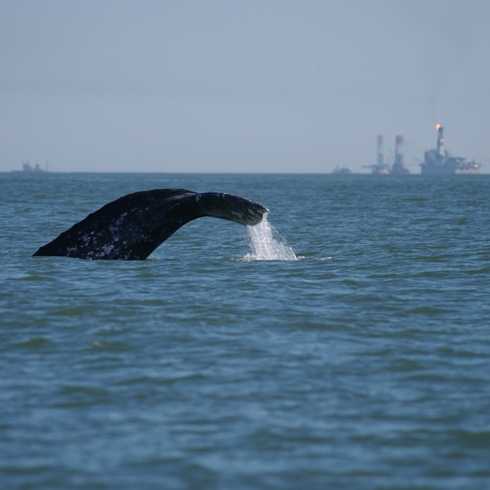
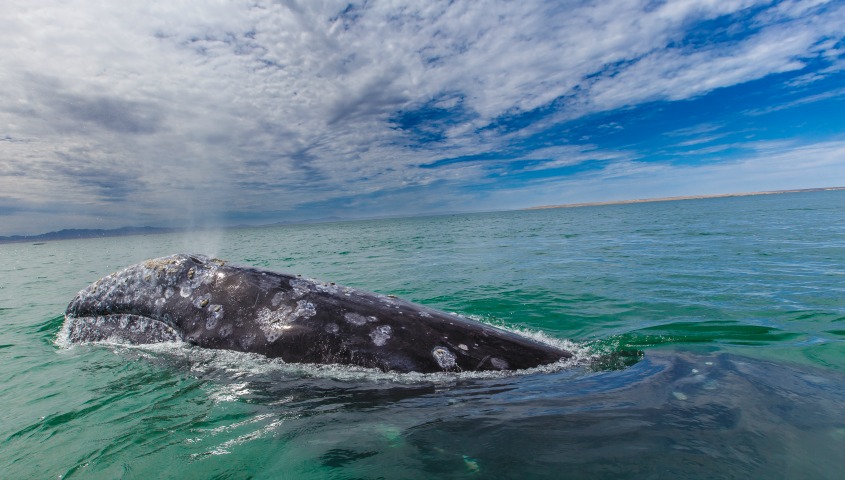
In November 2021, the Western Gray Whale Advisory Panel met for the last time. Its seventeen-year experiment in independent scientific oversight had changed pipelines, seismic-survey procedures, vessel management and corporate environmental practice. An independent evaluation concluded that it had materially reduced risks to the whales. Yet when the Panel closed, essential questions about prey, data access, cumulative impacts and long-term monitoring remained unresolved. Then Russia invaded Ukraine. Shell and Exxon began withdrawing. The institutional structure that had held companies, scientists, lenders, regulators and NGOs around the same table abruptly entered a different world.

1. The final meeting
The Western Gray Whale Advisory Panel held its 22nd and final meeting at IUCN headquarters in Gland, Switzerland, in November 2021.
It was the end of an experiment begun in 2004, when an Independent Scientific Review Panel was convened to assess the potential effects of Sakhalin II Phase 2 on the gray whales feeding off north-eastern Sakhalin.
The later WGWAP arrangement was unusual.
Sakhalin Energy helped finance the process.
IUCN administered it.
Independent scientists produced the recommendations.
Project lenders attended.
Russian regulators, NGOs and academic specialists participated as observers.
And Sakhalin Energy was expected either to implement WGWAP recommendations or explain publicly why it would not do so. (IUCN Cetacean Specialist Group)
That architecture was neither conventional corporate consulting nor adversarial environmental campaigning.
It was an attempt to embed independent scientific challenge inside the governance structure surrounding a major oil and gas project.
2. The final tally: 639 recommendations
When the Panel’s closing statement was prepared in early 2022, its authors calculated that WGWAP and its predecessor panels had issued:
639 recommendations
between 2004 and 2021.
The vast majority had been addressed to Sakhalin Energy. (IUCN Cetacean Specialist Group)
The number alone is striking.
But the more important question is what changed as a consequence.
The Panel identified perhaps its most tangible achievement as Sakhalin Energy’s decision to reroute an offshore pipeline that otherwise would have crossed the whales’ nearshore feeding ground near Piltun Lagoon.
The closing statement also credited the process with helping to produce stricter measures concerning construction noise, seismic surveys, vessel-strike avoidance, scientific monitoring and oil-spill planning.
Significantly, the Panel said many of those practices went beyond formal Russian regulatory requirements. (IUCN Cetacean Specialist Group)
3. An independent evaluation found real benefits
Before WGWAP closed, IUCN commissioned a fifth and final independent evaluation.
It was conducted by Ajabu Advisors.
The evaluators did not conclude that the system had solved every conservation problem.
They did conclude that WGWAP had materially improved scientific understanding of the whales and had helped Sakhalin Energy reduce risks arising from its operations.
The evaluation specifically identified the pipeline rerouting, mitigation of seismic-survey risks and vessel-traffic measures as important results.
It also found that the Panel’s independence, transparency, scientific expertise and ability to work collaboratively with company personnel were central to its credibility.
At the final meeting, the evaluation team said the Panel had also reduced reputational risk for Sakhalin Energy and the project lenders.
That finding deserves careful interpretation.
A system can simultaneously protect wildlife and protect a company’s reputation.
Those objectives are not necessarily contradictory.
If independent oversight makes corporate environmental performance better, reputational benefit may simply be one consequence.
4. But the evaluation was not a corporate testimonial
The final evaluation also recorded substantial limitations.
Sakhalin Energy had not implemented every recommendation.
Implementation varied over time.
The Panel had struggled to extend its influence to other operators.
And its ability to assess cumulative impacts was weakened by incomplete cooperation and data sharing elsewhere on the Sakhalin shelf.
One structural weakness was particularly important.
WGWAP was formally built around Sakhalin Energy.
But whales do not recognise corporate licence blocks.
They move through waters affected by multiple operators, shipping, fishing and other human activities.
The Panel could therefore advise one company extremely well while still lacking authority over much of the broader ecosystem.
5. Exxon and the missing common database
The Panel’s final statement identified lack of data sharing as one of its particular disappointments.
For years, scientists had wanted photo-identification and genetic information from different research programmes brought together under a common system.
The International Whaling Commission offered to maintain and manage a unified database.
According to the Panel’s closing statement, Exxon Neftegas did not agree to that arrangement. (IUCN Cetacean Specialist Group)
The consequence was not merely administrative inconvenience.
Population modelling depends upon identifying individual whales accurately across years and research programmes.
Fragmented databases make that harder.
The Panel considered a common dataset capable of improving the scientific basis for conservation throughout the whales’ range. (IUCN Cetacean Specialist Group)
Again, the evidential boundary must be preserved.
The documents establish a disagreement over data sharing.
They do not establish that Exxon falsified data or deliberately endangered whales.
6. Five years without meaningful habitat monitoring
The final WGWAP meeting returned to a problem examined in previous instalments.
The joint Sakhalin Energy–Exxon Neftegas monitoring programme continued to conduct photo-identification and distribution surveys.
But the Panel said that no meaningful habitat monitoring had been undertaken through the programme for approximately five years.
In particular, benthic prey sampling had not resumed despite WGWAP’s repeated requests.
The Panel concluded that the Joint Programme was therefore failing to fulfil its own stated objective of adequately monitoring both the whales and their habitat.
That conclusion was unusually direct.
The issue was no longer simply that scientists would have preferred more research.
By the Panel’s analysis, a programme expressly concerned with whales and habitat was not meaningfully monitoring one of the habitat features most relevant to explaining the whales’ changing distribution.
7. The whales themselves were doing better
Any balanced account must also record the positive biological evidence.
The Panel’s updated population assessment estimated that by 2020 approximately 220–270 whales, excluding first-year calves, were regularly using the Sakhalin feeding grounds.
The estimated long-term trend since the mid-1990s was upward.
The population’s IUCN Red List classification had improved from Critically Endangered to Endangered. (IUCN Cetacean Specialist Group)
That is an important conservation success.
It does not prove that Sakhalin Energy caused the recovery.
It does not prove that oil and gas activity was harmless.
And it does not prove that every mitigation measure was necessary.
But neither should the improvement be obscured.
The population that had prompted extraordinary concern at the beginning of the Sakhalin II controversy was larger and scientifically better understood by the time WGWAP closed.
8. The Panel itself believed the process deserved some credit
WGWAP’s final statement was careful about attribution.
The whales’ recovery reflected many influences, including cessation of historical whaling, research, mitigation, changing scientific understanding and broader conservation action.
But the Panel considered its own contribution substantial.
It highlighted the pipeline rerouting, seismic-survey mitigation, vessel management, improved analytical methods and oil-spill preparedness as concrete areas in which its recommendations changed practice. (IUCN Cetacean Specialist Group)
The independent Ajabu evaluation reached a similar conclusion.
Its executive summary stated that WGWAP had reduced the risk to whales from Sakhalin Energy’s activities, while acknowledging that performance across other companies and sectors was considerably more mixed.
9. Why was such a successful structure ending?
The answer was partly financial and institutional.
The Panel had been tied to project-finance arrangements.
By 2021, Sakhalin Energy had repaid the relevant loans and was no longer obliged under the loan conditions to finance WGWAP.
Ajabu’s evaluation said plainly that the absence of committed future funding would cause the Panel to close.
That raises a difficult governance question.
If independent environmental oversight is valuable principally while lenders require it, what happens when the debt disappears?
Environmental impacts can continue long after project financing has been repaid.
The ecological clock and the financial clock do not necessarily run together.
10. Shareholder pressure also entered the record
The final WGWAP report went further.
It recorded a recurring gap between what regulations required and what conservation scientists considered necessary.
According to the report, Sakhalin Energy regarded its primary obligations as compliance with Russian requirements and commitments to lenders.
Where regulators and lenders considered an analysis adequate, additional work could be constrained by budgets and, the Panel recorded, by shareholder pushback.
This is an important documentary statement.
It does not establish which shareholder objected to which expenditure.
It should not be converted into an allegation against Shell or any particular shareholder without further evidence.
But it does establish that financial constraints originating at shareholder level were part of the explanation given within the WGWAP process for limits on further scientific work.
11. Shell’s own final words were strongly supportive
At the November 2021 meeting, Larissa Leitch spoke on behalf of Shell, then one of Sakhalin Energy’s shareholders.
Her remarks were notably positive.
The official meeting record says Shell praised WGWAP’s independent scientific advice and transparency, credited the Panel with substantially increasing scientific knowledge and developing monitoring and mitigation techniques with wider international application, and stressed the importance of preserving long-term datasets.
Shell also expressed the hope that collaboration on western gray-whale science would continue.
Those remarks are important for another reason.
They make it difficult to characterise WGWAP simply as an external critic tolerated reluctantly by Shell.
By the end of the process, Shell was publicly endorsing the model.
12. Sakhalin Energy also said the work would continue
Sakhalin Energy told the final meeting that termination of the Panel did not mean the end of its whale-conservation activities.
The company said it would remain bound by Russian requirements, international reporting commitments, ISO environmental-management standards and voluntary adherence to International Finance Corporation performance standards.
It also said much of WGWAP’s guidance had already been incorporated into company standards and procedures.
Again, this was a company commitment.
Whether the full legacy survived the geopolitical upheaval that followed is a separate question.
13. The Panel nevertheless left a formidable “to-do” list
At its final meeting, WGWAP identified a series of actions that it believed should continue after its own disappearance.
Among them were:
continued prey and habitat sampling;
better population and density estimation;
satellite tagging;
full soundscape monitoring;
continued acoustic work;
assessment of mitigation effectiveness;
use of new technology without breaking historic datasets;
integrated photo-identification and genetic databases;
and mandatory public reporting rather than reporting only to regulators.
The scientists also stressed that this work should not become the responsibility of a single oil company.
Government-mandated cooperation and shared funding were needed.
That conclusion represented a significant evolution from the early Sakhalin debate.
The problem was no longer merely:
What should Shell do?
It had become:
How should an entire industrial region be monitored when several operators affect the same ecosystem?
14. “Unfinished Business”
The closing statement prepared in early 2022 used an unusually candid heading:
Unfinished Business
The list included continued support for the independent Russian Gray Whale Project; regular population modelling; long-term underwater-noise monitoring; renewed satellite tagging; and resumption of prey and habitat studies combined with measurements of diet, stress and body condition. (IUCN Cetacean Specialist Group)
The underlying principle was equally clear.
New data had to remain compatible with long historical series.
Existing information had to be archived.
And data needed to remain accessible.
Without continuity, seventeen years of increasingly sophisticated science could gradually become less useful.
15. Independence and collaboration: the paradox at the heart of WGWAP
The Panel’s final statement distilled one of its central lessons:
independent scientists had to remain independent of industry while simultaneously working closely enough with industry to influence operational decisions.
That balance was never simple. (IUCN Cetacean Specialist Group)
Too much corporate influence and the Panel would lose credibility.
Too much distance and its recommendations might never enter engineering and operational practice.
The independent evaluation concluded that WGWAP worked best when it managed to occupy that uncomfortable middle ground.
That may be the most transferable lesson from the entire Sakhalin experiment.
Independent oversight is not valuable because it eliminates disagreement.
It is valuable because disagreement can occur openly without destroying the process.
16. The final report nearly disappeared from public view
There is an extraordinary archival postscript.
According to the IUCN Species Survival Commission’s Cetacean Specialist Group, the report of the final November 2021 meeting was completed in January 2022 but was never officially released online.
After Russia invaded Ukraine in February 2022, IUCN removed the dedicated WGWAP collection from its public website.
Years of reports, task-force papers and related documents consequently became unavailable at their original location.
The Cetacean Specialist Group, assisted by the Animal Welfare Institute, later recovered a substantial part of the archive — more than 80 documents — and restored public access in 2024. (IUCN Cetacean Specialist Group)
This point requires particular caution.
The available record does not establish that Shell requested removal of the archive.
It does not establish that IUCN removed it in order to conceal criticism of Sakhalin Energy.
The CSG attributes the removal to the circumstances following Russia’s invasion.
What can safely be said is that an internationally important seventeen-year environmental record disappeared from its original public location and later had to be reconstructed.
For a documentary archive such as The Shell Leaks Files, that fact is significant in itself.
17. The court record explains why preservation matters
The older English litigation provides an appropriate historical bookend.
In Export Credits Guarantee Department v Friends of the Earth [2008] EWHC 638 (Admin), Mr Justice Mitting dealt with an earlier attempt to obtain environmental information relating to proposed British financial support for Sakhalin II.
The judgment recorded that approximately US$650 million of UK-backed support had been sought and that the project could have potentially serious consequences for western gray-whale habitat. The legal dispute concerned whether internal government environmental material should be disclosed. (vLex)
The High Court dismissed ECGD’s appeal against disclosure.
It did not find Shell environmentally liable.
It did not determine the future condition of the whales.
Its importance here is narrower.
From the earliest stages of Sakhalin II, access to environmental information was itself part of the controversy.
Seventeen years of WGWAP experience ultimately produced much the same lesson:
environmental oversight has limited value if the underlying evidence cannot be preserved, compared and independently examined.
18. Then history overtook the conservation plan
The Panel’s closing statement was finalised on 28 February 2022.
That date is remarkable.
Four days earlier, Russia had invaded Ukraine.
And on the same day the closing document was finalised, Shell announced that it intended to leave its Russian ventures, including its 27.5% interest in Sakhalin II. Shell said the decision was taken in response to Russia’s invasion. (Shell Plc)
Exxon soon announced its intention to discontinue operations and leave Sakhalin-1. Contemporary reporting described the withdrawal of personnel and the difficult task of unwinding the project safely. (The Washington Post)
The WGWAP authors inserted a footnote acknowledging the consequences.
They said the Shell and Exxon withdrawals would presumably have major implications for the Joint Programme and for Sakhalin Energy’s planned monitoring and mitigation during the forthcoming seismic survey. (IUCN Cetacean Specialist Group)
A seventeen-year conservation mechanism was closing at exactly the moment when the corporate order on which it had been constructed was beginning to collapse.
Documentary Findings
Established: The western gray-whale panels operated for seventeen years and issued 639 formal recommendationsbetween 2004 and 2021. (IUCN Cetacean Specialist Group)
Established: Sakhalin Energy was required under the Panel arrangement either to implement recommendations or explain why it would not, with recommendations and responses made public. (IUCN Cetacean Specialist Group)
Established: The pipeline rerouting away from the Piltun nearshore feeding area was identified by WGWAP as one of the Panel process’s clearest tangible achievements. (IUCN Cetacean Specialist Group)
Established: An independent evaluation concluded that WGWAP helped Sakhalin Energy minimise risks to western gray whales, while also identifying weaknesses concerning other operators, data sharing, funding and long-term institutional sustainability.
Established: The final meeting record said no meaningful habitat monitoring had been conducted under the Joint Programme for approximately five years despite repeated Panel requests for renewed prey sampling.
Established: The Panel identified differences between regulatory requirements and the standards of information needed for conservation science, and recorded budgetary limitations and shareholder pushback as factors constraining additional analysis.
Established: Shell publicly praised the Panel’s independence, scientific work and transparency at the final meeting.
Established: Shell announced on 28 February 2022 that it intended to leave its 27.5% Sakhalin II interest, while Exxon subsequently announced withdrawal from Sakhalin-1. (Shell Plc)
Not established: The documents do not show that Shell caused the Panel to close in order to avoid scientific scrutiny.
Not established: They do not establish that Shell caused IUCN to remove the WGWAP archive from its website after Russia invaded Ukraine.
Not established: Population recovery does not by itself prove either that Sakhalin Energy’s operations were harmless or that WGWAP alone caused the improvement.
Commentary
Seventeen years is long enough to judge the WGWAP experiment on more than intentions.
It changed things.
A pipeline moved.
Seismic-survey practices changed.
Ships were managed differently.
Noise was measured more systematically.
Oil-spill planning took the whales into account.
A once poorly understood population became one of the most intensively studied whale groups in the world.
That deserves recognition.
But the ending is equally instructive.
Independent environmental oversight had been created partly because lenders demanded it.
Once the financing obligation disappeared, long-term funding became uncertain.
Habitat monitoring had already weakened.
Some important datasets remained fragmented.
The Panel could advise Sakhalin Energy but could not compel every operator on the shelf to follow equivalent rules.
And scientists continued asking questions that extended beyond what any one company regarded as its regulatory responsibility.
Then geopolitics dissolved the underlying corporate relationships almost overnight.
The broader lesson may therefore be uncomfortable for both industry and campaigners.
The WGWAP story is neither evidence that voluntary corporate environmental programmes are worthless nor evidence that they can substitute permanently for public regulation.
It demonstrates something more complicated.
Independent scientific oversight can genuinely improve industrial behaviour.
But if the oversight depends ultimately upon a commercial contract, a lender requirement or the willingness of a single company to continue paying for it, its durability remains vulnerable.
The whales may live for decades.
Corporate arrangements may not.
Source Record
The principal primary document is the recovered Report of the 22nd Meeting of the Western Gray Whale Advisory Panel, November 2021. The IUCN SSC Cetacean Specialist Group states that the final report was completed in January 2022 but was not formally released at the time; a recovered version is now preserved in its WGWAP archive. (IUCN Cetacean Specialist Group)
Recovered WGWAP 22nd Meeting Report
The principal closing document is Western Gray Whale Advisory Panel: Closing Statement, prepared by Randall Reeves, Greg Donovan and David Weller and finalised in early 2022. It records the Panel’s history, 639 recommendations, achievements, weaknesses and “Unfinished Business.” (IUCN Cetacean Specialist Group)
The independent assessment is Western Gray Whale Advisory Panel Independent Impact and Learning Evaluation, commissioned by IUCN and conducted by Ajabu Advisors in 2021.
Ajabu Advisors — Final WGWAP Evaluation
The authenticated Shell corporate record includes Shell’s announcement of 28 February 2022 that it intended to leave its 27.5% interest in Sakhalin II and its other Gazprom-linked ventures. (Shell Plc)
Shell — intention to exit Gazprom partnerships, 28 February 2022
Contemporaneous reporting documented the rapid withdrawal of Western oil companies from Russia after the invasion of Ukraine, including Shell and Exxon. (News24)
The judicial background remains Export Credits Guarantee Department v Friends of the Earth [2008] EWHC 638 (Admin), used solely for the earlier Sakhalin II environmental-information and UK export-credit context. (vLex)
The IUCN SSC Cetacean Specialist Group’s reconstructed archive now preserves much of the WGWAP documentary record removed from the original IUCN site after February 2022. (IUCN Cetacean Specialist Group)
IUCN SSC Cetacean Specialist Group — WGWAP Archive
Archive disclaimer: WGWAP reports and recommendations represent independent scientific advice, not judicial findings. Company statements are identified as corporate positions. Population trends are not treated as proof of causation. The later disappearance of WGWAP material from IUCN’s original website is documented by the Cetacean Specialist Group; no allegation is made that Shell requested or caused its removal.
Site-wide disclaimer applies.
Next instalment
The Sakhalin Papers L: The Exit — Shell Walks Away, Moscow Rewrites the Ownership and Sakhalin II Enters a New Era
On 28 February 2022, Shell announced that it would leave Sakhalin II.
Within weeks, Shell’s executive directors resigned from Sakhalin Energy and managerial and technical personnel were withdrawn.
Shell later disclosed that it had lost significant influence over the venture from 1 April 2022 and recorded a $1.614 billion impairment against its Sakhalin II investment. (Shell)
Then, on 30 June 2022, President Vladimir Putin signed a decree designed to transfer Sakhalin Energy’s licences and assets into a newly created Russian company.
Shell said it was assessing its rights and searching for an acceptable route out. (Shell)
For almost three decades, Shell had helped design, finance, build and operate one of the world’s largest integrated oil and LNG projects.
Now the company that had once controlled Sakhalin II was trying to escape it.
The next file examines what happened when war, sanctions, corporate withdrawal and Russian state power collided with Shell’s most controversial megaproject.
This website and sisters royaldutchshellgroup.com, shellnazihistory.com, royaldutchshell.website, johndonovan.website, shellnews.net, and shellwikipedia.com, are owned by John Donovan - more information here. There is also a Wikipedia segment, the Shell DPA Files, "Shell and the Spies", the Shell Leaks files, as well as books written and published by John Donovan - Kindle eBooks. Timeline of the Donovan Shell Feud. Toxic History of Royal Dutch Shell Group. Shell and the Donovans: The Full Media Record — 550+ Articles, 110 Books, 40 Years.