In the corridors of global energy, Shell presents itself as a monolithic symbol of industrial prowess, dividend reliability and transition ambition. Investors like BlackRock, Inc. and The Vanguard Group, Inc. hold sizeable stakes. Yet behind the investor-slides and glossy sustainability pledges lies a series of historical shadows: offshore disasters, legacy pollution, human-rights litigation and repeated admissions of safety underperformance. This article takes a tour through select episodes—chronologically arranged—of how Shell has, in many instances, placed lives and safety on the back burner. While satire underpins the tone, the facts are stubbornly real.
Gas
Shell’s scandalous approach to safety
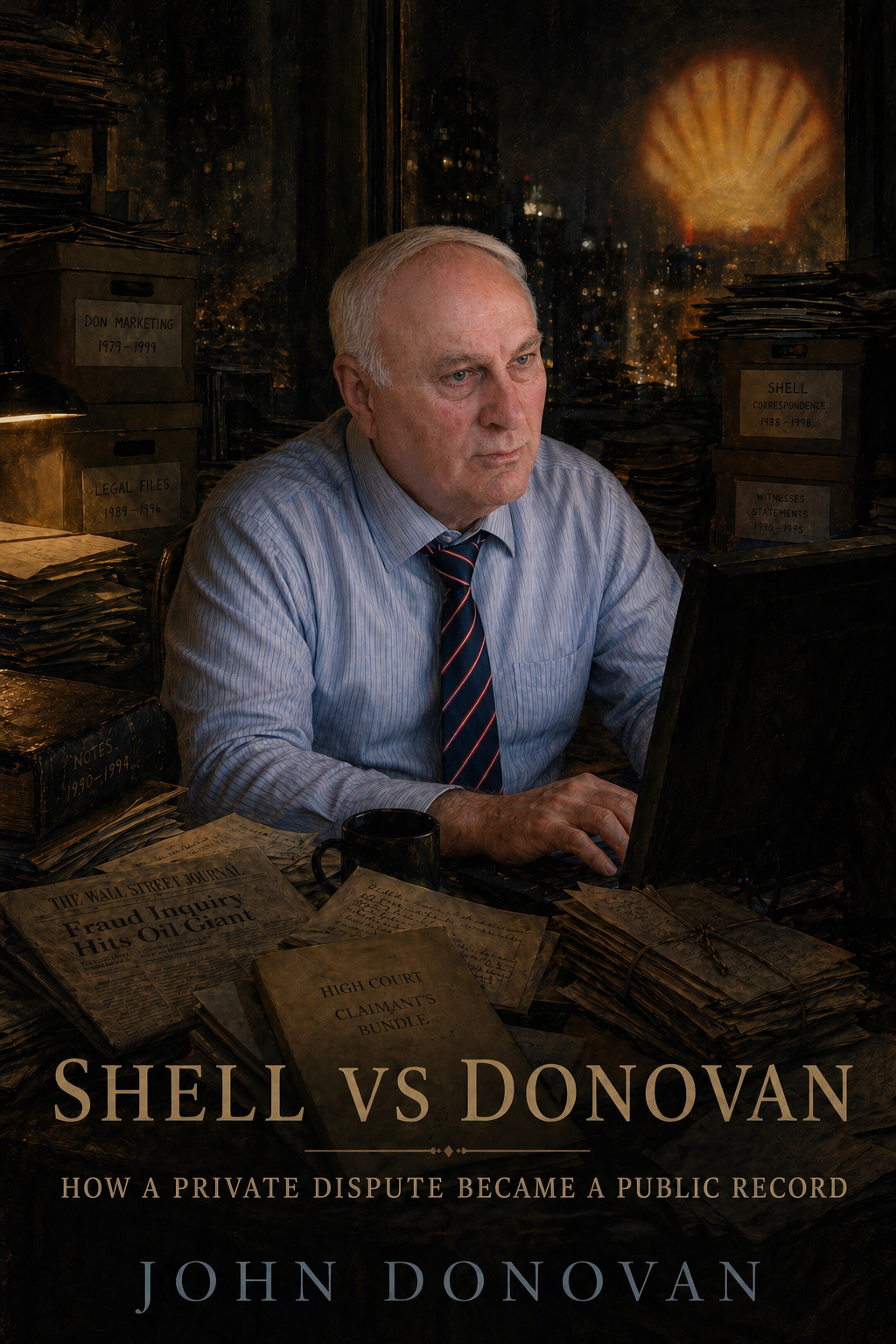
Shell vs Donovan: Oil Giant vs Watchdog
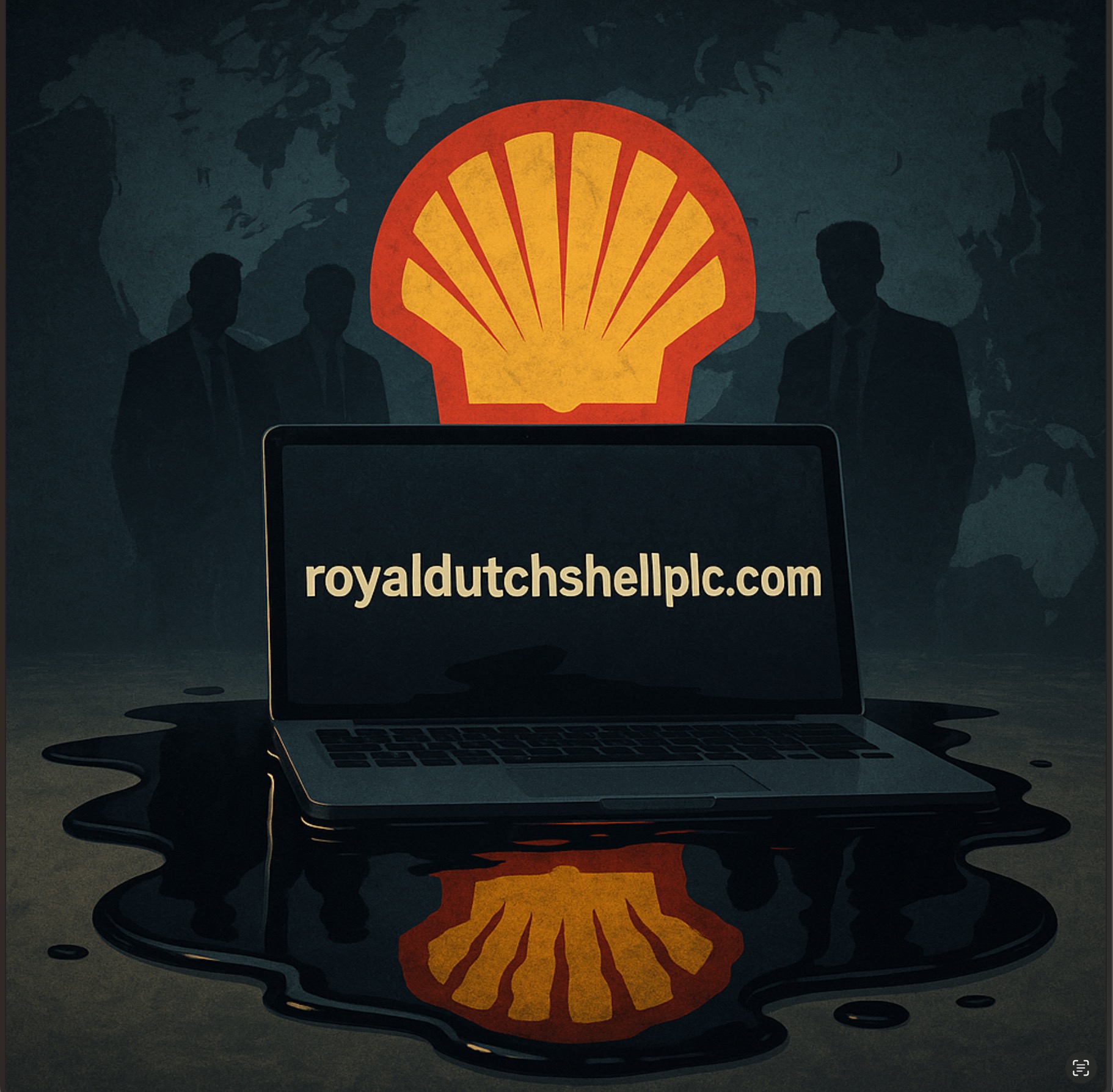
How one man’s persistence exposed decades of corporate deceit — and forced an oil giant to live with its reflection.
Part 1: The Origins of a Corporate Nemesis
“There are two types of corporations: those that fear whistleblowers and those that wish they’d hired one.” — Industry proverb
In the late 1980s, John Donovan was not yet a thorn in Shell’s side. He was one of its trusted collaborators — a marketing innovator whose company, Don Marketing, created hugely successful sales promotions for Shell in the UK and around the globe.
But what began as a partnership ended in betrayal. A bitter dispute over intellectual property, allegedly stolen concepts, and corporate bullying gave birth to a feud that would last decades.
Shell Dodges Justice—Again: Groningen Quakes Leave Cracks in Homes, Trust, and the Law
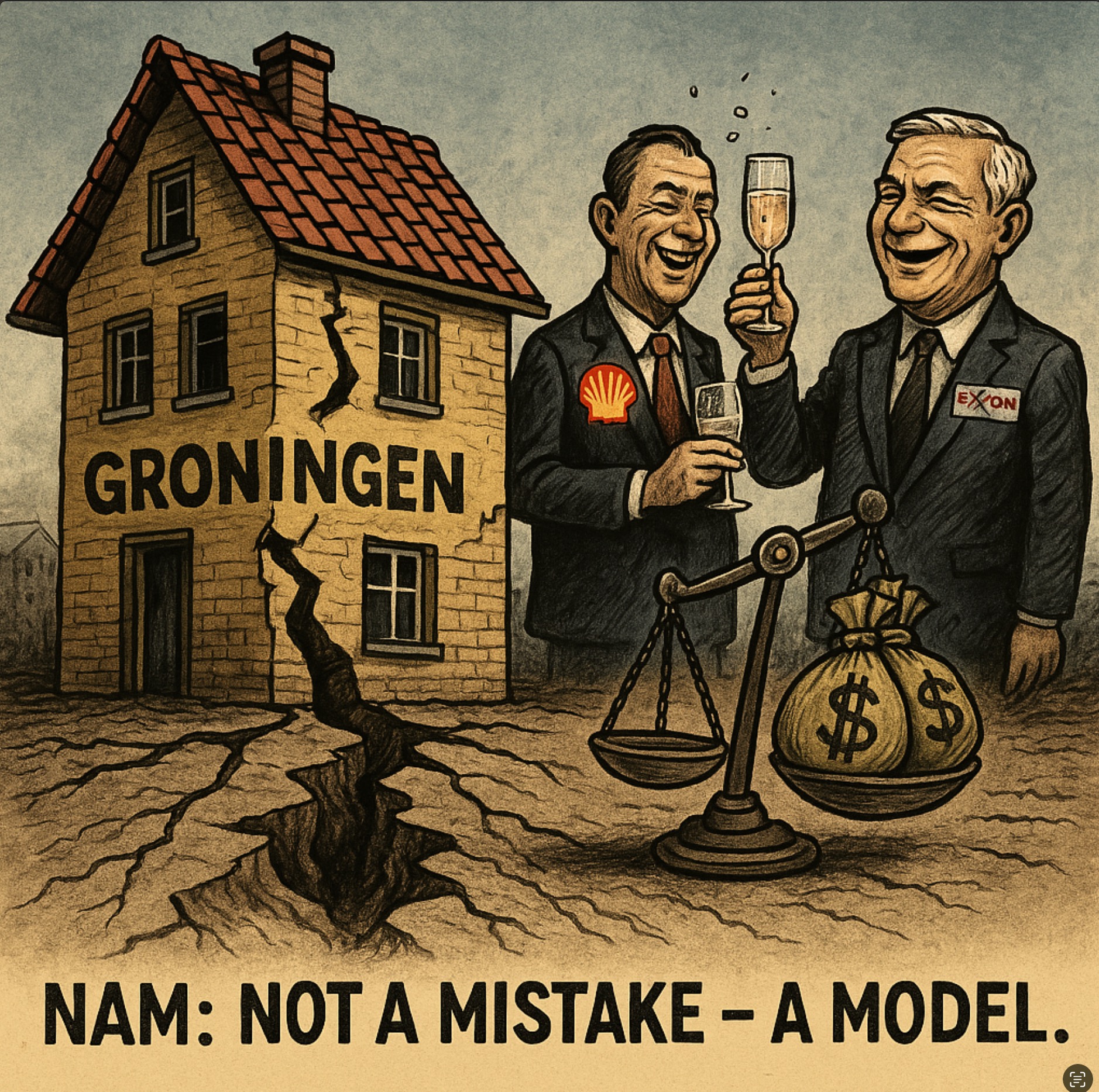
Another Earthquake, Another Escape Clause
In a move that shocked precisely no one familiar with the Dutch gas saga, the Dutch Public Prosecution Service (OM) announced that NAM — the joint venture between Shell and ExxonMobil — will not be prosecuted for creating “life-threatening danger” in the Groningen gas field, despite years of earthquakes, crumbling houses, and shattered nerves.
The OM admitted that NAM had “consciously accepted the risk” that drilling would cause earthquakes and endanger residents — but claimed that wasn’t enough to secure a criminal conviction. In plain English: Yes, they knew people could be hurt. No, that’s not a crime. Next question.
Pay the Quakes, Lock the Budget, Forget the Culprits?” — The Groningen Law that Lets Shell Breathe Easier
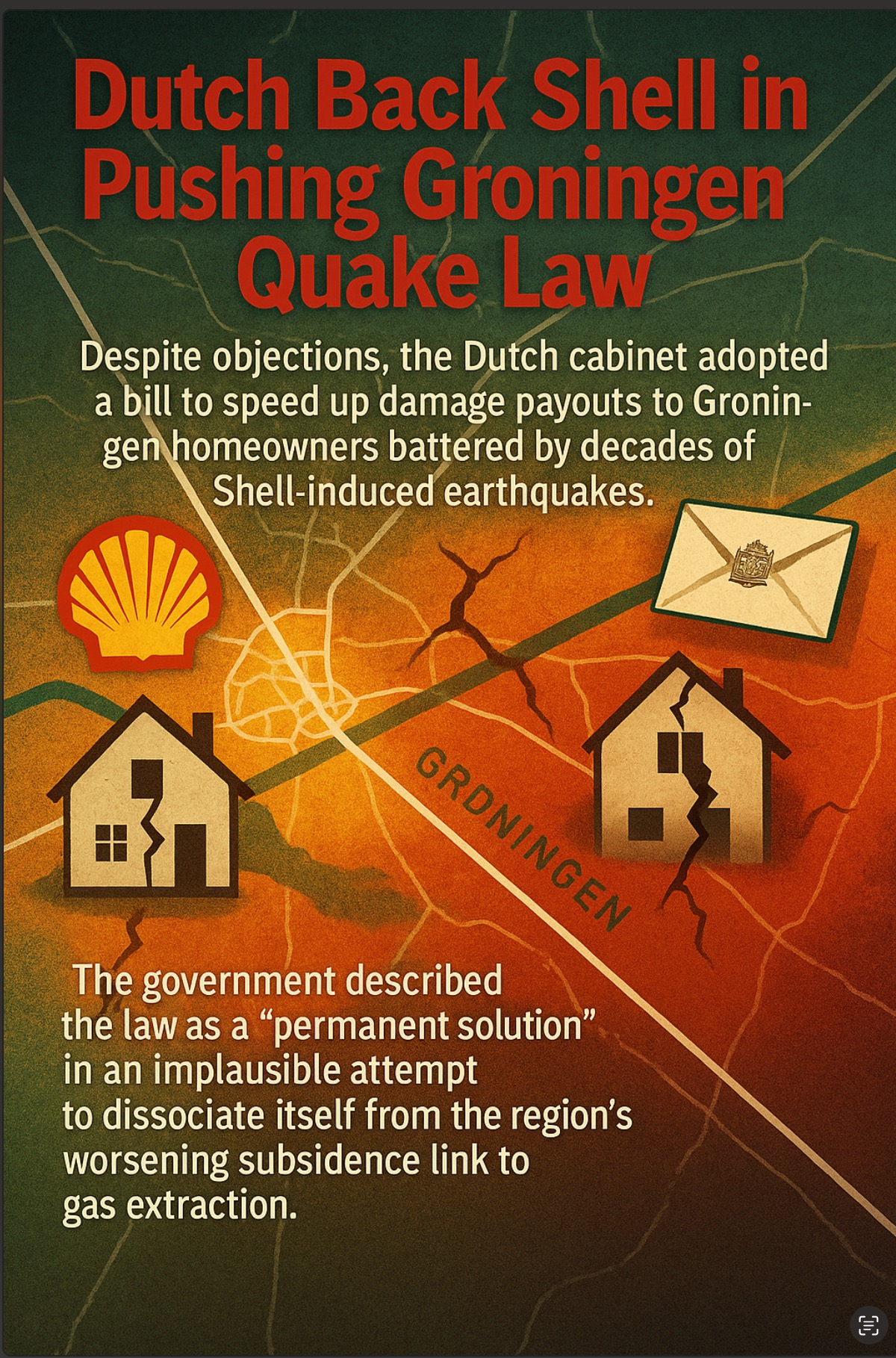 NAM, of course, is the joint venture of Shell and ExxonMobil that milked Groningen for decades.
The Dutch caretaker cabinet has pushed a new Groningen Law through to Parliament that promises faster payouts for quake-damaged homes — and a lighter legal load for the polluters who helped cause the mess. As NL Times reports: “The Caretaker Dutch cabinet has submitted the Groningen Law, which finalizes compensation for damages caused by gas extraction, to the Tweede Kamer, despite strong criticism from the Council of State.”
The bill would guarantee compensation up to €60,000 even without proof that gas extraction caused the damage — tidy for homeowners in a hurry, also tidy for corporate defendants who prefer fewer courtroom surprises.
Toxic Legacy: Shell, Exxon, and the Underground Waste Dump That Stinks of Corporate Arrogance
Move over Sakhalin, step aside Niger Delta—Shell and Exxon’s Dutch joint venture NAM (Nederlandse Aardolie Maatschappij) has managed to dump itself into yet another scandal. This time, prosecutors allege the company secretly injected hazardous waste into empty gas fields in Groningen for over a decade.
 The Charges
Dutch prosecutors have recommended a €20 million fine against NAM for a long list of environmental breaches, including:
-
Secretly dumping hazardous wastewater laced with mercury into empty underground gas fields near Borgsweer, Groningen.
-
Handling hazardous substances without permits, at sites where they had no business storing them.
-
Profiting over €5 million by cutting corners on proper hazardous waste treatment.
The Public Prosecution Service (OM) said bluntly:
“The key question is not whether environmental damage occurred, but rather transparency.” (NL Times)
Hakluyt, Heywood & Shell: The Corporate Spy Novel Nobody Asked For
If you thought Shell’s sins stopped at oil spills and carbon doublespeak, think again. Enter Hakluyt & Co., the boutique spook shop founded by ex-MI6 officers. This article is about Neil Heywood — a British businessman linked with Hakluyt who died in China under circumstances straight out of a John le Carré plot. WTF indeed.
The Shell–Hakluyt Bromance
Hakluyt doesn’t advertise on billboards. Its pitch is whispered in club lounges: discreet intelligence, political access, and bespoke “market insights.” Critics — most loudly John Donovan — have long accused Shell of being one of Hakluyt’s favourite corporate playmates. When Shell wants “strategic friends,” it doesn’t call McKinsey; it calls the ghosts of MI6.
The connection has been documented in detail for years. In fact, Donovan asked Shell’s General Counsel point-blank if Neil Heywood, via Hakluyt, had been working on Shell’s interests in China. Shell’s reply? Silence. And that silence still echoes louder than a Shell ad campaign. (source)
WTF, SHELL? JACKDAW’S ‘NEW’ CLIMATE MATH

A court told Shell to count what gets burned. Now Jackdaw’s fate depends on whether the UK wants the gas—and the emissions that come with it—on the books.
Shell—aka the ultimate sin stock with a green paintbrush—has filed a fresh environmental impact assessment for the Jackdaw gas field in the North Sea after losing in court to Greenpeace. Translation: the judges said, if your product gets burned, you have to count the emissions from burning it—those pesky Scope 3s—before ministers decide whether to hand you the keys. The previous approval? Unlawful.
Jackdaw isn’t some tiny puddle of methane dreams. It sits about 150 miles east of Aberdeen, and Shell loves to say it could churn out around 6% of the UK’s gas once it’s turned on—if ministers ever let them turn it on. Construction of the production platform is already well under way, but no extraction can start until the government retakes the decision under the new rules.
Ditching Europe’s Green Jet-Fuel Dream to Keep the Oil Flowing (Happy Shell Shareholders, F*** the Planet!)

Oh, Shell—our dear, lovable poison-gas overlord—has done it again. In a brilliant display of investment-first, ecology-second thinking, they’ve just scrapped what would’ve been one of Europe’s largest biofuel plants in Rotterdam. You know, the one supposed to turn waste into sustainable aviation fuel (SAF) and renewable diesel? Yeah, that one. Guess it didn’t pass smell-test of profitability.
Machteld de Haan, the renewables and energy solutions chief, stated with all the emotional warmth of a tax auditor:
Shell Loses LNG Case to Venture Global

The planet-wrecking colossus known as Shell — proudly backed by Wall Street heavyweight BlackRock — just lost its $1.7 billion arbitration battle against Venture Global. The scrappy U.S. LNG upstart sold cargoes on the spot market for huge profits instead of delivering them to Shell under long-term contracts. Shell whined: “Trust in long-term contracts is the bedrock of the LNG industry.” Translation: “We’re fine making billions, but only if it’s on our terms.”
Venture Global, which banked nearly $7 billion in 2022–23, crowed: “We have consistently honored these agreements without exception.” The ruling leaves Shell sulking and the rest of us wondering if corporate karma actually exists — because for once, Big Oil didn’t win.
Shell Eyes BP Takeover While Drenched in Gas, Cash, and Climate Denial

There are corporate villains, and then there’s Shell—the Bond villain of Big Oil, now openly toying with the idea of swallowing BP whole like a boa constrictor eyeing a stunned rat. With BP’s renewable daydreams in flames and its share price gasping for relevance, Shell’s chief executive Wael Sawan has stepped forward as the calm, calculating undertaker, declaring at the AGM that “the bar for mergers and acquisitions is very high”—which in Shell-speak translates to: “We’ll wait until they’re cheap enough to loot.”
Shell, the earthquake whisperer of the Netherlands

While most of us wince at a cracked window or a tremor underfoot, Shell—and its charmingly destructive joint venture with ExxonMobil, the Nederlandse Aardolie Maatschappij (NAM)—hears the sweet sound of shareholder dividends. Welcome to Groningen, where homes crumble, the earth groans, and Shell shrugs while polishing its halo of ESG nonsense.
In a rare act of temporary restraint (not to be confused with accountability), NAM has announced it won’t resume gas extraction in Warffum until the court rules on an appeal by the province of Groningen and the municipality of Het Hogeland. That’s right: Shell’s earthquake machine is pausing—not because they’ve realised that turning a region into a seismic mess might be morally questionable, but because they’re being legally forced to wait a few more days before continuing their extraction rampage.
Frozen Gas, Burning Planet: Shell’s LNG Canada Hype Hits Boil Point
ICE-COLD GAS, RED-HOT PROFITS-BROUGHT TO YOU BY SHELL

Exporting methane and melting credibility—Canada joins Shell’s planetary gaslighting tour
Hold your applause and grab your gas masks: Shell, the world’s favourite pollution profiteer, is about to transform Canada from the land of moose and maple syrup into a shiny new LNG export hub—just what the overheating planet didn’t ask for.
The LNG Canada project, a $40 billion love letter to fossil fuels led by Shell Plc, is getting ready to ship its first cargoes of super-cooled methane as early as June. According to “people with knowledge of the situation” (a.k.a. Shell insiders who know the drill), equipment testing is already underway at the plant, located in Kitimat, British Columbia.
Shell-Shocked: FERC Tells Oil Giant to Sit Down and Shut Up in LNG Tantrum
 Shell — the cuddly face of fossil fuel finesse. The benevolent, planet-loving oil titan that brought you a century of greenhouse gases and quarterly profits fatter than a deep-fried oil rig. But this time? The U.S. Federal Energy Regulatory Commission (FERC) wasn’t buying their entitlement routine.
In what can only be described as an institutional eye-roll, FERC sided with Venture Global LNG Inc., ruling that the company is not obligated to serve Shell all non-public documents going forward. Translation: just because Shell’s used to throwing its corporate weight around doesn’t mean it gets VIP access to everything behind the curtain.
This all stems from Shell’s never-ending hissy fit over Calcasieu Pass — Venture Global’s LNG plant in Louisiana — where Shell is a paying customer. They demanded access to internal, non-public documentation because nothing says reasonable corporate conduct like shouting “transparency!” while investing billions in planet-charing energy.
Shell’s Shaky Business: Now Predicting Its Own Earthquakes!
 Ah, Shell—forever innovating new ways to ruin lives, one gas field at a time. The latest breakthrough? Science has now made it easier to predict the earthquakes caused by Shell and its fossil-fuel-loving friends in the Groningen region. That’s right—thanks to decades of unchecked greed and relentless gas extraction, we can now forecast when and where the next disaster will strike. What a win for modern research!
This delightful revelation comes courtesy of researcher Zhuldyzay Baki, who has found a way to analyze the seismic mess Shell and its drilling partners have inflicted upon the Netherlands. Her work at the University of Twente combines statistical models with geological insights to track the correlation between underground pressure drops (caused by, you guessed it, gas extraction) and earthquake intensity. Turns out, the areas where Shell has sucked the most gas out of the earth are the same ones where people’s homes are cracking apart. Who could have possibly predicted that? Oh wait, literally everyone who warned about this for years.
Shell’s LNG Delusion: Betting Big on a Market That Doesn’t Want It
Nothing Screams “Strategy” Like Ignoring Reality
Ah, Shell—the ultimate sin stock, the champion of environmental destruction, and a firm favorite of investment giants like BlackRock and Vanguard—has once again graced the world with a vision of its glorious fossil-fueled future. This time, it’s an LNG pipe dream so detached from reality, you’d think they pulled it straight from an oil-stained magic eight ball.
According to Shell’s latest LNG outlook, the world is set to guzzle down up to 718 million metric tons of liquefied natural gas by 2040, a staggering 60% increase from today. Why? Because of Asia’s economic growth, the energy demands of AI, and the vague promise of “cutting emissions”—yes, you read that right, Shell is now selling fossil fuels as a climate solution. Comedy gold.
Shell and Exxon’s Gas Profits Shake Groningen—Literally
Nothing Says “Sustainable Business” Like an Earthquake Every Few Months
It’s another day, another earthquake in Groningen, where decades of reckless gas extraction by Shell and ExxonMobil’s joint venture, NAM, have left the ground as unstable as their ethical standards. This time, a 2.2 magnitude quake hit the town of Usquert just after midnight, shaking homes, rattling windows, and waking residents with a hard, dull thud. Coincidentally, that’s also the sound of Shell executives ignoring accountability.
“Induced Earthquakes”: Just a Fancy Term for Corporate Destruction
The KNMI meteorological institute wasted no time in confirming what everyone already knew: this was an “induced earthquake,” meaning it wasn’t some random act of nature—it was a direct consequence of Shell and ExxonMobil sucking every last drop of gas from the earth, leaving behind a crumbling foundation.