How one man’s persistence exposed decades of corporate deceit — and forced an oil giant to live with its reflection.
Part 1: The Origins of a Corporate Nemesis
“There are two types of corporations: those that fear whistleblowers and those that wish they’d hired one.” — Industry proverb
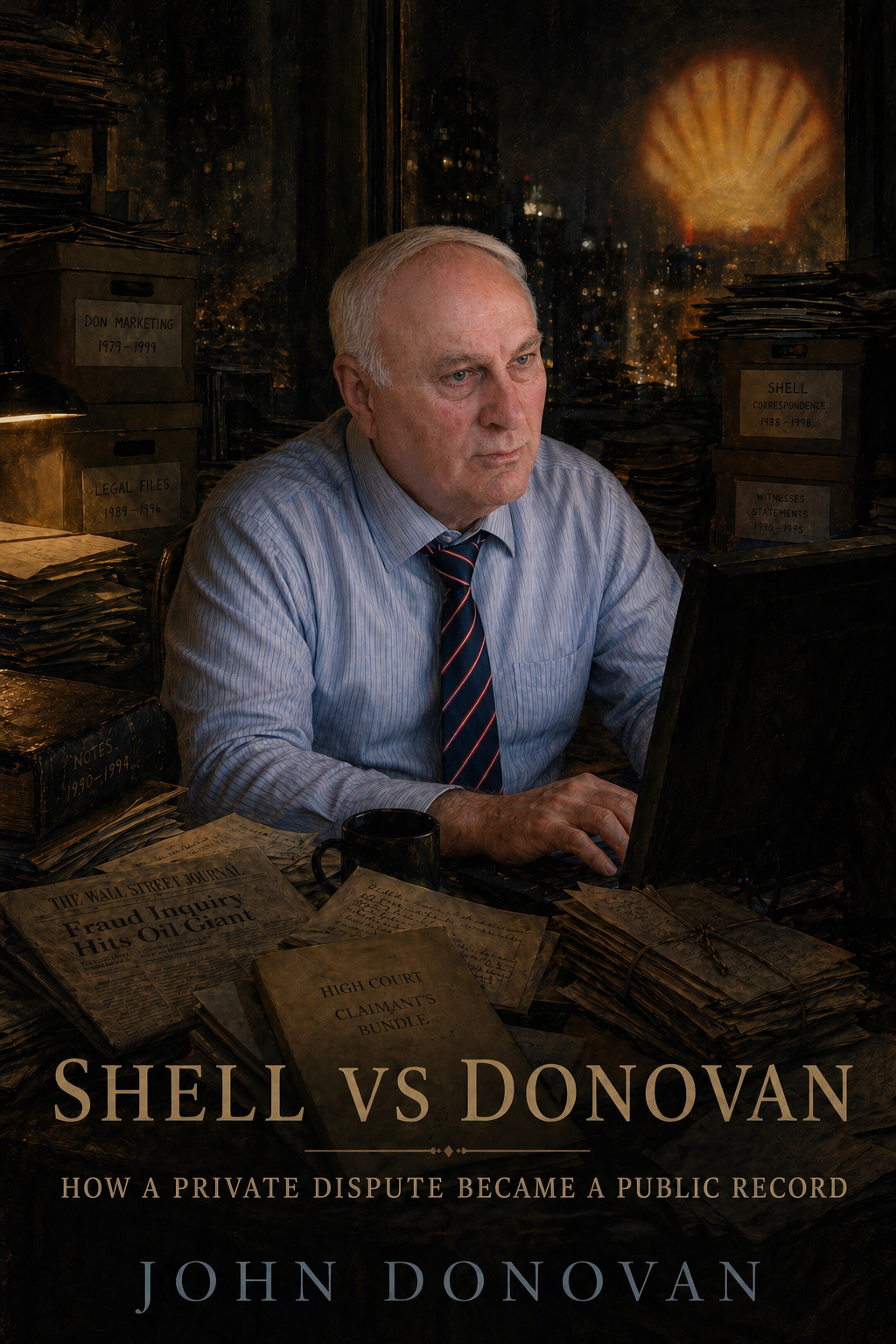
In the late 1980s, John Donovan was not yet a thorn in Shell’s side. He was one of its trusted collaborators — a marketing innovator whose company, Don Marketing, created hugely successful sales promotions for Shell in the UK and around the globe.
But what began as a partnership ended in betrayal. A bitter dispute over intellectual property, allegedly stolen concepts, and corporate bullying gave birth to a feud that would last decades.
When Shell’s lawyers tried to silence Donovan, he refused to play their game. Instead, he discovered a far more powerful weapon — the open web.
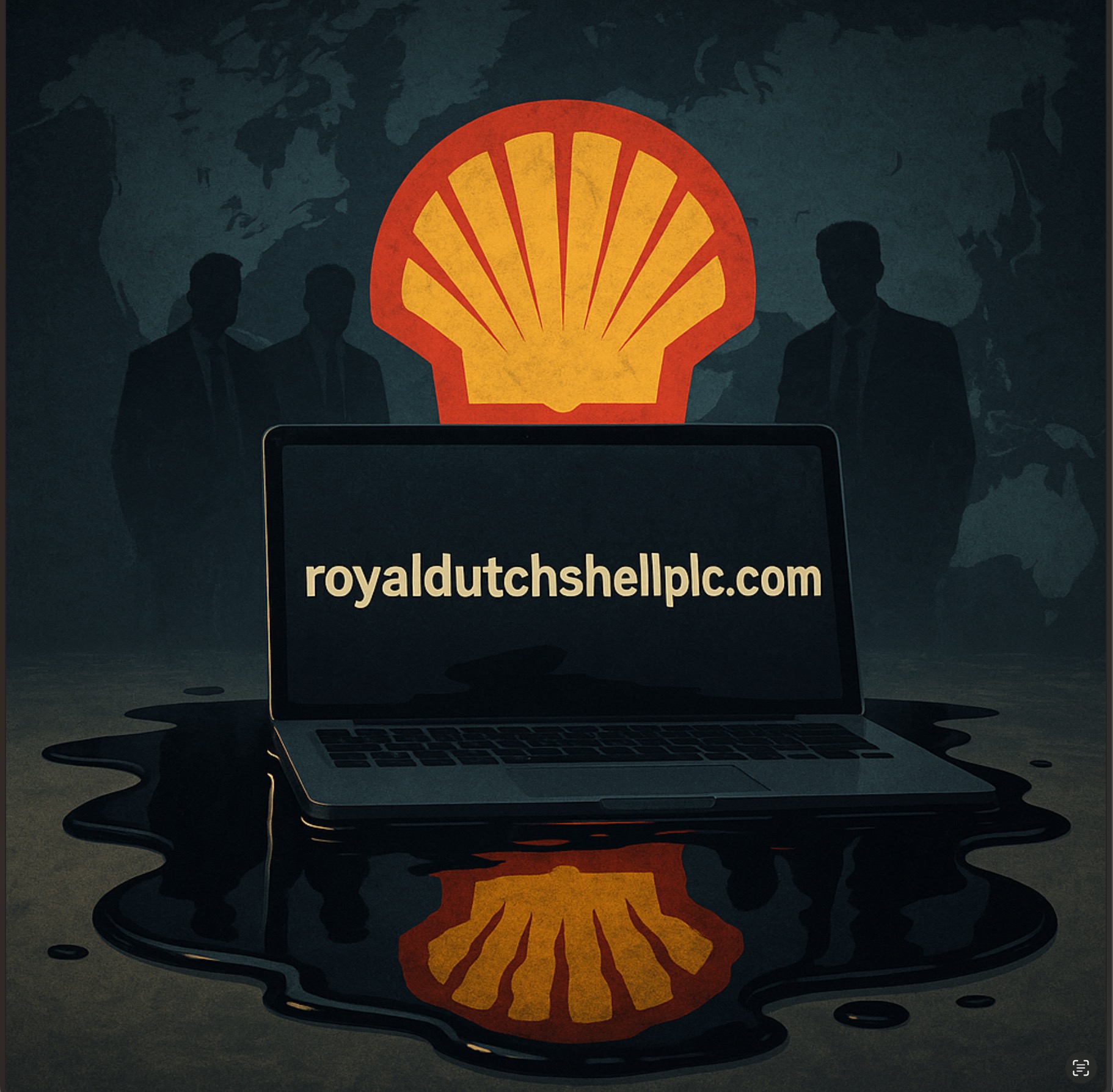
By 2001, royaldutchshellplc.com was born — an online archive, watchdog, and stage for one of the most persistent campaigns of corporate accountability in modern history.
What Shell dismissed as a “gripe site” would evolve into an unflinching library of leaked documents, legal rulings, and investigative journalism. It became, quite literally, the one source of Shell news that Shell itself couldn’t control.
Part 2: The Internal Files — Shell’s Secret Donovan Dossier
“The Donovan situation remains a reputational hazard requiring ongoing management.” — Shell Global Media Relations, internal correspondence, 2009
When Shell’s internal correspondence leaked through a 2009 Subject Access Request (SAR) under the UK Data Protection Act, the company’s darkest secret wasn’t its oil reserves — it was its paranoia.
Donovan’s request compelled Shell to hand over hundreds of pages of internal communications. The resulting archive — now published on ShellNews.net — revealed that the oil major had quietly assembled an internal task force dedicated to monitoring, discrediting, and containing Donovan’s activities.
“Maintain a watching brief on royaldutchshellplc.com and its mirror sites.” — Shell Communications Surveillance Brief, 2008
Emails show that Shell’s legal team even tried to “kill” a Sunday Times article about Donovan, fearing that coverage would “legitimize his campaign.”
In other words, a multibillion-dollar company spent time and money trying to manage a website run from an Essex living room.
One line from Shell’s internal reports stands out for its unintended honesty:
“Although antagonistic, Donovan’s reporting is usually factually sound.” — Shell External Affairs Advisor, 2007
When your own communications staff admit that the critic is more reliable than the corporation, you’ve already lost the narrative.
Part 3: Shell and the State — Influence, Access, and Control
“We must maintain constructive relations with all governments, even when those governments are investigating us.” — Shell Government Relations memo, 2006
Shell’s reach has always extended far beyond oilfields. Its political connections run deep — from Westminster to The Hague, from Moscow to Abuja.
In the mid-2000s, during the Sakhalin-II project in Russia, Shell’s arrogance collided with geopolitics. The company withheld key environmental data from Russian regulators — a fact confirmed by Oleg Mitvol, Russia’s deputy environment minister, after receiving leaked Shell emails from none other than John Donovan.
The fallout was spectacular. Shell was forced to surrender control of its $22 billion project to Gazprom for a fraction of its worth — a humiliation the Financial Times described as “self-inflicted.”
Meanwhile, in the Netherlands, Shell’s joint venture NAM caused a series of earthquakes in Groningen that damaged thousands of homes. In 2025, prosecutors announced that NAM would not face criminal prosecution for creating “life-threatening danger.”
It was a masterclass in influence. The victims shook; Shell’s stock did not.
Shell’s network even extended into the intelligence world. The private spy firm Hakluyt & Company, founded by ex-MI6 officers, counted Shell among its earliest and most loyal clients.
As Prospect Magazine reported, Hakluyt’s directors included senior Shell executives.
The relationship blurred the line between “corporate intelligence” and espionage.
Part 4: Scandals That Shaped the Legend
“Production was being maintained at the expense of safety.” — Judge Lord Carloway, sentencing Shell UK, 2005
If Shell’s PR department wrote the slogans, its history wrote the punchlines.
The Brent Bravo disaster (2003) left two workers dead after gas exposure — the result of falsified safety logs and systemic neglect. Shell pleaded guilty and was fined £900,000.
It was later revealed that Shell had known of fatal risks for years.
Then came the Lifeboat Scandal, when leaked documents (via Donovan) showed that Shell’s North Sea lifeboats were “unseaworthy.” One engineer quipped:
“If there was a fire, those boats would’ve killed more people than they saved.”
In Australia, the Prelude FLNG — Shell’s $17 billion “floating revolution” — became a floating fiasco, plagued by leaks, blackouts, and regulatory shutdowns. xxxxx xxxxxxxx, a former high-level safety expert at Shell, is currently involved in litigation with the Company. xxxxx is a source of important whistleblower information to royaldutchshellplc.com regarding the disaster-prone Prelude project.
And in Trinidad, the pattern of putting profit before safety repeated.
In 2025, worker Brian Soonachan accused Shell Trinidad and Massy Wood of concealing his benzene exposure on the Dolphin platform — failing to report it to authorities as required by law.
Each scandal reinforced the same lesson: Shell’s greatest renewable resource is denial.
Despite these disasters, the company continues to deliver record profits — $8.6 billion in Q3 2025 — thanks to global traders and the quiet support of BlackRock, Vanguard, and Norges Bank, who hold billions in Shell stock while claiming to promote “sustainable finance.”
Part 5: The Digital Watchdog That Wouldn’t Blink
“If Shell wants peace, it must first stop making war on the truth.” — John Donovan, 2015
In an age of corporate spin, royaldutchshellplc.com remains the one mirror Shell cannot escape.
Internal Shell memos confirm the company spent years monitoring the site and cataloguing Donovan’s posts.
“Our analytics show sustained internal traffic from Shell domains.” — Shell Digital Risk Team, 2009
And then came the ultimate irony.
As Reuters revealed, one Shell communications officer privately praised Donovan’s work:
“royaldutchshellplc.com is an excellent source of group news and comment and I recommend it far above what our own group internal comms puts out.”
When your critics cite you and your employees quote you — you’ve become the unofficial communications arm of the company you expose.
Over the years, royaldutchshellplc.com has published thousands of internal documents, whistleblower accounts, and legal records. Major media outlets now reference it routinely.
In 2012, Süddeutsche Zeitung dubbed Donovan “Konzernfeind No.1” — Shell’s Public Enemy No. 1.
Yet Donovan never sought fame. He wanted accountability.
“They had all the money and lawyers in the world. We had the truth and time.” — John Donovan, 2023
Today, the site’s audience includes journalists, academics, activists — and Shell staff quietly reading their own company’s secrets.
Even Shell’s internal strategy papers concede:
“Media stories sourced from Donovan’s publications carry disproportionate reputational weight.”
That’s corporate-speak for: if he posts it, we’re screwed.
Epilogue: The Sin Stock That Keeps Giving
As Shell touts its “energy transition,” its PR department still scrubs old disasters from search engines — while Donovan’s archive ensures the past stays indexed.
From Nigeria to Groningen, Aberdeen to Australia, one man has done what regulators, shareholders, and courts failed to do: hold one of the world’s most powerful corporations publicly accountable.
Shell calls it harassment.
History may call it journalism.
“The empire drilled oil. The watchdog drilled truth.”
Disclaimer
Warning: satire ahead. The criticisms are pointed, the humour intentional, and the facts stubbornly real.
Quotes are reproduced word-for-word from trusted sources.
As for authorship — John Donovan and AI both claim credit, but the jury’s still out on who was really in charge.
*This website and sisters royaldutchshellgroup.com, shellnazihistory.com, royaldutchshell.website, johndonovan.website, shellnews.net, and shellwikipedia.com, are owned by John Donovan - more information here. There is also a Wikipedia segment, the Shell DPA Files, "Shell and the Spies", the Shell Leaks files, as well as books written and published by John Donovan - Kindle eBooks. Timeline of the Donovan Shell Feud. Toxic History of Royal Dutch Shell Group. Shell and the Donovans: The Full Media Record — 550+ Articles, 110 Books, 40 Years. *All created and supported by internet wizz, Nick Gill.