13 October 2026 | RoyalDutchShellPlc.com
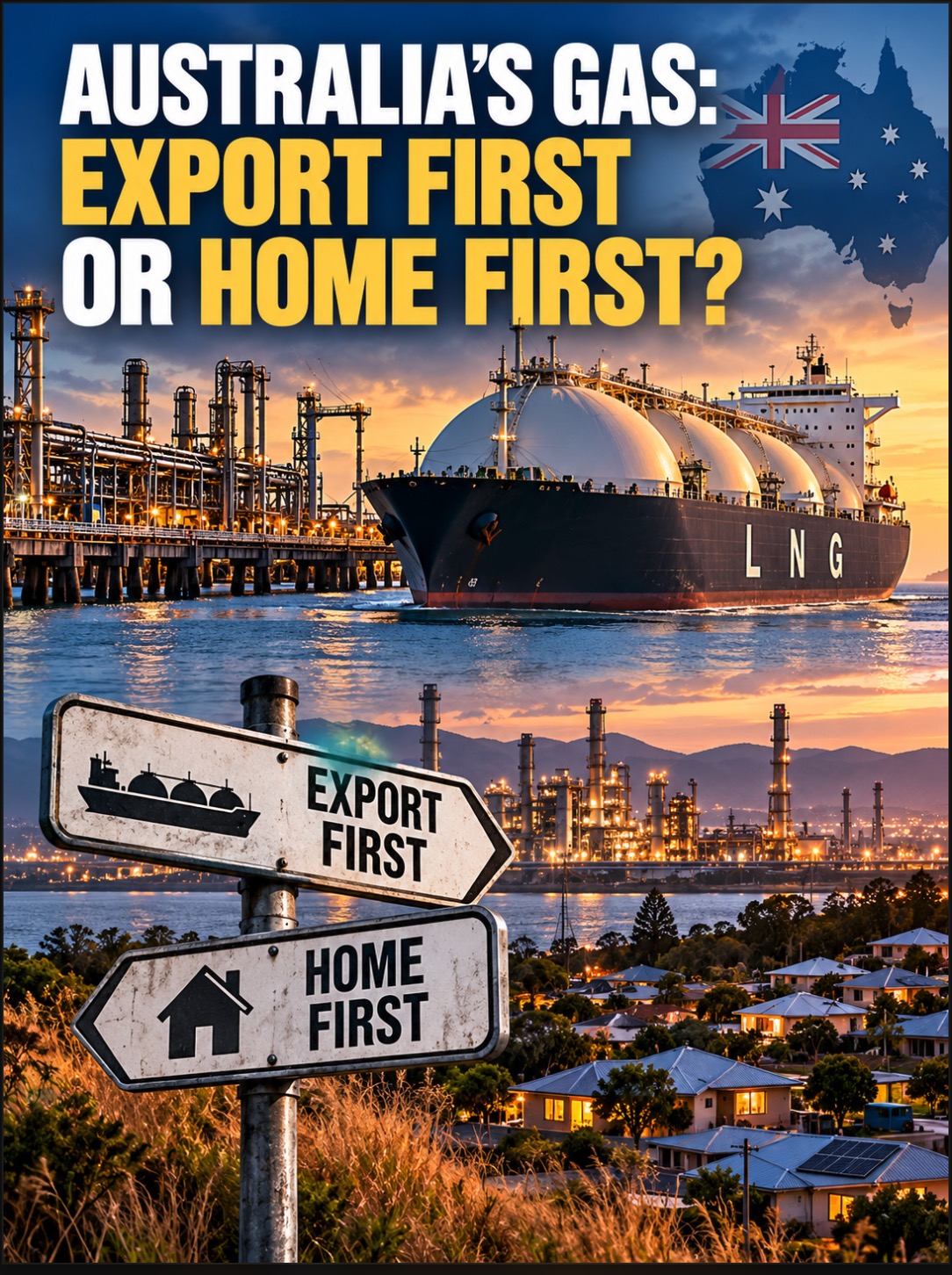
Australia is one of the world’s largest exporters of liquefied natural gas. Yet its own industries and households face uncertainty over future gas supplies and prices. Now Shell Australia chair Cecile Wake has attacked the government’s proposed domestic gas reservation scheme, warning that excessive intervention could damage investment and create the very shortages it is intended to prevent. But an investigation published by ABC News only yesterday raises an awkward question: why should Shell, which has historically contributed gas to Australia’s domestic market, face potentially onerous obligations while a rival exporter accused of drawing gas out of that market could benefit from exemptions?
Shell’s warning: A ‘sledgehammer to crack a nut’
Speaking at an industry conference in Sydney on Tuesday, 13 October 2026, Shell Australia chair Cecile Wake delivered a forceful criticism of the Albanese government’s proposed domestic gas reservation scheme.
According to Reuters, Wake described the proposed intervention as a “sledgehammer to crack a nut”.
Her argument was not that Australia should abandon domestic gas reservation altogether.
Indeed, she acknowledged that a reservation mechanism could have a legitimate role.
Her objection concerned the design of the proposed scheme, particularly requirements that could oblige exporters to supply more gas than the domestic market needs at prices that might fail to justify future production.
Wake warned that the government’s approach could ultimately undermine investment incentives and potentially produce future market failure.
The economic argument is straightforward.
Gas developments are capital-intensive. Producers typically require confidence that future sales will cover exploration, extraction, processing, transportation and financing costs.
If government intervention pushes domestic prices below the cost of developing additional supplies, companies may defer or abandon investment.
That could leave consumers facing shortages and higher prices in later years.
It is a serious argument deserving examination.
But it is not the entire story.
Australia’s extraordinary gas contradiction
Australia exports vast quantities of LNG to overseas customers, particularly in Asia.
Yet businesses and households in eastern Australia have faced persistently high gas prices and warnings about possible supply shortages.
Much of Australia’s gas production is concentrated in Western Australia and Queensland, whereas substantial industrial and household demand is located in the southeastern states.
The resulting problem involves production, transportation capacity, commercial contracts and the connection between Australian gas prices and international LNG markets.
For years, manufacturers and other industrial energy users have complained about the cost and difficulty of securing affordable long-term supplies.
The Albanese government argues that intervention is necessary to prevent Australia’s substantial gas export industry from leaving domestic consumers exposed.
In May 2026, ministers announced plans for a reservation scheme broadly equivalent to 20 per cent of LNG export volumes.
The latest implementation timetable envisages the new framework beginning in 2027, with domestic supply obligations expected to commence on 1 January 2028.
According to the Australian government’s official policy explanation, the objective is to improve supply security, moderate domestic prices and protect Australian consumers from international market volatility.
The government is seeking to balance export commitments against national energy requirements.
Shell argues that the proposed design risks getting that balance wrong.
But the existence of the problem is difficult to dismiss.
Australia is sufficiently rich in gas resources to be a major international exporter, yet its domestic market has repeatedly experienced supply concerns.
That raises a legitimate question about whether the export system has adequately protected Australian consumers.
What the government’s proposed scheme would do
The proposed Domestic Gas Reservation Scheme would require major LNG exporters to make specified quantities of gas available to Australian customers.
The broad policy has centred on an obligation equivalent to 20 per cent of LNG exports.
However, the draft legislation introduces several mechanisms affecting the actual obligations imposed on individual exporters.
These include provisions concerning existing export contracts, regulatory discretion, available supplies and compliance requirements.
The government has also proposed that the volume made available should exceed forecast domestic demand, with the aim of improving liquidity and encouraging competitive pricing.
Reuters reports that the latest design envisages supply equivalent to 110 per cent of forecast demand.
The difference between requiring producers merely to offer gas and obliging them actually to supply it has become particularly contentious.
A requirement to offer gas does not necessarily ensure that suitable commercial transactions occur.
Conversely, an obligation to sell more gas than customers wish to buy could create difficult commercial consequences.
The policy therefore raises genuine questions about market design.
The government needs to ensure that Australians receive sufficient gas at reasonable prices.
But it must also ensure that obligations are workable, transparent and fairly distributed.
The legislation had not yet completed the parliamentary process at the time of writing.
The official consultation documentation makes clear that the detailed design remains central to the debate.
An inconvenient discovery: Shell has been supplying Australian consumers
An important investigation published by ABC News on 12 October 2026 considerably complicates the argument.
The ABC examined the operations of Australia’s three major east-coast LNG export ventures.
These are:
- Queensland Curtis LNG (QCLNG), operated by Shell.
- Australia Pacific LNG (APLNG), operated by Origin Energy, with ConocoPhillips and other shareholders.
- Gladstone LNG (GLNG), operated by Santos.
Although all three export LNG from Queensland, their historical effects on domestic gas supply have differed substantially.
According to the ABC investigation, the Shell-operated QCLNG venture and APLNG have overwhelmingly contributed gas to the domestic market on a net basis.
The Santos-led GLNG venture, by contrast, has relied heavily upon purchasing gas from the Australian domestic market to fulfil international export commitments.
The ABC reported that GLNG’s net withdrawals and exports over the preceding decade were equivalent to approximately 20 per cent of eastern Australia’s annual domestic gas demand.
The underlying problem concerns the relationship between GLNG’s export capacity and its own available gas resources.
Its LNG plant was developed with production capacity exceeding the gas reserves available to support its export commitments.
Consequently, the project has purchased substantial quantities of gas from other domestic suppliers.
Critics argue that this has increased pressure on Australian gas availability and prices.
Santos disputes the criticism directed at its operations.
Nevertheless, the distinction is important.
Shell cannot fairly be characterised as having behaved identically to every other east-coast LNG exporter.
There is credible independent reporting that its Queensland operation has historically supported domestic supplies.
That should be acknowledged when assessing Shell’s objections to the proposed reservation scheme.
The Santos question: Will the biggest problem escape?
The ABC investigation identified another troubling issue.
Industry representatives, analysts and the Australian Workers’ Union have warned that changes to the draft reservation legislation could allow some exporters to escape much of their expected domestic supply obligation.
The concern focuses particularly on Santos-operated GLNG.
One contentious provision concerns existing export contracts.
The government has committed to protecting export commitments entered into before its December 2025 policy announcement.
That is understandable in principle.
Australia’s international customers have entered long-term arrangements on which they rely.
But critics fear that the proposed exemption rules could also protect extensions of some existing contracts.
The ABC highlighted GLNG’s agreement with South Korea’s KOGAS.
A five-year extension option beginning in 2030 could potentially shelter substantial export volumes from the intended reservation requirements.
There are also concerns about provisions allowing adjustments to exporters’ obligations where they claim insufficient available gas or difficulties meeting overseas commitments.
These provisions may be commercially necessary in some circumstances.
But they also create opportunities for differing interpretations and potentially unequal treatment.
Australian Workers’ Union national secretary Paul Farrow has warned that the draft contains what he calls “Santos-sized loopholes”.
His concern is that a policy intended to correct distortions in the gas market could end up imposing greater burdens upon exporters that have historically supported domestic supply.
Meanwhile, a venture accused of aggravating shortages might enjoy more favourable treatment.
These are allegations concerning the potential operation of draft legislation, not proof that exemptions have already been granted or misused.
But the questions deserve answers before the rules become law.
Is Shell being punished for contributing gas?
This is where Shell’s position becomes particularly interesting.
If the reservation scheme imposes substantial new obligations on QCLNG and APLNG while GLNG benefits from broad exemptions, the result could be commercially perverse.
Companies that have historically supplied domestic customers could face additional restrictions.
A company that has historically purchased domestic gas for export could receive protection because of its existing international contracts.
That outcome would be difficult to reconcile with the government’s stated objectives.
It could also weaken incentives for exporters voluntarily to support the domestic market.
Shell’s objections should therefore be examined in this context.
Its argument about maintaining appropriate investment incentives is not simply an attempt to protect export revenue.
There may be a legitimate concern that poorly calibrated legislation could create unfair outcomes between competing exporters.
The government must demonstrate that the proposed scheme will produce additional domestic supply rather than merely reshuffle existing gas sales.
Above all, obligations should reflect the actual contribution of each exporter and its capacity to supply more gas.
Shell’s earlier warning about investment confidence
Wake’s criticism is consistent with Shell Australia’s previously published position.
In an opinion article released by Shell on 19 September 2026, entitled Investment certainty builds strong nations, she argued that major energy investments compete internationally for capital.
Australia cannot simply assume that investors will continue funding projects regardless of changing regulatory conditions.
Shell emphasised the importance of predictable policy, adequate returns and a competitive investment environment.
The company linked those requirements to energy security and the development of additional gas supplies.
This is a standard argument among international energy producers.
But it also presents a legitimate challenge for policymakers.
There is little value in reducing domestic prices temporarily if the result is a serious shortage of economically viable production in subsequent years.
Equally, Australia cannot reasonably allow investment concerns to become an unlimited justification for leaving domestic consumers exposed to international energy prices.
Both considerations matter.
The government needs adequate investment.
It also needs a market that serves Australian energy users.
The international dimension: Australia’s Asian customers
Australia’s gas industry cannot be assessed solely as a domestic supply question.
LNG exports are commercially important to the country.
Customers in Japan, China, South Korea and elsewhere have made major investments in long-term supply arrangements.
International trading partners have a legitimate interest in contractual reliability.
The ABC reported that the Chinese embassy had raised concerns about equitable treatment under the proposed reservation scheme.
Chinese state-owned companies hold interests in major Australian LNG developments.
The embassy urged the Australian government to ensure consistent treatment of LNG exporters and international investors.
This adds another dimension to the policy challenge.
Australia must preserve its reputation as a reliable energy supplier.
But that international responsibility does not eliminate the government’s obligation to safeguard domestic energy security.
The appropriate balance should be determined through transparent legislation and enforceable rules, not preferential treatment for the most influential commercial interests.
COMMENTARY: The market works — but for whom?
Shell’s central assertion is that the proposed scheme risks damaging a market that is already functioning effectively.
That invites a fundamental question.
Functioning effectively for whom?
For LNG exporters, Australia’s position as a major international supplier has created substantial commercial opportunities.
For overseas customers, Australian gas has provided an important source of energy security.
For domestic consumers, however, the picture is less reassuring.
Australian manufacturers have complained about prices and uncertain availability.
Governments have repeatedly intervened to manage potential shortages.
And the possibility of future LNG imports into an LNG-exporting country has itself become part of the national debate.
These circumstances suggest that there are structural weaknesses requiring attention.
They do not prove that every proposed intervention is justified.
Nor do they prove that the government’s latest scheme is well designed.
But they do undermine any suggestion that commercial success in export markets automatically demonstrates satisfactory outcomes for Australian consumers.
The distinction matters.
Energy resources are developed by commercial enterprises.
Those enterprises are entitled to legitimate returns.
But governments are also entitled to establish policies intended to protect national economic interests.
The difficult question is how to reconcile those objectives.
There is a strong case for requiring LNG exporters to make a reasonable contribution to domestic supply.
There is also a strong case against imposing identical obligations upon producers operating under materially different circumstances.
And there is an especially strong case against creating exemptions that reward the very commercial behaviour the policy is intended to correct.
If the ABC’s reporting accurately identifies weaknesses in the draft, the government should address them.
Shell, for its part, should be willing to demonstrate how its proposed alternatives would ensure sufficient domestic gas availability rather than merely protect existing export arrangements.
Both sides should be judged by evidence.
Shareholders should also pay attention
For Shell shareholders, the controversy raises questions about regulatory risk and the long-term profitability of Australian gas investments.
QCLNG is an important component of Shell’s LNG business.
Changes to domestic reservation rules could influence the balance between Australian sales and international exports.
They could affect prices, contracting arrangements and future investment decisions.
But shareholders also have an interest in the sustainability of the wider market.
A gas export industry that fails to maintain public confidence may face increasing political intervention.
That could introduce greater uncertainty over time.
An arrangement perceived as fair to domestic consumers, investors and overseas customers may prove more durable than a system repeatedly subjected to emergency restrictions.
The Australian government’s challenge is therefore not simply to reduce prices.
It is to create a credible framework that secures sufficient supplies while maintaining incentives to develop new resources.
Shell’s challenge is to demonstrate that its preferred approach can meet those objectives.
Conclusion: A sledgehammer, or a necessary repair?
Cecile Wake may be correct that the proposed reservation scheme contains serious flaws.
Indeed, the ABC’s investigation provides grounds for concern about the fairness and effectiveness of the draft legislation.
But rejecting heavy-handed intervention is easier than explaining how Australia’s recurring domestic gas problems should otherwise be resolved.
A country blessed with enormous energy resources should not have to choose between honouring its export commitments and ensuring reasonable supplies for its own citizens.
The better question is how to design a system that achieves both.
Shell deserves recognition for its historical contribution to the domestic gas market through QCLNG.
That contribution strengthens its position when arguing for fair and carefully calibrated regulation.
But the government also has a legitimate responsibility to ensure that Australian consumers and industries benefit from the nation’s natural resources.
The danger is that a badly designed policy could satisfy neither objective.
It could discourage future investment while allowing some of the market practices blamed for domestic shortages to continue.
The real test of Australia’s gas reservation scheme is not whether Shell approves of it, or whether the government can claim to have confronted the LNG industry.
It is whether Australian consumers receive reliable and reasonably priced gas — without undermining the investment required to supply them in the future.
That is the standard against which both the government and Shell should be judged.
Principal sources
Reuters — 13 October 2026
Shell calls Australia’s gas reserve plan a ‘sledgehammer’ that risks market failure
The principal contemporary news report, including Cecile Wake’s criticism of the reservation scheme.
ABC News — 12 October 2026
Critics say ‘Santos-sized loopholes’ will make gas reservation a joke
Investigation by Daniel Mercer examining differences between the three Queensland LNG ventures and allegations that the draft scheme could favour GLNG.
Shell Australia — 19 September 2026
Investment certainty builds strong nations
Cecile Wake’s published explanation of Shell’s position on investment confidence, energy security and government intervention.
Australian Government — 2026
Official government account of the proposed reforms, consultation process and implementation timetable.
Australian Government — September 2026
Domestic Gas Reservation Scheme: Exposure Drafts
Draft legislation and explanatory material.
ABC News — 7 May 2026
Gas export restrictions and better domestic prices promised under new east coast reservation policy
Background reporting on the government’s policy announcement and the varying domestic supply contributions of Australia’s LNG exporters.
Editorial note: This article distinguishes Shell’s corporate position, the Australian government’s policy objectives, independent reporting and editorial commentary. The alleged legislative loopholes remain matters of debate concerning proposed legislation. No finding is made that Shell, Santos or any other exporter has acted unlawfully.
Site-wide disclaimer applies.








