THE SHELL LEAKS FILES: 15 OCTOBER 2026
SLF-2007-088
The Sakhalin Papers LXXVIII: Washington Enters the Pipeline War — US Sanctions, German Resistance and Shell’s Nord Stream 2 Exposure
Between April 2017 and February 2022, Royal Dutch Shell’s financial participation in Nord Stream 2 became entangled in an escalating confrontation between Washington, Berlin and Moscow. The United States threatened sanctions against companies supporting the Russian gas pipeline. Germany resisted what it regarded as extraterritorial interference in European energy policy. A major offshore contractor abandoned construction work, while the American government subsequently warned that even financing partners could face sanctions. The pipeline was eventually completed, but it never entered commercial service. Following Russia’s invasion of Ukraine, Germany halted its certification, Washington sanctioned the project company, and Shell announced its withdrawal. In May 2022, Shell recognised a $1.126 billion write-down of its Nord Stream 2 loan. Authenticated corporate announcements, American sanctions records, German government statements, European court proceedings and contemporaneous reporting reveal how a commercially ambitious energy project accumulated increasingly visible political and financial risks.
Archive reference: SLF-2007-088
Publication date: 15 October 2026
Collection: The Sakhalin Papers — Shell, Gazprom and Russia
Principal authenticated records: Shell and OMV corporate announcements, 24 April 2017; German Federal Government statement, 16 June 2017; US State Department sanctions guidance, 27 December 2019 and 15 July 2020; US-German Joint Statement, 21 July 2021; Shell corporate announcement, 28 February 2022; Shell First Quarter 2022 Financial Results, 5 May 2022.
Contemporaneous reporting: Reuters, June 2017, December 2019 and July 2020; Associated Press, September 2021; S&P Global, September 2021 and February 2022.
Judicial and regulatory context: Court of Justice of the European Union, Nord Stream 2 AG v European Parliament and Council, Case C-348/20 P, judgment of 12 July 2022; German Federal Network Agency certification decision, 16 November 2021; German Federal Ministry for Economic Affairs, 22 February 2022.
Evidence standard: Corporate commitments are distinguished from actual payments and equity ownership. Sanctions threats are distinguished from sanctions imposed. Government political assessments are attributed to their authors. Judicial decisions are reported according to their actual legal effect. Financial write-downs are distinguished from proof of misconduct or negligence.
Introduction: A financing agreement becomes a geopolitical liability
The previous instalment, The Shell Leaks Files — 14 October 2026, examined Poland’s extraordinary attempt to penalise Gazprom and five Western European energy companies over their participation in Nord Stream 2.
The Polish regulator initially imposed penalties exceeding PLN 29 billion against Gazprom and PLN 30 million against Shell.
Those principal competition penalties were subsequently overturned by the Polish courts.
But Poland was not the only government challenging Nord Stream 2.
Another confrontation was developing across the Atlantic.
Unlike Poland’s competition authority, Washington was not primarily concerned with whether the financing agreements constituted an unauthorised corporate concentration.
The United States regarded the pipeline as a strategic threat to European energy security and Ukraine’s position as a transit country for Russian natural gas.
Germany regarded the project differently.
Successive German governments argued that additional gas infrastructure could benefit European energy consumers and objected strongly to American attempts to impose sanctions on European companies undertaking lawful commercial activities.
Shell occupied an increasingly uncomfortable position between these competing interpretations.
It had entered into a substantial financing commitment with Gazprom’s pipeline company.
It was participating in a project that Germany supported but several other European governments opposed.
And it faced the prospect that the United States might extend its sanctions regime to companies financing Russian energy infrastructure.
The surviving documents establish that these risks did not emerge suddenly in February 2022.
They developed over several years.
The central question is what those documents reveal about the accumulation of risk — and what investors could reasonably have understood at the time.
1. April 2017: Shell commits up to €950 million
On 24 April 2017, Shell joined ENGIE, OMV, Uniper and Wintershall in signing financing agreements with Nord Stream 2 AG.
Gazprom remained the sole shareholder of the pipeline company.
The five Western European participants agreed to provide financing and guarantees covering half the project’s anticipated €9.5 billion cost.
Each company committed up to €950 million.
The agreement provided for an initial long-term funding facility of €285 million per company.
Further financing and guarantees of up to €665 million depended upon subsequent project requirements and decisions.
This distinction matters.
Shell did not acquire the 10 per cent shareholding originally envisaged in September 2015.
Its participation had become a contractual financing arrangement.
Nor does the €950 million commitment establish that Shell immediately transferred that entire amount.
It represented a maximum agreed financial exposure under the financing arrangements.
The participating companies presented Nord Stream 2 as commercially necessary infrastructure.
They argued that declining European gas production would increase demand for imports and that an additional Baltic Sea pipeline would strengthen supply security.
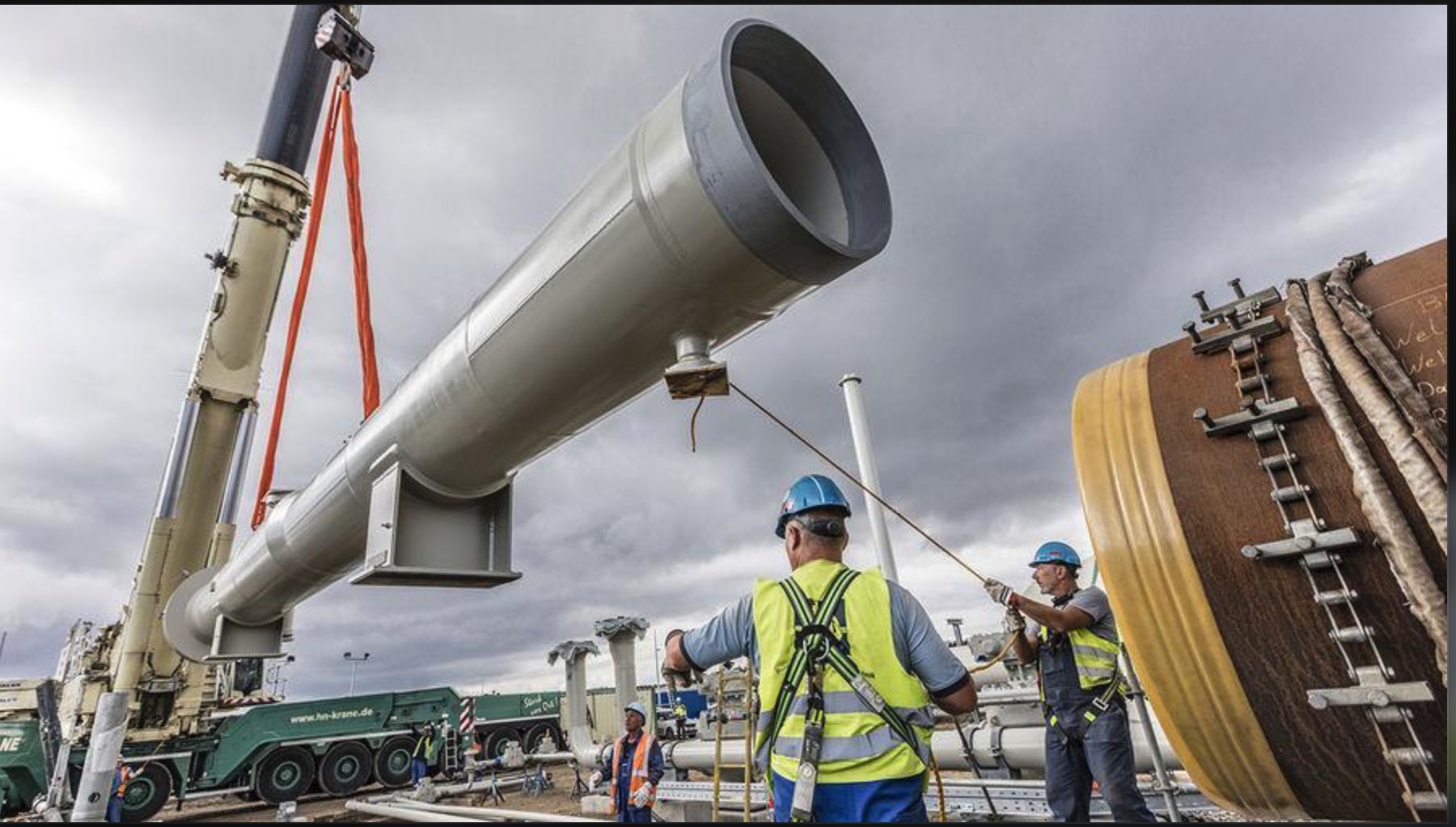
The corporate announcement also identified the project’s intended capacity: 55 billion cubic metres of gas annually.
The planned route extended approximately 1,220 kilometres from Russia across the Baltic Sea to Germany.
Construction was expected to commence in 2018 and finish by the end of 2019.
The project was therefore presented as a substantial but commercially conventional infrastructure investment.
Within weeks, however, the American Senate had brought the arrangement into an increasingly contentious sanctions debate.
Authenticated corporate source: OMV — Nord Stream 2 AG and European Energy Companies Sign Financing Agreements, 24 April 2017. Ocean News & Technology
2. June 2017: Washington’s sanctions proposals alarm Germany
On 15 June 2017, Reuters reported an unusually strong response from Germany and Austria to proposed American sanctions against Russia.
The US Senate had advanced measures intended to increase pressure on Moscow over its international conduct, including interference in the American electoral process and actions concerning Ukraine.
The proposed measures also created potential sanctions exposure for companies participating in certain Russian energy-export pipeline projects.
German Foreign Minister Sigmar Gabriel and Austrian Chancellor Christian Kern publicly objected.
Their concern was not simply that Russia might face additional sanctions.
They feared that European companies financing or constructing Nord Stream 2 could become subject to American penalties.
The ministers argued that Europe should determine its own energy policy and that American sanctions should not be used to advance commercial interests in the energy sector.
That last argument was an interpretation advanced by the German and Austrian governments.
It was not an established judicial finding concerning American motives.
Nevertheless, their intervention exposed a serious disagreement within the Western alliance.
Germany and Austria regarded the proposed extraterritorial measures as a threat to European commercial sovereignty.
Washington regarded Russian energy infrastructure as a legitimate subject for national-security sanctions.
Shell and the other European financiers were directly relevant to this disagreement because they had signed their financing commitments less than two months earlier.
The possibility of American sanctions was no longer theoretical political commentary.
It had entered the legislative process.
Contemporaneous source: Reuters — US Sanctions on Russia Threaten European Energy Firms, Germany and Austria Warn, 15 June 2017.
3. The German government’s authenticated response
On 16 June 2017, the German Federal Government published an official statement concerning the American proposals.
The statement was unusually forthright.
Government spokesperson Steffen Seibert criticised the prospect that sanctions intended to influence Russian conduct might instead penalise European businesses.
The German government reiterated its opposition to extraterritorial sanctions affecting third countries.
It also confirmed that Chancellor Angela Merkel shared the concerns expressed by Gabriel and Kern.
Foreign Office spokesperson Martin Schäfer argued that the proposed measures could allow American authorities to penalise German, Austrian and other European companies for participating in energy projects.
The German government questioned whether such measures would be compatible with international law.
That was the government’s stated legal position, not a court ruling determining that the American legislation was unlawful.
The statement demonstrates that the dispute was not confined to an individual minister’s personal opinion.
It reflected an official German government position.
The United States and Germany were already divided over the treatment of Nord Stream 2.
The German government wanted coordinated action against Russia while resisting American measures that might penalise European companies.
The American government increasingly regarded Nord Stream 2 as inconsistent with European energy security.
Those positions would remain in tension for several years.
Primary source: German Federal Government — Trade Policy Should Not Be Mixed With Sanctions, 16 June 2017.
4. August 2017: American legislation creates a new category of risk
On 2 August 2017, President Donald Trump signed the Countering America’s Adversaries Through Sanctions Act, commonly known as CAATSA.
Section 232 established discretionary sanctions authority concerning specified investments and other activities supporting Russian energy-export pipelines.
The legislation did not automatically sanction Shell.
Nor did it make participation in every Russian pipeline project unlawful.
Its importance lay in providing American authorities with a mechanism for imposing sanctions upon qualifying activities by foreign companies.
This introduced a different kind of risk from Poland’s competition proceedings.
A company could face potential American consequences for activity undertaken outside the United States.
Sanctions might affect access to American markets, financing arrangements, commercial relationships or other activities subject to US jurisdiction.
The consequences would depend upon the actual legislation, implementing guidance and any subsequent designation.
For Shell, which operated extensively in the United States and international financial markets, the emergence of this sanctions authority was a development of potential commercial significance.
But the documentary record does not establish that Shell was sanctioned under Section 232 in 2017.
The distinction between the existence of a sanctions power and its exercise is essential.
5. December 2019: Washington targets the construction vessels
The confrontation escalated sharply in December 2019.
On 20 December, President Trump signed the National Defense Authorization Act for Fiscal Year 2020.
The legislation included the Protecting Europe’s Energy Security Act of 2019, known as PEESA.
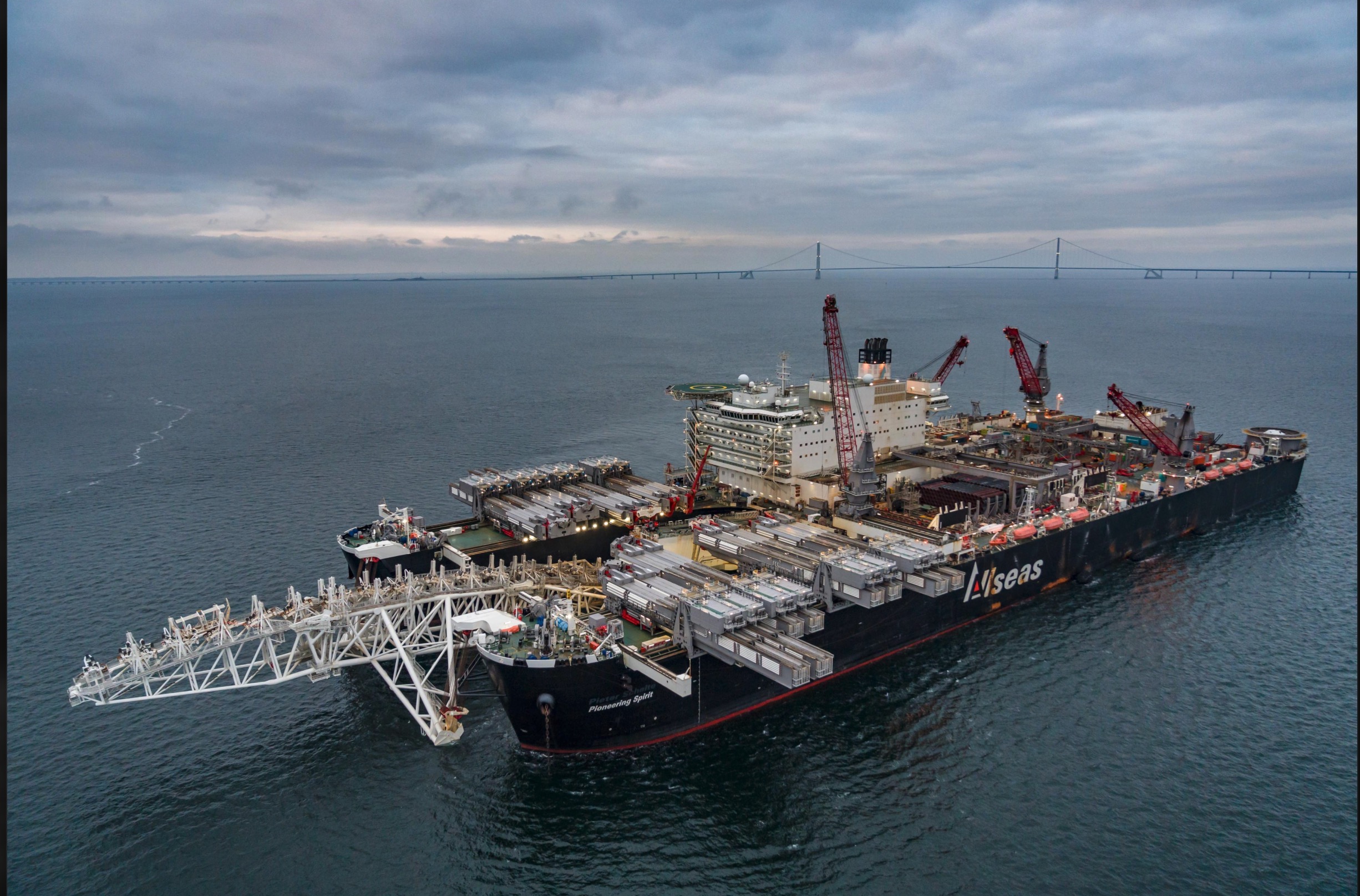
Its provisions targeted specified vessels engaged in laying pipe for Nord Stream 2 and certain companies providing those vessels.
The legislation required identification of qualifying activities and provided sanctions mechanisms, subject to statutory conditions and wind-down provisions.
The United States was now moving beyond general opposition to Russian pipeline financing.
It was targeting the specialist contractors physically constructing the pipeline.
That change proved immediately consequential.
Allseas suspends construction
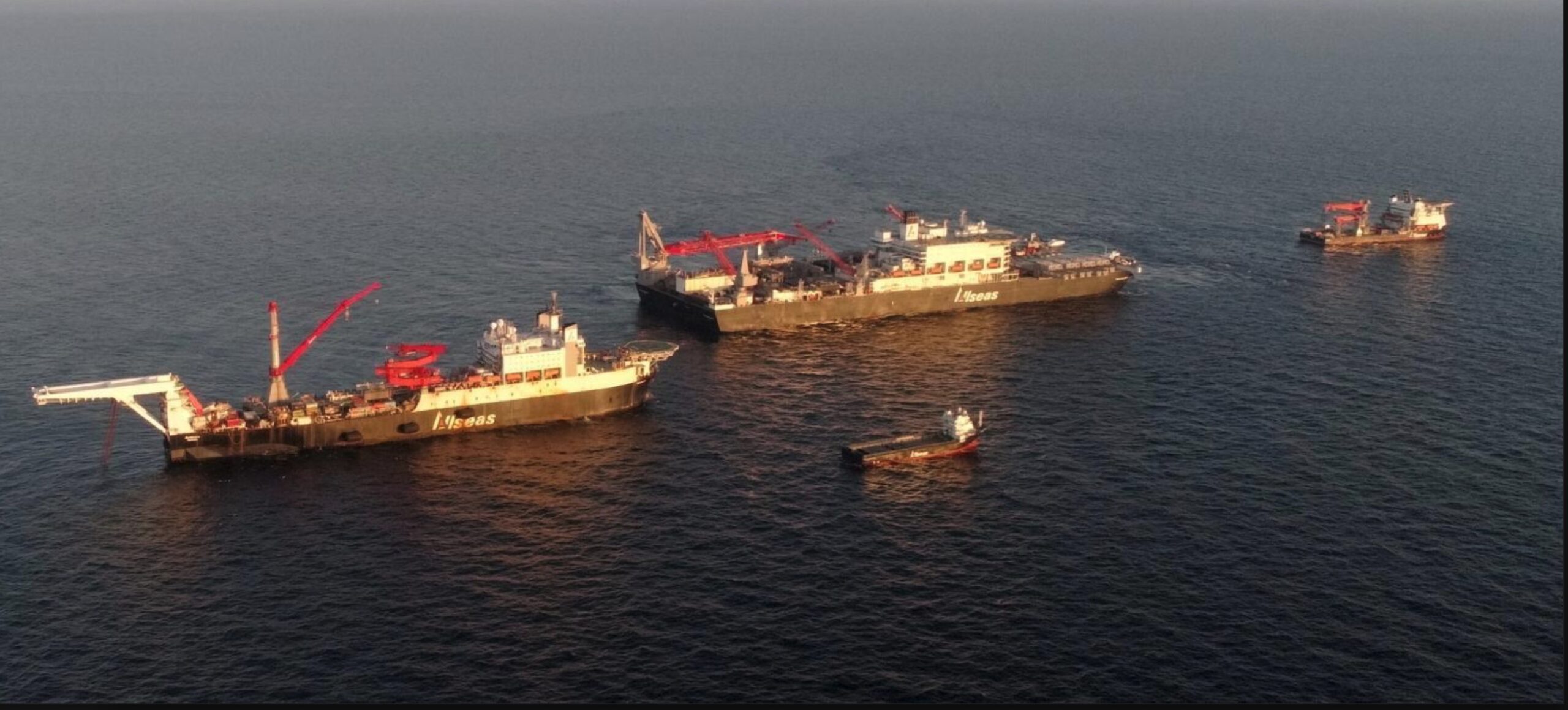
On 21 December 2019, Swiss-Dutch offshore engineering company Allseas announced that it had suspended pipe-laying operations associated with Nord Stream 2.
Allseas operated specialist vessels capable of installing large-diameter pipelines in deep water.
Its participation was important to the project’s construction programme.
The company explained that it was suspending work in anticipation of the new American legislation and would await clarification concerning its application.
Reuters independently reported the decision.
This was one of the clearest demonstrations that American sanctions could materially disrupt the project.
The sanctions had not merely generated diplomatic protests.
A major contractor had stopped work.
Construction, previously anticipated to finish in 2019, faced substantial uncertainty.
The pipeline consortium maintained that it intended to complete the project.
But the interruption demonstrated how dependent Nord Stream 2 had become upon access to specialist Western contractors and the international services they supplied.
For Shell and the other financiers, the consequences were indirect but important.
They had financed a project whose construction schedule could now be disrupted by American legislation.
The Allseas decision did not establish that Shell had violated sanctions.
It established that sanctions pressure had produced a significant operational consequence.
Primary US record: US State Department — Fact Sheet on US Opposition to Nord Stream 2, 27 December 2019.
Contemporaneous reporting: Reuters — Allseas Suspends Nord Stream 2 Work, 20–21 December 2019.
6. July 2020: Washington explicitly warns financing partners
On 15 July 2020, the US State Department issued updated guidance concerning Section 232 of CAATSA.
This document is particularly important to the Shell archive.
The department announced that its implementation of the legislation would explicitly encompass Nord Stream 2 and the second line of TurkStream.
It also identified financing partners among the categories of participants potentially exposed to sanctions.
The official statement distinguished between activities that might become sanctionable and persons actually sanctioned.
The department expressly stated that it was not imposing sanctions under Section 232 at that time.
However, it encouraged companies involved in the projects to reassess their participation and mitigate their exposure.
The guidance was therefore a direct public warning to relevant commercial participants.
It was not a finding that Shell or any other specific financing company had breached American law.
But it removed much of the uncertainty about whether Washington intended its sanctions authority to reach financial supporters of Nord Stream 2.
The category was now explicitly identified.
Shell’s participation in the project was already documented through its 2017 agreement.
The significance for investors is straightforward.
By July 2020, the American government had publicly identified financing partners in its sanctions guidance.
The possible implications for Shell’s loan and future participation were therefore matters that could be considered using public records.
Authenticated primary source: US State Department — Updated Public Guidance for Section 232 of CAATSA, 15 July 2020.
7. The changing relationship between sanctions and contractual commitments
The July 2020 guidance introduced an important complication.
Earlier American guidance had treated certain pipeline projects with contracts signed before the enactment of CAATSA differently.
The updated approach broadened potential sanctions exposure.
This mattered because Shell’s Nord Stream 2 financing agreement had been signed on 24 April 2017.
That date preceded CAATSA’s enactment in August 2017.
The changing guidance therefore raised questions about activities conducted under older contractual arrangements.
However, the legal analysis requires care.
An existing financing agreement is not identical to every later transaction performed under that agreement.
The imposition of sanctions depends upon the conduct concerned, the statutory criteria and the effective implementing guidance.
The fact that Shell signed its original agreement before August 2017 does not establish that all subsequent activities were permanently exempt.
Conversely, the July 2020 guidance does not establish that Shell was automatically in violation of American law.
The surviving public record supports a narrower conclusion.
A financing structure established in 2017 had become potentially vulnerable to sanctions interpretations that changed during the life of the project.
That was a material category of regulatory uncertainty.
8. January 2021: The sanctions framework expands again
Further American legislation expanded PEESA at the beginning of 2021.
The amendments widened the categories of activities potentially subject to sanctions.
They addressed support services associated with pipe-laying vessels, including specified insurance, technical and certification activities.
The legislation also introduced additional reporting and consultation requirements.
The significance was that construction could be affected through more than the direct withdrawal of pipe-laying contractors.
Companies providing essential supporting services could also face legal and commercial uncertainty.
The State Department’s formal guidance appeared in the Federal Register in April 2021.
It identified the expanded categories of potentially sanctionable conduct and explained the applicable wind-down arrangements.
Again, this was not a judicial finding against Shell.
Nor does the existence of wider sanctions authority prove that Shell personally performed the additional activities covered by the amendments.
But it demonstrates the increasing difficulty of completing a highly specialised international infrastructure project while essential contractors and service providers faced potential American restrictions.
Official legal record: Federal Register — Updated Public Guidance for the Protecting Europe’s Energy Security Act, 14 April 2021.
9. March and May 2021: Biden maintains opposition but grants a waiver
The arrival of President Joe Biden did not immediately end American opposition to Nord Stream 2.
On 18 March 2021, Secretary of State Antony Blinken warned companies participating in the project that they risked American sanctions.
The administration characterised Nord Stream 2 as a Russian geopolitical project that could weaken European energy security.
The statement reflected a position shared by successive American administrations.
But a different consideration was emerging.
Washington also wanted to repair and strengthen its relationship with Germany.
In May 2021, the Biden administration announced sanctions measures affecting entities and vessels associated with construction.
At the same time, it granted national-interest waivers concerning Nord Stream 2 AG, its chief executive Matthias Warnig and specified corporate officers.
The distinction was significant.
Washington remained opposed to Nord Stream 2.
But it chose not to impose certain sanctions on the project company and its leadership at that stage.
The waiver was a foreign-policy decision.
It was not an endorsement of the pipeline.
Nor did it establish that all companies involved in financing or constructing Nord Stream 2 were immune from future sanctions.
The administration was attempting to balance opposition to Russian energy infrastructure with the preservation of relations with Germany.
For Shell, this meant that the sanctions environment remained politically contingent.
The project had encountered repeated legislative and operational obstacles, but American policy was not entirely uniform in its immediate practical effects.
Primary sources: US State Department — Nord Stream 2 and Potential Sanctionable Activity, 18 March 2021 and Nord Stream 2 and European Energy Security, 19 May 2021.
10. July 2021: Washington and Berlin negotiate a compromise
On 21 July 2021, the United States and Germany issued a joint statement concerning Ukraine, European energy security and climate objectives.
It represented a significant diplomatic development.
The two governments committed themselves to supporting Ukraine’s energy security.
Germany undertook to use its influence to support the continuation of Russian gas transit through Ukraine beyond the existing contractual arrangements.
The agreement also addressed financial and technical support for Ukraine’s energy transition.
Importantly, the statement recognised the risk that Russia might use energy supplies as a political instrument.
Germany committed to take national action and support effective European measures if Russia engaged in further aggression against Ukraine or attempted to weaponise energy.
The document did not remove every disagreement concerning Nord Stream 2.
It represented an effort to manage those disagreements while acknowledging that the pipeline might be completed.
The compromise also illustrated the growing importance of Ukraine’s position.
For Kyiv, the pipeline presented risks extending beyond lost transit revenue.
The ability to transport Russian gas to Western Europe while bypassing Ukraine could potentially reduce the strategic importance of the Ukrainian transmission system.
That concern had been expressed for years by Ukraine and several Central and Eastern European governments.
Supporters of Nord Stream 2 continued to emphasise additional transport capacity, commercial efficiency and supply security.
The July agreement attempted to reconcile these competing interests.
Authenticated diplomatic record: German Federal Foreign Office — Joint Statement of the United States and Germany, 21 July 2021.
11. September 2021: Construction is completed — but the pipeline cannot yet operate
On 10 September 2021, Gazprom announced that construction of Nord Stream 2 had been completed.
The announcement followed extensive delays and the eventual continuation of work using Russian-controlled pipe-laying resources.
The project had survived the withdrawal of Allseas.
It had survived multiple rounds of American sanctions pressure.
And it had survived substantial political opposition within Europe.
But physical completion was not the same as legal authorisation to transport gas commercially.
The pipeline still required regulatory certification.
This distinction would prove decisive.
The completion announcement established a major engineering milestone.
It did not establish that Nord Stream 2 had entered commercial service.
Nor did it eliminate the possibility of further regulatory or political obstacles.
The original expectation that construction would be completed by the end of 2019 had already been missed by a considerable margin.
Even after construction was complete, the project remained exposed to decisions outside Gazprom’s immediate control.
Contemporaneous source: S&P Global — Russia’s Gazprom Completes Nord Stream 2 Construction, 10 September 2021.
12. November 2021: Germany suspends certification
On 16 November 2021, Germany’s Federal Network Agency, the Bundesnetzagentur, announced that it had suspended the certification procedure for Nord Stream 2 AG.
The immediate issue concerned the legal organisation of the proposed transmission-system operator.
Nord Stream 2 AG was established in Switzerland.
The regulator determined that the German section of the pipeline required an operator organised under German law.
Nord Stream 2 AG proposed establishing a German subsidiary.
The regulator announced that certification would remain suspended until the relevant assets and personnel had been transferred and the necessary documentation examined.
This was a regulatory decision.
It was not the same as the political suspension announced by Germany in February 2022.
Nor was it a judicial finding that the project had been unlawfully financed.
Nevertheless, it demonstrated that the pipeline remained unable to begin commercial operation even after construction had been completed.
The available German regulatory record therefore supplies another important distinction.
A completed pipeline was not necessarily an operational or revenue-producing pipeline.
Primary source: Bundesnetzagentur — Certification Procedure for Nord Stream 2 Suspended, 16 November 2021.
13. The European legal challenge: Nord Stream 2 confronts EU gas rules
The pipeline also faced a separate legal controversy concerning European gas-market legislation.
In April 2019, the European Union had adopted Directive 2019/692, extending aspects of its gas-market regulatory framework to certain pipelines connecting EU member states with third countries.
The rules addressed matters including ownership separation, third-party access and regulatory supervision.
Nord Stream 2 AG challenged the legislation.
The proceedings eventually reached the Court of Justice of the European Union.
On 12 July 2022, the Court delivered its judgment in Case C-348/20 P.
The judgment concerned whether Nord Stream 2 AG was entitled to challenge specified provisions of the directive.
The Court concluded that the company had standing to pursue part of its challenge and referred that part of the proceedings back to the General Court.
It did not, in that judgment, declare the entire directive invalid.
Nor did it rule that Nord Stream 2 was exempt from EU gas-market rules.
The decision is relevant because it demonstrates that the project faced legal questions extending beyond American sanctions and Polish competition proceedings.
The pipeline’s regulatory position involved several overlapping legal systems.
Those systems should not be confused.
The Polish proceedings concerned merger-control rules.
The American measures concerned sanctions.
The EU proceedings concerned gas-market legislation and the ability of the project company to challenge it.
The German certification proceedings concerned the requirements for authorising the pipeline’s operator.
Together, these records reveal a complex and increasingly uncertain legal environment.
Judicial source: Court of Justice of the European Union — Nord Stream 2 AG v Parliament and Council, Case C-348/20 P, 12 July 2022.
14. February 2022: Germany changes course
On 21 February 2022, Russian President Vladimir Putin announced recognition of the self-proclaimed separatist entities in eastern Ukraine.
The following day, German Chancellor Olaf Scholz announced that the certification process for Nord Stream 2 would be halted.
The decision represented a fundamental change in German policy.
For years, German governments had defended the project against American objections and argued that decisions concerning European energy infrastructure should be made within Europe.
Now Germany itself was preventing the pipeline from entering service.
On 22 February, the Federal Ministry for Economic Affairs and Climate Action formally explained the administrative action.
The government withdrew its previous security-of-supply assessment.
That assessment was necessary for the German regulator to issue a favourable certification decision.
Without it, the pipeline could not be authorised to operate.
The ministry cited the deterioration of the geopolitical situation and the consequences of Russia’s conduct concerning Ukraine.
This was a political and regulatory decision taken by the German government.
It was not a court judgment finding Shell’s financing agreement unlawful.
But its commercial significance was profound.
The pipeline had been constructed.
The project company had invested heavily in the infrastructure.
European financiers had supplied substantial support.
Yet the pipeline remained unable to enter commercial service.
Authenticated primary source: German Federal Ministry for Economic Affairs — Minister Habeck on the Discontinuation of Nord Stream 2 Certification, 22 February 2022.
15. February 2022: Washington sanctions the project company
On 23 February 2022, the Biden administration imposed sanctions on Nord Stream 2 AG and its chief executive Matthias Warnig.
The decision followed Germany’s suspension of certification.
The sanctions reversed the earlier national-interest waiver granted in May 2021.
The project company became subject to American blocking sanctions.
This was a materially different position from the earlier warnings that certain participants might face sanctions.
An identified entity was now directly sanctioned.
The distinction is essential.
The available American record establishes the designation of Nord Stream 2 AG and Warnig.
It does not establish that Shell itself was designated under the same measure.
Nevertheless, the sanctions further complicated the legal and commercial position of the project company to which Shell had provided financing.
The pipeline’s future had become dependent upon a profound change in the geopolitical and regulatory environment.
Two days later, Russia’s full-scale invasion of Ukraine had transformed that environment still further.
Official record: US State Department — Department Press Briefing, 23 February 2022.
16. Shell announces its withdrawal
On 28 February 2022, Shell announced that it intended to exit its joint ventures with Gazprom and related entities.
The announcement included the company’s interests in Sakhalin-2, Salym Petroleum Development and Gydan.
Shell also stated that it intended to end its involvement in Nord Stream 2.
Chief executive Ben van Beurden condemned Russia’s military aggression against Ukraine and said the company would work through the business consequences of its withdrawal.
The statement marked an abrupt change in Shell’s relationship with major Russian energy projects.
But the different investments must be distinguished.
Shell held an equity interest in Sakhalin-2.
Its Nord Stream 2 exposure arose from financing arrangements rather than ownership of the pipeline company.
Consequently, the legal and accounting implications were different.
The announcement did not retrospectively establish that the original 2017 financing agreement had been unlawful.
It represented Shell’s decision to withdraw from the project in the circumstances then prevailing.
The company’s own statement also acknowledged that the decision would affect the carrying value of relevant assets.
An impairment was anticipated.
The financial consequence would become clear in its first-quarter results.
Authenticated corporate announcement: Shell — Intention to Exit Equity Partnerships With Gazprom Entities, 28 February 2022.
17. May 2022: Shell recognises a $1.126 billion write-down
On 5 May 2022, Shell published its first-quarter financial results.
The announcement recorded substantial charges associated with withdrawal from Russian oil and gas activities.
The total recognised pre-tax charges were approximately $4.235 billion.
Within that amount, Shell identified a $1.126 billion write-down associated with its Nord Stream 2 loan.
The company separately recorded a $1.614 billion impairment relating to Sakhalin-2.
These amounts should not be conflated.
They concerned different investments with different ownership structures and accounting treatments.
The Nord Stream 2 write-down was particularly significant because Shell’s original financing commitment had been expressed as a maximum of €950 million.
The figures are denominated in different currencies and relate to different accounting concepts.
The €950 million represented a maximum financing-and-guarantee commitment under the 2017 arrangements.
The $1.126 billion represented the carrying amount of the loan written down in Shell’s 2022 financial reporting.
The two numbers should not be presented as though they were directly interchangeable.
Nor should the accounting charge automatically be described as a regulatory fine or a payment made in 2022.
It was a financial write-down.
The company had reassessed the recoverability of its loan and recognised the loss in its accounts.
That was the documented financial consequence of its Nord Stream 2 participation.
Primary source: Shell plc — First Quarter 2022 Unaudited Results, 5 May 2022.
Documentary Findings: What the Evidence Establishes
Established facts
Shell entered into a Nord Stream 2 financing agreement on 24 April 2017.
Its maximum commitment was €950 million in financing and guarantees.
Gazprom remained the sole shareholder of Nord Stream 2 AG.
The United States introduced sanctions legislation affecting Russian energy-export pipelines and subsequently expanded its implementation of those measures.
Germany and Austria publicly opposed American extraterritorial sanctions affecting European companies.
In December 2019, Allseas suspended pipe-laying activities following the introduction of American sanctions legislation.
In July 2020, the US State Department explicitly identified financing partners among those potentially exposed to sanctions under Section 232 of CAATSA.
The Biden administration maintained opposition to Nord Stream 2 but granted specified sanctions waivers in May 2021.
The United States and Germany reached a diplomatic agreement in July 2021.
Construction was completed in September 2021.
Germany suspended the regulatory certification process in November 2021 and halted it on geopolitical grounds in February 2022.
Washington sanctioned Nord Stream 2 AG and Matthias Warnig on 23 February 2022.
Shell announced its intention to withdraw on 28 February 2022.
In May 2022, Shell recognised a $1.126 billion write-down of its Nord Stream 2 loan.
These findings are supported by authenticated corporate announcements, official government records, contemporaneous reporting and financial disclosures.
What is not established
The material examined does not establish that Shell violated American sanctions.
It does not establish that Shell secretly controlled Nord Stream 2 AG.
It does not establish that Shell’s financing agreement constituted an unlawful equity investment.
It does not establish that the company’s directors knowingly concealed material information from shareholders.
It does not establish that Shell should have recognised its loan impairment before 2022.
Nor does the later financial loss prove that the original commercial decision was negligent or unlawful.
Those conclusions would require evidence beyond the public documents examined here.
The record supports a narrower but important proposition.
Shell continued to have financial exposure to Nord Stream 2 during a period in which the project faced a succession of publicly documented political, legal and sanctions-related obstacles.
COMMENTARY: The Warnings Were Public — But the Financial Outcome Was Not Inevitable
The Nord Stream 2 story is particularly instructive because the eventual loss can be examined against a detailed chronology of publicly available warnings.
The original financing arrangement was signed in April 2017.
Within two months, Germany and Austria were protesting American sanctions proposals that could affect European companies supporting the project.
By December 2019, American legislation had prompted a major offshore contractor to suspend construction.
By July 2020, American guidance explicitly warned financing partners of potential sanctions exposure.
By September 2021, the pipeline had been completed, but regulatory approval remained outstanding.
By November, German certification proceedings had been suspended.
And in February 2022, the geopolitical situation changed decisively.
These events can be established without access to Shell’s confidential board papers.
They were public.
But the existence of warnings is not equivalent to proof that the ultimate loss was inevitable.
At various stages, reasonable commercial participants could have anticipated different outcomes.
The project survived Poland’s objections to the original shareholding structure.
It survived the withdrawal of Allseas.
It survived repeated American sanctions warnings.
And construction was ultimately completed.
Those facts help explain why the project’s supporters continued to believe it could enter service.
Commercial optimism and geopolitical risk
Shell’s commercial rationale was based upon the expected importance of natural gas to Europe.
The company and its partners anticipated additional demand for imports as domestic European production declined.
Nord Stream 2 was intended to provide additional transportation capacity.
From a narrow infrastructure perspective, that rationale was understandable.
But energy infrastructure does not operate independently of politics.
The route of Nord Stream 2 was politically significant precisely because it could transport Russian gas to Germany without passing through Ukraine or Poland.
That created consequences extending beyond transportation costs.
For Ukraine, gas transit was economically important and carried wider strategic significance.
For Poland and other Central and Eastern European countries, additional dependence upon Russian gas created security concerns.
For Germany, the project was associated with access to gas supplies and commercially advantageous infrastructure.
For Washington, it became an object of sanctions policy.
Shell’s investment sat at the intersection of those competing interests.
The project was therefore not exposed merely to normal construction and commodity-price risks.
It was vulnerable to decisions taken by governments with conflicting strategic objectives.
The changing significance of Germany’s position
One of the most striking aspects of the chronology is Germany’s transformation from opponent of American sanctions to the government that prevented Nord Stream 2 from entering service.
In June 2017, Germany objected to Washington’s interference in European energy affairs.
In July 2021, Berlin negotiated a compromise with the Biden administration.
In November 2021, its regulator suspended certification on legal and organisational grounds.
In February 2022, Chancellor Scholz halted the process in response to Russia’s conduct concerning Ukraine.
The explanation is not simply that Germany reversed a commercial decision without warning.
The geopolitical circumstances had changed dramatically.
Nevertheless, the sequence demonstrates how dependent the project had become upon German government policy.
An investment initially justified by long-term gas demand could not generate the anticipated benefits merely because the infrastructure had been completed.
The necessary political and regulatory conditions also had to exist.
What should investors have understood?
The central shareholder question is not whether every investor could have predicted Russia’s full-scale invasion of Ukraine in February 2022.
That would impose an unrealistic standard of foresight.
The more reasonable question concerns the evaluation of identifiable risks.
By 2020, investors could see that Nord Stream 2 had become the subject of substantial sanctions controversy.
They could see that a major construction contractor had withdrawn.
They could see that Washington was willing to extend sanctions guidance to financing partners.
And they could see that European governments remained divided over the project’s strategic implications.
These were not hidden developments.
They were documented in government statements, legislation and international reporting.
Whether Shell appropriately evaluated those risks internally is a separate question.
Answering it would require the relevant board materials, risk assessments, accounting judgments and contemporaneous management records.
Those documents have not been established as part of the present source collection.
Accordingly, the archive does not assert that Shell’s management ignored warnings or failed to discharge its duties.
It records the existence of the warnings and their subsequent financial context.
That is a meaningful documentary finding in its own right.
The Sakhalin Connection
The original Sakhalin Papers examined Shell’s experience of managing a major Russian energy project during a period of increasing political and regulatory pressure.
Sakhalin-2 involved direct equity ownership, construction difficulties, environmental controversies, disputes with Russian authorities and the eventual emergence of Gazprom as the controlling shareholder.
Nord Stream 2 was different.
Shell’s participation was structured through financing rather than direct equity ownership.
The principal legal challenges came from Western governments and European regulatory institutions.
But the two histories contain a common issue.
Both projects demonstrate that substantial investment in Russian-linked energy infrastructure involved risks that could not be understood solely through engineering, commodity prices or conventional commercial forecasting.
Political authority mattered.
Regulatory decisions mattered.
International relations mattered.
And the legal structures through which Shell participated shaped its exposure.
In Sakhalin-2, Shell faced the consequences of negotiating with a Russian state determined to increase control over strategic energy assets.
In Nord Stream 2, Shell faced the consequences of financing Russian-controlled infrastructure that Western governments increasingly regarded as a strategic liability.
The circumstances were different.
The general lesson was similar.
A commercially attractive project could become extraordinarily difficult to complete or operate once it entered a confrontation between governments.
The archive should preserve that history without assuming that every political objection was justified or that every commercial decision was mistaken.
Conclusion: A Pipeline Completed, a Loan Written Down
The historical record establishes an extraordinary sequence.
In April 2017, Shell agreed to provide substantial financing for Nord Stream 2.
In June, Germany and Austria protested American sanctions proposals threatening European energy companies.
In December 2019, an offshore contractor withdrew from construction in response to sanctions legislation.
In July 2020, Washington expressly warned that financing partners could be exposed.
In 2021, the Biden administration combined continuing opposition with diplomatic concessions to Germany.
Construction was completed in September.
But the pipeline remained uncertified.
In February 2022, Germany halted certification, the United States sanctioned the project company, and Shell announced its withdrawal.
By May, Shell had recognised a $1.126 billion loss against its Nord Stream 2 loan.
The documentary conclusion is neither that Shell acted unlawfully nor that every warning should necessarily have caused immediate withdrawal.
It is that a series of substantial and publicly identifiable political risks accumulated around an investment that ultimately produced a major financial write-down.
The public record allows that sequence to be established.
It does not disclose every internal decision that Shell’s management made in response.
That distinction matters.
The purpose of this archive is not to replace missing evidence with confident speculation.
It is to establish what can be demonstrated, identify what remains uncertain and preserve the material through which later researchers may examine the decisions.
For Shell shareholders, Nord Stream 2 ultimately became a case study in the financial consequences of geopolitical exposure.
For European governments, it became a source of profound disagreement over energy security and relations with Russia.
For Ukraine, the project had long represented concerns about energy dependence, transit revenues and national security.
For Gazprom, the pipeline was completed but did not achieve its intended commercial operation.
And for the historical record, the most important fact may be the simplest.
The pipeline was physically completed. Its commercial purpose was not realised.
Source Record
The following authenticated records and contemporaneous reports underpin this instalment. They are distinguished according to their evidential function.
1. Shell and OMV — 24 April 2017
Nord Stream 2 AG and European Energy Companies Sign Financing Agreements
Primary corporate announcement identifying the five European financiers, their maximum commitments, the anticipated cost of the project and Gazprom’s continued sole ownership.
2. German Federal Government — 16 June 2017
Trade Policy Should Not Be Mixed With Sanctions
Authenticated German government statement concerning American sanctions proposals, extraterritorial measures and the position of Chancellor Merkel.
3. Reuters — 15 June 2017
US Sanctions on Russia Threaten European Energy Firms
Contemporaneous independent reporting of the German and Austrian objections.
4. US State Department — 27 December 2019
Fact Sheet on US Opposition to Nord Stream 2
Official explanation of the Protecting Europe’s Energy Security Act and the American government’s sanctions policy.
5. Reuters — 20–21 December 2019
Allseas Suspends Nord Stream 2 Construction Activities
Contemporaneous reporting confirming the suspension of pipe-laying activities following American legislation.
6. US State Department — 15 July 2020
Updated Public Guidance for Section 232 of CAATSA
Primary evidence that the American government explicitly included Nord Stream 2 within its expanded sanctions guidance and identified financing partners among potentially affected participants.
7. US Federal Register — 14 April 2021
Updated Guidance for PEESA, as Amended
Official record explaining the expanded categories of activity potentially subject to sanctions and the relevant statutory exemptions and procedures.
8. US State Department — 19 May 2021
Nord Stream 2 and European Energy Security
Official confirmation of American sanctions measures and national-interest waivers concerning Nord Stream 2 AG and specified corporate officers.
9. German Federal Foreign Office — 21 July 2021
Joint US-German Statement on Ukraine and European Energy Security
Authenticated diplomatic agreement recording the commitments of Washington and Berlin concerning Ukraine, Russia and the pipeline.
10. S&P Global — 10 September 2021
Gazprom Completes Nord Stream 2 Construction
Independent contemporaneous confirmation that physical construction had been completed.
11. German Federal Network Agency — 16 November 2021
Certification Procedure for Nord Stream 2 Suspended
Primary regulatory announcement identifying the requirements governing the pipeline operator and the suspension of certification.
12. German Federal Ministry for Economic Affairs — 22 February 2022
German Government Halts Nord Stream 2 Certification
Primary government statement establishing the withdrawal of the previous security-of-supply assessment.
13. US State Department — 23 February 2022
Department Press Briefing on Nord Stream 2 Sanctions
Official confirmation of sanctions against Nord Stream 2 AG and its corporate officers following Germany’s decision.
14. Shell plc — 28 February 2022
Shell Intends to Exit Equity Partnerships With Gazprom Entities
Authenticated corporate announcement recording Shell’s decision to end its Nord Stream 2 involvement and withdraw from other Russian energy ventures.
15. Shell plc — 5 May 2022
Shell First Quarter 2022 Unaudited Financial Results
Primary financial record confirming the $1.126 billion Nord Stream 2 loan write-down and distinguishing it from impairment charges associated with Sakhalin-2 and other Russian assets.
16. Court of Justice of the European Union — 12 July 2022
Nord Stream 2 AG v European Parliament and Council, Case C-348/20 P
Judicial record concerning the admissibility of Nord Stream 2 AG’s challenge to specified provisions of EU gas-market legislation. It is not presented as a judgment invalidating the directive or authorising the pipeline’s commercial operation.
Evidence and Attribution Statement
This instalment relies upon authenticated corporate announcements, official American and German government documents, published regulatory decisions, European judicial records, and identified contemporaneous journalism.
Shell’s financing commitment and eventual loan write-down are established through its own disclosures.
The German and Austrian objections to American sanctions are recorded as their governments’ positions. Assertions concerning the commercial motives of American sanctions policy are not treated as established facts.
The sanctions legislation and guidance are distinguished from actual sanctions designations.
The record establishes that Nord Stream 2 AG and its chief executive were sanctioned in February 2022. It does not establish that Shell was sanctioned for participating in the financing arrangements.
The EU judicial decision cited concerns procedural admissibility and does not constitute a judicial finding that Shell’s investment was unlawful.
The public record establishes the sequence of political warnings and regulatory obstacles. It does not disclose Shell’s complete internal risk assessments or justify allegations concerning the personal motives of its directors.
Editorial commentary is identified separately from documentary findings.
No allegation of secret political arrangements, concealed ownership, sanctions evasion or established unlawful conduct by Shell is made.
The website’s general disclaimer also applies.
NEXT IN THE SHELL LEAKS FILES
SLF-2007-089 — The Sakhalin Papers LXXIX: The Baltic Explosions — Nord Stream’s Destruction, Competing Accusations and the Search for Evidence
On 26 September 2022, powerful underwater explosions damaged the Nord Stream pipeline system in the Baltic Sea.
The explosions triggered major gas leaks, international investigations and a succession of accusations concerning responsibility.
Russia blamed Western interests.
Other allegations pointed elsewhere.
Intelligence assessments, investigative journalism and official criminal inquiries would eventually produce a complicated and sometimes contradictory public record.
But which findings were authenticated?
Which accusations were supported by evidence?
And which conclusions remained speculative?
For Shell, the explosions occurred after the company had already recognised the full write-down of its Nord Stream 2 loan.
The financial loss had therefore preceded the physical damage.
The next instalment will examine the documented chronology of the explosions, the official investigations, the evidence concerning possible perpetrators and the limits of what can responsibly be concluded.
It will also consider the implications for the historical record of Shell’s investment.
The distinction between evidence and allegation will be especially important.
Because few episodes in the modern history of European energy infrastructure have generated more speculation than the destruction of Nord Stream.
And speculation, however widely repeated, is not a substitute for authenticated evidence.
Historical visual references